

A well-run Houston home checklist in late September is not about starting the fall to-do list. It is about verifying that the house came through the hardest months of the year with its attic ventilation intact, its roof and gutter drainage still sized correctly, and its window and door seals still doing their job. The houston late september home checklist below is a whole-exterior walkthrough built around what a homeowner can actually see and hear before the first north cold front arrives — usually mid to late October in Houston.
This is a DC Pines Education Center piece written for Houston homeowners who want to catch small failures while the heat-season symptoms are still visible. Everything below is a real, verifiable check with a clear next step. The U.S. Department of Energy and ENERGY STAR maintain related guidance for many of the systems referenced here.

Attic Ventilation — Verify Under Load
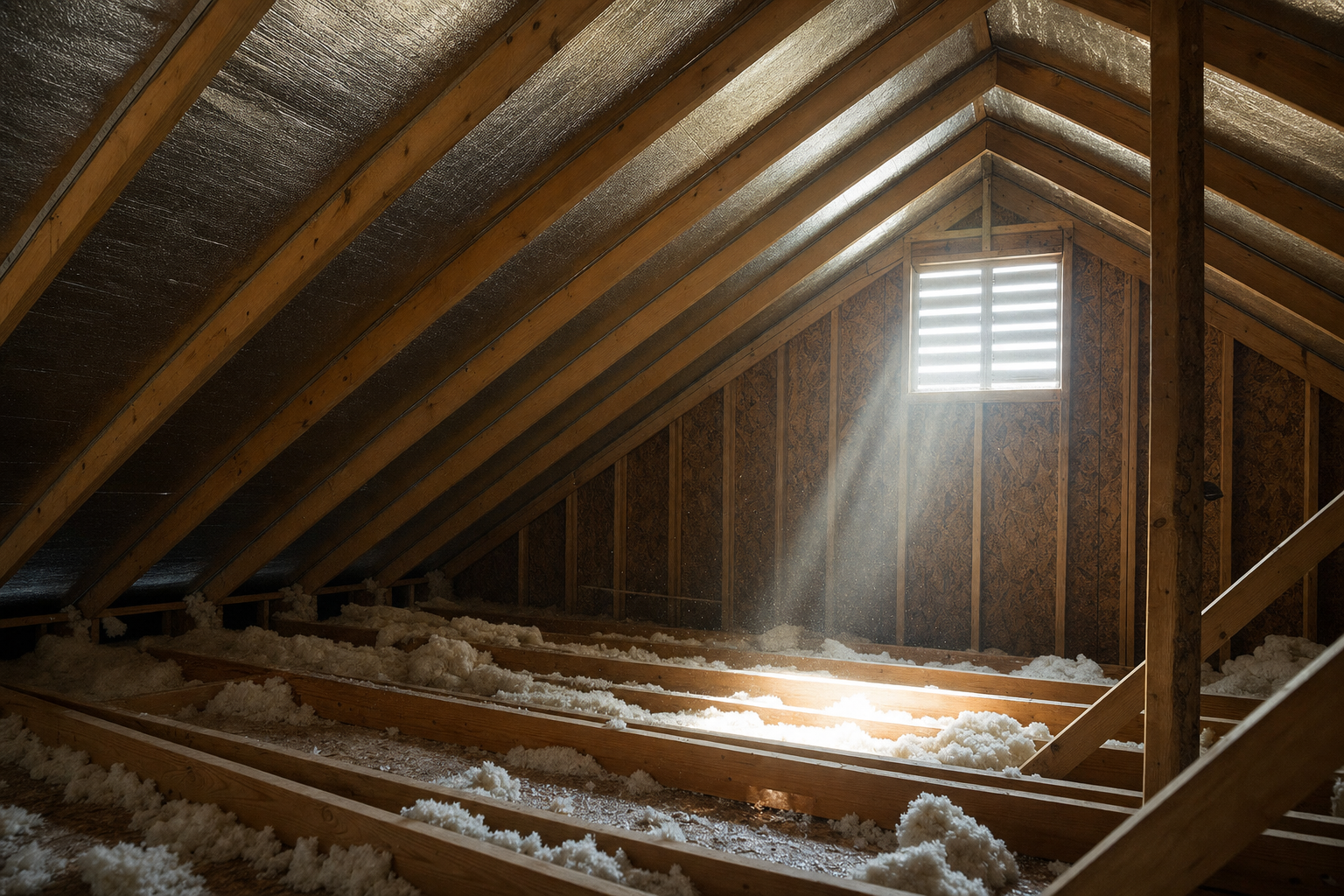
Late September is the best time of year to check attic ventilation because the attic is still hot enough to reveal problems. A Houston attic on a 90F day should not exceed about 120-130F if intake and exhaust ventilation are working properly. The reference standard is IRC Section R806, which sets the 1:150 or 1:300 net free ventilation area ratio for vented attics.
Walk the attic in the early afternoon. Check that intake air can be felt at each soffit vent — the DC Pines guide on NFVA math covers how to size the intake and exhaust openings. Look for insulation baffles that have been crushed or displaced, which choke off soffit intake. Confirm ridge or off-ridge exhaust is not blocked by paint or debris. If ceiling registers are still blowing warm air two or three hours after the AC cycles off, the attic is not shedding heat and the ventilation math is the first place to look.
Roof — Walk the Perimeter, Not the Roof
The late-September roof check is a ground-level and ladder-at-the-eave walk, not a full walk-around on the shingles. Signals of heat-season stress that are worth catching now include curled or lifted shingles at ridge and hip lines, granule loss showing as bare mats at south and west exposures, exposed nail heads that lost their sealant tab under UV, and pipe boot rubber that has cracked at the collar. Any one of those is small right now and expensive after a wet, windy fall.
The DC Pines guides on starter strip performance and cool-roof shingles cover the roof-side reasons this matters more than a spring check. Anything the homeowner cannot resolve from a ladder becomes a photo-documented item for a professional walk.
Gutters and Downspouts — Size, Slope, and Discharge
Fall in Houston pushes gutter systems harder than the summer rain season because leaves start collecting in the trough right when NOAA’s precipitation frequency records show some of the year’s heavier hourly rains. The NOAA Atlas 14 Precipitation Frequency Data Server lists the Houston 1-hour, 10-year event at roughly 3.7-4.0 inches, and that number is what a properly sized system has to move without overflow.
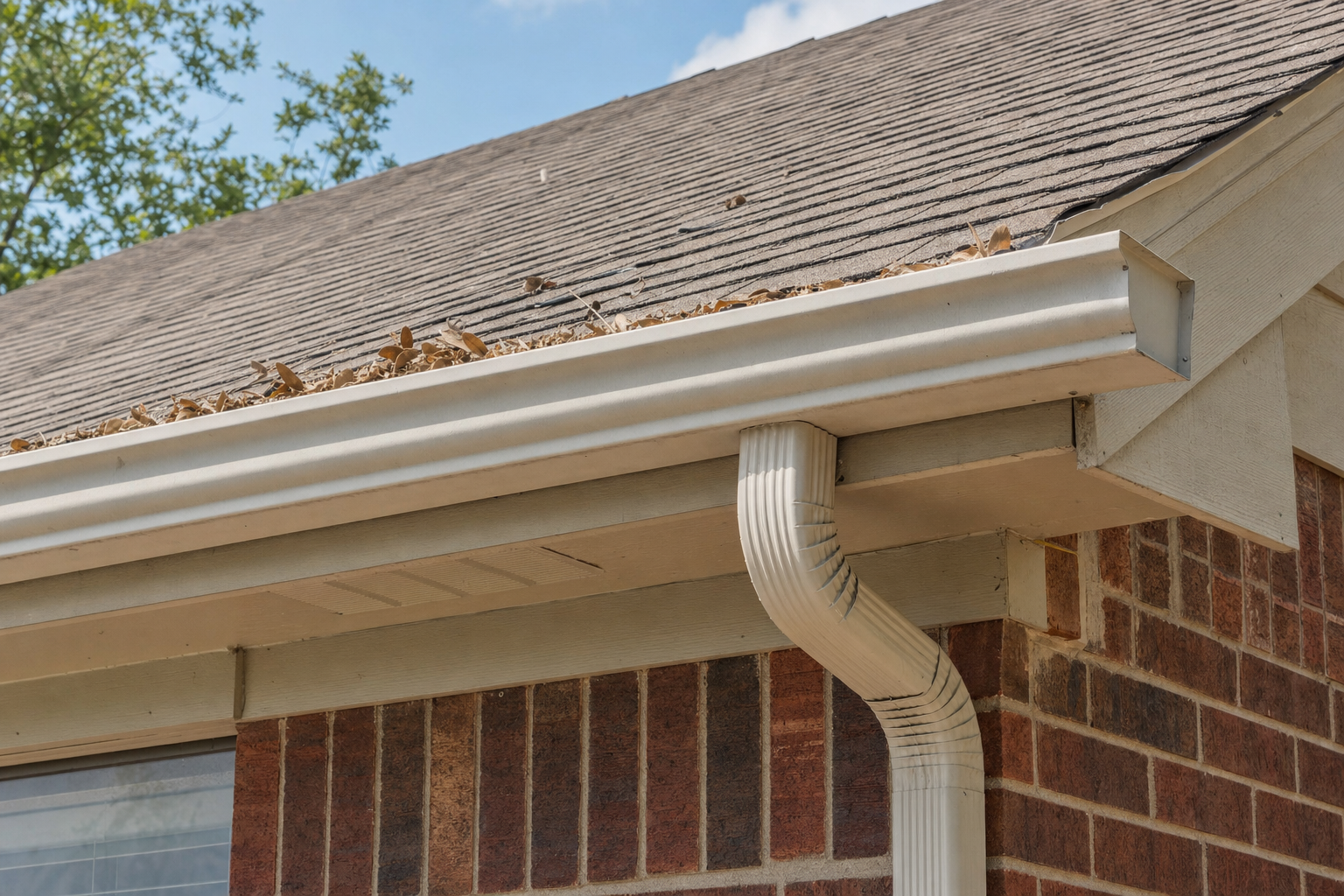
Walk each gutter run and confirm: no visible sag between hangers, slope toward the downspout is still consistent, and each downspout drains freely when a garden hose is run for a few minutes at the far end. Check that leaf accumulation in the trough is under a half inch — anything more, and the effective cross-section shrinks fast in the first fall storm. The DC Pines references on downspout sizing (2×3 vs 3×4) and hidden hangers vs spike-and-ferrule explain what the system should look like from the ground.
Downspout Extensions and Discharge
The most-skipped item on the fall Houston home checklist is the discharge end of the downspout. Reset every splash block, replace flexible extensions that have crushed or cracked over the summer, and clear any pop-up emitter that has been buried by mulch or St. Augustine growth. The DC Pines guide on downspout extensions and pop-up emitters covers what “correct” looks like.
Windows and Exterior Seals — Catch the Cracks Before the Cold Front
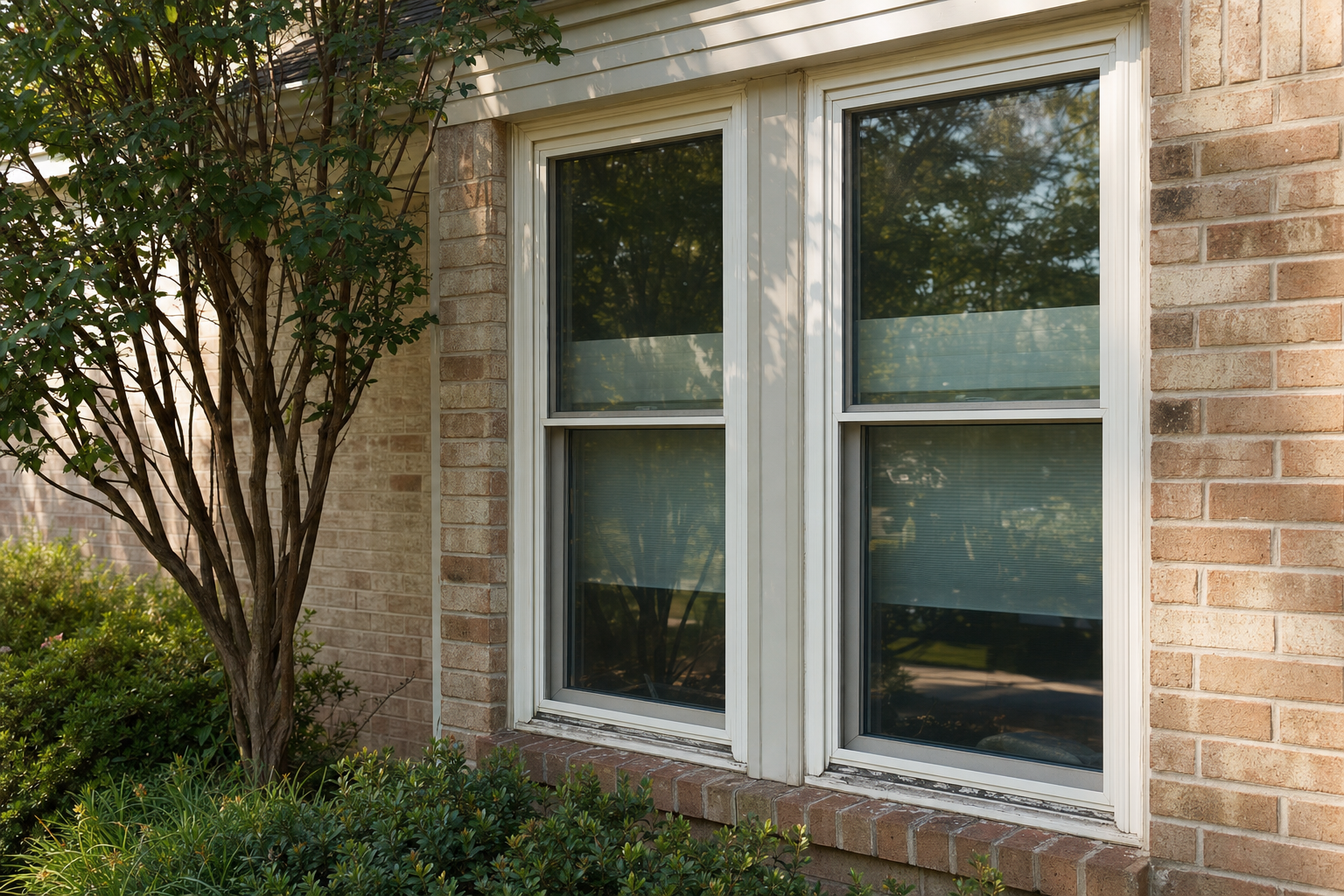
The exterior sealant around Houston windows and doors is under maximum thermal stress right now — it survived the heat, and it is about to swing through 30F overnight when the first north front comes down. Walk the exterior with a flashlight in low sunlight and look for hairline cracks in sealant beads at the window sill, jamb, and head. Interior signals to add to the walk include daylight visible around door thresholds and cool air infiltrating around window trim when the AC is running.
This is not about replacing windows — it is about catching seal failures while they are still a caulk-and-sealant repair rather than a wall-cavity problem later in the year. Related DC Pines pieces include the SHGC / NFRC label guide and Low-E coating explainer for homeowners who are separately evaluating replacement windows.
Grading, Landscaping, and Documentation
Step back to the property line and check the 30-foot view of the house. Late September is when landscaping has grown into gutter runs, tree limbs now overhang parts of the roof they did not overhang in April, and mulch or landscape edging has drifted up against siding or slab. Overhanging limbs shed leaves directly into gutters and abrade shingle granules in the wind. Mulch or soil in contact with siding or brick weeps holds moisture against the wall assembly, which is the last thing a Houston house wants going into a wetter fall.
Trim limbs so no branch is within about six feet of the roof surface. Pull mulch back to a two-inch gap from siding and confirm slab weep holes in brick veneer are visible and clear. The DC Pines Kingwood tree canopy guide and Memorial canopy planning guide cover the tree-and-canopy side of this in detail.
Close the walk with photo documentation. A homeowner who spends 20 minutes walking the exterior with a phone camera captures the current condition of the roof, gutter runs, downspout discharges, seal beads, and landscaping. That set of images becomes the baseline against which fall and winter problems get compared. If a downspout starts overflowing in November, the September photo tells whether the trough was already partly blocked or whether something changed.
The Bottom Line
A Houston late-September home checklist is a low-cost, high-signal walkthrough that catches attic ventilation, roof, gutter, window seal, and drainage issues while their heat-season symptoms are still visible. Every item on the list has a clear next step — reseal, reset, retrim, or schedule a professional walk with photo documentation. Done well, the first north cold front finds a house that is already sealed, drained, and ventilated correctly.
Get a documented Houston roof and exterior review before winter.
DC Pines Roofing walks the roof, checks attic ventilation, and photo-documents gutter, downspout, and seal conditions homeowners can act on.