
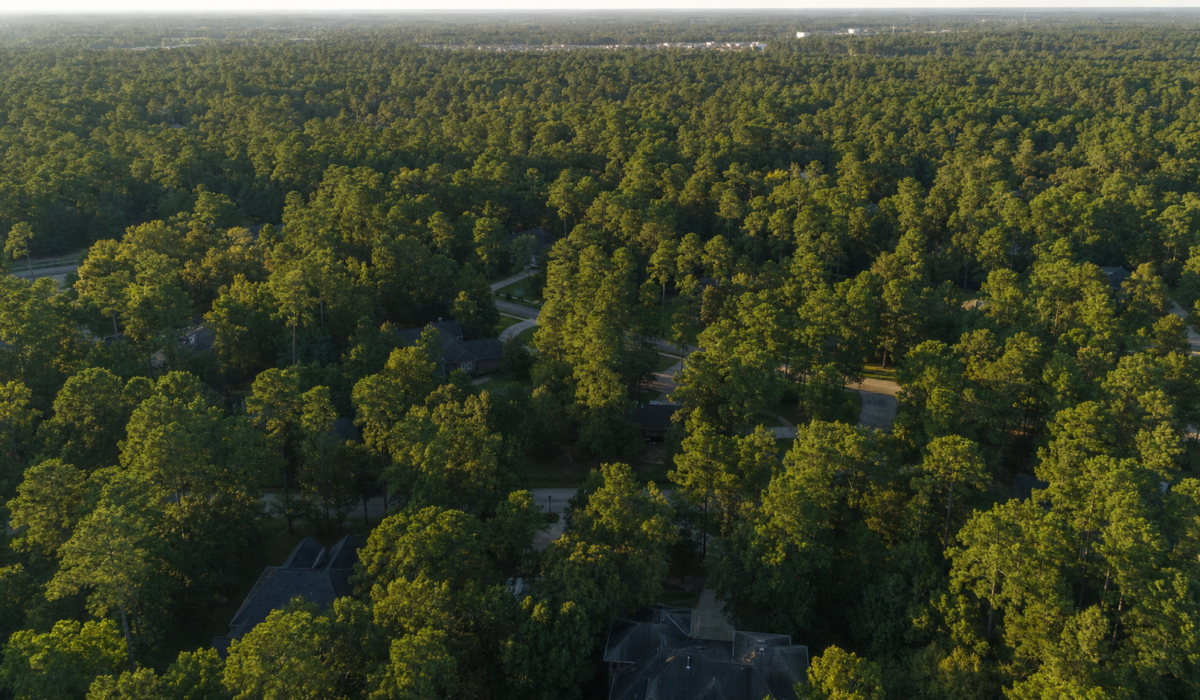
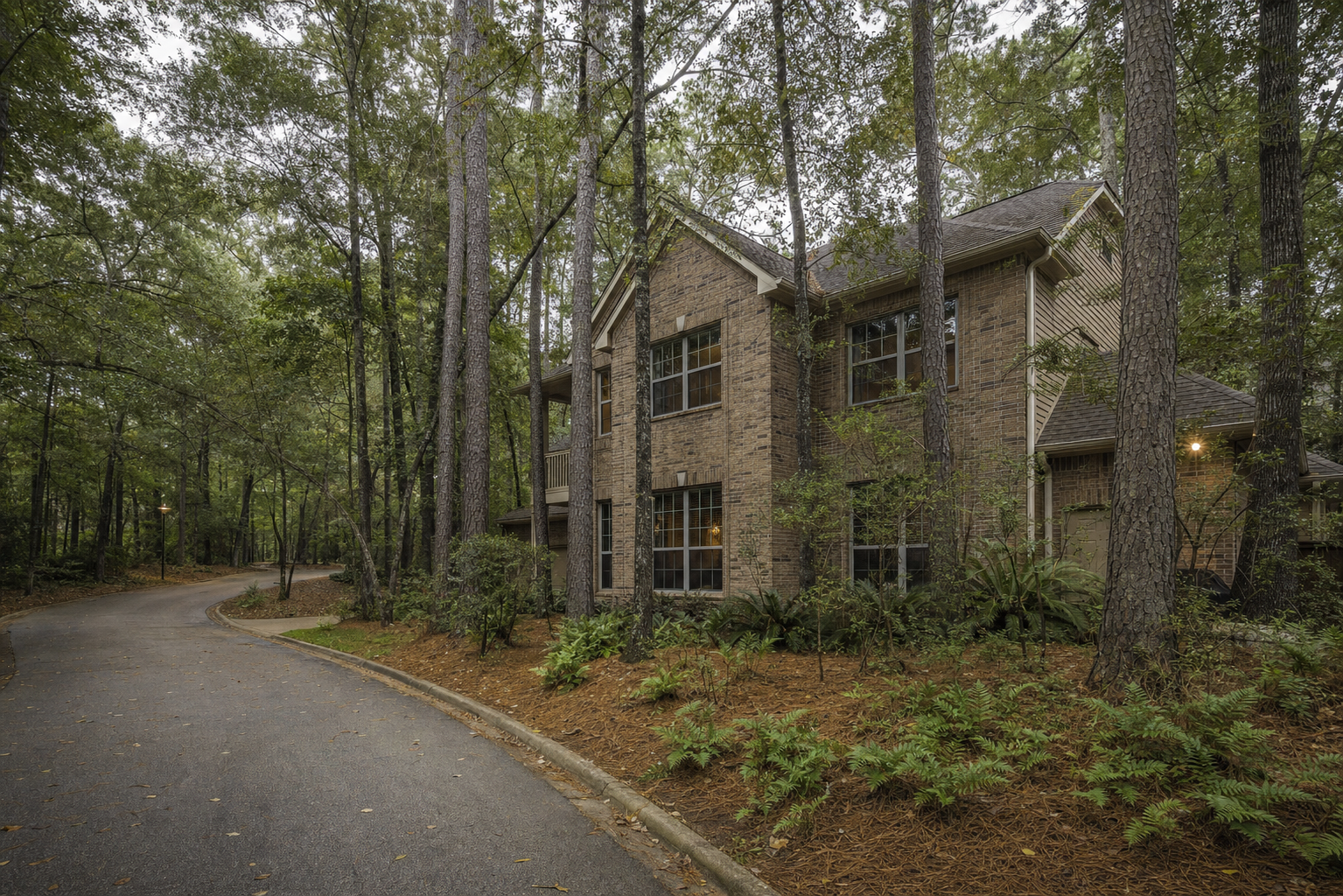
Kingwood is not a typical Houston suburb, and Kingwood homes are not typical Houston homes. When developer Friendswood Development platted the community in 1971, the master plan preserved the towering loblolly pine and hardwood canopy that gave “The Livable Forest” its name — and that same canopy is the single biggest factor a Kingwood homeowner has to manage on their roof, gutters, and attic year after year. A specific approach to Kingwood Houston roof maintenance pays off in shingle life, gutter reliability, and cooling costs.
This post is a practical field guide to how a Kingwood home exterior actually behaves under all that shade — what the pine straw, oak leaves, and constant humidity do to shingles and aluminum, how often those gutters really need to be cleaned, and what a homeowner should specify differently on a Kingwood roof replacement compared to a wide-open subdivision in Cinco Ranch or Cypress.
The Canopy Is the Design — and the Ongoing Homework
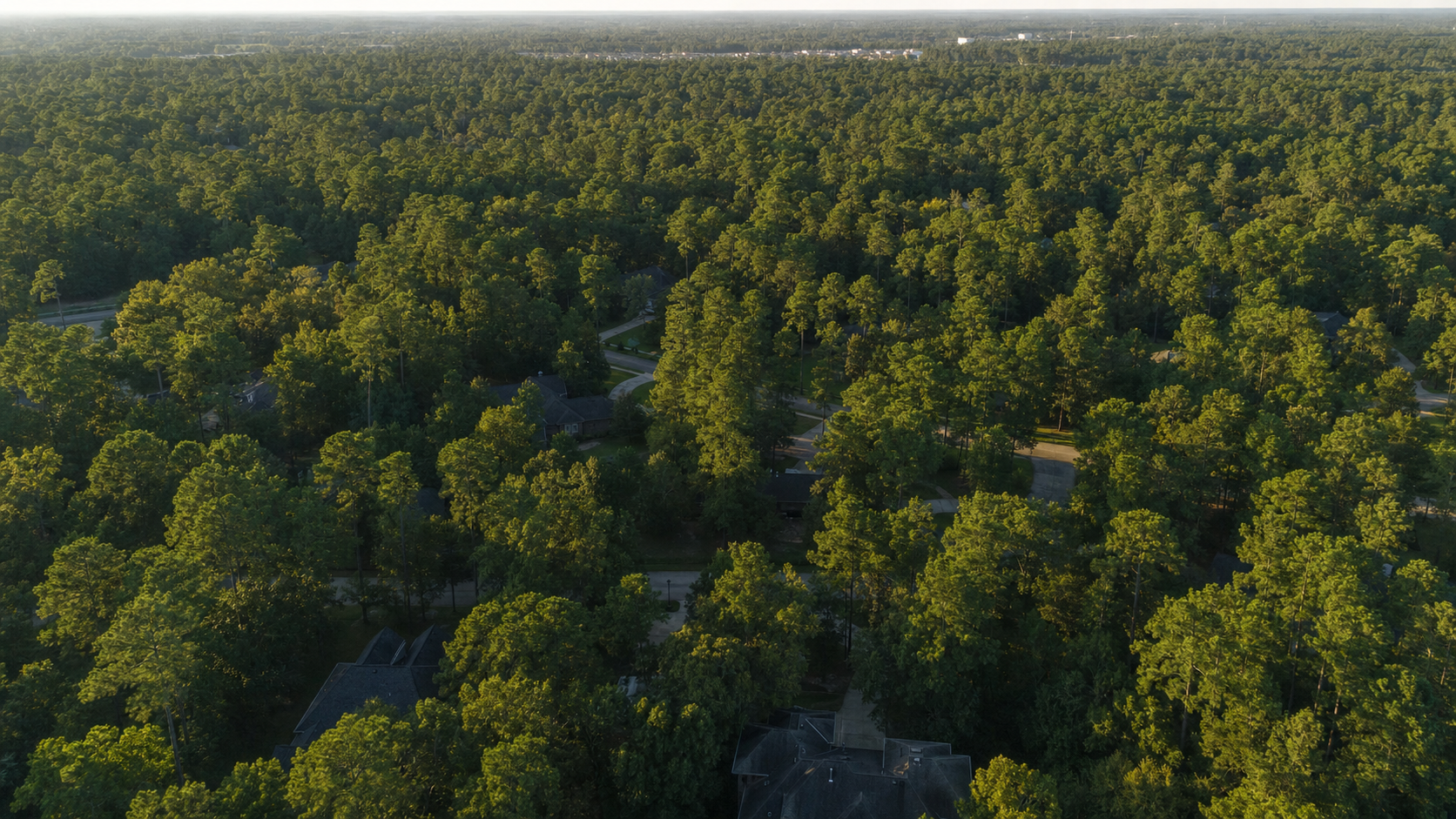
Kingwood’s deed restrictions and the community association’s tree protection standards were written specifically to keep the forest intact. That is why the neighborhood feels the way it does, and it is why standard suburban roof and gutter advice does not quite fit here. A home in a treeless subdivision might get away with an annual gutter cleaning and a shingle sweep every couple of years. A Kingwood home does not.
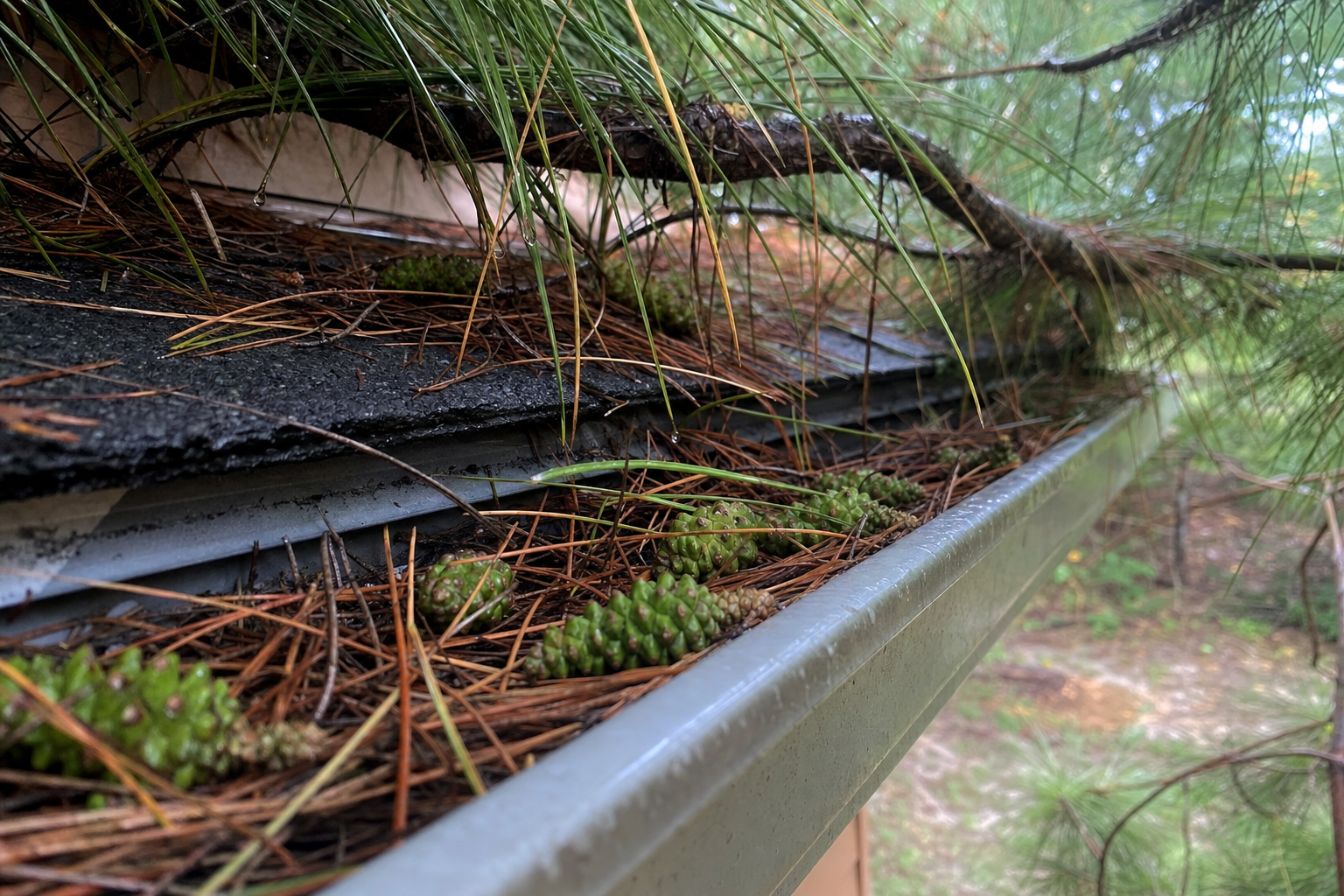
Loblolly pines shed catkins heavily in spring, drop pine straw year-round, and release small green cones that jam gutter mouths. Overhead water oaks and sweetgums add leaves in fall and sweetgum balls that clog downspout inlets. On top of all that, the canopy holds humidity around the eaves, so debris in a Kingwood gutter tends to become a wet mat quickly rather than blowing away in a dry breeze.
What the Trees Do to Kingwood Gutters
Aluminum 5-inch K-style gutters — standard on most Kingwood homes — hold a specific amount of water per linear foot and depend on unobstructed downspout inlets to keep up with a Houston-scale downpour. Under a heavy pine canopy, three specific failure modes are common.
Pine-straw pack at the outlet
Pine needles align themselves along the trough and wad tightly at the downspout drop-outlet. Water backs up, spills over the front edge, and runs down the fascia — the exact opposite of what the gutter is there to do. Because pine needles are narrow, they slip through many older screen-style guards designed for oak leaves.
Sweetgum ball and small-branch dams
Sweetgum balls collect at inside miters and downspout inlets and act as a dam. A single storm can back up an entire run behind one clog. Homeowners often notice the streak on the fascia before they notice the dam upstream.
Green algal biofilm inside the trough
Constant shade and moisture keep the interior of the gutter damp long after a rain event. A thin green biofilm forms on the aluminum and gives new debris something to stick to, which compounds every subsequent cleaning cycle.
What the Canopy Does to a Kingwood Roof
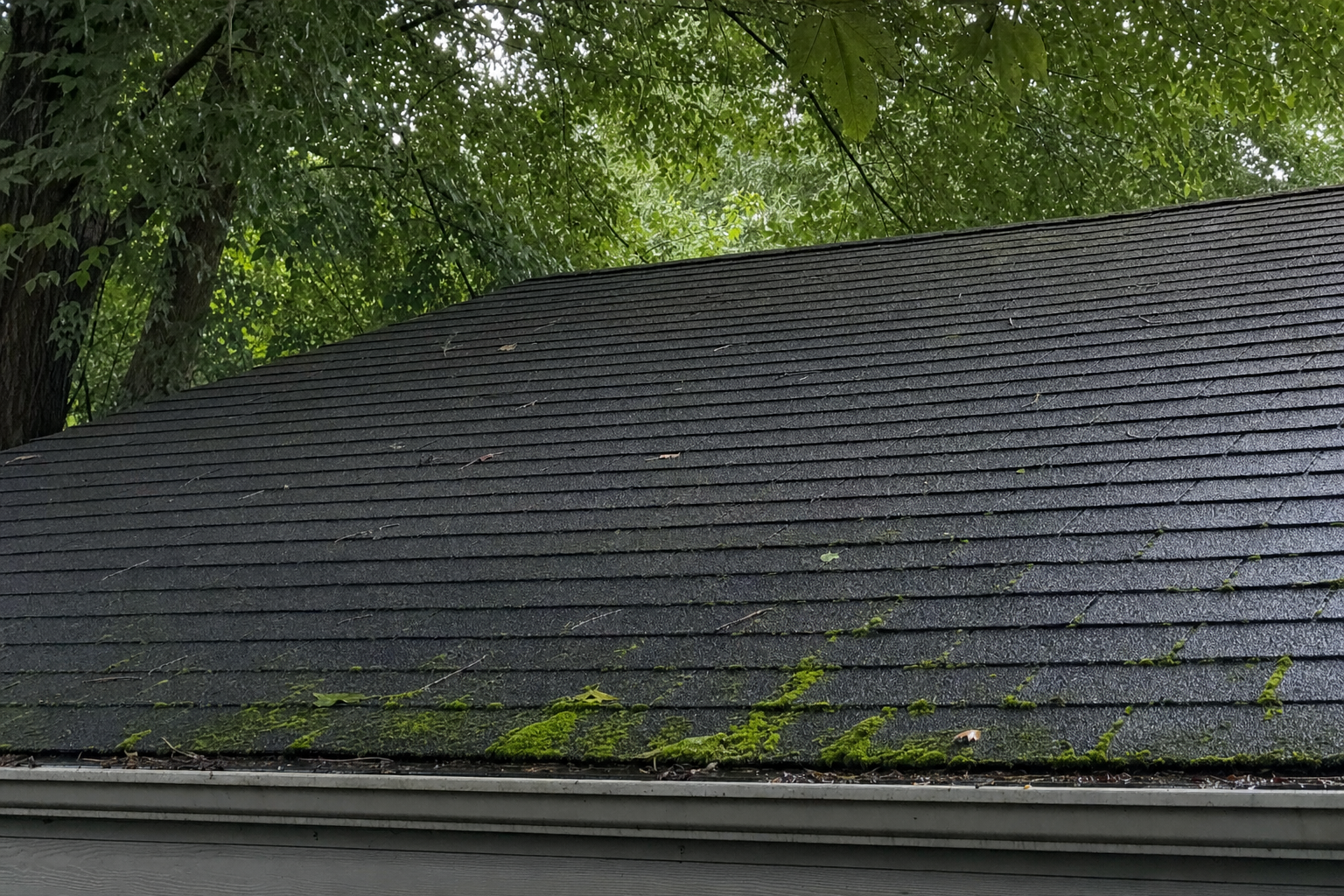
The most visible symptom on a Kingwood roof is streaking on the shaded planes — usually the north-facing side and any dormer or wing that never quite dries out. Those dark streaks are Gloeocapsa magma, a common algae that eats the limestone filler in asphalt shingles. It is cosmetic at first and functional over time: as the algae and moss digest the shingle mat, granule loss accelerates and the roof loses its UV protection years earlier than the wide-open version of the same roof would.
The second, less visible issue is physical abrasion. Overhanging branches that touch or scrape the roof deck in a light breeze wear granules off the surface — always in the same spots — and can lift shingle tabs on windy afternoons. Kingwood roof inspections should always include a specific look at where branch tips are landing on the deck.
What to Specify on a Kingwood Roof Replacement
A roof replacement in Kingwood is a chance to solve the canopy problem structurally rather than fighting it every year. A few specifics are worth calling out on the scope of work.
Algae-resistant architectural shingles with copper granules. Copper is toxic to Gloeocapsa magma, and the copper granules embedded in the shingle surface release trace amounts every time it rains — enough to suppress algae growth for the life of the warranty. Most major shingle manufacturers offer a StreakFighter-, ClimaFlex-, or 3M Scotchgard-branded algae-resistant line at a small premium.
Proper attic ventilation math. The International Residential Code’s Chapter 8 ventilation provisions require 1 square foot of net-free ventilation area per 150 square feet of attic floor (or 1:300 with proper vapor-retarder and balanced ridge-and-soffit split). Under canopy, blocked soffit vents are common — the intake calculation on paper is not the intake reality on the roof.
Wider drip edge and generous kickout flashing. Kingwood’s constant leaf load means water will occasionally sheet over the gutter edge. Wider drip edge and correctly installed kickout flashings at wall-roof intersections protect fascia and siding when the gutter is temporarily overwhelmed.
Six-inch gutters and oversized downspouts on canopy-heavy elevations. Upsizing from 5-inch to 6-inch gutters, and from 2×3 to 3×4 downspouts, roughly doubles the capacity of the system — enough to keep up with a debris-loaded storm event.
A Realistic Kingwood Maintenance Rhythm
A homeowner in a treeless subdivision may only think about their roof once a decade. A Kingwood homeowner benefits from a lighter but more frequent rhythm.
Quarterly gutter clearing in most years, with an extra visit in mid-spring after pine catkin drop and again in late fall after the hardwoods finish shedding. If micro-mesh guards are installed, the cadence drops to twice a year but the eaves still need a top-side sweep.
Annual roof visual inspection — ideally from the ridge, not the ground — to check shaded planes for streaking, look for lifted tabs under branch strikes, and confirm that soffit vents are still clear. This is the single most valuable annual habit in Kingwood and takes an experienced installer about an hour on a typical two-story home.
Branch clearance every two to three years. The community’s tree-protection standards protect the canopy, but they do not forbid trimming branches that are physically touching a roof deck. A qualified arborist working around Kingwood’s tree rules can keep the canopy intact while removing the specific limbs abrading the shingles.
Related Reading from the DC Pines Education Center
For more on how Houston’s climate and tree canopy shape a home exterior, see how algae-resistant shingles and copper granules stop the black streaks on shaded Houston roofs, the gutter-guard buying guide for live oak and pine debris in Houston, and the parallel exterior-maintenance rhythm for a Woodlands home.
The Bottom Line for Kingwood Homeowners
The Kingwood canopy is the reason the neighborhood feels different from the rest of Houston, and it is also the reason a Kingwood roof and gutter system needs a slightly different playbook. Homeowners who lean into that reality — algae-resistant shingles, oversized gutters, quarterly clearing, and a real annual roof look — get to keep the forest without paying for it every ten years with a premature roof replacement or a rotted fascia.
Living under the Kingwood canopy? Get a real roof and gutter game plan.
DC Pines Roofing works across Kingwood and the greater Houston area — algae-resistant shingle specs, oversized gutter systems, and honest annual inspections.