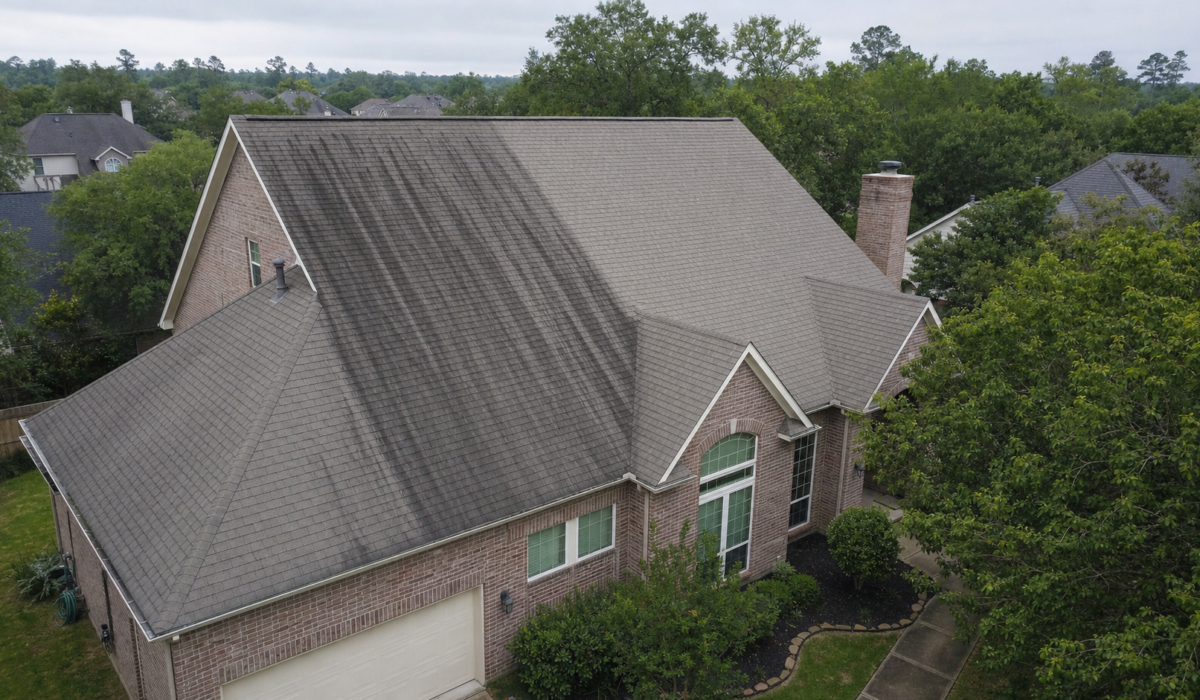
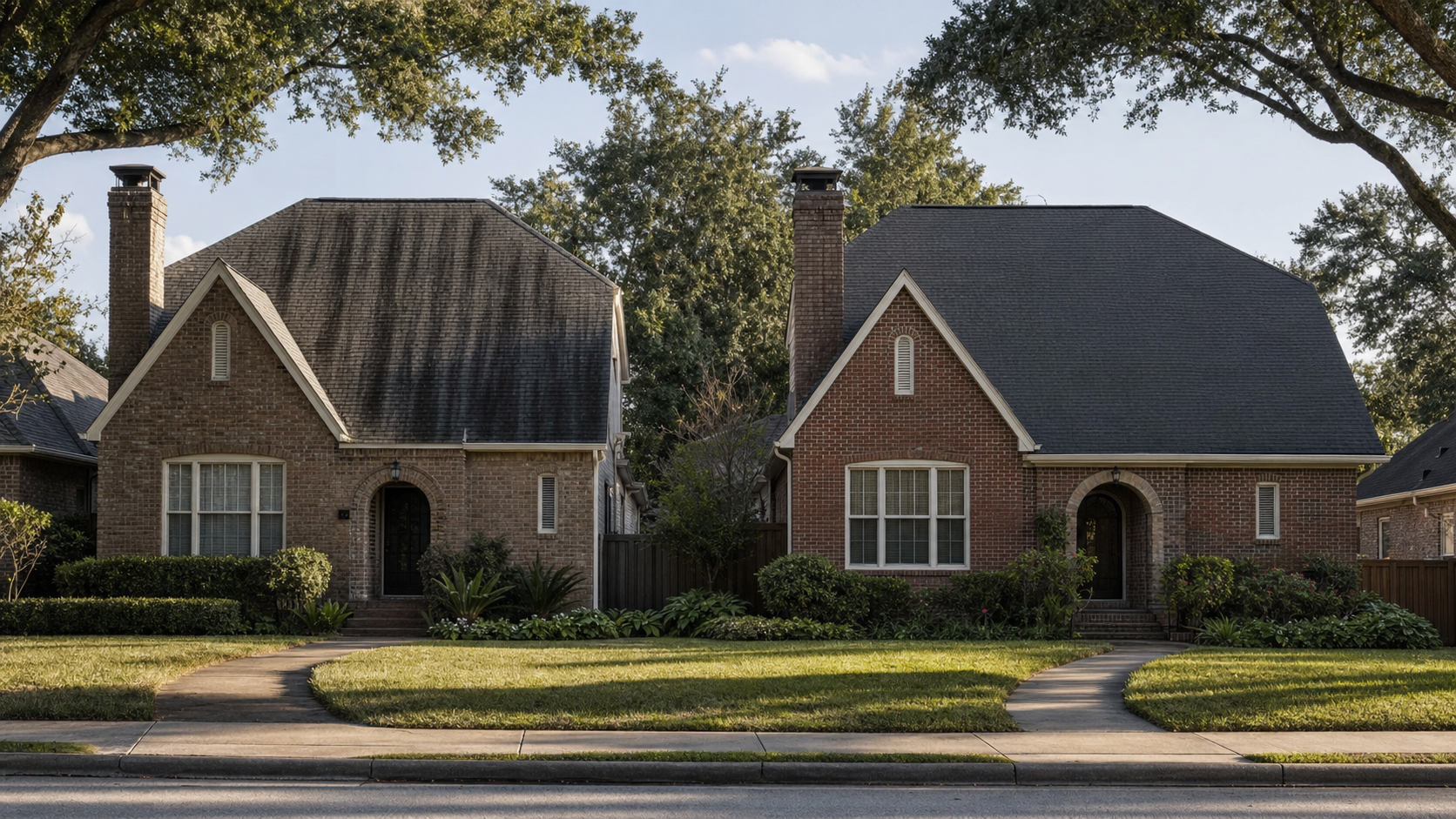
Dark vertical streaks running down a Houston roof are almost never dirt. They are colonies of a hardy cyanobacterium, and the reason some homes on the same block show them at year three while others still look clean at year fifteen comes down to the granule spec on the shingle itself.
The DC Pines Education Center walks through why Houston algae resistant shingles perform differently from standard shingles in this climate, how the copper-granule chemistry actually works, and what the manufacturer warranty language really covers when discoloration shows up.
What Causes the Black Streaks on Houston Roofs
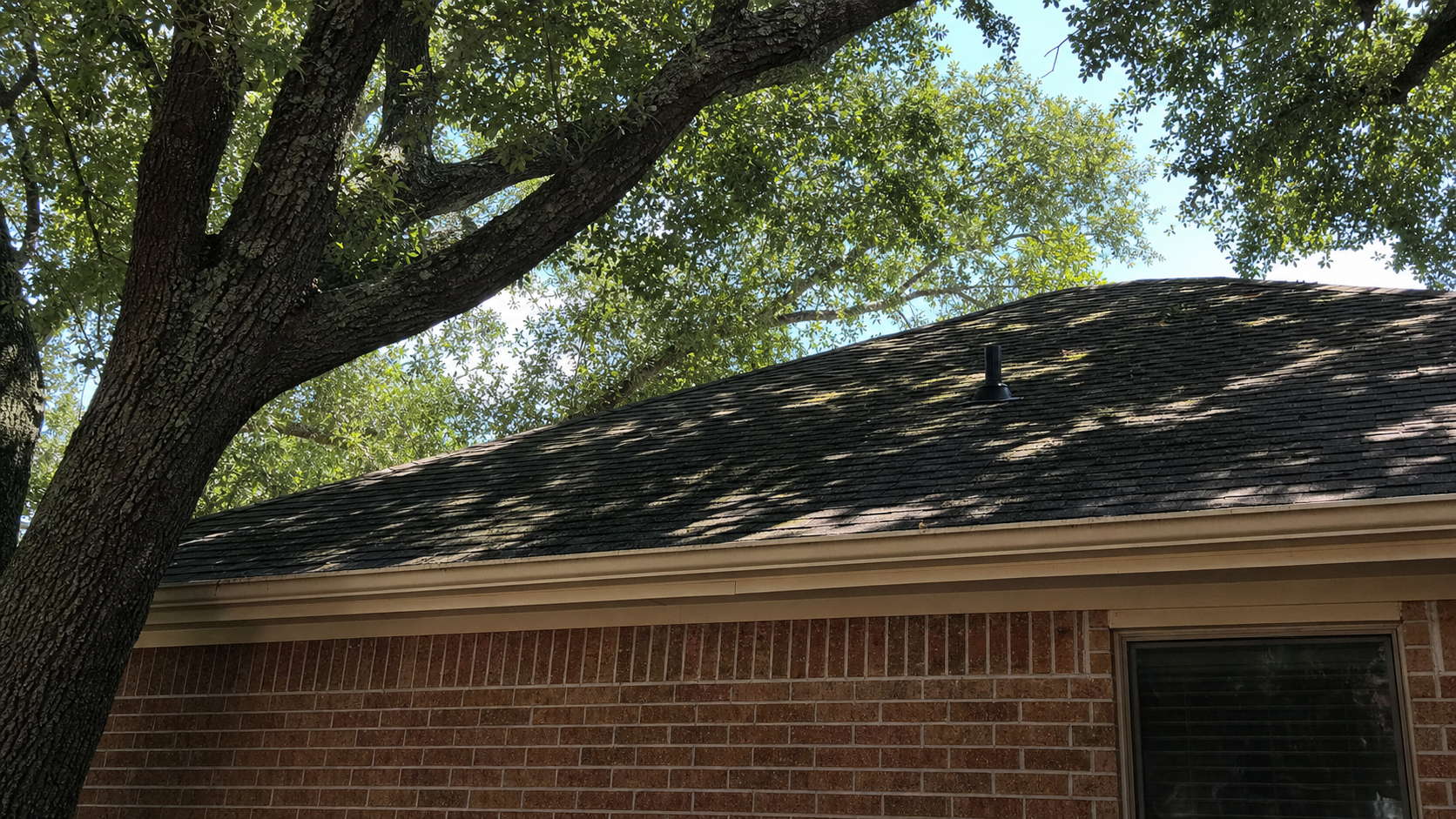
The streaks are colonies of Gloeocapsa magma, a blue-green cyanobacterium that thrives on warm, humid, north-facing roof slopes. Spores drift on the wind, land in the gaps between granules, and colonize the shingle surface wherever moisture lingers. Once established, the colonies release a dark UV-protective sheath that gives the streaks their signature black-to-gray appearance.
Houston is essentially a laboratory-perfect environment for the organism: 90-plus percent relative humidity most summer mornings, mild winters that never break the growth cycle, and mature tree canopy that keeps north slopes shaded. The NRCA algae discoloration bulletin documents the same pattern across the humid southeastern U.S. and confirms the organism as the primary cause rather than dirt, mildew, or shingle defect.
How Houston Algae Resistant Shingles Actually Work
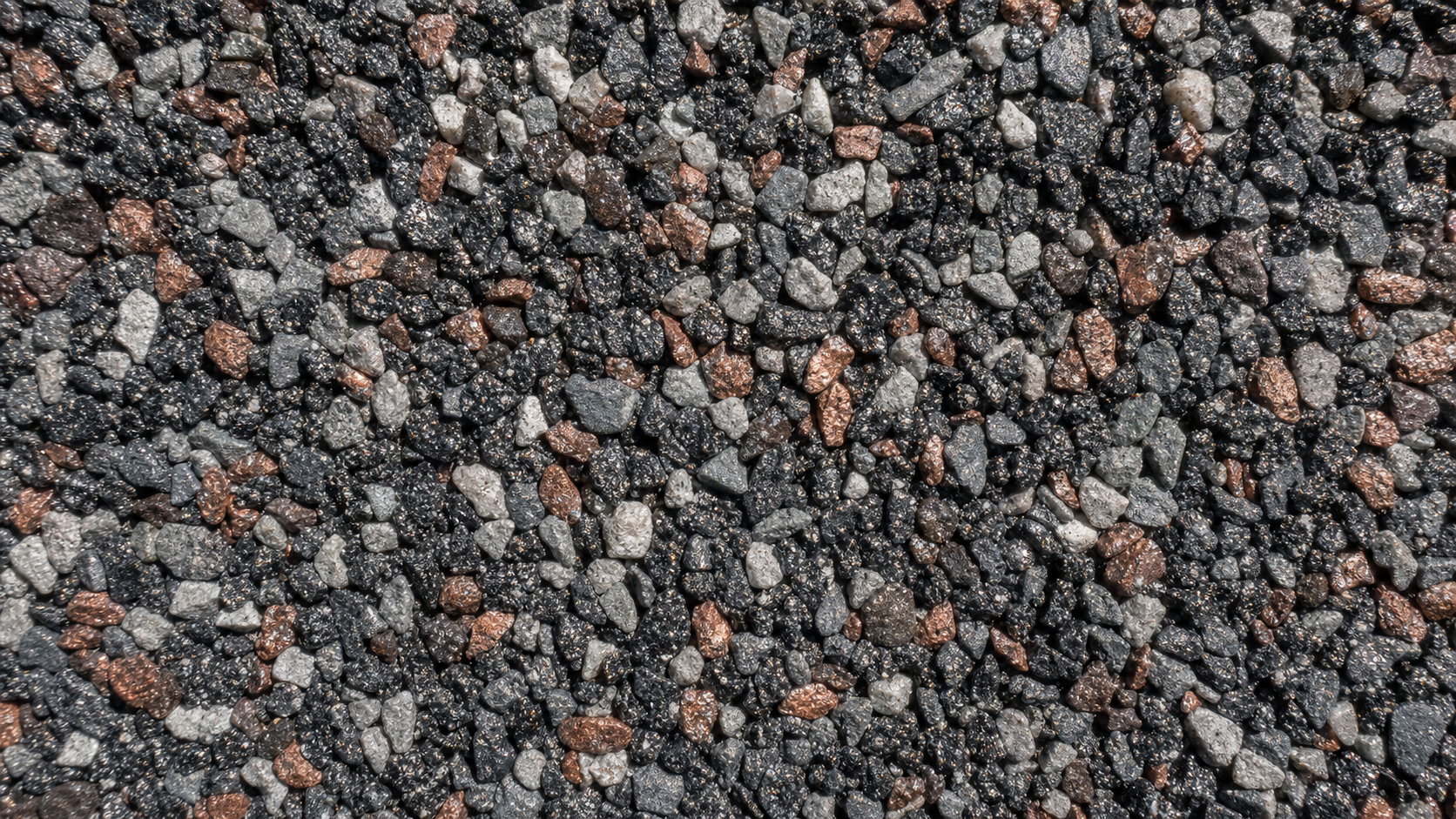
Algae resistant shingles are manufactured with copper-containing granules blended into the ceramic-coated mineral surface. The most common configuration is copper-coated zinc particles embedded alongside standard granules at a controlled ratio. When rainwater hits the roof, trace copper ions leach out across the shingle face — enough to make the surface hostile to Gloeocapsa without visibly changing the shingle color.
A peer-reviewed three-year weathering study in the hot humid climate of Houston tested copper-treated granule panels and confirmed the mechanism works under real Houston exposure. The protection level scales with granule concentration — premium products list their algae warranty term as a proxy for how heavily the copper granules are dosed on the shingle surface.
Reading the Algae Warranty on a Houston Shingle
Not every shingle labeled “algae resistant” carries the same protection. The warranty term printed on the wrapper is the fastest way to compare products.
10-year algae warranty
Entry-level algae resistance, common on builder-grade shingles. Enough copper to slow initial colonization but typically the first product line to show streaking after year eight to ten in Houston.
25-year algae warranty (StainGuard Plus and equivalent)
The current mainstream tier for architectural shingles. Heavier copper granule dosage, and the warranty covers cleaning or replacement if pronounced discoloration appears during the coverage period.
30-year algae warranty (StainGuard Plus PRO and equivalent)
The premium tier, typically paired with designer or luxury shingle lines. Highest copper granule concentration currently on the market and the longest coverage term.
One critical detail buried in every algae warranty: coverage is limited to pronounced discoloration caused by blue-green algae specifically. Light staining, mildew, moss, lichen, and tree-sap discoloration are not covered on any tier. The GAF Shingle and Accessory Limited Warranty spells out the exact organism and coverage language.
What Houston Homeowners Should Match on the Roof
An algae warranty only applies to the components sold in packages bearing the algae logo. That means three roof components need to match to actually get the coverage:
- Field shingles — the main slope material. This is where most homeowners already check the label.
- Ridge cap shingles — the shingles that run along the peak of the roof. Manufacturers make matching algae-labeled ridge cap; standard cut ridge cap does not carry the same protection.
- Starter strip shingles — the first course along the eaves. Some algae warranties extend to starter, some do not; the label on the wrapper is what governs.
Mixing tiers dilutes the coverage. A 30-year algae field shingle paired with a 10-year algae ridge cap gets the 10-year coverage at the ridge. Related coverage on Houston shingle nailing standards explains why matching accessories is one of the recurring line items that separates a code-minimum install from a warranty-eligible install.
Why the North Slope Streaks First in Houston
North-facing slopes stay damp longer after morning dew and afternoon storms. In the Greater Houston area, north slopes under a mature live-oak canopy can hold surface moisture for 6 to 10 hours a day during the growing season, which is more than enough for Gloeocapsa colonies to establish and spread.
South-facing slopes get direct sun that dries the surface quickly and pushes UV exposure to levels the organism cannot tolerate. That is why most Houston roofs show streaking on the north side years before any visible discoloration appears on the south side.
Two practical implications for homeowners:
- Trim tree limbs back from the roof line where feasible — sun and airflow slow colonization more than any cleaning product.
- If a roof is already streaking, cleaning treats the symptom but not the cause. A soft-wash contractor familiar with asphalt shingles is the correct call; pressure washing strips granules and voids the shingle warranty. Related coverage on Houston heat and shingle aging explains the granule-loss failure mode in detail.
The Bottom Line on Houston Algae Resistant Shingles
The black streaks on Houston roofs are cyanobacterial colonies, not dirt, and the way to prevent them is a shingle with heavier copper-granule dosage across the field, ridge cap, and starter strip. The algae warranty term (10, 25, or 30 years) is a direct proxy for how much copper the manufacturer built into the granule blend. Matching that spec across every roof component — not just the field shingles — is what actually delivers a clean roof at year ten and beyond.
Frequently Asked Questions
What are the black streaks on my Houston roof?
They are colonies of Gloeocapsa magma, a blue-green cyanobacterium that thrives on warm, humid, north-facing roof slopes. The dark appearance comes from a UV-protective sheath the organism produces, not dirt.
Do algae resistant shingles cost more?
Premium algae resistant shingles (25 or 30-year algae warranty) typically add a modest per-square premium over 10-year algae products. The delta is usually small next to the total installed cost of a Houston re-roof.
Does the algae warranty cover cleaning?
Most algae warranties cover the reasonable cost of a commercial cleaning, or replacement at the manufacturer’s option, if pronounced discoloration appears during the coverage period. Coverage prorates over time and is limited to shingles, ridge cap, and starter labeled with the algae logo.
Can I clean the streaks off myself?
A soft-wash treatment applied by a contractor familiar with asphalt shingles will remove the discoloration without stripping granules. Pressure washing is not recommended and voids most shingle warranties by removing the ceramic granule coating.
Will a new roof stop the streaks permanently?
A new roof installed with algae resistant field shingles, ridge cap, and starter strip should prevent visible streaking for the algae warranty term (10, 25, or 30 years). Growth resumes once copper granule concentration falls below the protection threshold, which is why the higher tiers last longer.
Talk to DC Pines About Algae Resistant Shingles
Houston homeowners choose DC Pines for a straight walk-through of shingle spec, algae warranty tiers, and what the estimate should actually cover.

Jeffrey Ternois
Jeff Ternois is the owner and founder of DC Pines Roofing, a veteran-owned roofing, gutter, and window company in Houston. A former U.S. Army Infantry Captain, he led an infantry platoon in Afghanistan and was awarded the Bronze Star Medal and the Combat Infantryman Badge. After the Army he earned an MBA focused on real estate and learned homebuilding from the studs out before founding DC Pines. DC Pines Education Center guides are published under his direction.