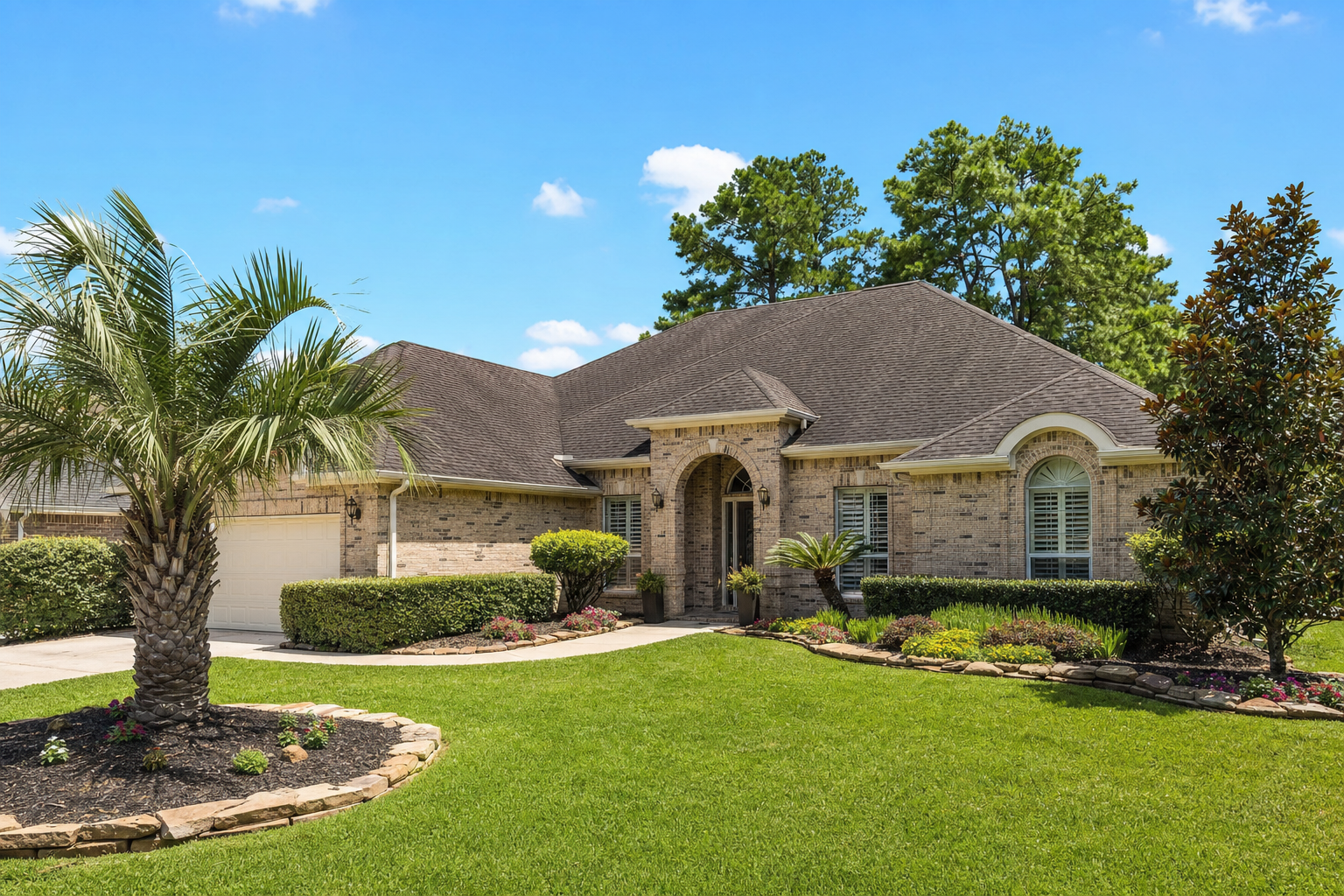
Houston attics run 140°. Yours doesn’t have to.
Blown-in fiberglass insulation, properly sized for Houston heat. We blow over what works, remove what doesn’t, sanitize what’s contaminated, and add baffles so your roof actually breathes.
Bad attic insulation costs you money every month you leave it.
Your AC is fighting a losing battle against a superheated attic sitting six inches above your ceiling. Undersized, compacted, or contaminated insulation isn’t just an efficiency problem — it drives real damage that shows up on your energy bill, your ducts, and your comfort.
Runaway cooling bills
An under-insulated attic radiates heat straight into your living space. Your AC never catches up, cycles constantly, and burns kilowatts through July and August.
Hot & cold rooms
Rooms under thin attic zones bake. Rooms over pantries and garages freeze. Uneven insulation is the number-one cause of comfort complaints in Houston homes.
Dust, dander & contamination
Old fiberglass batts absorb rodent waste, roof leaks, mildew, and shed particles into your return air. Symptoms: dust on every surface, allergies, musty smell.
Ice-cream-truck AC lifespans
Compressors that run 12 hours a day in July don’t last 15 years — they last 8. Cutting attic heat load extends the equipment you already paid for.
Attics in this city are their own climate zone.
A Houston attic in July peaks around 140°F on a still afternoon — the DOE’s building-science research puts unvented attic peaks even higher. That heat is trying to move through your ceiling drywall into your living space every hour of the day. The only thing standing in its way is your insulation.
DOE recommends R-38 to R-60 for our climate zone (Zone 2). Most Houston attics we crawl are sitting between R-11 and R-19 — the code from 30 years ago. That’s the delta between a comfortable house and one that fights you every summer.
Blow over what works. Remove what doesn’t.
Every attic is different. On the inspection, we look at what’s up there, why you’re calling us, and whether your existing insulation is worth keeping. Then we quote one of two paths — and you get a flat number for whichever one fits.
Blow over existing insulation
If your existing insulation is clean, dry, and undamaged — we blow new loose-fill fiberglass directly over the top to bring the whole attic up to R-49 or R-60. Fast, affordable, and no disruption to your ductwork or wiring.
- Best forHomes with R-13 to R-30 existing
- ProductOwens Corning ProPink
- Final R-valueR-49 or R-60 (your choice)
- Time on site3–5 hours typical
- DisruptionNone — no removal
Remove, sanitize, install new
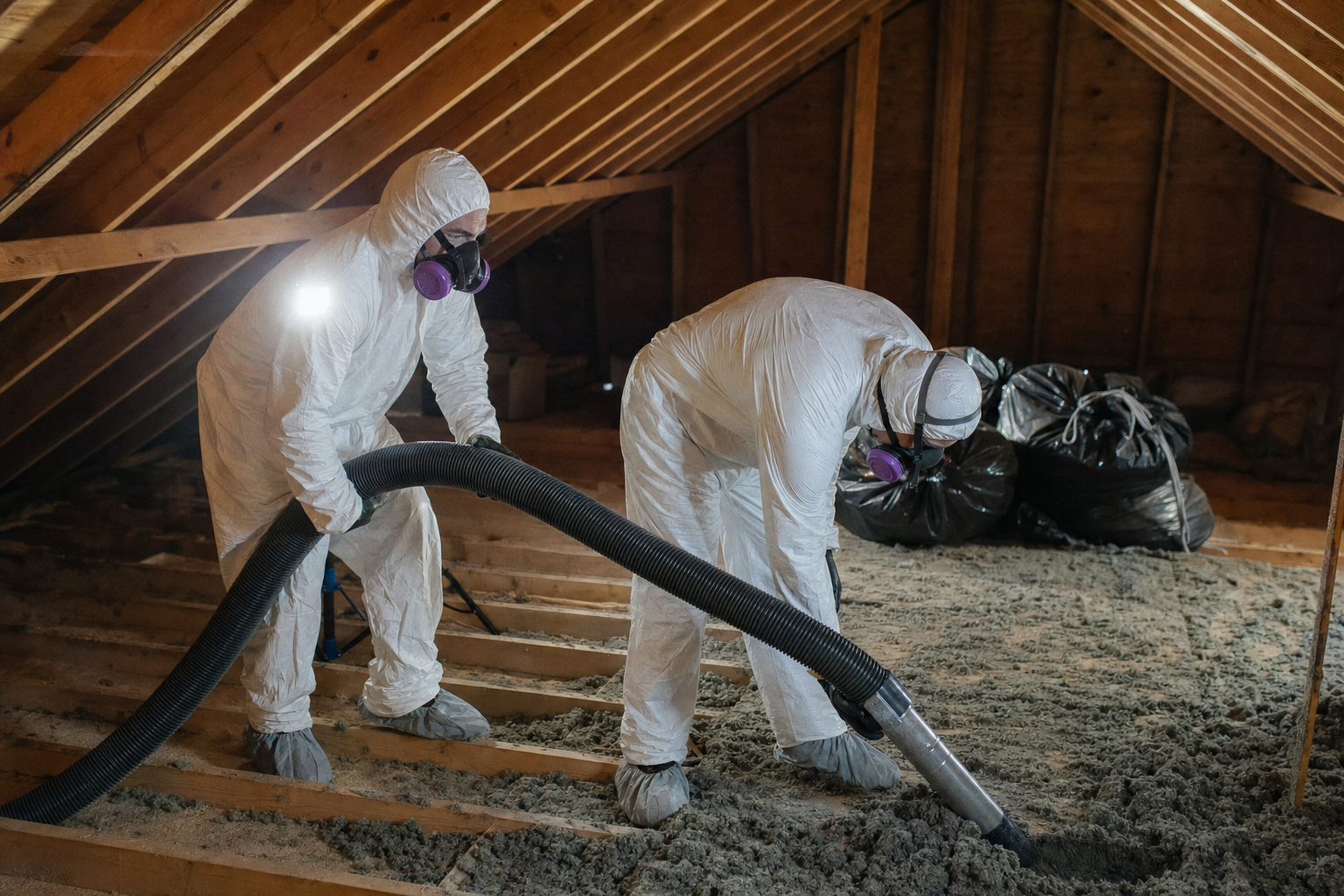
If we find rodent contamination, water damage, mildew, or compacted 30-year-old fiberglass — we do it right. HEPA vacuum the old material out, sanitize the decking with an EPA-registered antimicrobial, seal the top plates, then blow in fresh loose-fill to R-49 or R-60.
- Best forContaminated or damaged insulation
- RemovalHEPA vacuum + sealed bags
- SanitizeEPA-registered antimicrobial
- Air sealingFoam at top plates, penetrations
- Time on site1 day (most single-family)
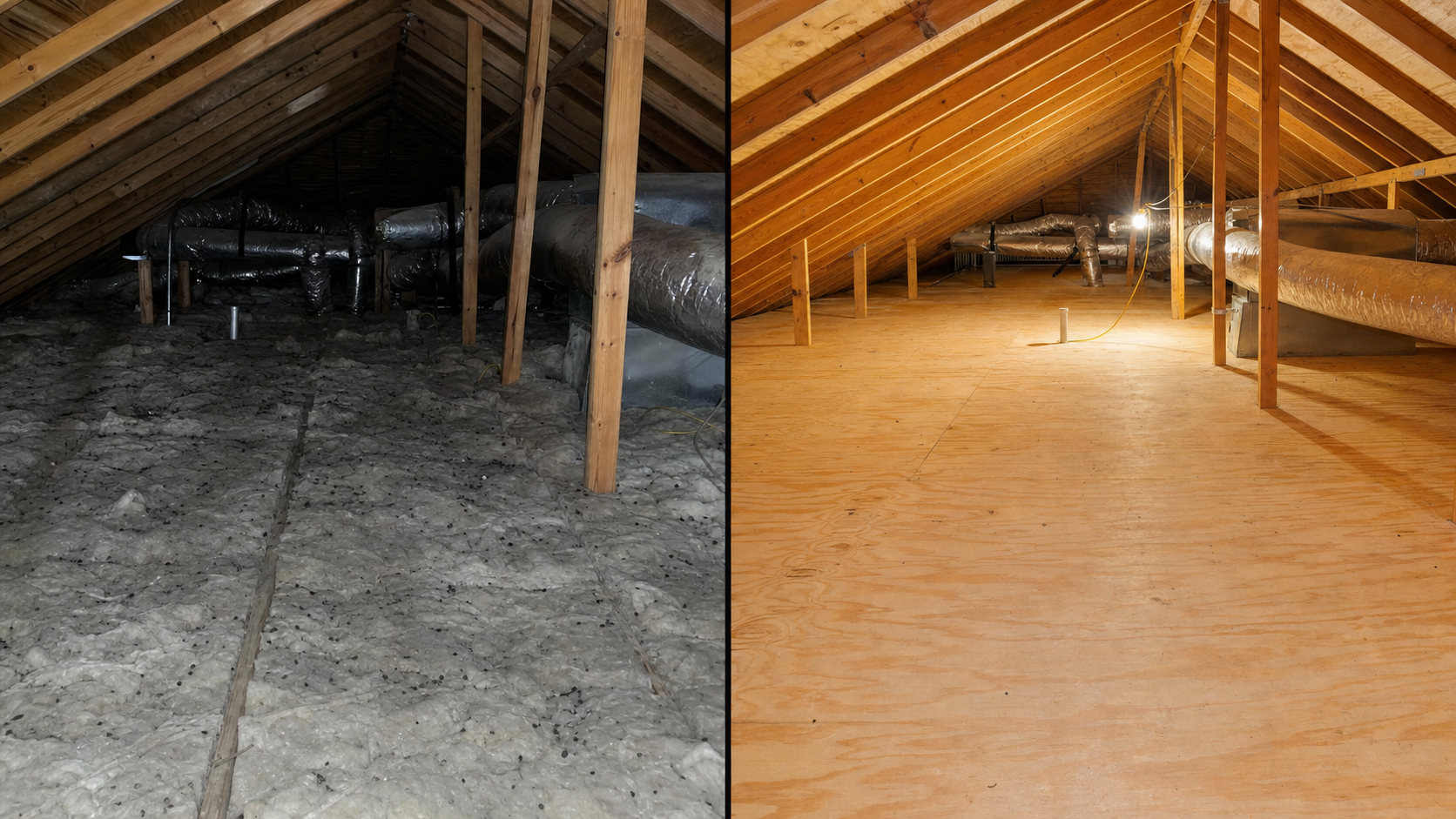
How much insulation your Houston attic actually needs.
R-value measures resistance to heat flow — higher is better. The Department of Energy sets its recommendations by climate zone, and Houston sits in Zone 2. Here’s how the numbers stack up in a working attic.
The Zone 2 scale — and where most Houston attics land.
These are the numbers straight from the U.S. Department of Energy’s Insulate and Weatherize guidelines for our climate. If your attic is under R-30, you’re leaving comfort and money on the table. Above R-49, returns start to flatten.
- R-11 to R-19Old code
- R-30 to R-38Minimum code
- R-49 to R-60DOE recommended
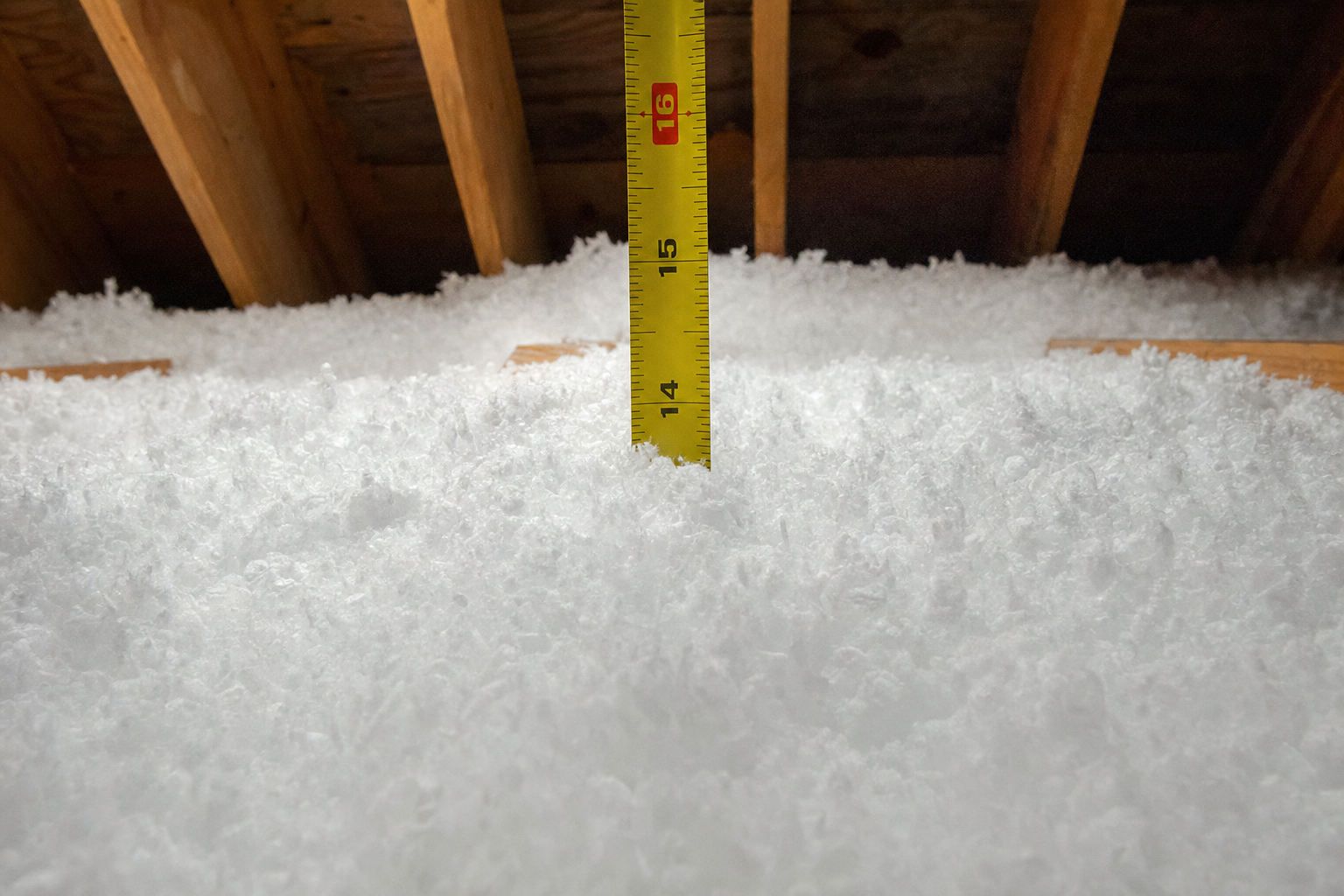
Three things that separate a real install from a filled attic.
Blowing insulation over the top of a broken attic is like putting a new roof over rotten decking. Before we insulate, we make sure the attic can breathe, seal, and stay dry. This is where most bargain-price installs go wrong.
Baffles at every eave vent
Rafter baffles keep loose-fill insulation from blocking your soffit vents. Without them, blown-in packs into the eaves and shuts off your intake air — the number-one cause of “mystery” attic moisture and shingle failure.
Air sealing at top plates
We foam every attic penetration before we insulate: bath fans, can lights, top plates, wire chases, HVAC boots. Insulation slows heat conduction — air sealing stops heat leakage. You need both.
Verified ridge / soffit balance
An attic needs balanced intake (soffit) and exhaust (ridge or gable) to work. We verify the ratio on inspection and flag anything that needs a vent upgrade before we blow in new material.
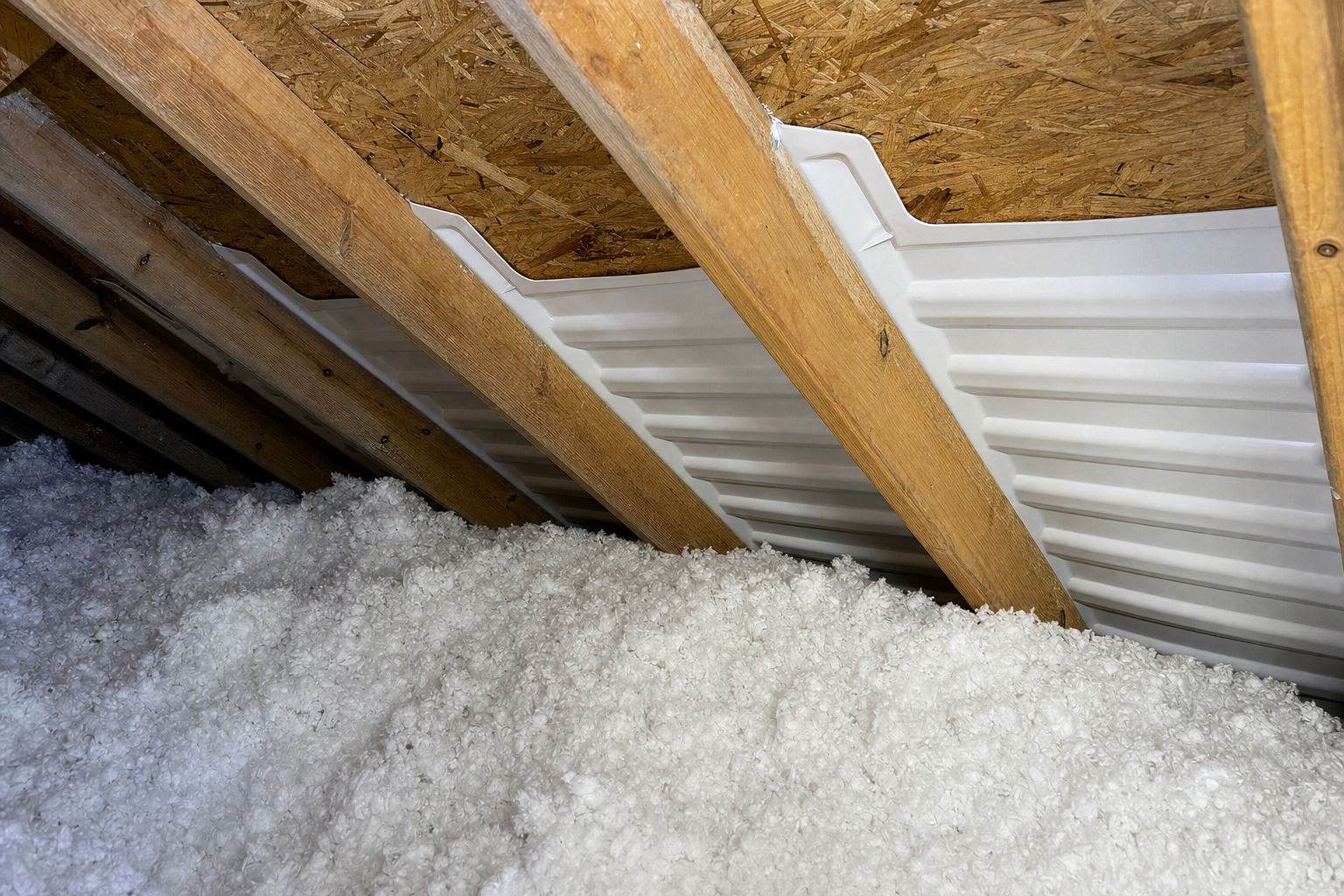
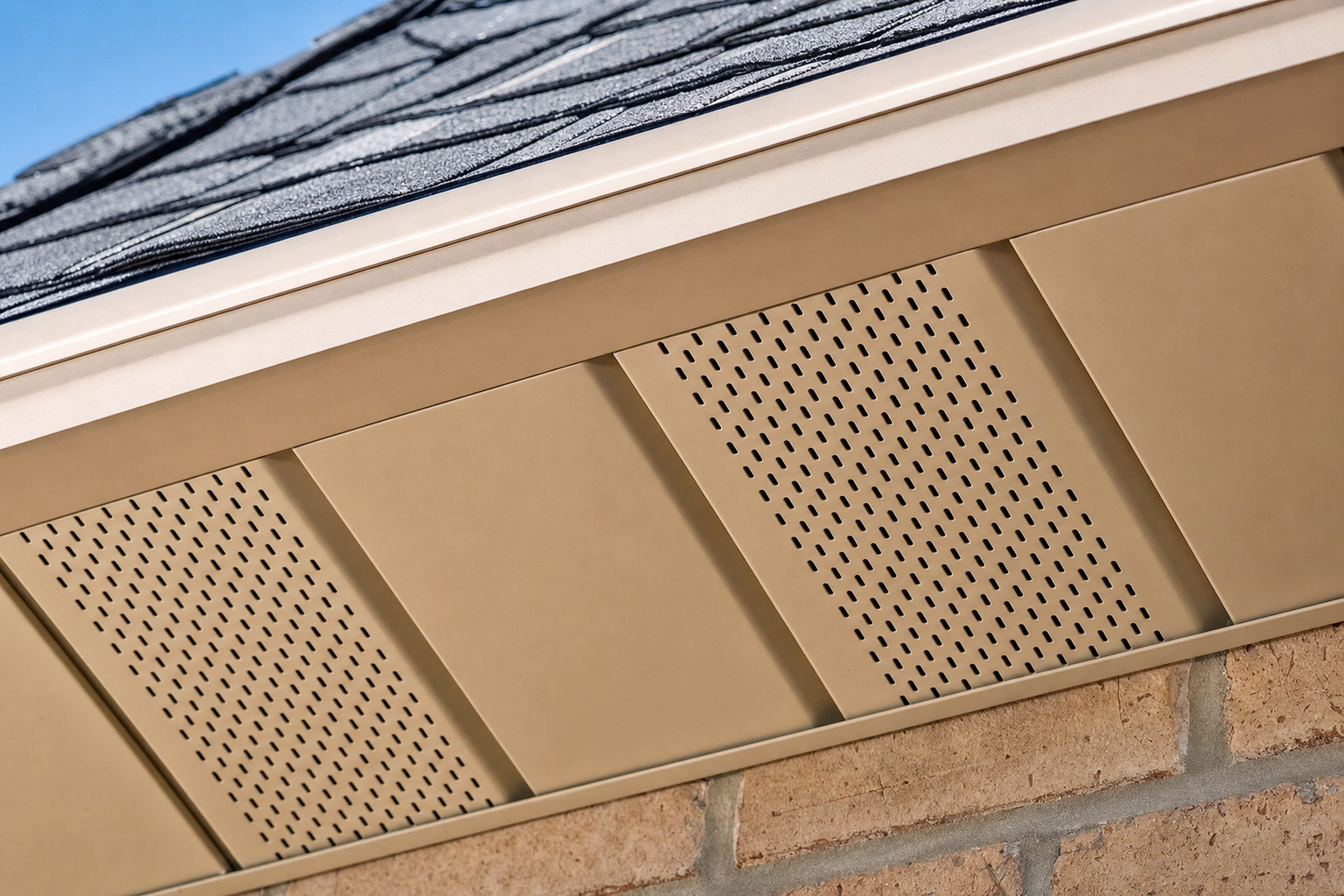
What a real install looks like — versus what most crews sell you.
| Feature | DC Pines | Bargain Insulation Crews | Big-Box "Blow-In Special" |
|---|---|---|---|
| Product | Owens Corning ProPink loose-fill | Generic fiberglass | Off-brand cellulose |
| Final R-value | R-49 or R-60 (verified w/ ruler) | “About R-38” | Whatever fits the quote |
| Baffles at eave vents | ✓ Installed on every job | ~ Sometimes | ✗ Rarely |
| Air sealing top plates | ✓ Foam-sealed pre-install | ✗ Not included | ✗ Not included |
| Contaminated old insulation | ✓ HEPA vac + antimicrobial | ~ Bag & toss | ✗ Blown over |
| Written R-value verification | ✓ Ruler photo + coverage chart | ✗ Verbal only | ✗ Not offered |
| Post-install walkthrough | ✓ Every job, before pay | ~ Sometimes | ✗ No |
| Written warranty | ✓ Lifetime, transferable | 1 year workmanship | Prorated / limited |
| Owned by a roofer | ✓ Yes | ✗ No | ✗ No |
We see the damage bad attics cause. Every week.
DC Pines is a roofing company first. That means when we crawl your attic, we’re checking the decking, the ventilation balance, the flashing at penetrations, and the moisture history — not just how deep to make the pile.
You don’t need someone who blows insulation. You need someone who understands how an attic actually works, and builds accordingly.
Get My Free Attic InspectionFour steps from first call to clean install.
Free attic inspection
We crawl your attic, measure existing R-value with a ruler, check baffles and ventilation, and photograph what’s up there. You get a written report — same day or next day.
Flat quote, two paths
You get one price for a top-up install and one for a full remove-and-reset. No pressure, no upsell — just the numbers and what each includes.
Prep & protect
We tarp the pathway from truck to attic, install baffles at every eave, foam-seal top plates, and — if it’s a reset — HEPA vacuum out the old material.
Blow, verify, walk it
Blow in Owens Corning ProPink to your chosen R-value. Verify depth with a ruler and coverage chart. Walk you through it, hand over paperwork, register warranty.
Answers to what most Houston homeowners ask.
How do I know if my attic needs more insulation?
Blown-in fiberglass vs. cellulose — which is better?
Should I remove my old insulation or just blow over it?
What are baffles and why do you insist on them?
How much will this actually save me on my bill?
Is blown-in insulation safe once it’s installed?
Do you handle rodent contamination?
What about my ductwork in the attic?
Ready for an attic that stops working against you?
Free inspection with a written R-value report. Same-day or next-day quotes. Flat pricing, no upsell.