
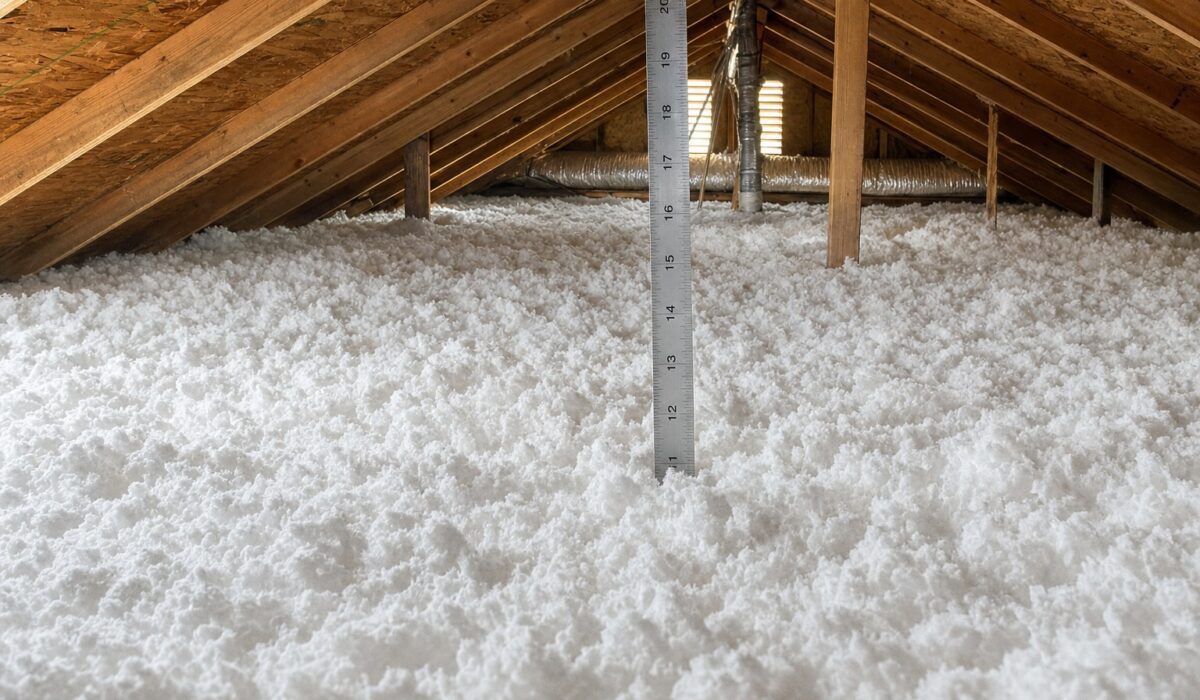
Houston attic insulation R-value is the single number that controls how much of the July sun ever reaches the ceiling below. In a climate where attic air routinely runs 130 degrees on late afternoons, every added inch of insulation is the difference between a 74-degree bedroom and an HVAC system that never gets to rest.
The Education Center gets asked about attic R-values more than any other efficiency topic. Texas cities adopted the 2021 IECC, and the prescriptive minimum for Climate Zone 2 attics jumped from R-38 to R-49 — a shift that resets the “how much do I really need?” conversation for 2026.
What R-value actually measures
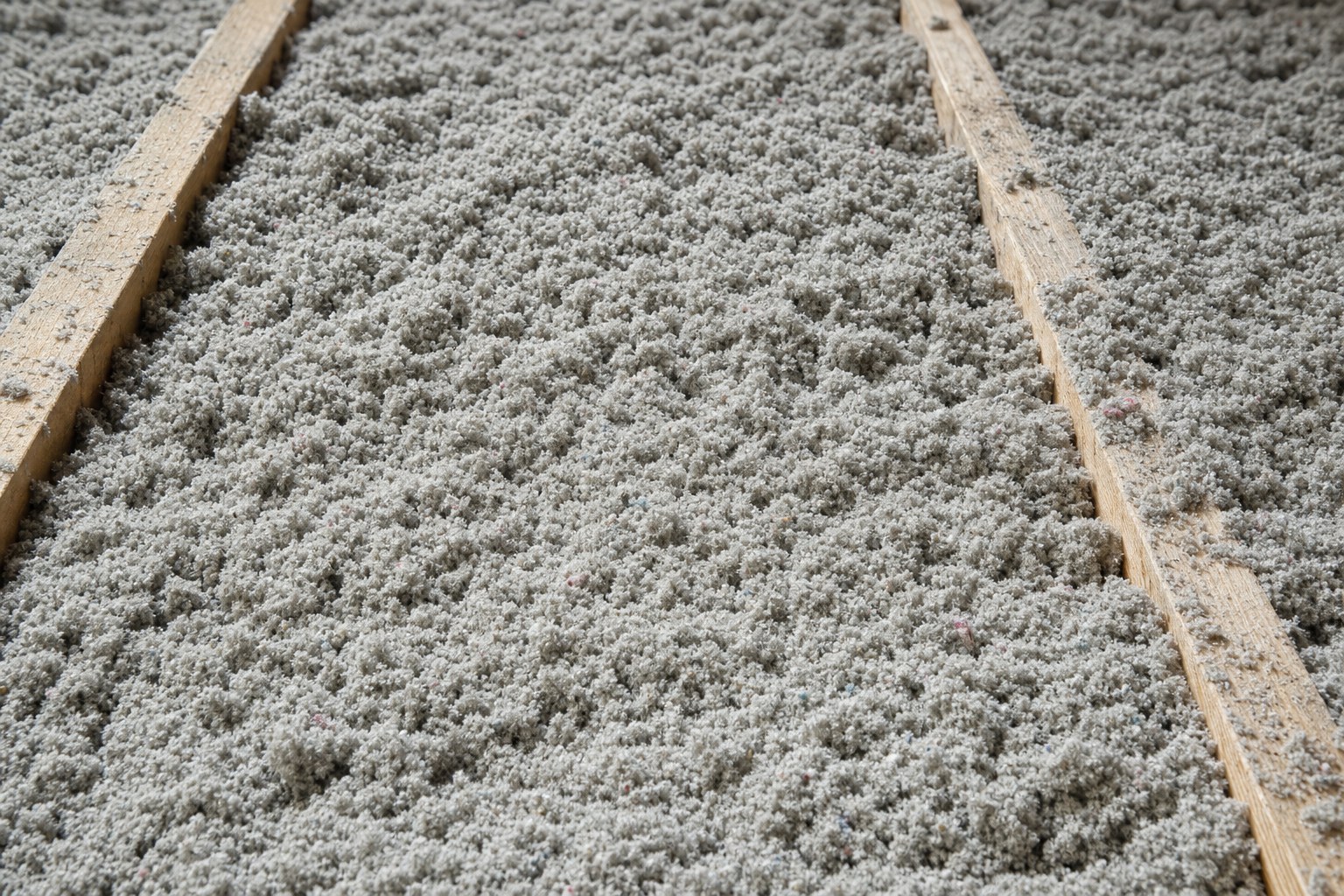
R-value is thermal resistance — how much a material slows heat flow. Higher numbers resist more. Value scales roughly linearly with depth: doubling blown-in fiberglass depth roughly doubles R-value. That is why insulation is always specified as a target R-value first and a material second — the depth needed depends on which product is installed.
For Houston attic floors, the reference numbers come from the ENERGY STAR recommended R-values and the Department of Energy insulation guidance — both put Climate Zone 2 attics in the R-38 to R-60 band, with R-49 as the retrofit sweet spot.
Why the Houston minimum jumped from R-38 to R-49
Houston-area jurisdictions previously built to the 2015 IECC, which set Climate Zone 2 attic minimums at R-38. The 2021 IECC — now adopted by most Texas cities — moves that to R-49. Homes permitted after the adoption date are built to R-49 or higher, which means a large share of the Houston housing stock is technically under-insulated relative to today’s code, even if it complied when built.
There is no requirement to retrofit older homes to current code. But the code change is a useful signal: two decades of Texas cooling data pushed the target up because the incremental cost from R-38 to R-49 pays back quickly. For most homeowners, adding depth to an existing attic is one of the highest-return exterior upgrades available.
R-38, R-49, and R-60 side by side
The three numbers that come up most often in Houston attic conversations are R-38, R-49, and R-60. Each fits a different assumption about how long the homeowner plans to stay and whether HVAC lives in the attic.
- R-38 — Old Houston code minimum. Still a reasonable retrofit target for a single-story, single-family home with HVAC in a conditioned closet and moderate cooling bills.
- R-49 — Current 2021 IECC prescriptive minimum for Climate Zone 2. The DC Pines Education Center recommends this as the default target for retrofits: strong summer performance, modest incremental cost over R-38, and it aligns the home with current code language.
- R-60 — Premium target. Meaningful gains for two-story homes, homes with attic-mounted air handlers or ductwork, and homeowners planning to stay in the home for the long term. Diminishing returns beyond this level for most Houston floor plans.
Material choice determines depth
Houston attic floors are usually blown-in fiberglass, blown-in cellulose, or (less often) batts. Each hits target R-values at very different depths, and depth matters because storage, walkway boards, and can lights all fight for the same vertical space.
Blown-in fiberglass runs about R-2.5 per inch: R-38 takes ~15 inches, R-49 takes ~20. Cellulose, at ~R-3.5 per inch, hits R-38 at 11 inches and R-49 at 14. Closed-cell spray foam is far denser (R-6 to R-7 per inch) but is almost never used on the attic floor — its role is different (below).
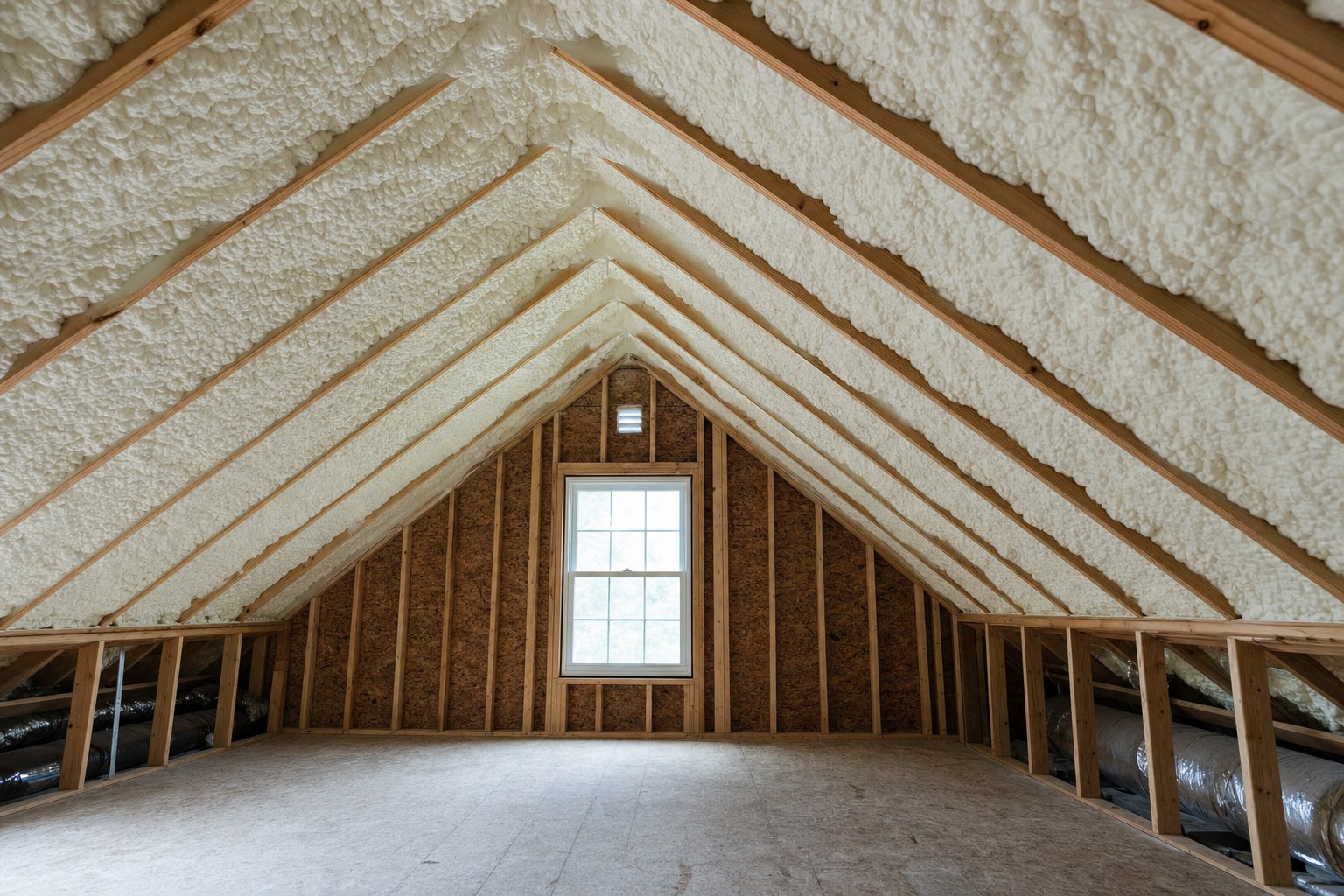
Cellulose reaches the same R-value in less depth, which matters when there are existing HVAC platforms or storage in the attic. Fiberglass costs a bit less per installed R-value and does not settle as much. Neither is categorically better — the Education Center specifies material based on attic geometry and what already exists on the ceiling plane.
Spray foam is a different strategy, not more R-value
Homeowners frequently ask whether spray foam should be layered on top of existing blown-in insulation for a bigger R-number. It should not. Foam applied to the underside of the roof deck creates a fundamentally different attic: the roof deck becomes the thermal boundary, and ceiling-plane insulation is removed or ignored. Layering foam on top of blown-in produces a moisture trap and defeats the attic’s ventilation design.
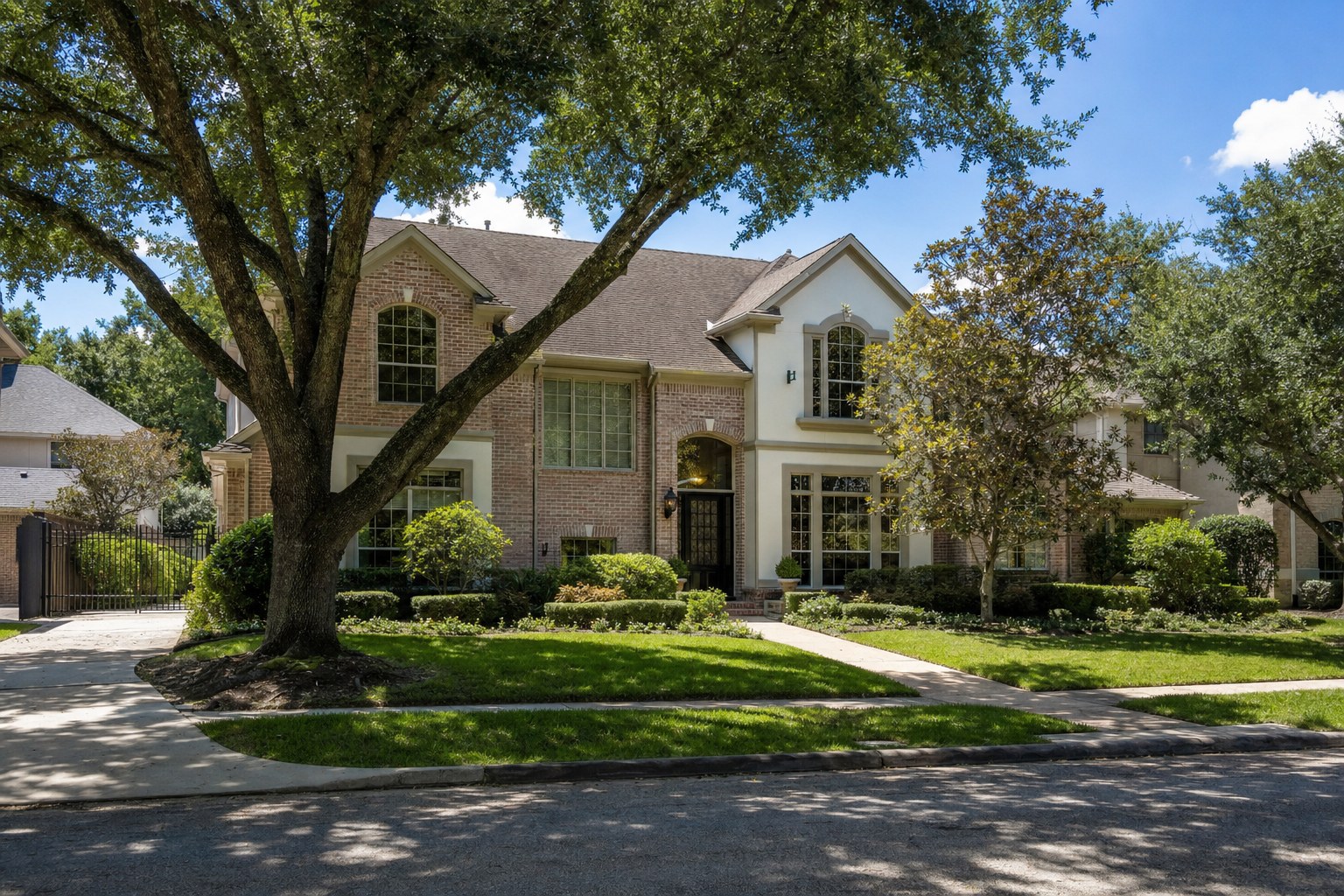
Spray foam on the roof deck is the right call in specific cases: attics that house the air handler and long duct runs, cathedral-ceiling homes without an accessible attic floor, or older homes where sealing the roof deck is easier than sealing every top plate below. It is not a drop-in upgrade — it changes the whole envelope strategy.
How Houston humidity changes the R-value conversation
Northern climates talk about R-value as winter heating loss. In Houston, R-value is really a summer humidity story. Every degree the attic transfers into the ceiling below is a degree the HVAC has to remove, and each compressor cycle takes some moisture with it. Under-insulated ceilings force longer, hotter cycles that swing indoor humidity higher between runs.
That is why the jump from R-38 to R-49 shows up not just on the utility bill but in how sticky the house feels at 10 pm in August. A well-insulated attic lets the HVAC run shorter, more frequent cycles at a steadier setpoint — the operating mode that pulls the most moisture out of the interior air. The Education Center’s guide to attic ventilation, radiant barrier, and energy efficiency covers how those three systems stack together.
How this connects to the roof above it
Attic R-value does not exist in isolation. Insulation on the ceiling plane, ventilation baffles above it, and the shingle system on the roof deck all interact. A properly ventilated attic keeps the roof deck 20 to 40 degrees cooler on summer afternoons, extending shingle life. Under-insulated attics with poor ventilation heat-cook the shingles from below — see the Education Center’s guide on how Houston heat ages asphalt shingles. The math on attic ventilation net free area under IRC R806 covers the intake and exhaust needed once insulation depth is right.
The Bottom Line
For most older Houston attics, R-49 is the current best target: it aligns with the 2021 IECC, offers meaningful comfort and utility improvement over R-38, and stops short of the diminishing-returns territory above R-60. Choose cellulose when attic depth is tight and fiberglass when depth is not a constraint. Reserve spray foam for full envelope redesigns, not as a top-off. Insulation is only one leg of the summer-comfort tripod — ventilation and roof condition matter just as much.
Ready to bring your Houston home up to current attic and roofing standards?
The DC Pines team inspects attic insulation, ventilation, and shingle condition together — because in a Houston climate, they all fail together too.