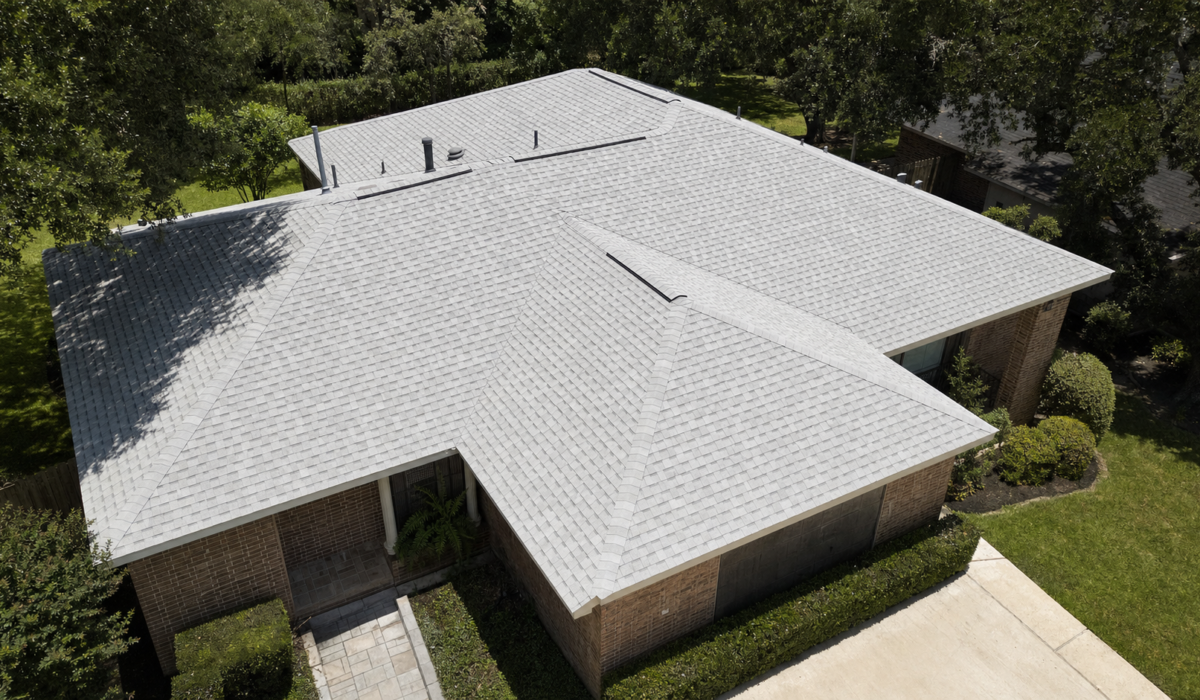
Houston runs one of the longest cooling seasons in the country, and the asphalt shingle roof sitting eight feet above the attic is the single hottest surface on most homes. This guide covers houston cool roof shingles — what solar reflectance actually means on an asphalt product, how the numbers translate into attic temperature and cooling bills, and how the modern generation of cool-roof shingles has moved past the all-white look of a decade ago. The goal is a decision framework that survives the Texas summer and holds up in the color-selection conversation with the homeowner’s spouse.
The physics is straightforward — a lighter, more reflective shingle absorbs less solar energy, runs cooler at the deck, and offloads less heat into the attic. The engineering is more subtle, because ENERGY STAR-labeled cool-roof shingles use specially formulated granules and infrared-reflective pigments to hit reflectance targets without forcing every Houston home into a white roof. This guide walks through the honest math on what the upgrade does, where it earns its keep, and where it does not.
What Solar Reflectance Actually Measures
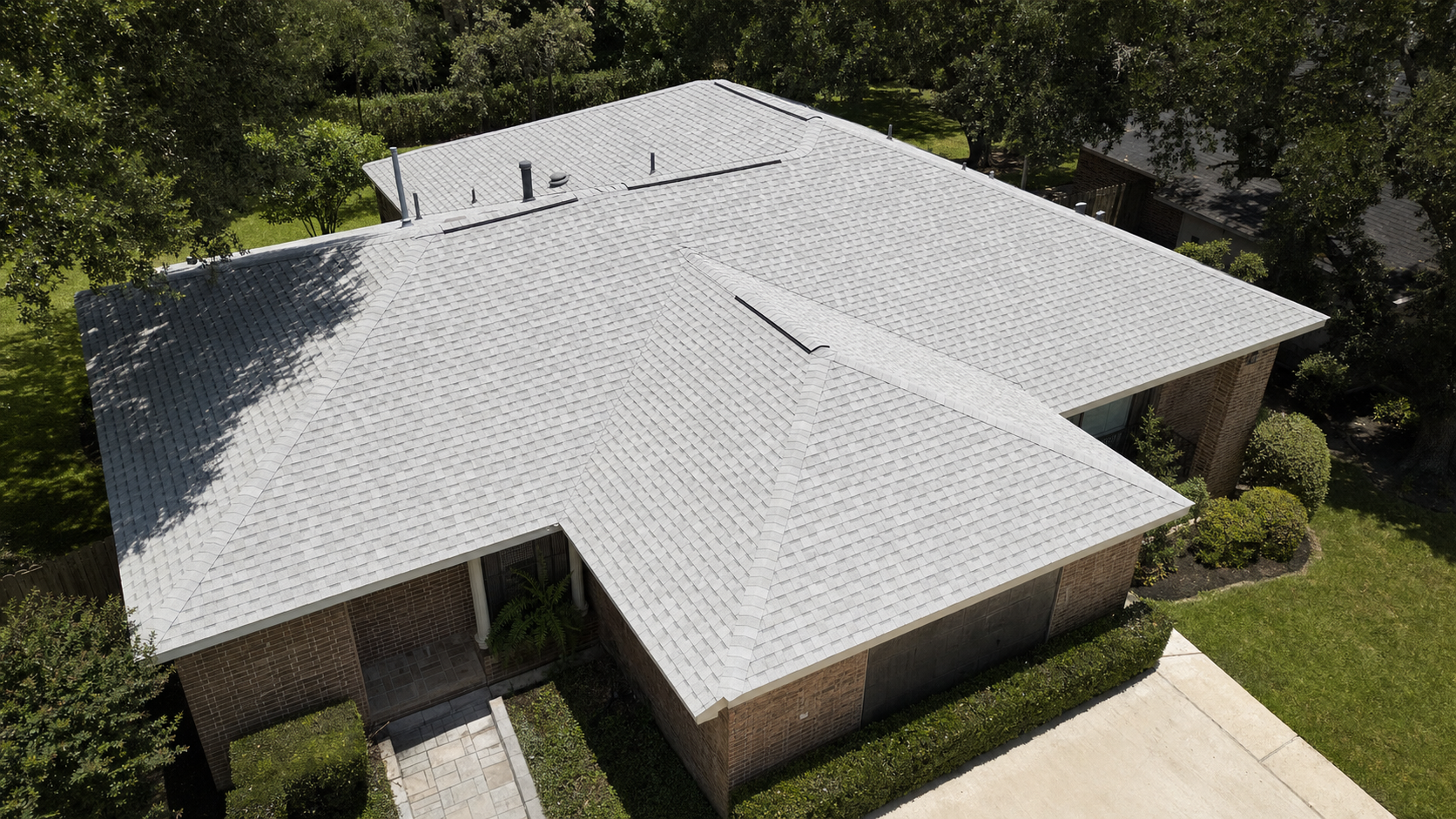
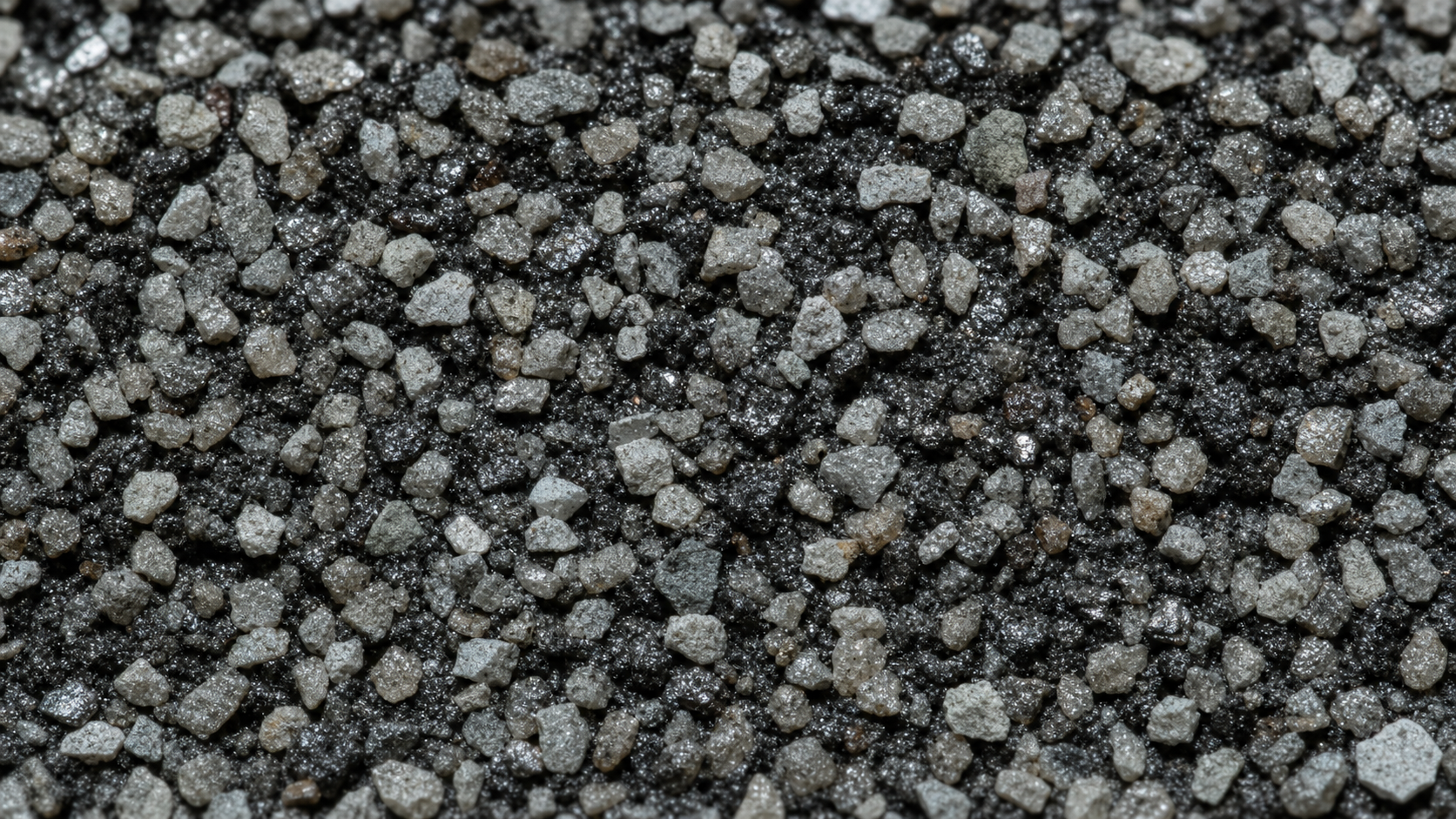
Solar Reflectance is the fraction of incoming solar energy that a surface reflects back into the sky rather than absorbs. It is measured on a 0-to-1 scale and it covers the full solar spectrum, not just visible light. A dark charcoal conventional shingle typically has a Solar Reflectance around 0.05 to 0.10 — it absorbs 90-plus percent of the sun that hits it. A light cool-roof shingle can hit 0.25 or higher, and reflective-pigmented dark cool-roof shingles typically land in the 0.15 to 0.20 range while still looking dark to the eye.
The U.S. Department of Energy’s cool roofs guidance explains the second half of the equation: thermal emittance, or how quickly a surface releases the heat it did absorb. Asphalt shingles are generally strong on emittance regardless of color, so most of the cool-roof performance difference between products comes from reflectance rather than emittance. The Solar Reflectance Index — SRI — combines both into a single number that appears on many product data sheets and city cool-roof ordinances.
What ENERGY STAR Requires on a Cool-Roof Shingle
To carry the ENERGY STAR label for steep-slope residential roofing products, a shingle must meet minimum initial Solar Reflectance of 0.25 and minimum aged (three-year) Solar Reflectance of 0.15. That aged number matters more than the initial one on a Houston roof, because Houston dust, pollen, and biological growth reduce reflectance faster than in most of the country. A shingle that starts at 0.30 but drops to 0.14 after three years is worse for a Houston home than a shingle that starts at 0.26 and holds 0.18 aged.
ENERGY STAR is a floor, not a ceiling. Premium cool-roof lines from major manufacturers can hit initial reflectance in the 0.35 to 0.45 range on lighter colors and 0.20 to 0.28 on infrared-reflective dark colors, with aged retention well above the ENERGY STAR minimum. The data sheets are worth pulling before committing to a shingle color; two products that look identical from the driveway can differ meaningfully on the label.
Deck Temperature and Attic Load on a Houston Afternoon
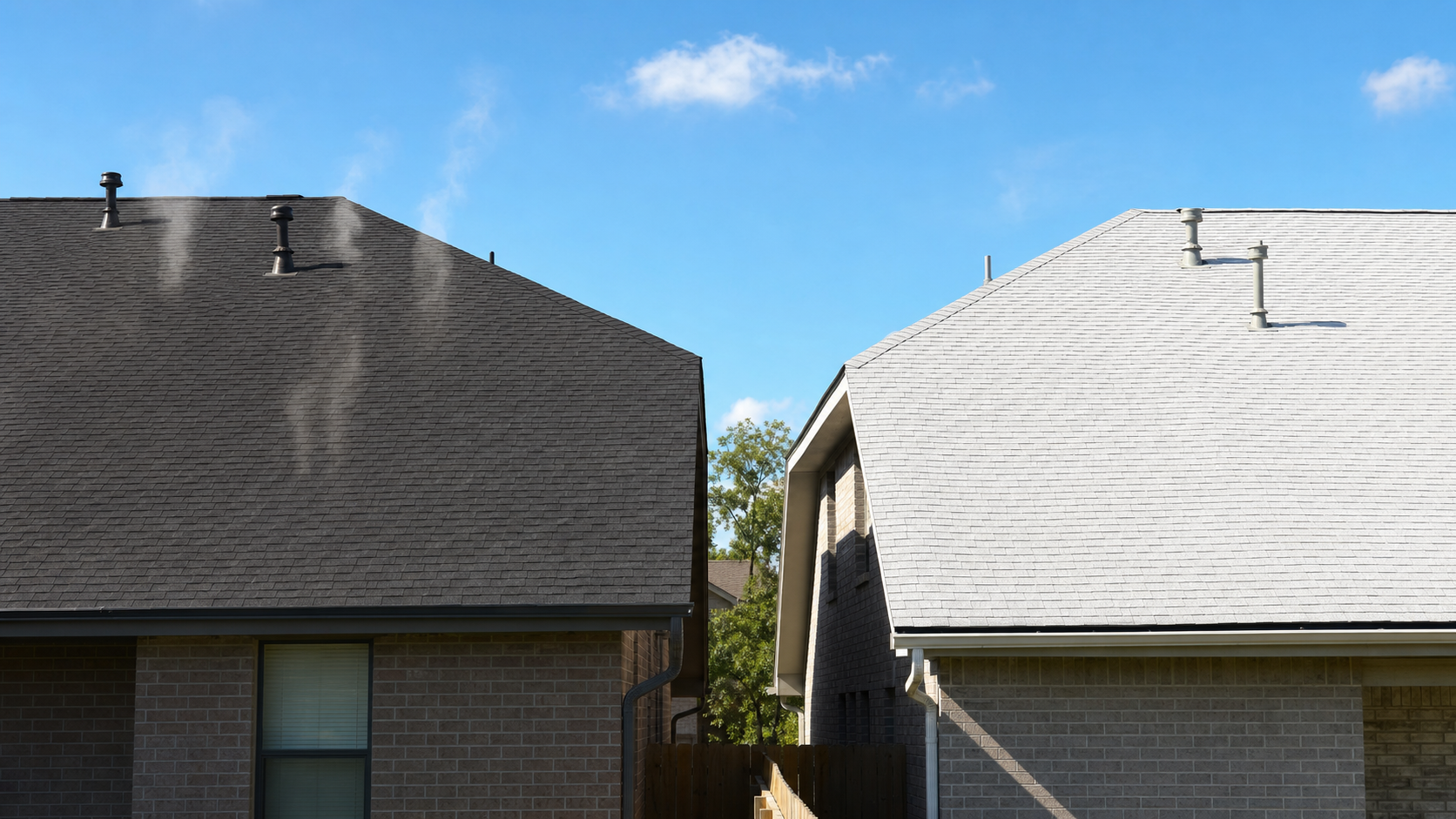
On a typical Houston July afternoon with ambient at 96 degrees Fahrenheit and full sun, a dark conventional shingle roof deck routinely measures 150 to 170 degrees Fahrenheit on infrared readings. A light cool-roof shingle on the same roof under the same conditions typically reads 30 to 50 degrees cooler at the deck — often in the 105 to 125 degree range. That is not a marginal difference; it is a large change in the temperature driving heat into the attic.
The attic below sees the effect indirectly. On homes with proper R806 vented attics, the ventilation is trying to flush that heat out to the ridge, and the cooler deck simply gives it less to flush. On homes with HVAC ducts in the attic, the improvement is more direct — the duct trunks and branches are radiatively exposed to a cooler surface, and every degree cut off the peak attic temperature reduces conductive gain through duct walls. This is why the cool-roof payback in Houston depends heavily on where the mechanical equipment lives.
Modern Cool-Roof Colors That Do Not Look White
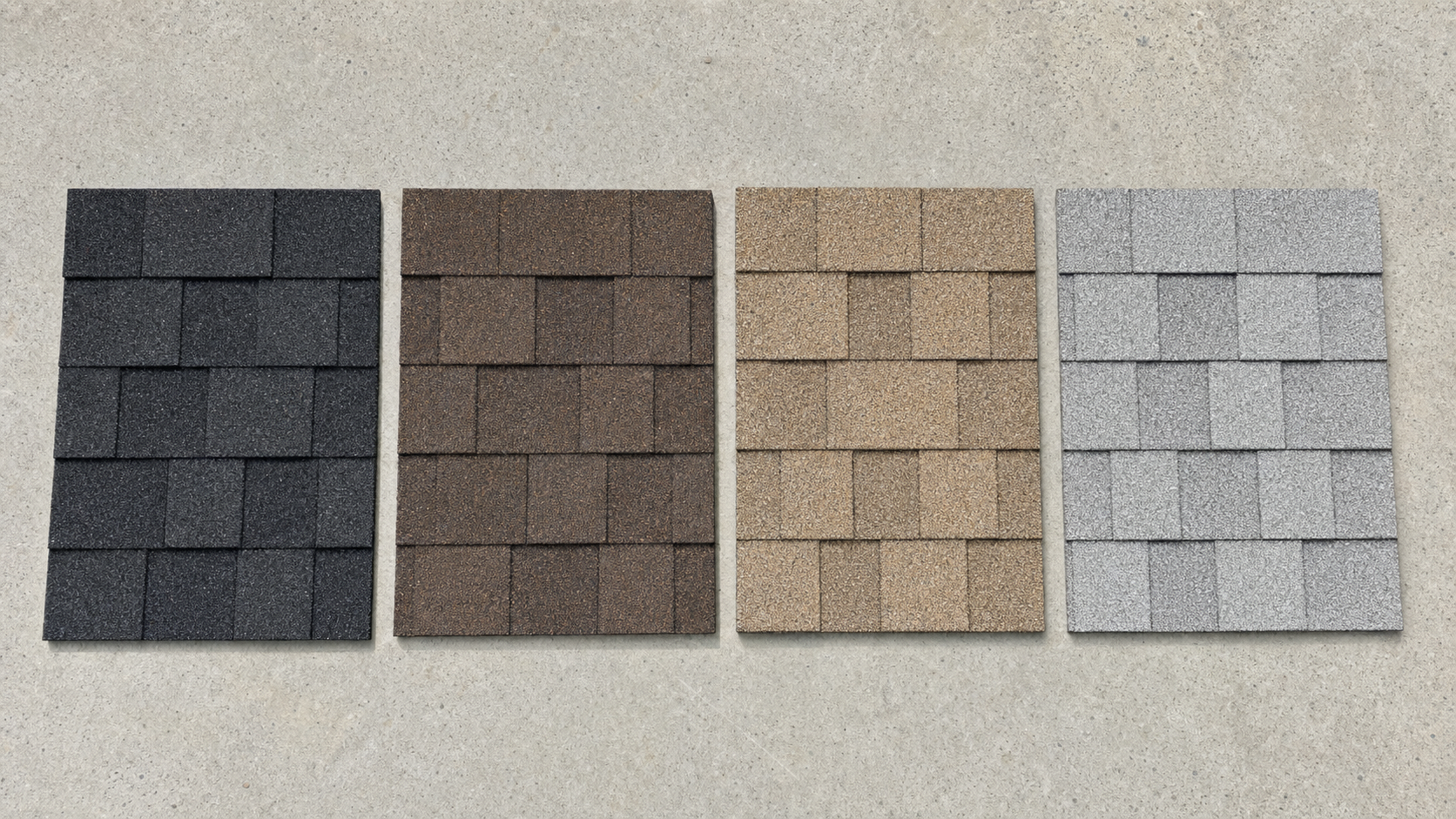
The first generation of cool-roof shingles from the early 2000s were mostly white or very pale gray, which limited adoption to homes where the aesthetic was acceptable — a hard sell on a traditional Houston brick elevation. The modern generation solves the aesthetic problem with infrared-reflective pigments that reflect the invisible near-infrared portion of the solar spectrum while absorbing enough visible light to stay dark. A cool-roof shingle in medium gray or warm brown can now hit initial Solar Reflectance in the 0.20 to 0.28 range — well above conventional shingles in the same visible color.
The tradeoff is that infrared-reflective dark shingles do not match the aged performance of lighter cool-roof shingles. A white or light gray cool-roof shingle usually holds a Solar Reflectance advantage over any dark cool-roof shingle at the three-year mark. Homeowners who prioritize absolute maximum efficiency should still lean lighter; homeowners who need to match a brick or stucco color palette can now do so and still capture meaningful cool-roof benefit.
When a Cool Roof Earns Its Keep in Houston
The strongest case for a cool-roof shingle in Houston is a home with HVAC equipment and ducts in the attic. The ENERGY STAR roof products energy-savings guidance notes cooling-energy reductions of 7% to 15% in typical residential applications, and the upper end of that range is more realistic on Houston homes with attic-located mechanical systems. Homes with ground-floor mechanical systems still benefit through longer shingle life and better interior comfort, but the utility-bill effect is smaller.
The case is weakest on homes where the shingle upgrade is being justified almost entirely on energy math while the attic ventilation, insulation, and duct sealing are still substandard. A cool-roof shingle installed over a poorly ventilated attic with leaky ducts is still an improvement, but the marginal dollars usually go further into the attic-side fixes first — R-38 insulation, sealed ducts, and code-compliant net free area — before spending the premium on a cool-roof upgrade.
Related Reading from the DC Pines Education Center
For related Houston shingle and roof guidance, see how algae-resistant shingles use copper granules to fight black streaks, IRC R806 attic ventilation math for Houston homes, and how the ASTM D7158 wind rating translates to Houston roofs.
The Bottom Line for Houston Homeowners
Cool-roof asphalt shingles are a legitimate Houston upgrade — the physics is real, the temperature numbers are large, and the modern generation solves the aesthetic problem the early products had. The honest math weighs HVAC location, attic condition, and the shingle line’s actual aged Solar Reflectance rather than a marketing color name. Homeowners who compare on the label rather than the brochure end up with the right shingle for the right elevation and capture the cool-roof benefit without paying for a headline they did not need.
Thinking about a cool-roof shingle on a Houston home?
DC Pines Roofing walks homeowners through Solar Reflectance, aged performance, and the honest Houston-attic math on cool-roof upgrades — no headline claims.