
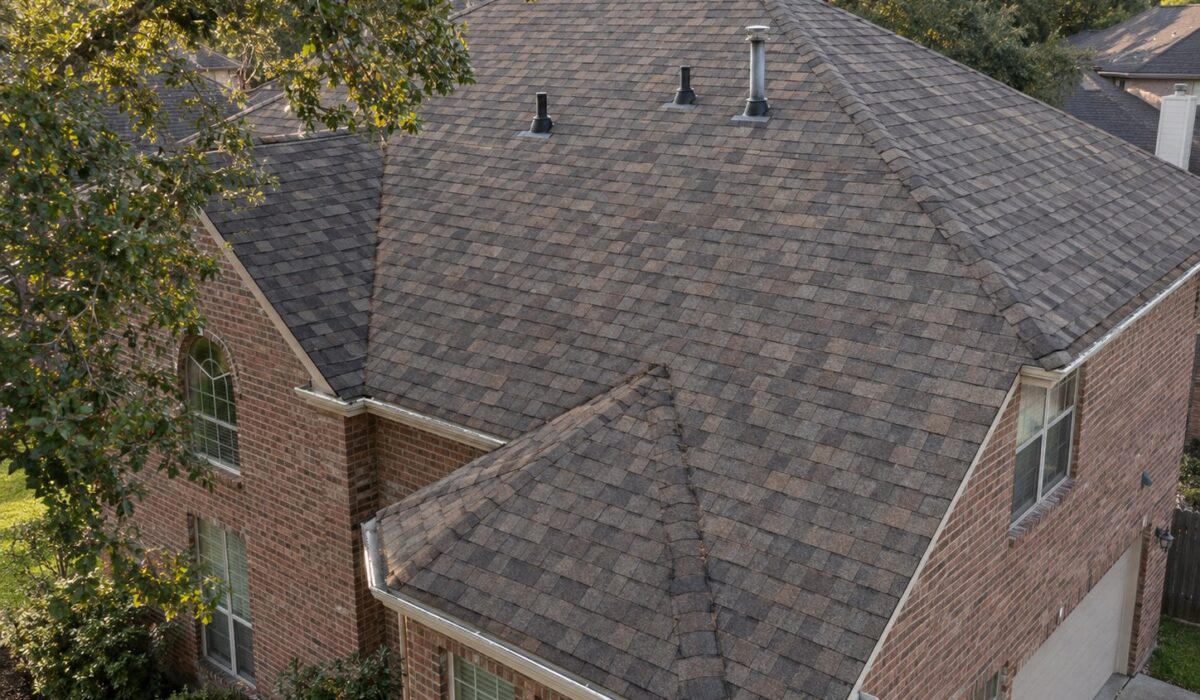
On most Houston roofs, the first leak doesn’t come from the shingles. It comes from a small rubber collar around a plumbing vent pipe. That part, the roof pipe boot, is the cheapest component on the roof. It’s also often the first one to give out, because it spends every summer in direct sun with no shade and no granules to protect it.
The DC Pines Education Center wrote this guide for homeowners who have found a water spot on a bathroom or hallway ceiling. It covers what a pipe boot does, why Houston wears it out, how to spot a failing one, and what a correct replacement looks like.
What a Roof Pipe Boot Actually Does
Every drain in a home connects to a vent pipe that runs up through the attic and out the roof. Where that pipe passes through the roof deck, the pipe boot seals the hole.
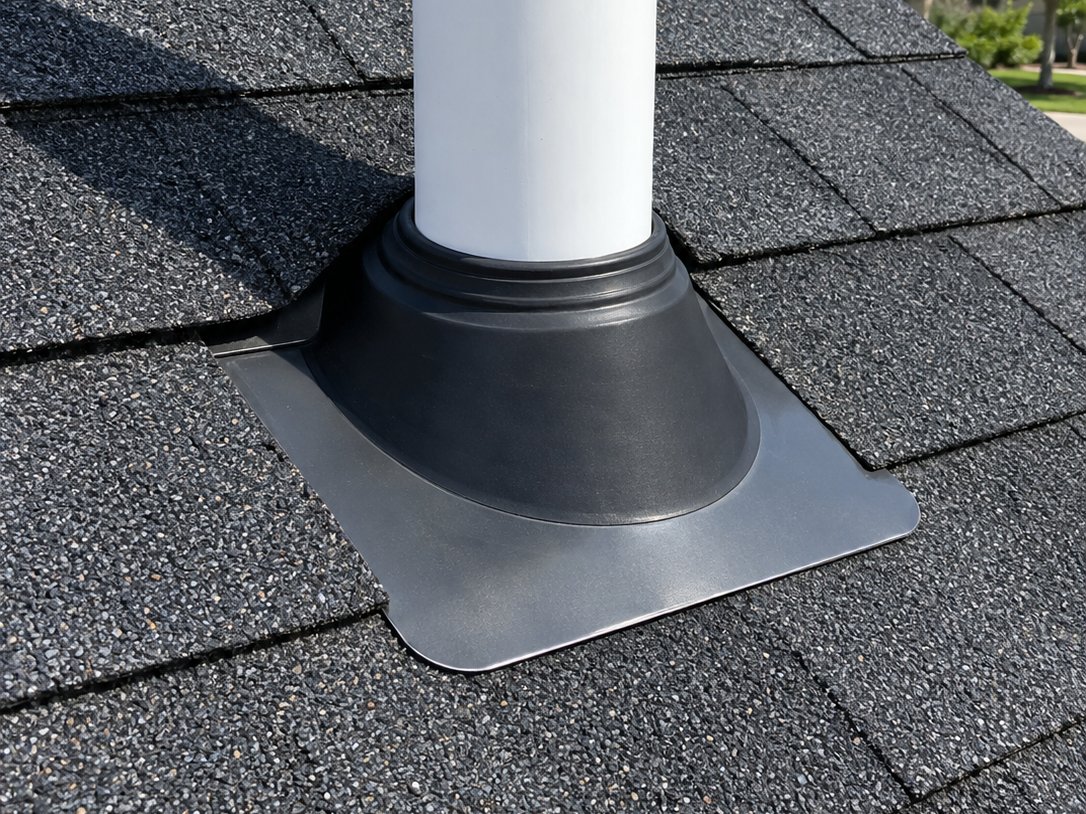
A typical boot has two parts: a flat flange that lies in the shingle courses, and a raised collar that grips the pipe. The flange is usually galvanized steel, aluminum, or plastic. The collar is usually neoprene or EPDM rubber. Some homes have one-piece lead boots instead.
The International Residential Code’s vent rule (P3103.1.1) requires an open vent pipe through a roof to end at least 6 inches above the roof surface. The code’s roof chapter, shown in this UpCodes edition of IRC Chapter 9, requires flashing at roof penetrations. It also says vent pipe flashing goes on according to the shingle manufacturer’s printed instructions. In practice, that means the boot has to be woven into the roof, not just glued on top of it.
Why Houston Wears Out Pipe Boots Early
Sun and heat on exposed rubber
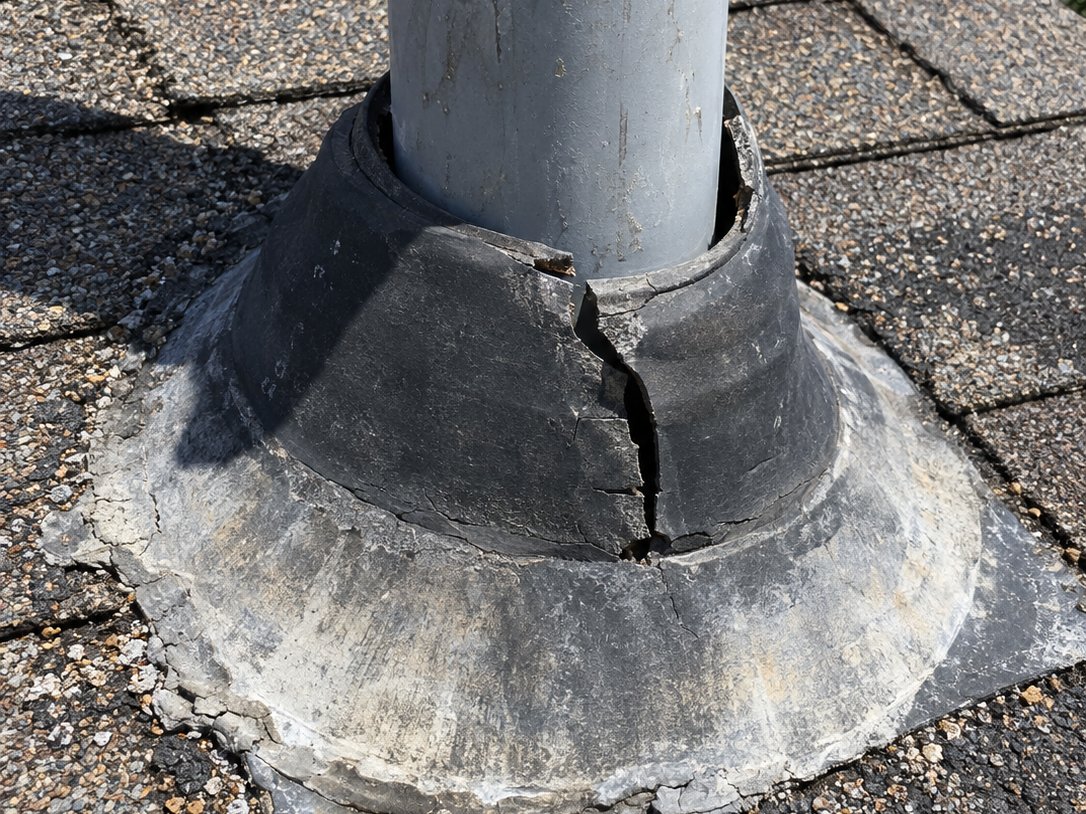
Shingles carry a layer of ceramic granules that shield the asphalt from sunlight. A rubber collar has no such protection. After years of Houston summers, the rubber hardens, shrinks, and begins to crack where it meets the pipe. Once a crack opens on the uphill side, water running down the roof flows straight into the gap and down the pipe into the attic. This is the same heat that ages the rest of the roof. The Education Center’s guide to how Houston heat ages a shingle roof covers the rest.
Squirrels and soft lead
Lead boots don’t crack the way rubber does, but squirrels in Houston’s live oak and pine neighborhoods chew on them. A gnawed lead boot leaves a ragged hole that is hard to see from the driveway.
Caulk used as a patch
A smear of roofing caulk around a cracked collar is a common shortcut. It may hold for a season, but caulk also hardens in the sun and pulls away from the rubber.
Signs of a Failing Roof Pipe Boot
Most pipe boot leaks show up inside the house first:
- A ceiling stain near a bathroom, kitchen, or laundry room. Vent pipes rise from these rooms, so a round stain a few feet from a bathroom wall points straight at the boot above it.
- A stain that only grows after rain. A plumbing supply leak stays wet all the time. A boot leak gets worse after rainfall and dries out in between.
- Dark, stained decking around the pipe in the attic. With a flashlight on a dry afternoon, look at the underside of the roof deck where the vent pipe passes through. Water rings or soft wood there confirm the leak.
- Cracks or caulk visible from the ground. Binoculars from the yard often show a split collar or sealant smeared around the base.
Homeowners should not climb onto a pitched roof to check; a ground and attic check is enough to decide whether to call for an inspection.
How a Correct Replacement Is Installed
A correct pipe boot replacement follows the same rule as every other layer on the roof: water must always run over the next piece down, never under it. The upper part of the flange slides under the shingle course above the pipe, and the lower part lies on top of the shingles below. That way, water coming down the slope runs over the boot and back onto the shingles. The fasteners that hold the flange go in where the shingles above will cover them, so no nail heads are left exposed to the weather.
On a full replacement, DC Pines Roofing adds self-adhered underlayment around each penetration before the shingles go down. It’s a second line of defense if the collar ever fails. The Education Center’s guide to synthetic versus felt underlayment explains where that membrane belongs on a Houston roof.
Repair Now or Wait for the Replacement?
On a roof that is otherwise in good shape, replacing a failed boot is a small repair. On an older roof, the boot can be a signal: if the collars are cracking, the shingles around them have taken the same years of sun.
On every DC Pines Roofing replacement, the old pipe boots come off with the tear-off. New boots matched to the shingle system go on, and the crew lead checks how each boot sits during the final walkthrough. The Education Center’s walkthrough of a DC Pines install day shows where that step fits. When comparing bids, homeowners should confirm that pipe boots appear as a separate line item. The Education Center’s guide to reading a Houston roofing estimate explains why a bid without them may be assuming the old boots will be reused.
Frequently Asked Questions
What is a roof pipe boot?
A roof pipe boot is the flashing that seals the gap where a plumbing vent pipe passes through the roof. It has a flat flange woven into the shingles and a rubber or lead collar that grips the pipe.
How can a homeowner tell if a pipe boot is leaking?
The most common sign is a ceiling stain near a bathroom, kitchen, or laundry room that grows after rain. In the attic, stained or soft decking around the vent pipe confirms it.
Can caulk fix a cracked pipe boot?
Caulk is a short-term patch at best. Sealant hardens and separates in Houston sun, and it hides the crack instead of fixing it. A cracked collar should be replaced.
Should pipe boots be replaced during a roof replacement?
Yes. New boots matched to the new shingle system should be part of every replacement, and they should appear on the estimate as their own line item.
How tall should a plumbing vent pipe be above the roof?
The International Residential Code requires an open vent pipe through a roof to end at least 6 inches above the roof surface. Local amendments can require more.
The Bottom Line
A roof pipe boot is a small, inexpensive part that sits in direct Houston sun all year. A quick ground and attic check each fall, and a proper replacement woven into the shingles, keeps one of the most common roof leaks from becoming a bigger repair.
Written by the DC Pines Education Center for Jeff Ternois, Army veteran and owner of DC Pines Roofing.
Found a ceiling stain near a bathroom or vent pipe?
DC Pines Roofing inspects pipe boots, vent flashing, and every roof penetration, and documents what it finds with photos so homeowners can see the issue for themselves.

Jeffrey Ternois
Jeff Ternois is the owner and founder of DC Pines Roofing, a veteran-owned roofing, gutter, and window company in Houston. A former U.S. Army Infantry Captain, he led an infantry platoon in Afghanistan and was awarded the Bronze Star Medal and the Combat Infantryman Badge. After the Army he earned an MBA focused on real estate and learned homebuilding from the studs out before founding DC Pines. DC Pines Education Center guides are published under his direction.