

A Houston roofing estimate is not just a price — it is a written scope of work that tells the homeowner exactly what will happen on the roof, which materials will be installed, and where the money is going. Houston homeowners comparing multiple roofing proposals often see wildly different totals for what looks like the same job, and the reason almost always lives in the Houston roofing estimate line items: what is specified, what is bundled, and what is quietly left off.
The DC Pines Education Center built this guide to help Houston homeowners read a roofing estimate the way an experienced project manager reads it — line by line, quantity by quantity, brand by brand. The goal is not to make anyone an expert; it is to make sure a Houston homeowner never signs a bid that hides costs, reuses old flashing, or leaves the deck-repair number blank until the crew is on the roof.

The 10-14 Line Items a Complete Houston Roofing Estimate Should Contain
A professional Houston roofing estimate breaks the job into discrete lines with quantities, unit prices, and material specifications. The list below is the minimum a Houston homeowner should expect on a residential asphalt shingle replacement. If a proposal is missing any of these — or bundles them into vague “materials” — the homeowner should ask for itemization before signing.
- Tear-off and disposal — number of layers being removed, dumpster included or itemized separately
- Deck inspection and per-sheet replacement allowance — 7/16-inch OSB or plywood, unit price stated, allowance or cap disclosed
- Synthetic underlayment — full deck coverage, brand and product named
- Starter strip shingles — linear feet at eaves and rakes
- Field shingles — manufacturer, product line, wind rating (Class H / 150 mph in Houston), color, quantity in squares with waste factor
- Hip and ridge cap shingles — linear feet
- Step flashing, counter flashing, and valley flashing — replaced (not reused), material and gauge specified
- Drip edge — both eaves and rakes, aluminum or galvanized specified
- Attic ventilation — ridge vent linear feet or box vent count, matched to net-free-area math
- Pipe boots and roof penetrations — quantity and product type
- Labor — per square or lump-sum, with steep-slope or two-story upcharges disclosed if applicable
- Permit and inspection — City of Houston or applicable jurisdiction, flat fee stated
- Cleanup and magnetic nail sweep — non-negotiable, should be explicitly included
- Warranties — manufacturer material warranty AND separate contractor workmanship warranty, both in years
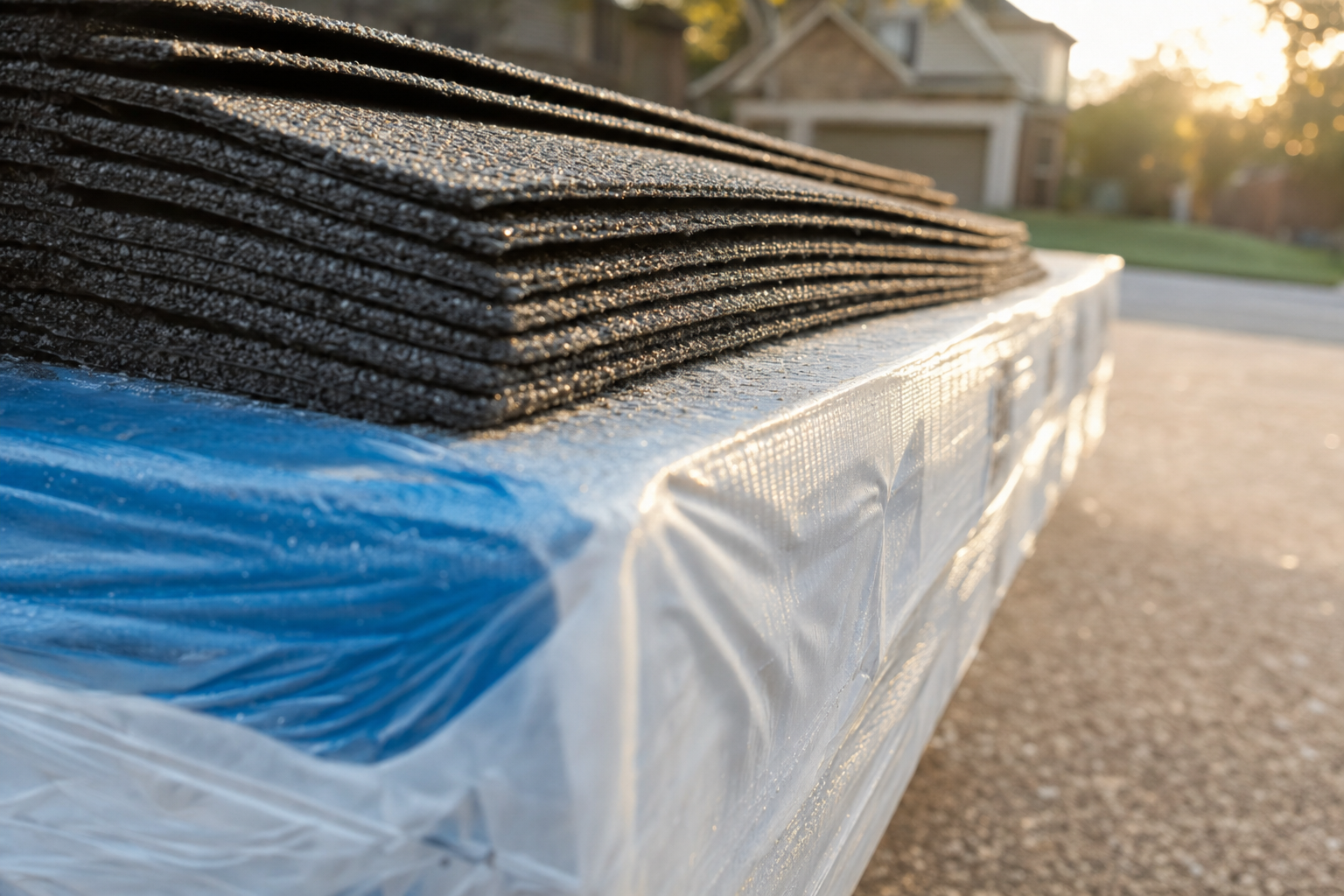
The Deck-Repair Trap Every Houston Homeowner Should Watch For
Roof decking condition cannot be fully assessed until the old shingles are off. That variability is normal — but the way an estimate handles it separates a professional bid from an open-ended add-on.
What a clean deck-repair line looks like
A clean estimate names a per-sheet unit price for 7/16-inch OSB or plywood replacement (typically $75 to $150 per sheet installed in the Houston market) and either an included allowance (“first 2 sheets included, then $X per sheet”) or a clear cap. This gives the Houston homeowner a predictable ceiling and an itemized expectation for anything above it.
What a red-flag deck-repair line looks like
“Decking replaced as needed — price TBD,” or no deck-repair line at all, is not a specification. It leaves the Houston homeowner exposed to a surprise line on the final invoice that could add hundreds or thousands of dollars without a pre-agreed unit price to negotiate against. If deck repair is not itemized, the homeowner should ask for it in writing before signing.
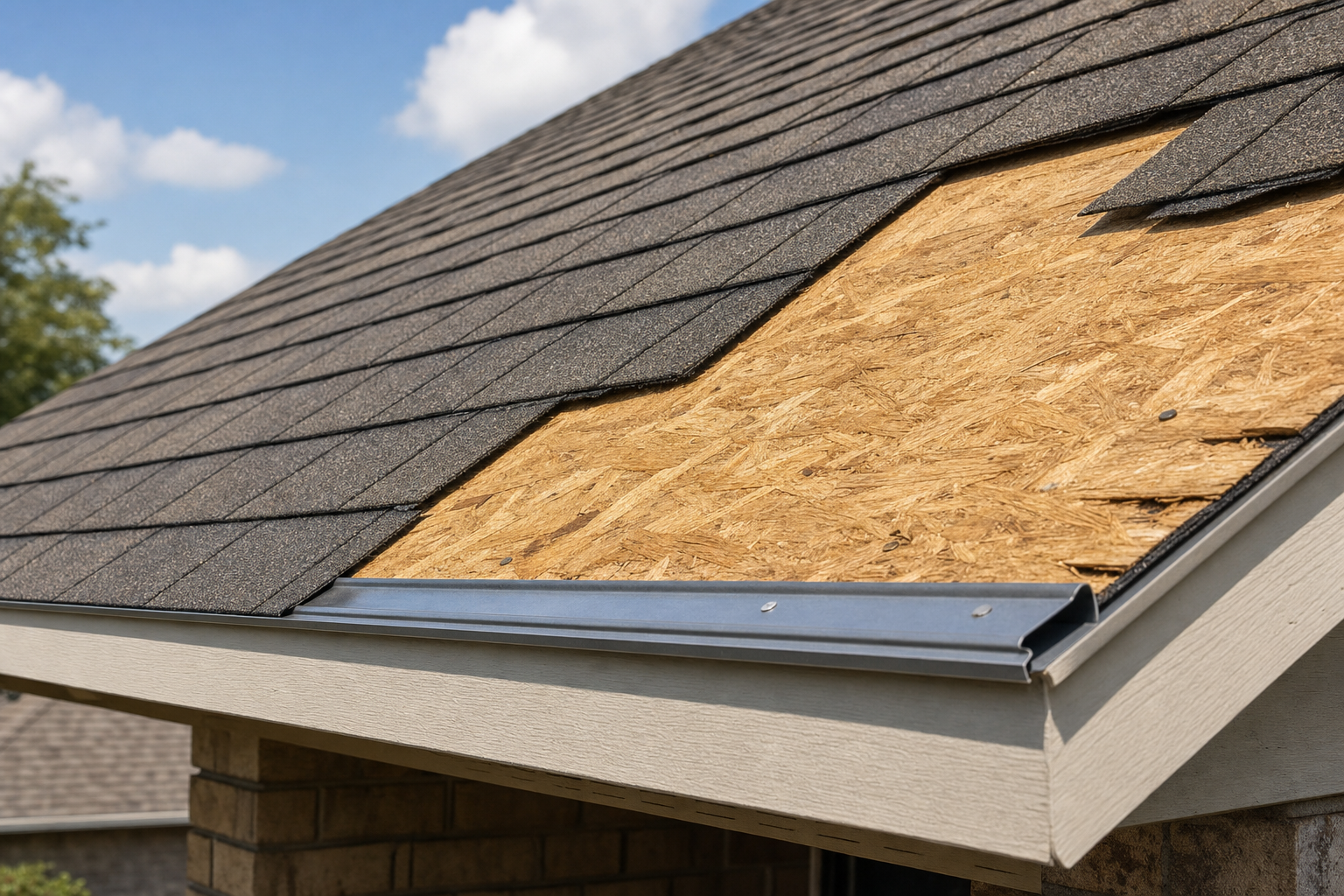
Deposits, Trust Accounts, and What Texas Law Actually Requires
Texas does not statutorily cap residential roofing deposits, but Houston homeowners have real protections that most contractors will not volunteer. The customary industry practice for residential roofing deposits is 10 to 33 percent of the total contract price, with milestone-based progress payments (typically at material delivery and at substantial completion). Deposit demands materially above one-third of the contract without a documented special-order justification are widely treated as a red flag in the Houston market and can be challenged under the Texas Deceptive Trade Practices Act enforced by the Texas Attorney General.
Houston homeowners should also know about the Texas Property Code Construction Trust Fund Act. For residential homestead improvements over $5,000, the contractor is legally required to deposit customer payments in a construction account at a financial institution — not in the operating account. Misapplying those trust funds carries criminal liability. A Houston roofing contractor who cannot confirm trust-account compliance in writing has already answered a question the homeowner should be asking.
The Line Items Estimates Quietly Leave Off
Some of the biggest cost variance between competing Houston roofing bids comes from what is missing, not what is priced. The line items below are consistently under-included in Houston-area proposals and worth asking about explicitly before signing.
- Ice-and-water shield at valleys and penetrations — even in a non-freeze market like Houston, self-adhering membrane at valleys and around pipe penetrations is best practice; if it is not on the estimate, it is likely not being installed
- Drip edge on rakes — many estimates include eave drip edge but omit rake drip edge; both should be specified
- Ventilation upgrades to meet IRC R806 net-free-area — replacing shingles without correcting an under-ventilated attic is a common miss
- New flashing vs. reused flashing — “reused if possible” on 15-year-old step flashing is a bet with bad odds
- Permit fee — should be a stated flat fee, not buried in labor
- Magnetic nail sweep — non-negotiable for pet and tire safety; should be explicitly listed
- Workmanship warranty (separate from manufacturer) — a 25-year workmanship warranty is materially different from a 1- or 5-year warranty
How to Compare Two Houston Roofing Estimates Apples-to-Apples
When two Houston roofing proposals arrive with different totals, the honest comparison is not “which is cheaper.” It is “which is complete.” A simple side-by-side works: take the most detailed estimate, list every line item, and check each competing proposal for the same line. Anything missing gets flagged and the contractor is asked whether it is included. If they say yes, it goes on the estimate in writing.
Houston homeowners should also compare on the same material grade (architectural vs. 3-tab), the same flashing scope (replaced vs. reused), the same underlayment (synthetic vs. felt), and the same warranty terms (workmanship years plus manufacturer). Two roofing bids at the same headline price can differ by thousands of dollars of actual installed value once those variables are held constant.
Related Reading from the DC Pines Education Center
For more on the Houston-specific pieces that show up inside a roofing estimate, see how to read Houston shingle wind class ratings, how to verify a Houston roofing contractor’s license and insurance, and the IRC R806 attic ventilation math a Houston roof has to satisfy.
The Bottom Line
A Houston roofing estimate is a contract in disguise — every line item is a promise about what will be installed, how much of it, by which brand, and under what warranty. A complete Houston roofing estimate has 10 to 14 distinct lines, names materials by manufacturer and product, itemizes deck repair with a unit price, keeps deposits inside customary Texas norms, and complies with the Construction Trust Fund Act for homestead projects over $5,000. Anything less is not a bid; it is a placeholder that hides where the money is going.
See what a complete Houston roofing estimate looks like from DC Pines.
Itemized line items, named material specifications, trust-account compliance, and a separate workmanship warranty in writing.