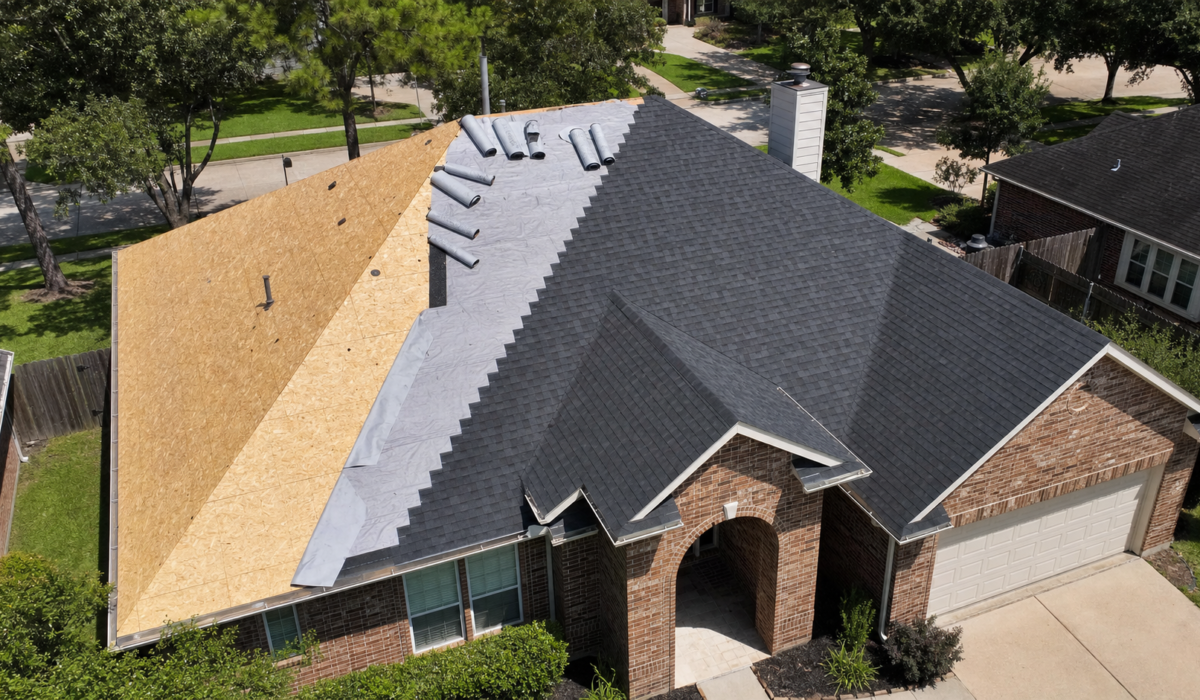
The layer between the roof deck and the asphalt shingle is one of the most misunderstood parts of a Houston roof. When Houston homeowners compare roofing quotes, the shingle line item gets 95% of the attention and the underlayment gets a single-word entry — usually “felt” or “synthetic” — with no explanation of why that choice matters. The synthetic vs felt underlayment decision, in a hot, humid Gulf Coast climate with algae-driven maintenance cycles and shingle manufacturers that increasingly require matched-system installs, actually drives long-term roof performance and warranty coverage more than most homeowners realize.
The DC Pines Education Center hears the underlayment question in almost every pre-roof-replacement consultation, and the answer is not “synthetic always.” It is a real material comparison with real trade-offs, real code implications, and real warranty consequences. This guide lays out what actually belongs under a Houston asphalt shingle roof, what IRC code and the shingle manufacturer both require, and how homeowners can read the underlayment line item on a quote without needing a roofing certification.
The Three Underlayment Categories on a Houston Roof
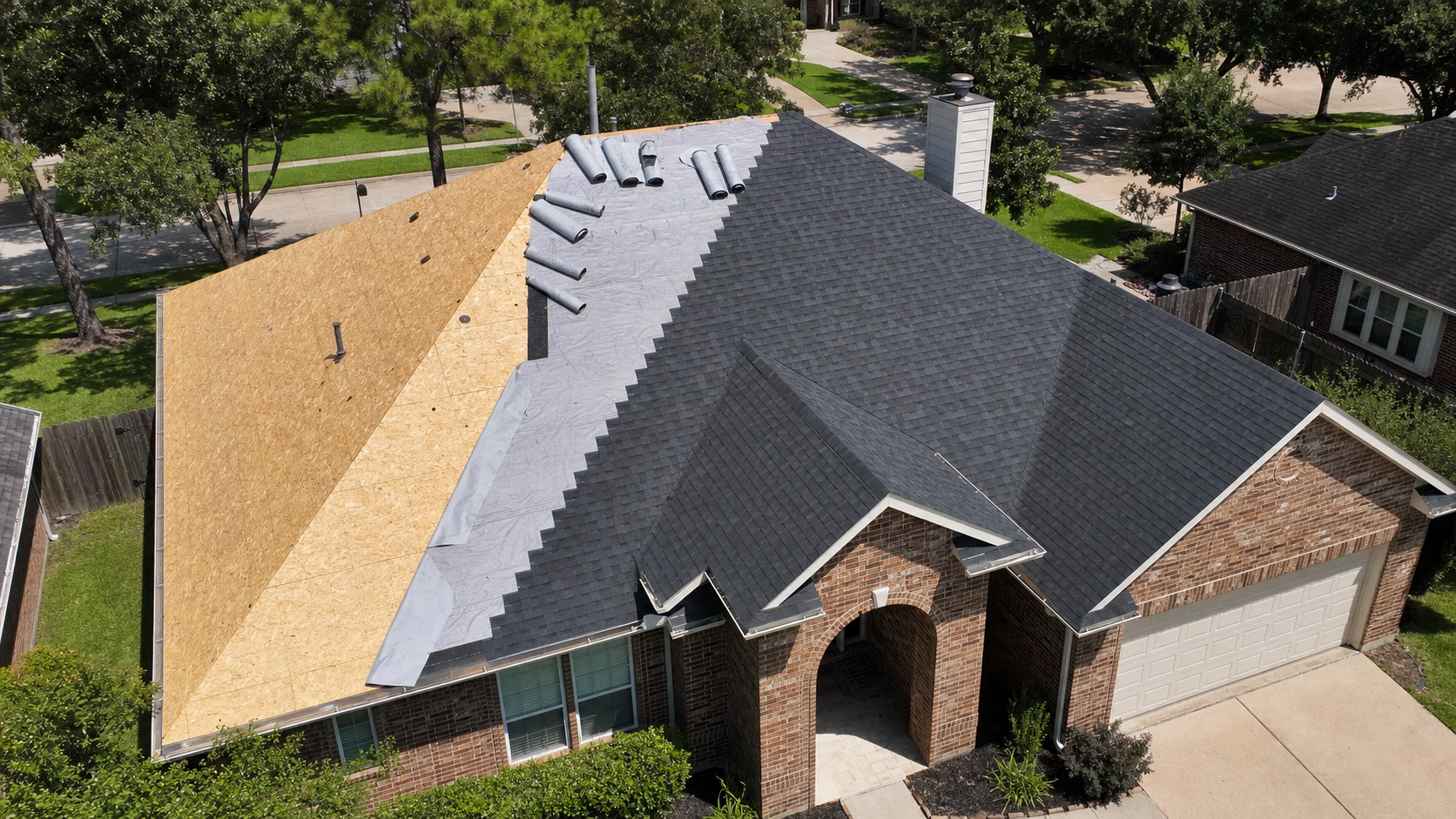
Every asphalt shingle roof in Houston uses one or more of three underlayment categories. Homeowners reading a bid should know the differences before comparing dollar figures.
Asphalt-saturated felt (15-lb or 30-lb)
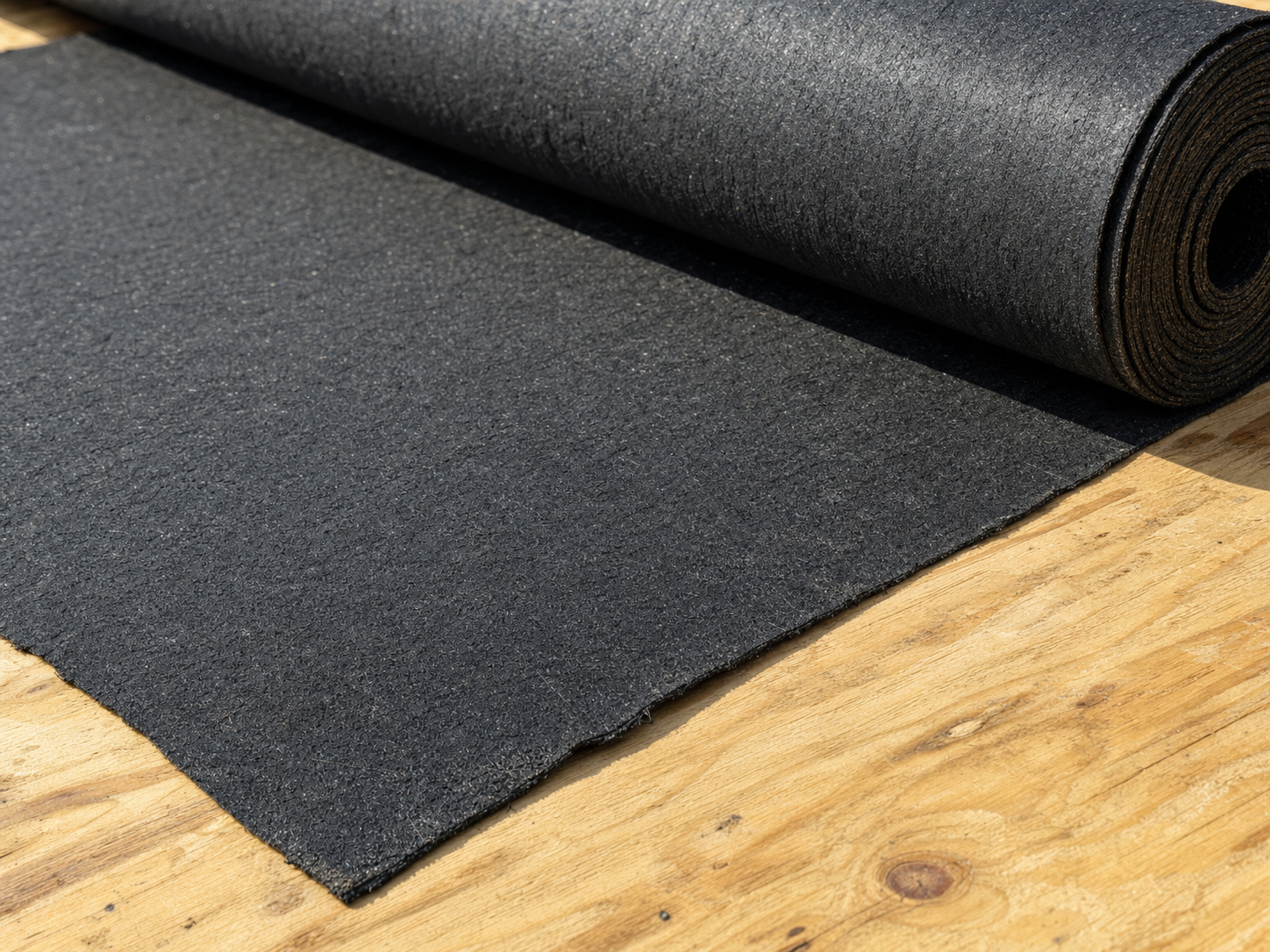
Felt is the traditional roofing underlayment — a paper or fiberglass sheet saturated with asphalt to make it water-resistant. It comes in two common weights. 15-lb felt (ASTM D226 Type I) is the code minimum for most sloped applications. 30-lb felt (ASTM D226 Type II) is heavier, more tear-resistant, and preferred on steeper slopes and longer exposures. Felt is inexpensive, code-compliant, and familiar to every roofer — but it wrinkles when it gets damp, tears more easily on hot days, and degrades faster under sustained roof-deck heat.
Synthetic underlayment
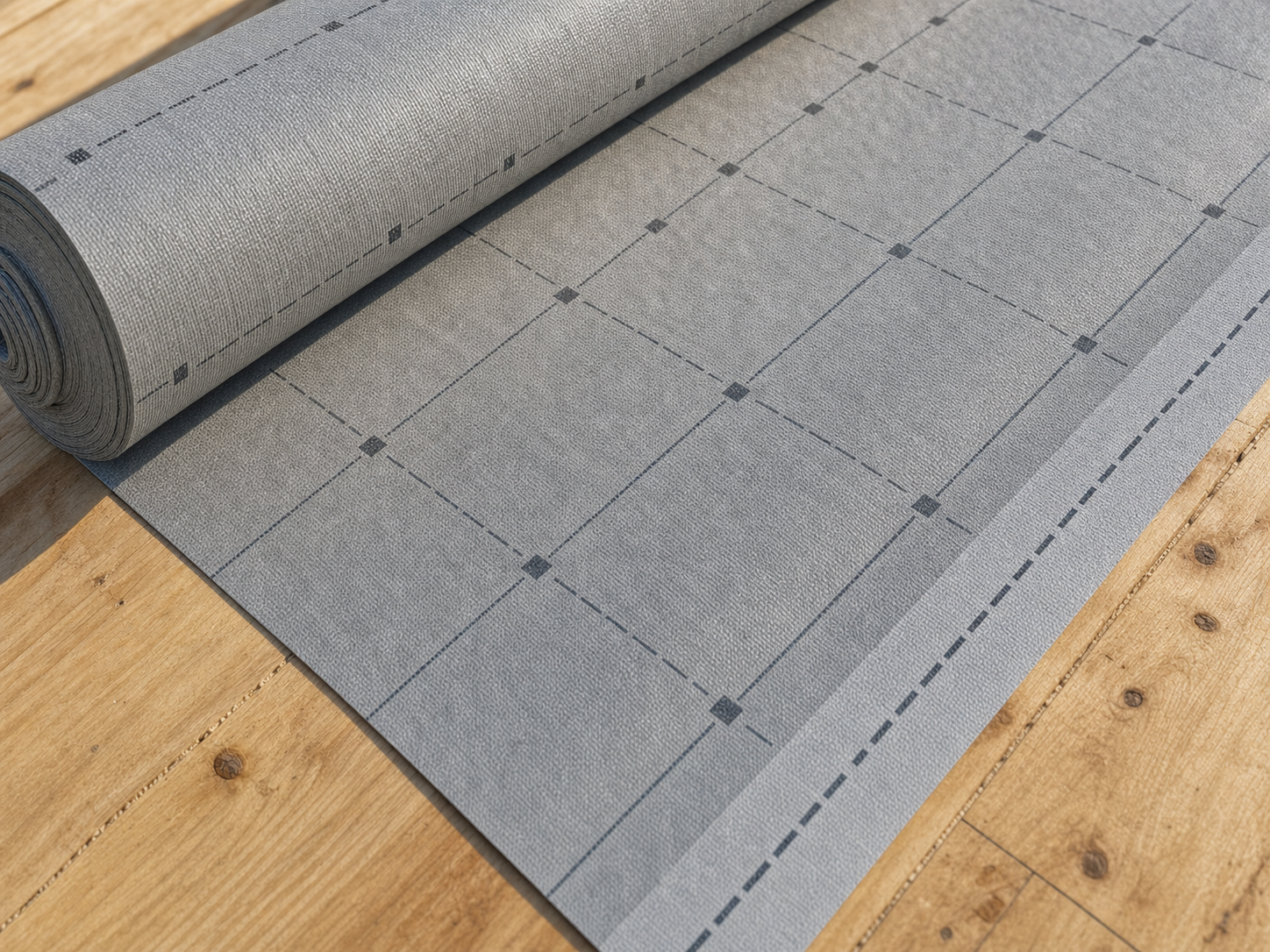
Synthetic underlayment is a woven or spun polymer sheet — polypropylene or polyethylene — engineered specifically to replace felt. It is lighter per roll, stronger per square foot, dramatically more tear-resistant, and holds up to sustained UV and heat exposure much better than felt. Most synthetics also print a nail-pattern grid and manufacturer-approved lap lines directly on the material, which reduces installer error. Synthetic costs more than felt per square but installs faster.
Self-adhered (peel-and-stick) membrane
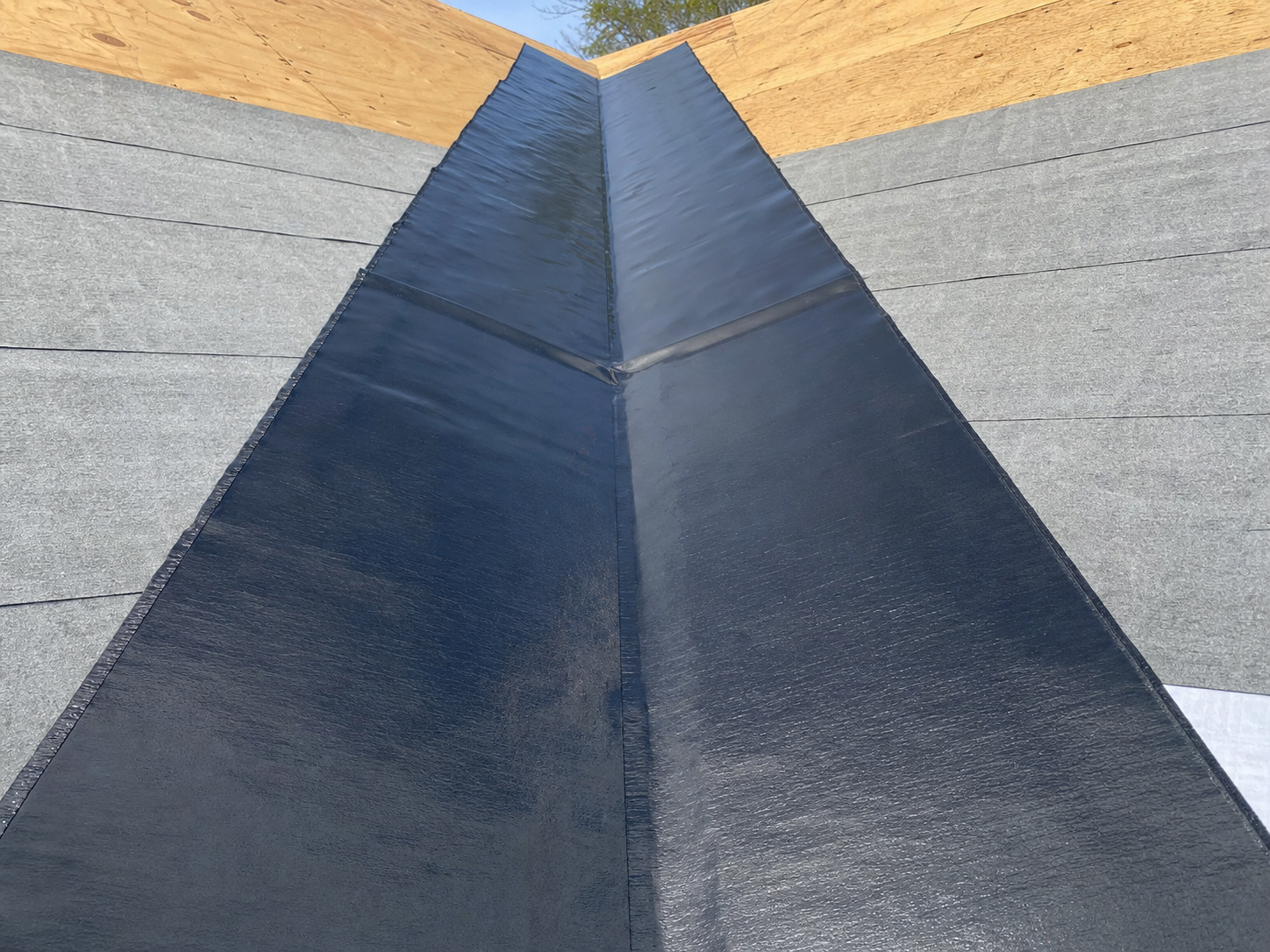
Self-adhered membrane is a rubberized-asphalt sheet with a peel-off backing. It bonds directly to the roof deck and self-seals around nail punctures — the primary reason it is used at eaves, in valleys, and around penetrations even on Houston roofs. The most common product in this category is often referred to as ice and water shield, though on Gulf Coast roofs its purpose is less about ice and more about wind-driven rain, canopy-debris pooling, and low-slope tie-ins.
What Houston Heat Actually Does to Underlayment
Roof-deck temperatures in Houston summers routinely exceed 150°F on dark shingle roofs, and the underlayment sits directly against that heat. This is where the felt-vs-synthetic decision has its largest practical consequence.
Felt is asphalt-saturated paper. Sustained high-temperature exposure drives off the volatiles that keep felt pliable, and over years the material becomes brittle. In a re-roof or a roof leak repair 15 to 20 years later, felt that started as a serviceable underlayment often crumbles when it is disturbed. Synthetic polymer sheets do not have volatile fractions to drive off — they age much more slowly under the same heat load. This is not a marketing claim; it is a material-science distinction, and it is one of the reasons enhanced-warranty shingle systems in hot climates increasingly require synthetic underlayment as part of the matched system.
What IRC Code Actually Requires
Houston enforces the International Residential Code (IRC), and the relevant underlayment section is IRC R905. For asphalt-shingle roofs at 4:12 pitch or steeper (the majority of Houston homes), the code requires a single layer of ASTM D226 Type I or Type II asphalt-saturated felt or an approved synthetic equivalent. Synthetics must carry an approved evaluation report to substitute for felt at code review, which is why any competent Houston roofing bid will name the specific synthetic product (TitaniumUDL, Owens Corning ProArmor, GAF Deck-Armor, CertainTeed DiamondDeck, and similar) rather than just say “synthetic.”
For lower-slope sections (2:12 up to but not including 4:12) — common on porch tie-ins, low-slope additions, and some patio covers — IRC R905 requires either two layers of felt cemented together or an approved self-adhered membrane. The DC Pines Education Center’s related guide to complete Houston roofing estimate line items covers what those low-slope details should look like on a proper written bid.
Why the Shingle Warranty Cares About What’s Underneath
The most overlooked reason synthetic vs felt matters in Houston is warranty language. Enhanced shingle warranties from major manufacturers are structured as system warranties — they cover the roof only when starter strip, underlayment, field shingles, hip-and-ridge cap, and (in some programs) ventilation are all supplied by the same manufacturer, installed by a certified contractor, and registered within the transfer window. A budget felt substituted for the manufacturer’s specified synthetic on a Golden Pledge, Platinum Protection, or Integrity Roof System install typically drops the coverage back to the standard limited warranty at the first claim.
This is not a hypothetical detail. Per the U.S. Department of Energy’s energy-efficient roofs guidance, the roof system is best treated as an integrated assembly rather than a stack of independently priced parts, and the underlayment is one of the assembly components that separates a code-minimum install from a manufacturer-certified system install. Homeowners considering the enhanced warranty tier for its transferable resale value should verify that the underlayment line on the bid matches the specific product the shingle manufacturer names.
How to Read the Underlayment Line on a Houston Roofing Quote
A competent Houston roofing bid names the specific underlayment product by manufacturer and code evaluation report, specifies where each product is used (field, eaves, valleys, penetrations), and matches those products to the shingle manufacturer’s warranty program if an enhanced warranty is being offered. Homeowners can flag three warning signs on a written bid.
The first warning sign is a single-word entry — “felt” or “synthetic” — with no product name. The second is a synthetic in the field with no self-adhered membrane at the eaves, valleys, and penetrations, which is a code shortfall on any home with a low-slope tie-in and a warranty shortfall on most enhanced programs. The third is a bid offering an enhanced or system warranty on a mixed-brand underlayment stack, which typically will not qualify for that warranty when the certified installer registers the install.
The Bottom Line
The synthetic vs felt underlayment decision is not marketing fluff. In Houston’s heat, humidity, and canopy-debris environment, and inside the warranty structures the major shingle manufacturers now use, the layer under the shingle carries more weight than most homeowners are told. Felt is still code-compliant and still in service on many Houston homes, but synthetic (paired with self-adhered membrane at eaves, valleys, and penetrations) is the specification most matched-system enhanced warranties actually require. Homeowners reading a roofing bid should treat the underlayment line the same way they treat the shingle line — by product name, by code compliance, and by warranty alignment.
Planning a Roof Replacement in Houston?
The DC Pines Education Center can help Houston homeowners confirm the underlayment spec — felt, synthetic, or self-adhered — matches the local heat load, the shingle manufacturer’s warranty language, and IRC code. Get a written scope that treats the layer under the shingles as seriously as the shingles themselves.