
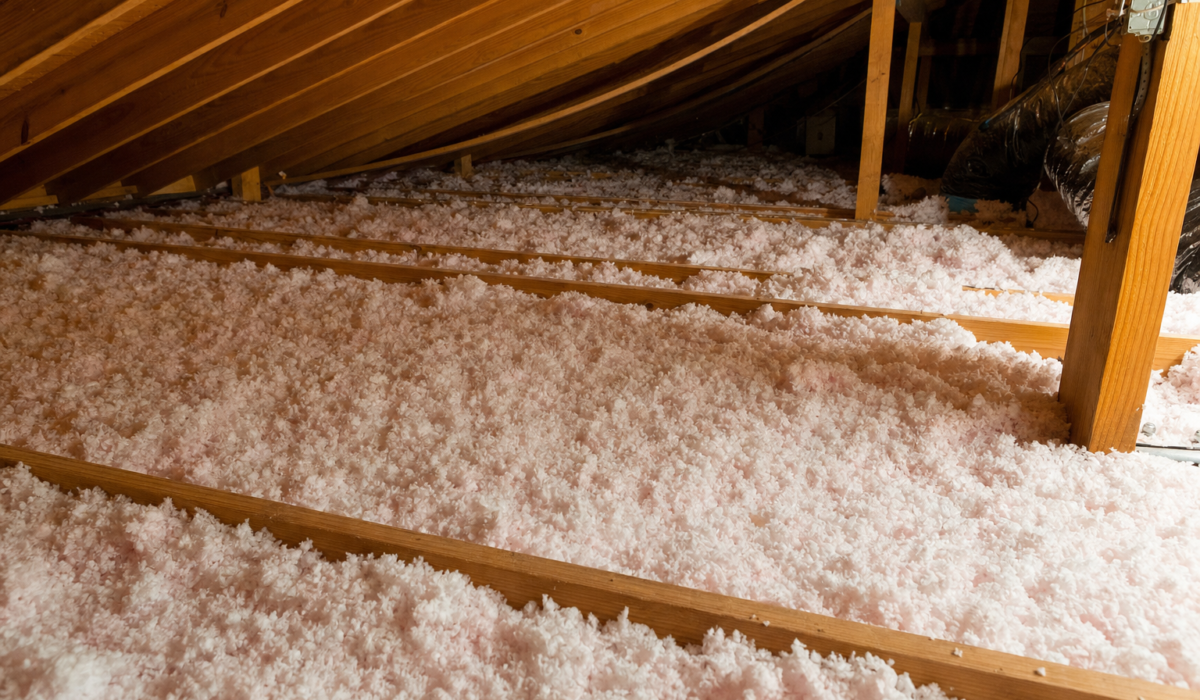
The houston attic insulation r value question drives more summer utility spending — and more contractor confusion — than almost any other envelope decision in the region. Houston attics run 130 to 150 degrees in July and August, and every degree of that heat is trying to conduct straight down through the ceiling into conditioned rooms. The R-value in the attic is the number that determines how hard that heat has to work to get in.
The DC Pines Education Center pulled the current DOE Climate Zone 2 recommendations, the Texas building code minimum, and the installed R-value-per-inch numbers for the three materials Houston homeowners actually encounter — blown fiberglass, blown cellulose, and closed-cell spray foam — into one place. The goal is a Houston-specific decision framework a homeowner can walk into any insulation quote with and know exactly what they are buying.
What R-38, R-49, and R-60 Actually Mean for a Houston Attic
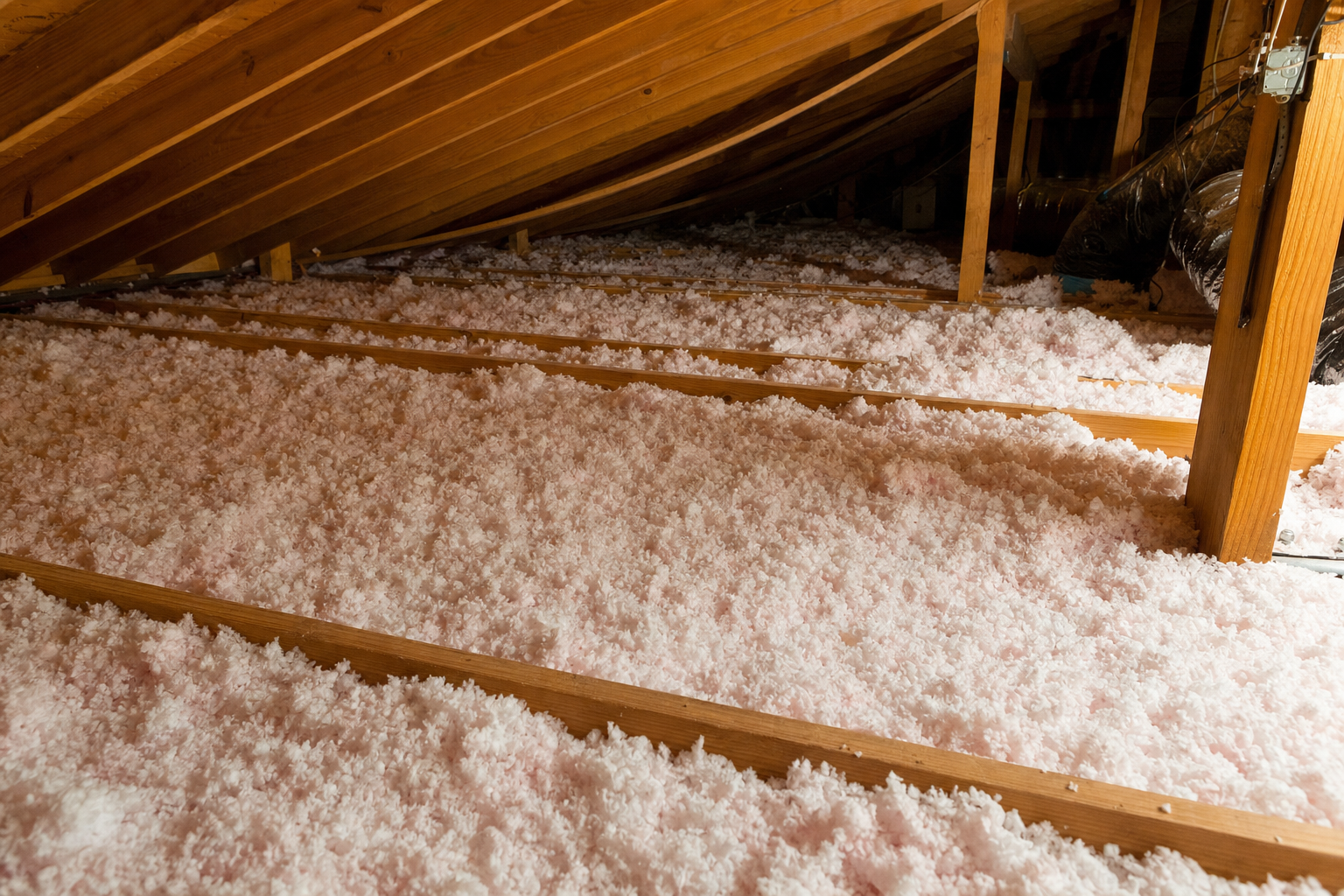
R-value measures resistance to conductive heat transfer. Higher R-value means less heat gets through per unit of temperature difference per square foot per hour. Houston sits in DOE Climate Zone 2. The ENERGY STAR recommended R-value chart for Zone 2 lists R-49 as the upgrade target for a Houston attic that is currently uninsulated and R-38 for a Houston attic that already has 3 to 4 inches of existing insulation.
Texas building code adopts R-38 as the minimum ceiling insulation for new construction and major renovations in Climate Zone 2. Most Houston insulation professionals target R-38 as the code-compliant floor, R-49 as the recommended upgrade for cooling-cost-sensitive homeowners, and R-60 as the top of the DOE-recommended band for homeowners planning to stay in the home 15-20+ years.
The Three Materials Houston Homeowners Actually See
Almost every Houston attic insulation quote lands on one of three products. The R-value-per-inch numbers below are widely published installed values and are the numbers that convert the R-value target into a real settled depth in the attic.
Blown-in fiberglass delivers roughly R-2.2 to R-2.7 per inch installed. It is the most common material blown over existing insulation in Houston attics because it is lightweight, does not absorb moisture the way cellulose does, and is the least expensive per square foot to install.
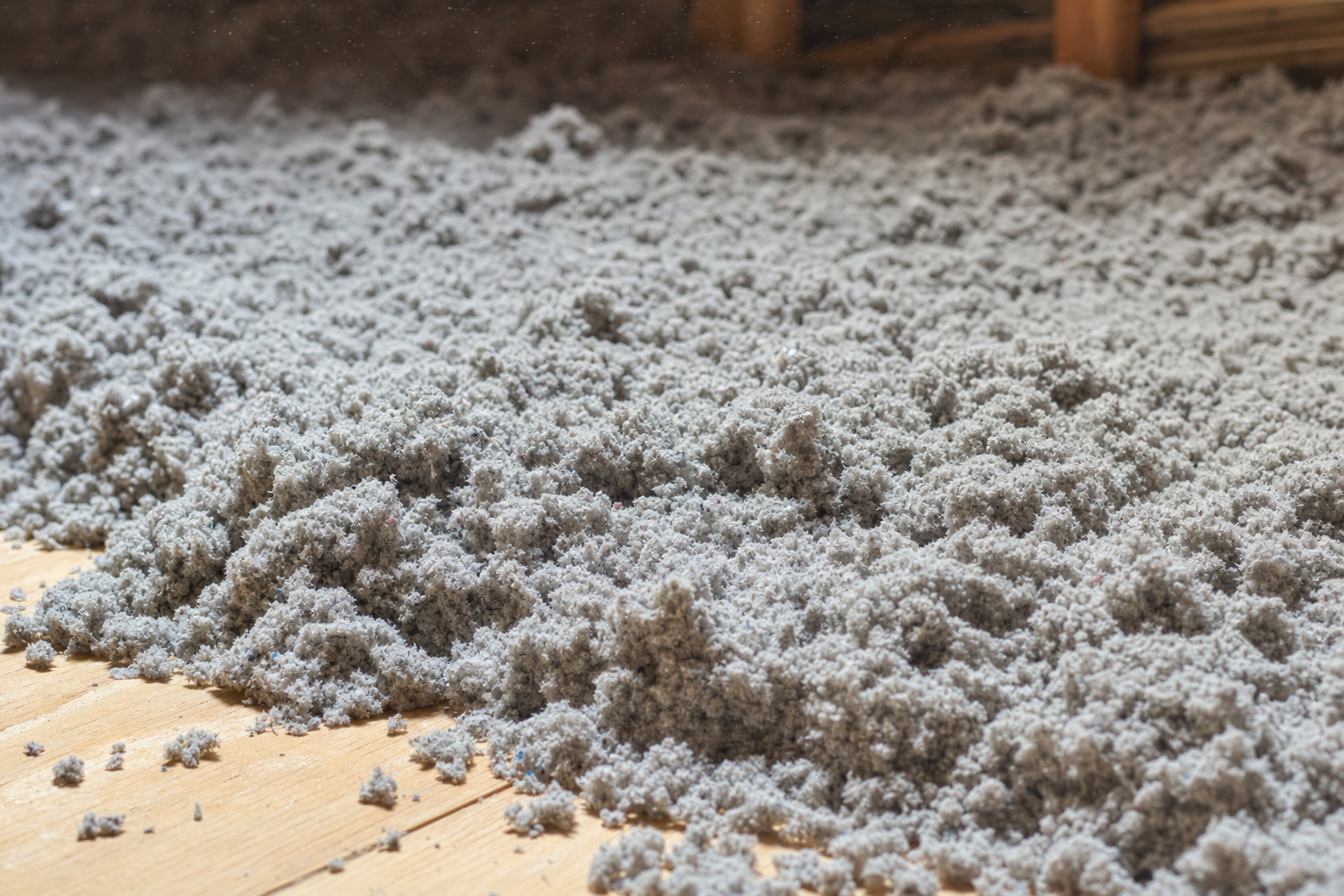
Blown-in cellulose delivers roughly R-3.2 to R-3.8 per inch installed. It is made from recycled newspaper treated with borate for fire and pest resistance. It installs at higher density than fiberglass and does a better job filling around penetrations and top-plate gaps, but it is heavier and it will absorb and hold moisture from any duct leak or bath fan that vents into the attic instead of through the roof.
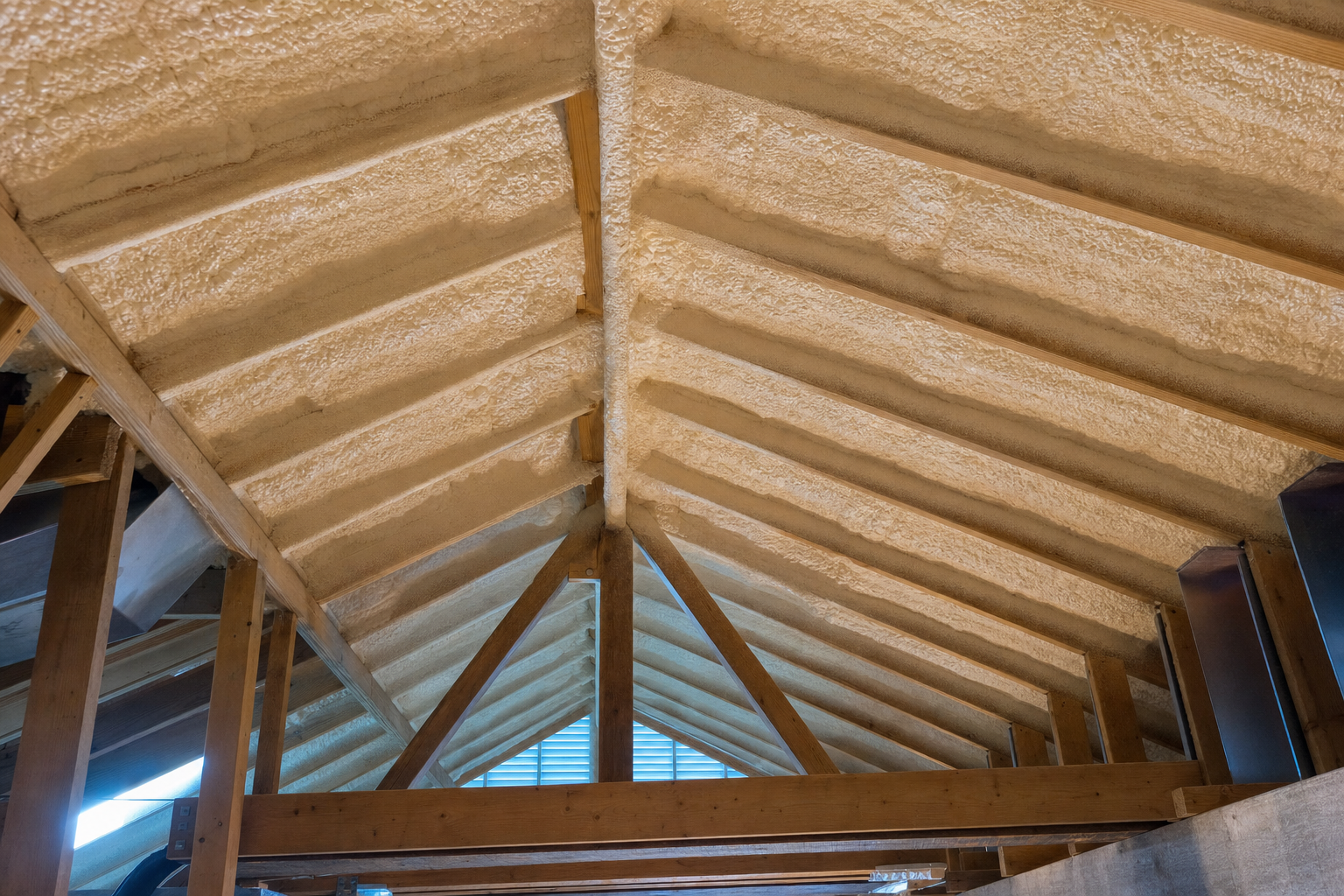
Closed-cell spray foam delivers roughly R-6 to R-7 per inch and is typically applied to the underside of the roof deck to create an unvented conditioned attic. It is the highest performance option, but it is a fundamentally different assembly — see the Houston unvented conditioned attic code guide for the details on when that assembly is the right call.
Depth Math: What R-38, R-49, and R-60 Look Like in Inches
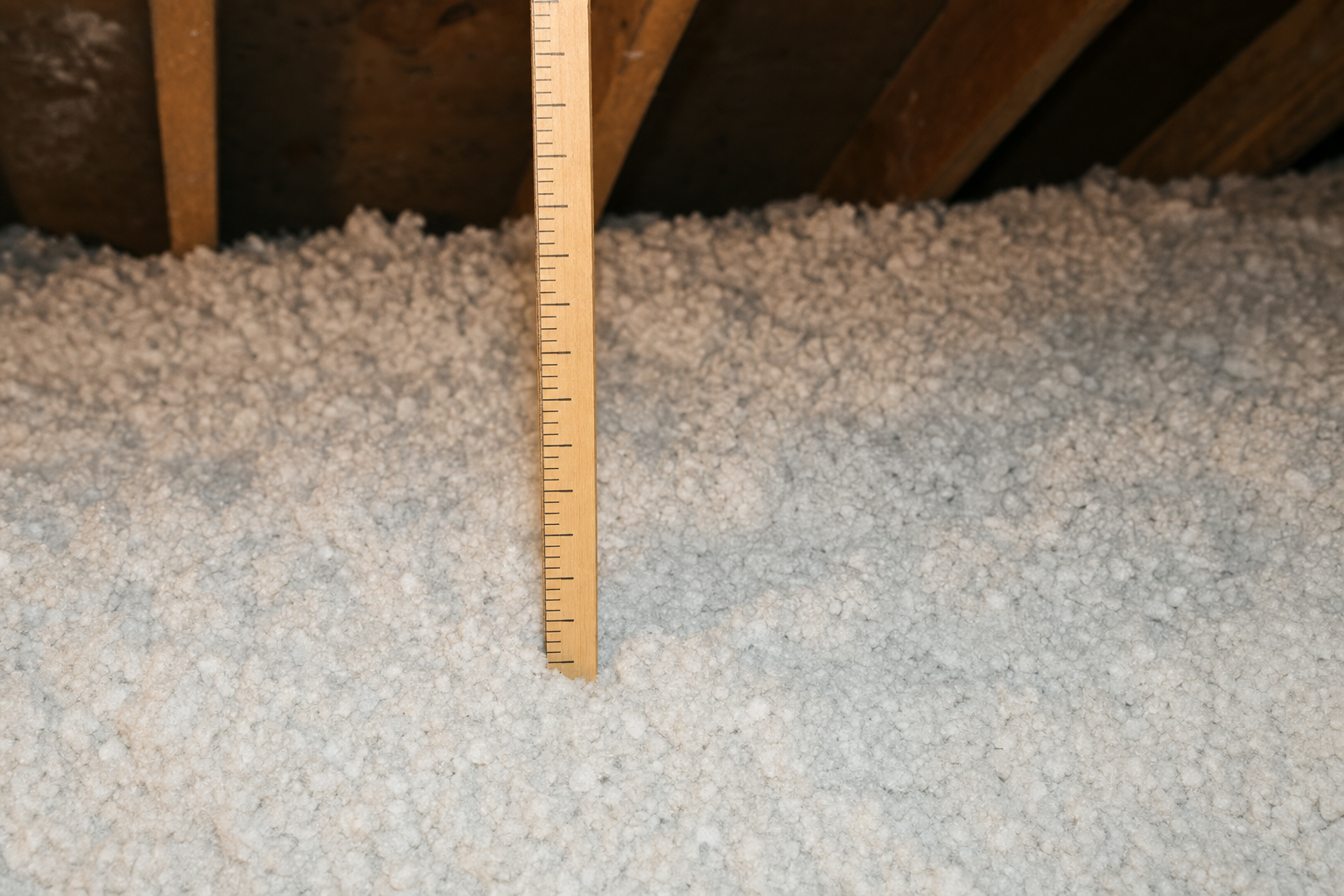
The number a homeowner should actually verify in the attic is settled depth, not the bag count on the invoice. Below is the approximate settled depth required to hit each Houston R-value target for each material, using widely published installed R-value-per-inch numbers.
Blown fiberglass: R-38 needs about 14 to 17 inches settled. R-49 needs about 18 to 22 inches settled. R-60 needs about 22 to 27 inches settled.
Blown cellulose: R-38 needs about 10 to 12 inches settled. R-49 needs about 13 to 15 inches settled. R-60 needs about 16 to 19 inches settled.
Closed-cell spray foam: R-38 needs about 5.5 to 6.5 inches applied to the roof deck. R-49 needs about 7 to 8 inches. R-60 needs about 8.5 to 10 inches. Because spray foam is applied to the underside of the roof deck in the Houston unvented assembly, the total depth is much lower than a blown product on the attic floor.
The Diminishing-Returns Curve Every Houston Homeowner Should Know
The single most important piece of Houston attic insulation math is that ceiling heat transfer follows a diminishing-returns curve, not a straight line. Moving from R-11 to R-38 blocks a very large percentage of ceiling heat transfer. Moving from R-38 to R-49 blocks a small additional percentage. Moving from R-49 to R-60 blocks a very small additional percentage on top of that.
Published DOE and building-science analyses put ceiling heat flow reduction at approximately 97 percent at R-38, 98 percent at R-49, and 98.3 percent at R-60, all relative to no insulation. That is why the Houston recommendation is a range and not a single number: past R-49 the incremental attic R-value delivers less improvement than an equal dollar spent on duct sealing, top-plate air sealing, can-light air sealing, and a radiant barrier on the underside of the roof deck.
What to Verify in a Houston Insulation Quote
A Houston homeowner comparing insulation proposals should push each quote to answer four specific questions before signing. First: what is the target R-value in numbers, and what is the target settled depth in inches for the specific product being blown. Second: does the crew perform air sealing at top-plate penetrations, can lights, and bath-fan boots before blowing, since blowing insulation over unsealed penetrations traps warm humid air paths the insulation cannot stop. Third: what is the plan for the HVAC air handler and ductwork — if either is in the attic, an unvented spray-foam assembly may perform better than adding depth to the attic floor. Fourth: how is settled depth going to be verified after installation — a ruler photo in several attic locations is the honest check.
The related DC Pines guides on attic ventilation math and the radiant barrier and attic energy efficiency cover the adjacent decisions that decide whether the insulation dollar actually shows up on the summer utility bill.
The Bottom Line
For most Houston homes the honest houston attic insulation r value target is R-38 to R-49 with a well-installed blown product, verified in settled inches with a ruler after the crew leaves. R-60 makes sense when the homeowner is staying long term and the duct and top-plate air sealing has already been done. Closed-cell spray foam on the roof deck is a strong option when the HVAC lives in the attic and the homeowner is prepared to condition the attic space. Regardless of the product, the number that matters is settled depth on the day the crew finishes, not the label on the bag.
The attic is where Houston cooling bills are won or lost.
DC Pines Roofing helps Houston homeowners pair the right roof system with a properly specified attic assembly so summer heat stays out and the cooling load drops.