


The Houston September exterior checklist is the quiet window between the worst of the summer heat and the fall rain cycle. Homeowners who skip the reset in September pay for it in October, when caulking that survived one more summer finally lets water into the wall, and gutters full of summer debris and roofing granules overflow onto the fascia in the first heavy shower. September is the month to take stock of the exterior before the weather turns.
The DC Pines Education Center treats September as a discrete season on its own — not late summer, not fall. Houston’s climate spends the month burning off residual heat while humidity stays high and the first cool fronts start rolling through late in the month. That combination stresses sealant, encourages mildew growth, and reveals whichever attic ventilation or drainage weakness has been simmering all summer. This post walks the exterior in the order a DC Pines Roofing inspector would.
Start at the sealant lines
Every exterior seal on a Houston home lives on borrowed time. Sun-cured silicone and polyurethane caulking around windows, doors, trim, and penetrations breaks down under Houston UV in a fraction of the time it would last in a mild climate. By late summer, the visible failures are obvious: cracks running along the bead, sections that have pulled away from one substrate, and chalky white residue where the polymer has degraded past the point of adhesion.
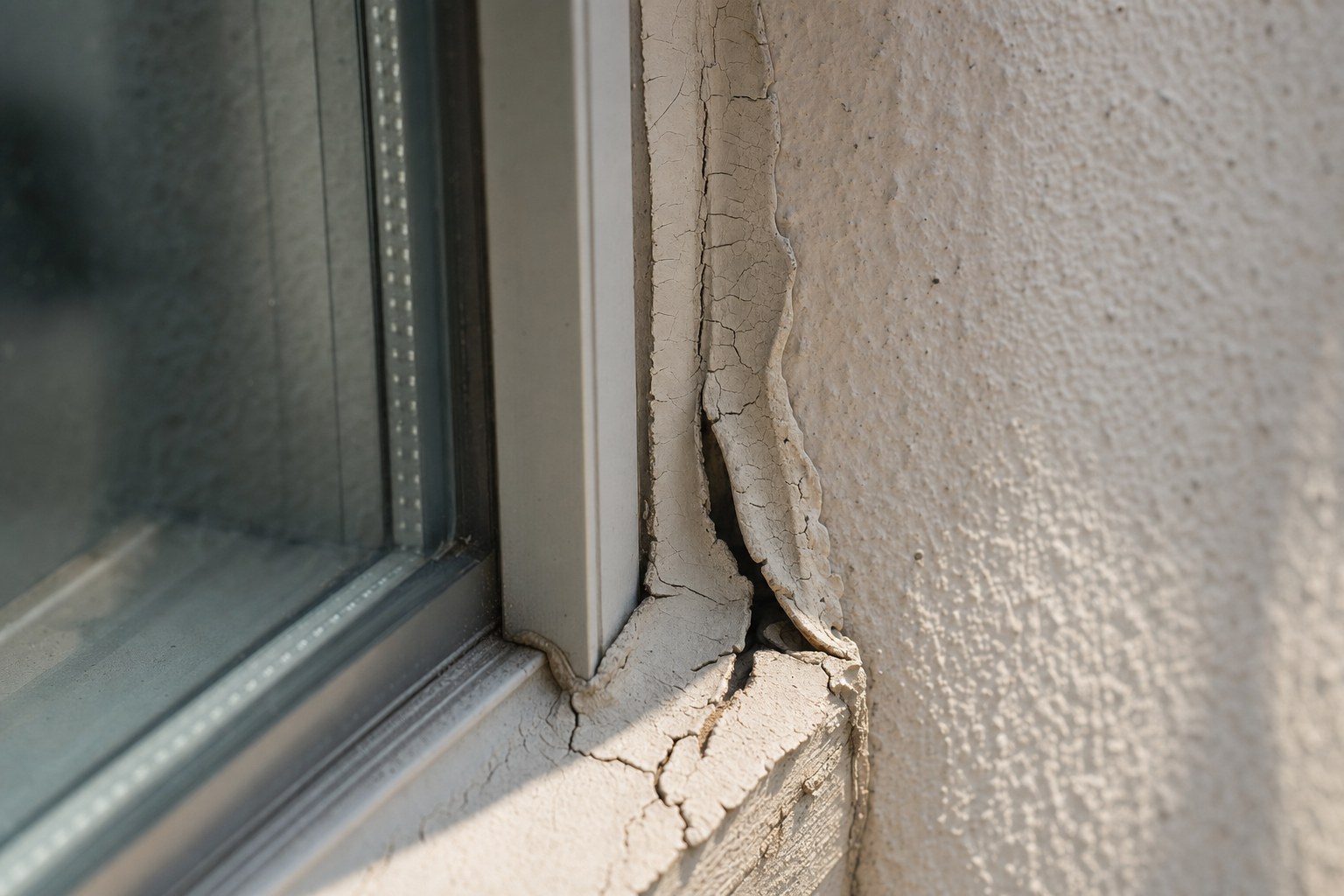
The September inspection is simple: walk the perimeter and press a fingernail into every caulk line at every window, door, and trim transition. If the bead is hard and cracks, it needs replacement. If it is soft and returns, it is still working. Homeowners who want to go deeper can consult the U.S. Department of Energy air-sealing guide, which explains why exterior seal failures drive both moisture intrusion and cooling losses in humid climates like Houston.
Address summer mildew before it stains
Houston humidity keeps the shaded, north-facing sides of a home damp long enough for mildew and algae to establish colonies over the summer. By September, that growth is visible as green, gray, or black patches on siding, brick mortar, fences, and around downspout terminations where splash-back keeps the surface moist. Left alone through the fall rain cycle, mildew becomes a stain that requires more than a rinse to remove.
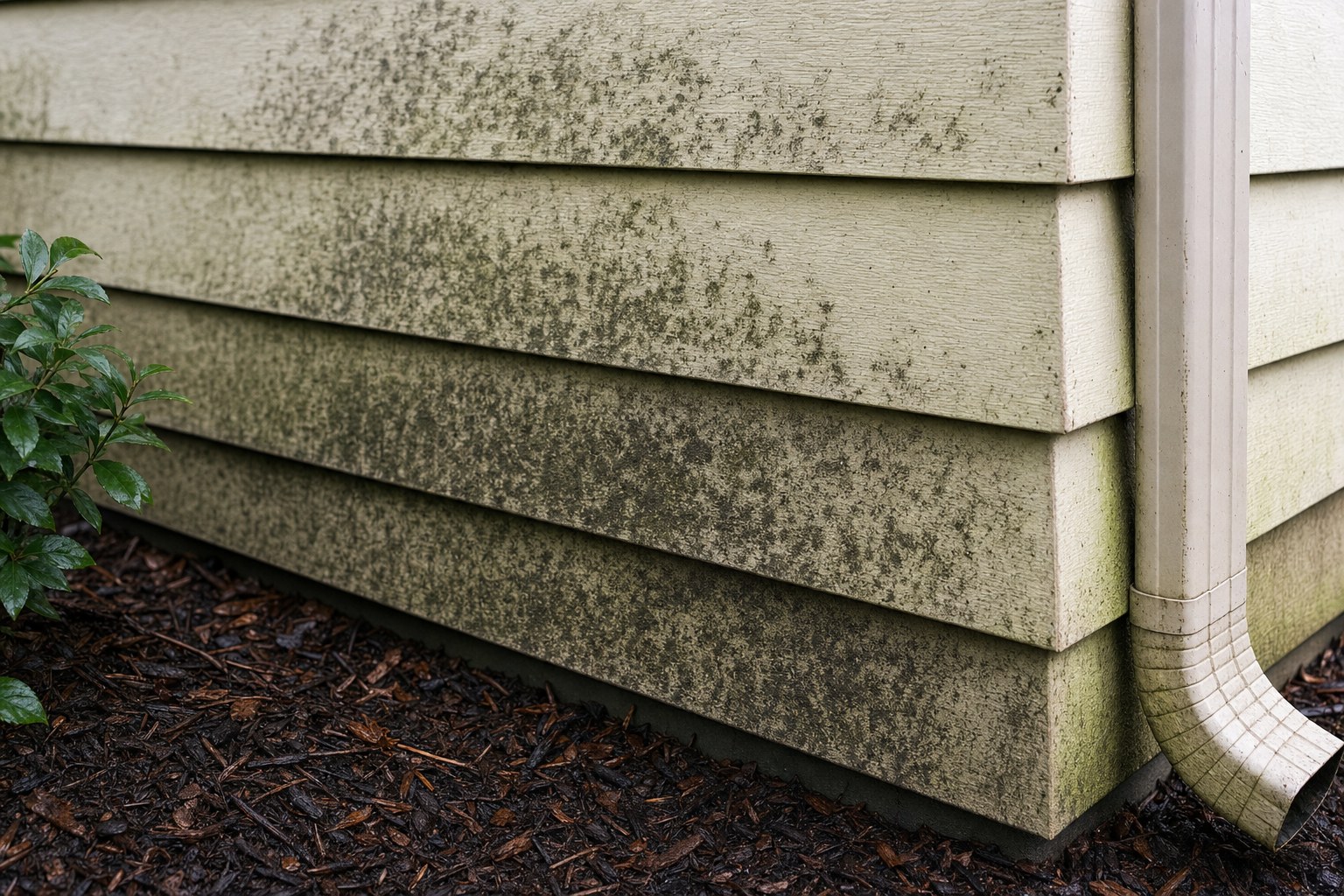
Soft-wash treatment with a diluted sodium hypochlorite solution and a low-pressure rinse is safer than high-pressure washing on most Houston siding. High pressure drives water behind fiber-cement and Hardie panels, waterlogs soft trim, and can strip granules from asphalt shingles when a homeowner turns the wand toward the roof to knock down streaks. If black roof streaks are the concern, see the DC Pines Roofing guide to algae-resistant shingles and copper granules instead of pressure-washing the roof.
Clear the drainage path before fall rain
Houston gutters do not need to wait for live oak leaf drop to fill up. By September, most gutter runs already hold three to four months of accumulated dust, wind-blown seed pods, small twigs, and roofing granules washed off aging shingles during summer storms. That layer is heavy enough to slow drainage and create the standing water that breeds mosquitoes and stains the inside of the trough.
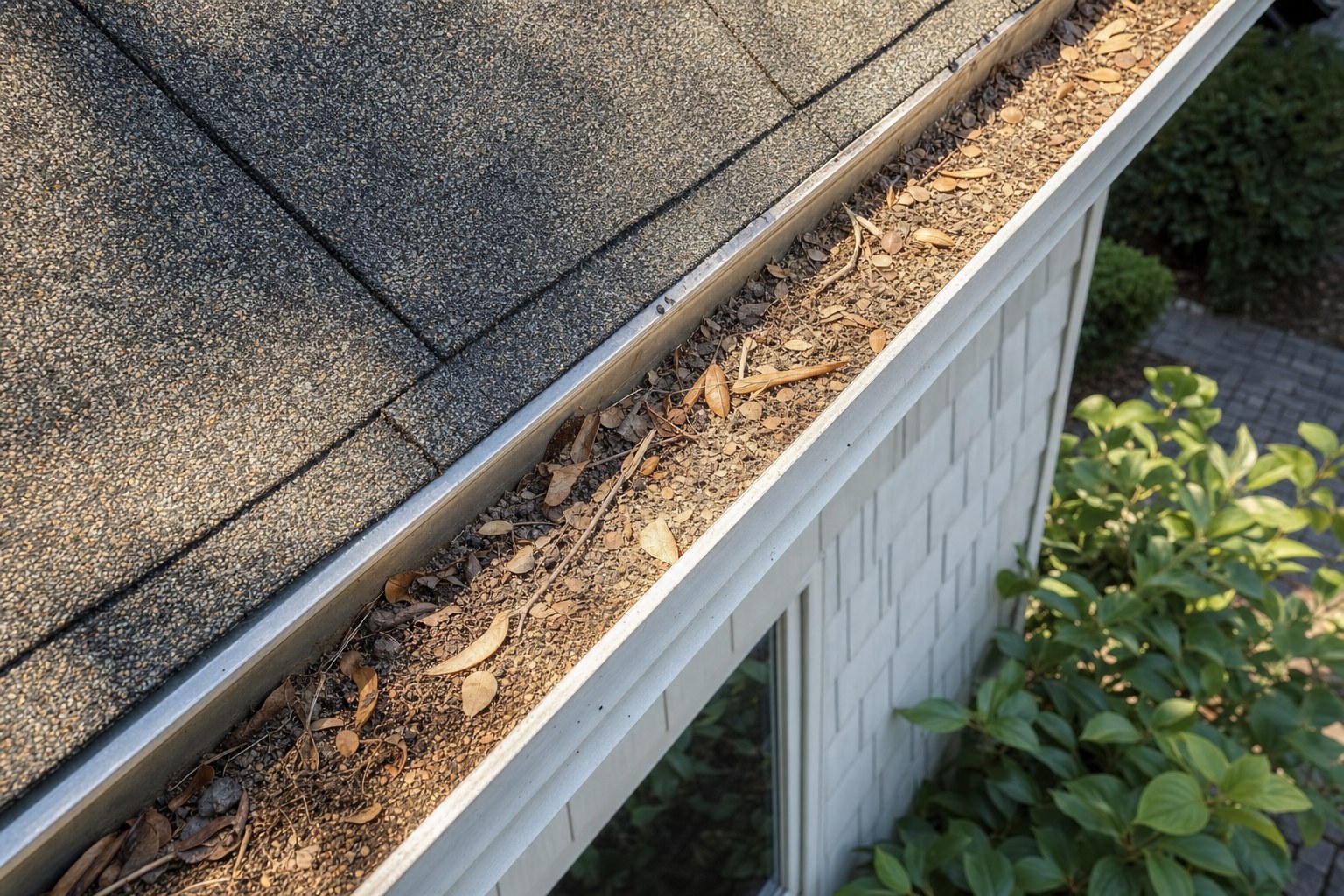
The September cleaning is the first of two annual passes most Houston homes need; the second follows leaf drop in late November. While the gutters are open, homeowners should verify that downspouts drain a minimum of four to six feet from the foundation, that hangers are still tight, and that the front lip of the gutter has not rolled forward from the weight of summer debris. For more detail on drainage geometry, see the DC Pines Roofing guide to gutter sizing and downspout capacity.
Check attic ventilation before the fall pressure test
September is when the summer’s ventilation performance is easiest to grade. On a still afternoon with the AC running, an attic that is more than 30 degrees Fahrenheit above outside air temperature is telling homeowners that intake, exhaust, or both are undersized. Blistered shingles from below, rusted nail heads on the underside of the deck, and heat-cured plywood decking all point to the same problem.
The ENERGY STAR Roof Products program notes that a properly ventilated attic reduces cooling loads and extends shingle life in hot climates. The math sits in the International Residential Code — one square foot of net free vent area for every 150 square feet of attic, split evenly between soffit intake and ridge or off-ridge exhaust. Houston attics that fail the September temperature check almost always fail the code check too.
Walk the roof from the ground
A September roof walk starts at the driveway, not on a ladder. Homeowners can spot most heat-driven roof problems from the ground: shingle tabs that have lifted at the corners, curled edges on courses that face the hardest afternoon sun, and dark streaks in the gutter where granules have washed off. Any of those signs is a cue to bring in a professional for a closer look before the fall rain cycle exposes what the summer heat weakened.
For related Houston reading, see the DC Pines Roofing guides to how Houston heat ages asphalt shingles and the Houston gutter maintenance guide.
The Bottom Line
The Houston September exterior checklist is not glamorous, and none of it involves emergency work. That is exactly why it matters. Sealant, mildew, drainage, ventilation, and shingle condition all show themselves in September, when homeowners still have time to act before the first heavy fall rain reveals whatever the summer heat left behind. A one-hour inspection this month is the cheapest maintenance a Houston home will get all year.
Ready for a professional Houston exterior reset?
DC Pines Roofing inspects the roof, flashing, gutters, and ventilation together so nothing falls through the cracks before fall rain arrives.