Choosing a Houston roofing contractor is one of the largest exterior decisions a homeowner will make, and it is one where the wrong choice tends to hide for years before showing up as leaks, denied warranty claims, or a resale headache. The tricky part is that most of the warning signs are visible before the first shingle is torn off — if a homeowner knows what to look for.
The DC Pines Education Center put together this Houston roofing contractor red flags checklist to help homeowners compare bids with clearer eyes. It focuses on the eight signals that show up during the estimate, contract, and jobsite stages — the moments where careful vetting pays off most.
Credentials and Local Footprint (Red Flags #1 and #2)
Texas does not license roofing contractors at the state level, so a homeowner’s first job is to confirm the company actually exists in a durable way. That means a physical Houston-area office or shop, a business filing with the Texas Secretary of State, a company website with real project history, and reviews that stretch back more than a few months. A crew that shows up in an unmarked truck with a magnetic door sign and no permanent local footprint is a signal to slow the conversation down.
The second half of this credential test is insurance. A serious Houston roofing contractor carries general liability and workers compensation, and a homeowner should ask for a certificate of insurance issued directly by the carrier — not a photocopy handed over by the salesperson. A quick phone call to the listed agent confirms the policy is active. Homeowners can pair this with the general fraud-prevention guidance the Texas Department of Insurance publishes on contractor scams, which points to the same core signals: no local address, no written estimate, pressure to sign fast, and requests for full payment up front.
The Estimate and Contract (Red Flags #3 and #4)
A verbal price is not a bid. A real Houston roofing proposal breaks out the tear-off, decking replacement allowance, underlayment type, starter strip, drip edge, ice-and-water at valleys and penetrations, shingle product and color, ridge cap, flashing, ventilation, cleanup, and warranty terms as separate line items. Homeowners who receive a single lump-sum “roof: $X” have no way to compare bids fairly, and no way to hold anyone accountable if a corner gets cut on the actual install.
Pressure tactics belong in this same conversation. The Federal Trade Commission’s home-repair scam guidance lists high-pressure sales as the single most common thread across contractor complaints. A trustworthy roofing contractor gives a Houston homeowner time to read the contract, ask questions, and get a second bid. Discounts that evaporate at the end of the visit, contracts pushed across the kitchen table before the walk-around is finished, or scare tactics about a roof that “will not survive the summer” all belong in the red-flag column.
What a Calm Sales Conversation Sounds Like
A settled roofing salesperson explains what was found on the roof, hands over photos, walks the homeowner through the proposal, and leaves. Any real discount they can offer today they can also offer next week — and any professional who cannot say that in plain language is telling the homeowner something important.

Payment Schedule and Warranty Language (Red Flags #5 and #6)
Reputable Houston roofing contractors tie payments to milestones. A modest deposit at contract signing is normal. Full payment before materials are delivered is not. A common healthy structure looks like a small deposit, a material draw when the shingles and accessories arrive on the driveway, and the balance after the final inspection and cleanup are complete. Any structure that puts most of the money in the contractor’s hands before the roof exists is a structural risk, not a scheduling convenience.
Warranty language deserves the same scrutiny. Every asphalt shingle roof carries two separate warranties, and a homeowner should see both. The manufacturer warranty covers the shingles and accessories, and its strongest tiers are only available when a certified contractor installs a matched system. The workmanship warranty is the contractor’s promise on the install itself. Homeowners should confirm the exact tier of manufacturer coverage, whether the workmanship warranty is transferable to a future buyer, and what is specifically excluded. “Lifetime warranty” printed on the proposal without a product tier or duration attached is marketing language, not a warranty.
Craftsmanship Details and References (Red Flags #7 and #8)
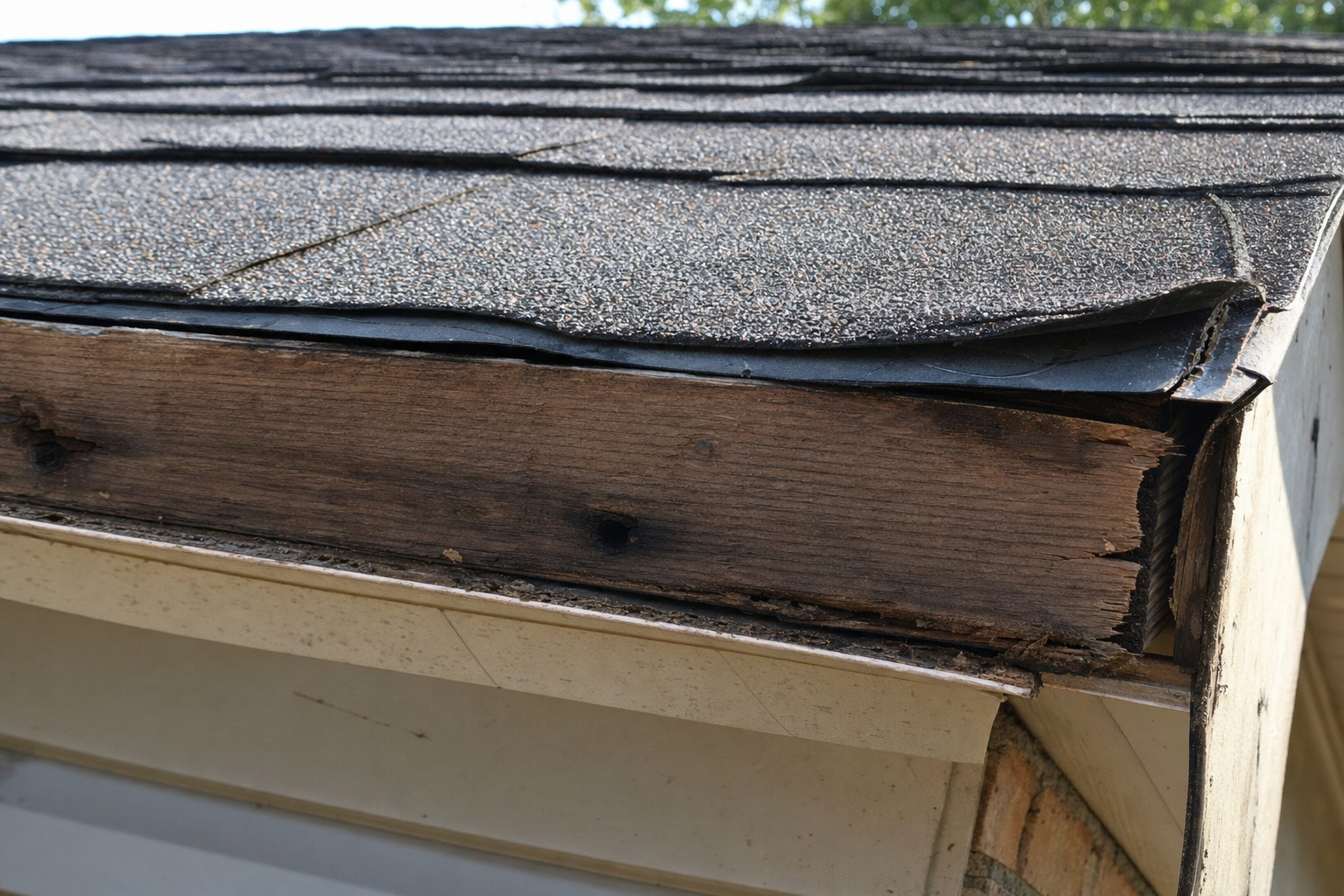
Most premature Houston roof failures start at the transitions — the drip edge, valleys, wall flashings, and pipe boots — not the shingle field in the middle of the roof. A contractor whose estimate does not mention drip edge, valley treatment, step flashing, or pipe boot replacement is either assuming reuse of existing components or hoping the homeowner will not ask. Both answers cost the homeowner years of roof life. A calm, thorough contractor talks about the edges as much as the shingles.
The last vetting check is the paper trail behind the crew. A contractor operating in Houston for real should be able to name at least three recent local jobs, share addresses of driveway signs still up, and point a homeowner to reviews across multiple platforms — Google, the Better Business Bureau, and manufacturer certification directories. Refusal, delay, or references only from far outside the metro is a signal to keep vetting. Homeowners can strengthen this step further by cross-checking that the contractor’s shingle-manufacturer certification is listed on the manufacturer’s own website, not just on a business card.
The Bottom Line
The best defense against a bad roofing contractor is a slow first meeting. Written estimates, itemized scopes, verified insurance, milestone payments, real warranty tiers, honest talk about the roof edge, and references a homeowner can actually call are the eight signals that separate a settled Houston roofing contractor from a fly-by-night crew. Homeowners who apply this checklist to every bid — including the lowest one — tend to end up with a roof that lasts as long as it was sold to last, and paperwork that holds up when it is time to sell the home. For related background, homeowners can read the DC Pines guides on the transferable roof warranty and home resale value, the Sugar Land HOA roof approval process, and the craftsmanship standards a Houston install should meet.
Vetting a Houston roofing contractor and want a second opinion?
The DC Pines Roofing team offers no-pressure, itemized written estimates that give homeowners a clear apples-to-apples baseline for comparing bids.