

September has closed out one of the hotter, wetter Gulf Coast summers on record for Houston homeowners, and October is the natural reset point for anything on the outside of the house. Attic temperatures drop, gutters stop swelling with humidity, and the first real cool snap — historically late October to early November for Houston — is close enough to plan for but far enough away to actually fix what needs fixing. The window is short but usable.
This is a whole-envelope October checklist for Houston-area homes: HVAC, attic ventilation, roof visual, gutter and downspout drainage, sealants and flashings, and the small drainage details that stop small problems from becoming winter emergencies. Nothing here requires a specialist — most of it is homeowner-doable in a Saturday morning, and the parts that need a professional are called out clearly.

Step 1: The HVAC Cool-Down Handoff
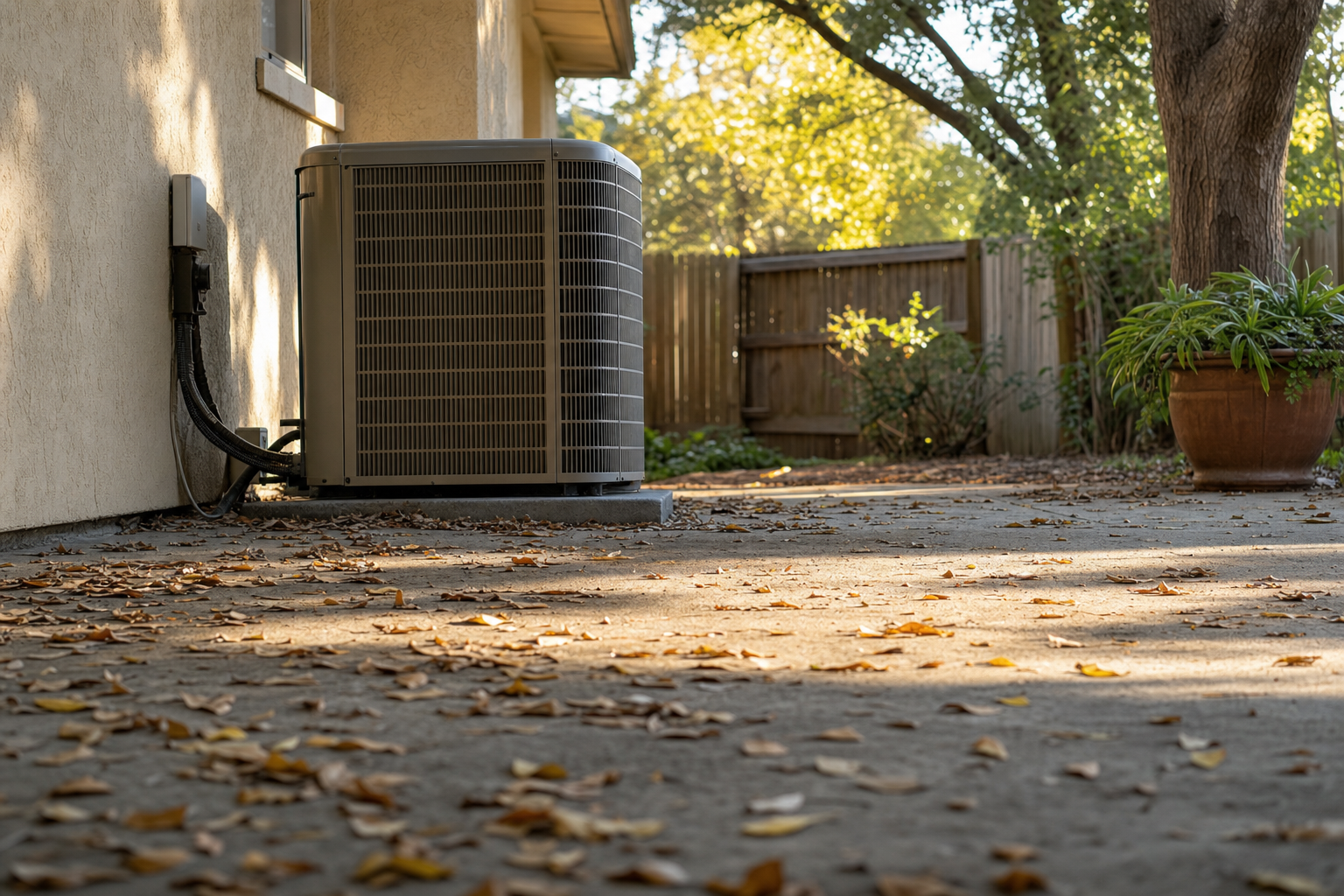
Houston air conditioning systems have run at or near full capacity for roughly six straight months. Before the cool snap arrives and the system starts cycling less often, October is the moment to reset the equipment for its next season.
- Replace the filter. One-inch pleated filters that have been in place since summer are almost always clogged. Even if the media looks acceptable, the pressure drop across a partially loaded filter forces the blower to work harder and pulls conditioned air past the seams instead of through the media.
- Rinse the outdoor condenser coil. With the disconnect pulled and the unit off, use a garden hose (not a pressure washer) to rinse fins from the inside out. Live oak pollen, lawn clippings, and dust accumulate through summer and choke off airflow.
- Clear a 24-inch radius around the outdoor unit. Trim shrubs, sweep leaves, and lift any patio furniture that has migrated too close. Airflow starvation shows up on utility bills before it shows up on the thermostat.
- Check the condensate line. The PVC drain from the indoor air handler should be draining freely. A cup of distilled vinegar poured into the cleanout every quarter breaks up biological growth before it clogs the line and triggers the safety float switch.
The ENERGY STAR heating and cooling guidance is a useful reference for anyone thinking about seasonal HVAC habits beyond the filter change.
Step 2: Attic Ventilation and Insulation Check
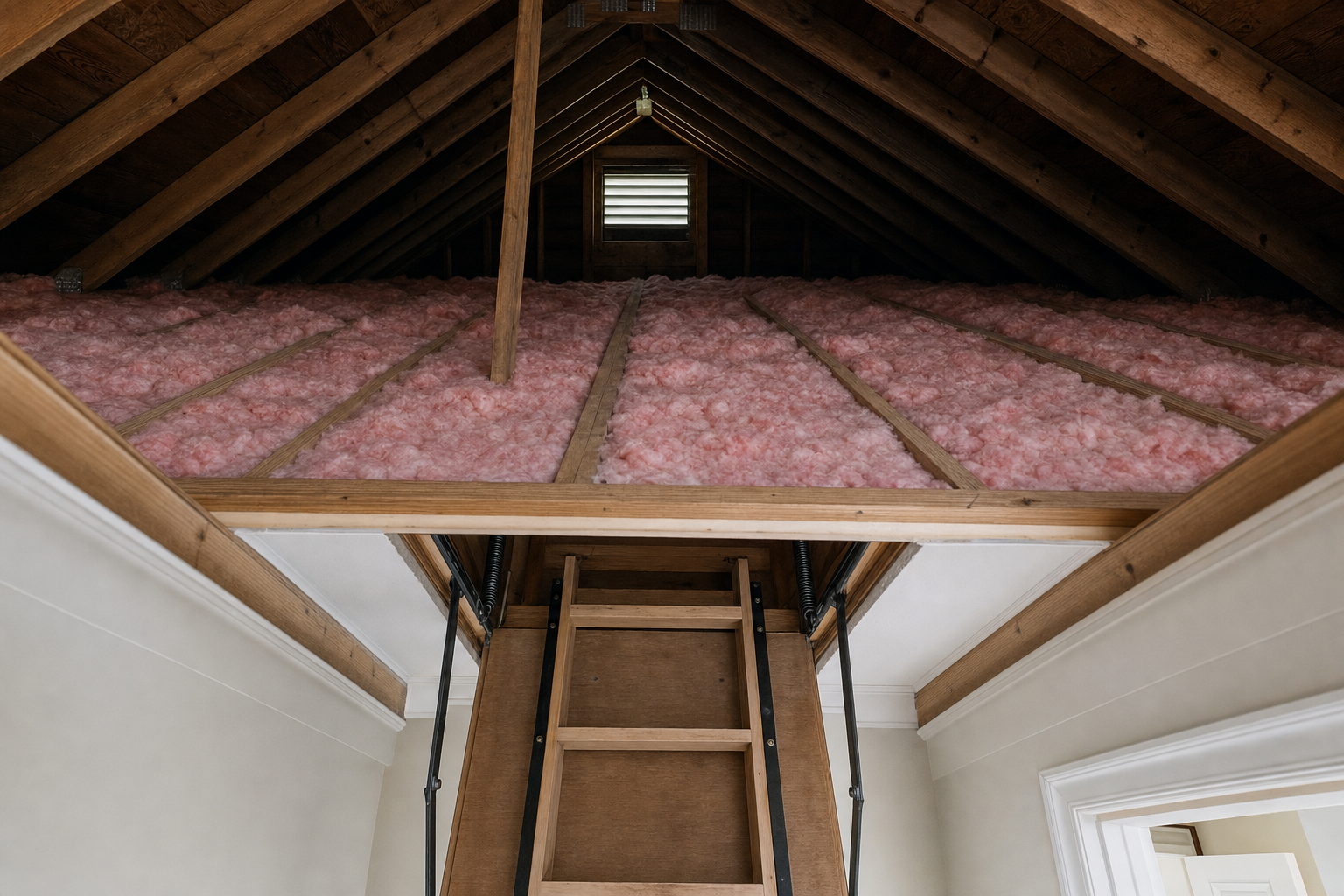
Houston attics are the single biggest source of comfort and energy waste in a home, and October is when a homeowner can safely go up there without heat exhaustion. The pull-down ladder or scuttle opens onto the year’s most useful diagnostic view.
What to look for from the hatch
- Insulation depth. Modern Houston-code homes should have R-38 or higher, which translates to roughly 12–14 inches of blown fiberglass or cellulose. Look for compressed spots, gaps around can lights, and any dark discoloration around the perimeter — that discoloration is dust drawn through leaks, and it is a map of where air is escaping.
- Ventilation balance. A traditional vented attic needs both intake (soffit vents) and exhaust (ridge vent, turbine, or gable vents). If soffit vents are blocked by insulation or paint, the exhaust vents pull conditioned air from the house instead of outside air from the eaves. That is the single most common ventilation failure in Houston homes.
- Signs of water. Rusty nail tips, dark decking stains, or matted insulation are all early warnings. Trace each one back to the roof plane above.
The building-science background here is well-documented; the U.S. Department of Energy’s insulation basics guide covers R-values and climate zones, and homeowners with unvented (sealed-attic) systems should treat their attic as its own system and not add traditional vents.
Step 3: The Ground-Level Roof Visual
A homeowner does not need to climb the roof to catch most October-relevant problems. A walk around the perimeter with a pair of binoculars catches roughly 80 percent of the issues that matter before the first cool snap.
- Shingle edges and corners. Curled, cupped, or missing shingles along the eaves and rakes are the earliest visible sign of aging. Individual missing tabs after summer’s heat cycles are worth flagging.
- Pipe boots and vent boots. The rubber gaskets around plumbing vents crack under Houston UV. Any visible split is a slow leak waiting for the next rain event.
- Ridge cap and hip lines. Look for lifted or displaced ridge caps, and any daylight visible along the ridge line from the ground.
- Flashing at chimneys, skylights, and wall junctions. Streaks of rust or dark staining on siding directly below flashing points to failed sealant.
Anything ambiguous is worth a professional look before November rain patterns settle in. Getting eyes on a suspect area in October costs far less than a mid-storm emergency call in December.
Step 4: Gutters, Downspouts, and the Ground
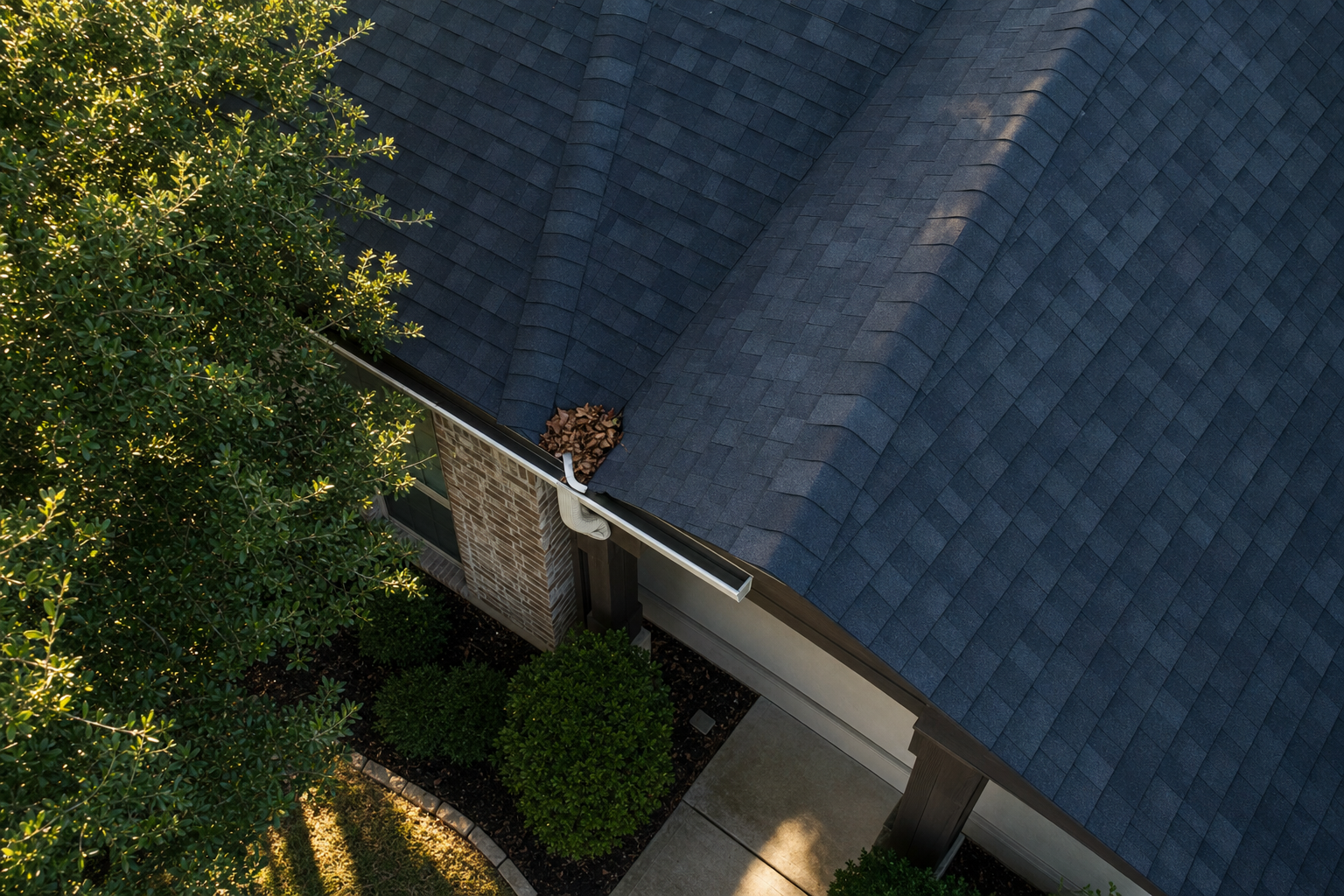
Houston’s leaf drop is unusual — live oaks shed in spring, but pecans, sweetgums, sycamores, and crepe myrtles all drop through October and November. Combined with the region’s short, intense rain events, that means a partial gutter clog can overflow a homeowner’s flowerbed in a single afternoon storm.
- Clear the gutters, front to back. Remove leaves, twig debris, and any granule accumulation from the roof above. Even ¼-inch of sediment reduces gutter capacity noticeably.
- Flush each downspout. Run a garden hose from the far end and watch the outlet. A slow trickle at the bottom means a clog somewhere in the elbow or extension.
- Check where water exits. Downspouts should discharge at least 4 to 6 feet from the foundation, ideally onto a splash block or into a buried drain that carries water away from the slab.
- Look for gutter separation and pitch problems. Sections pulling away from the fascia, sagging in the middle, or holding standing water after a rain are all fall-priority repairs.
Step 5: Sealants, Weatherstripping, and Envelope Seals
The last major October category is the small seals that hold the building envelope together. Every one of them fails eventually, and every failure lets conditioned air out and humid air in.
- Exterior door weatherstripping. Feel for daylight at the corners and the top of the door. Replace any compressed foam or torn rubber before winter drafts start.
- Window casing sealant. Check the exterior caulk bead around window casings. Cracks and separations get a bead of paintable polyurethane or hybrid sealant.
- Penetrations and control joints. Cable, dryer vent, gas line, hose bib, and satellite mount penetrations all crack open under UV. Re-seal with an exterior-rated product.
- Foundation vents and dryer vent flap. Vermin proofing matters as rodents look for warm shelter in November. Screen any open foundation vents, and confirm the dryer vent hood flap closes cleanly.
Step 6: Drainage Around the Slab
Houston homes are almost universally slab-on-grade, and slab performance depends on consistent moisture around the perimeter. October is the moment to walk the foundation and check three things: soil should slope away from the slab, mulch should not be piled against siding or brick, and any settlement or erosion near downspouts should be filled and re-graded before the winter rain pattern arrives. Slab movement from inconsistent perimeter moisture is one of the most expensive failures on a Houston home — and one of the most preventable.
The Bottom Line
An October home exterior reset in Houston is not glamorous work. There is no single project a homeowner points to and says “I did that.” What there is, instead, is a house that runs cooler, dries out faster, sheds water correctly, and delivers a winter without emergencies. The HVAC filter, the attic ventilation, the gutter flush, the exterior caulk bead, and the perimeter drainage walk together add up to maybe four hours of Saturday morning work and hundreds — sometimes thousands — of dollars in avoided damage.
For any item on this list that turns up something bigger — active roof leaks, ventilation failures, chronic gutter overflow, or foundation drainage problems — October is also the right month to bring in a professional while schedules are still open. By late November, most Houston-area home services trades are booked through the holidays.
Homeowners who want to review adjacent Houston-specific guides can look at the Houston attic ventilation and radiant barrier guide, the Houston gutter maintenance guide, and the Houston windows energy efficiency warning signs. Each covers a single system on this checklist in more depth.
Booked up before the first cool snap? Get a Houston-area exterior inspection.
DC Pines Roofing walks the roof, gutters, ventilation, and flashings so nothing on your fall checklist gets missed.