
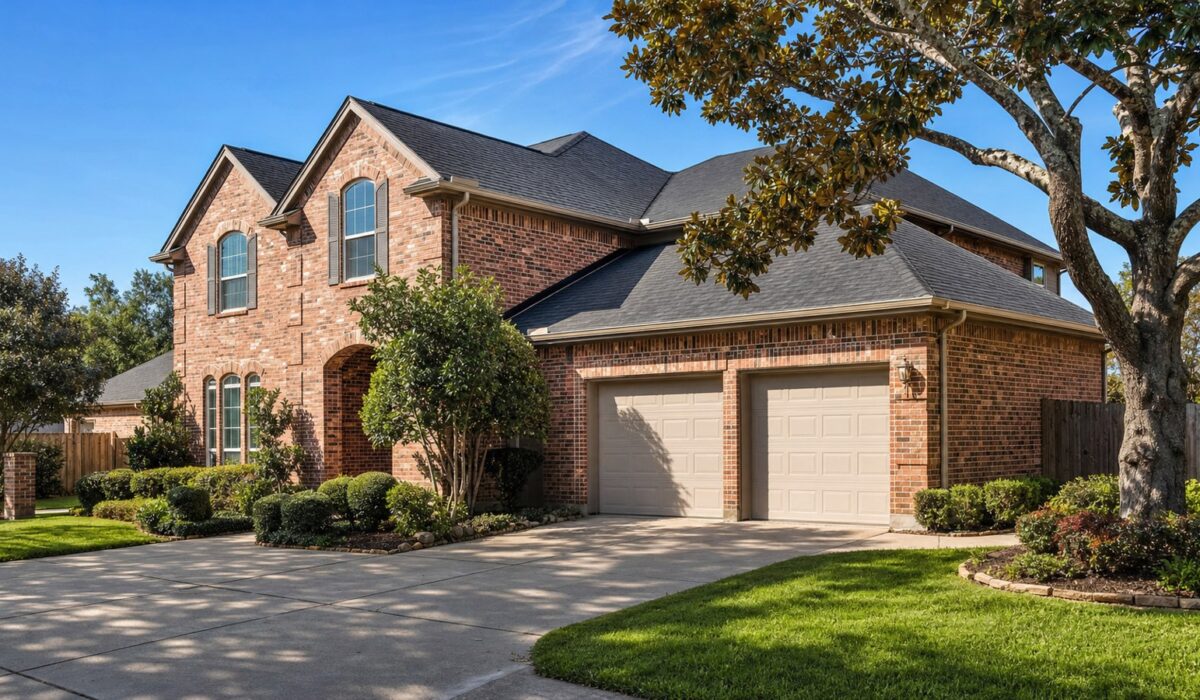
Ask five Houston homeowners what protects the fascia board behind their gutter and most will say the gutter itself. In practice the answer is a thin piece of metal flashing, and the difference between having the right flashing and having the wrong flashing shows up as either a dry, painted fascia or a soft, blackened one after a few humid summers. This guide breaks down gutter apron vs drip edge, what each one does, where each one belongs on a Houston home, and how to tell from the ground whether a house has one, the other, or both.
The two components look similar in a supplier’s catalog but they solve different problems. Drip edge is a code-required roof edge flashing that keeps water out of the sheathing and away from the fascia. Gutter apron is a longer, hemmed piece of flashing whose entire purpose is to bridge from under the shingle down into the back of the gutter. In Houston’s rain-heavy, humidity-heavy climate, a house with drip edge but no gutter apron often still ends up with wet fascia — and the DC Pines Education Center walks homeowners through exactly why that happens.
What drip edge actually does
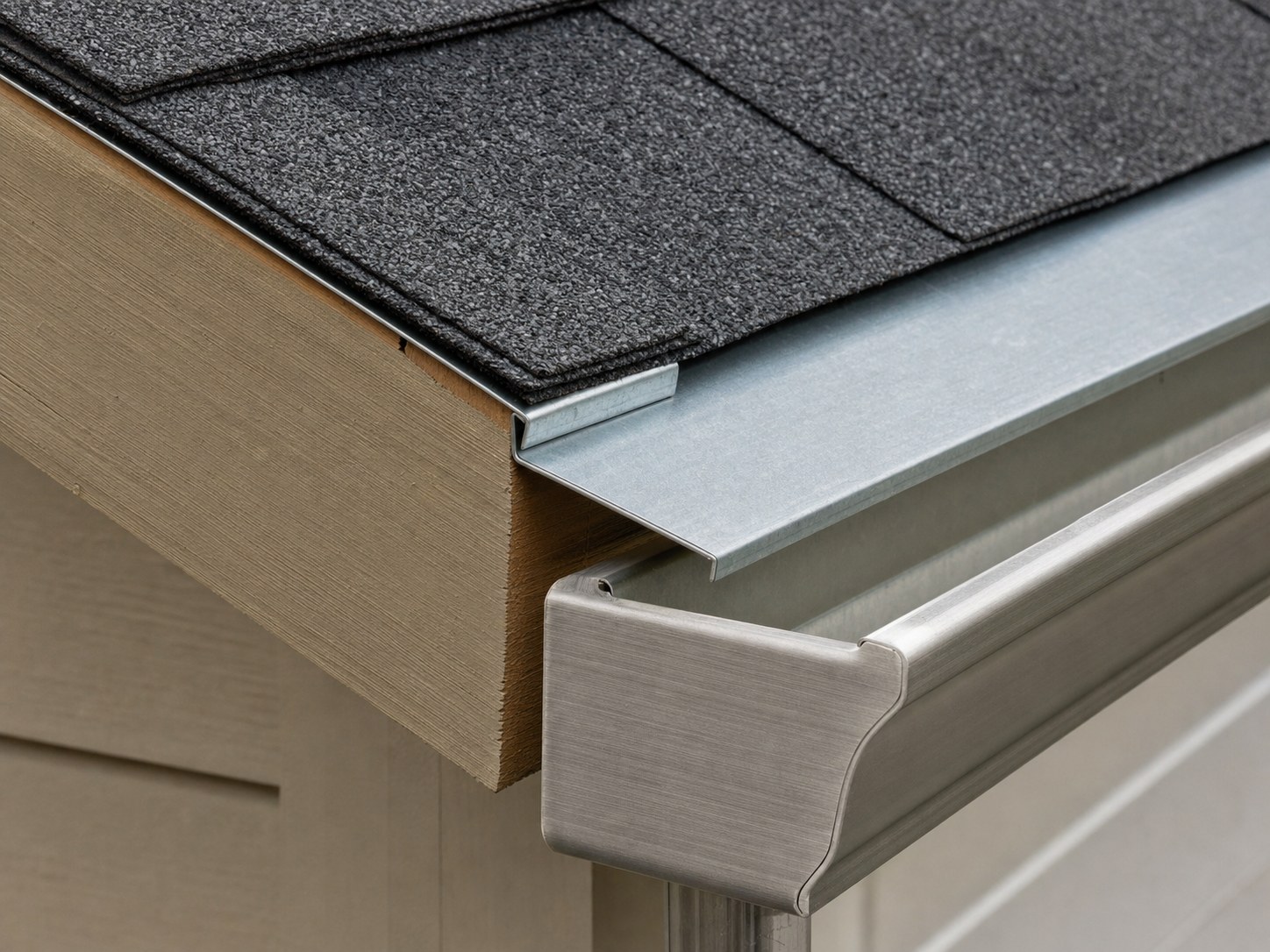
Drip edge is a narrow L-shaped metal flashing, typically painted aluminum, that runs the full perimeter of the roof. Its horizontal leg tucks under the shingle at eaves and over the underlayment at rakes. Its vertical leg hangs down about an inch and a half past the roof sheathing so that water dripping off the edge falls clear of the fascia rather than wicking back onto the wood.
The 2018 International Residential Code section R905.2.8.5, which the City of Houston has adopted, requires drip edge at eaves and rakes for asphalt shingle roofs. It also specifies overlap, gauge, and fastening spacing. That code language is the reason drip edge shows up on every quality re-roof in Houston, even homes without gutters — it protects the sheathing regardless of whether water is being captured below.
What gutter apron actually does
Gutter apron is a wider L-shaped flashing, sometimes called a gutter flashing or a fascia apron. The upper leg is the same width as drip edge, but the lower leg is significantly longer — often four to six inches — and is bent so that its bottom edge extends into the back of the gutter itself. The result is a continuous metal ramp from under the shingle down into the trough.
The physics behind the apron
Water leaving a shingle does not always fall straight down. Surface tension carries a portion of it back along the underside of the shingle edge, and wind, especially the swirling gusts common on Houston’s afternoon storm cells, can push runoff sideways and up under the metal. Without an apron, that water lands on the fascia behind the gutter or drips onto the top of the fascia and runs down its face. With an apron, the water has nowhere to go except into the gutter.
Why Houston’s climate makes the apron matter more
Houston sits in Climate Zone 2A: hot, humid summers with heavy rainfall from May through October. National Weather Service Houston/Galveston puts the region at roughly 50 inches of annual rainfall in intense bursts. Fascia boards here stay wet longer between rain events than fascia in drier climates, so any water reaching bare wood has more time to soak in.
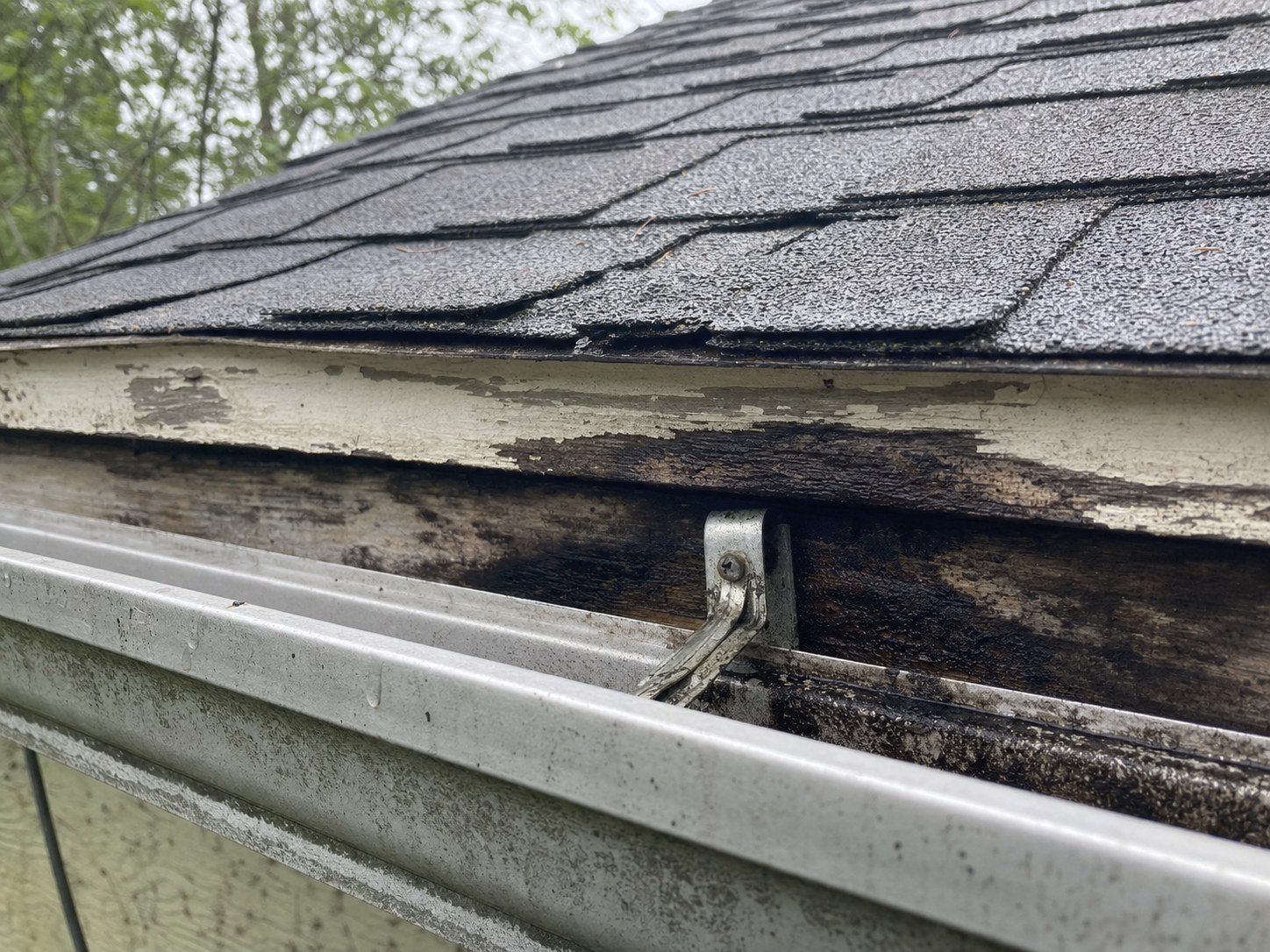
Add to that the number of Houston homes with wood-composite fascia rather than PVC or fiber cement, and the missing-apron problem becomes almost predictable. Rot from a missing apron shows up first as peeling paint along the top edge, then as dark streaks, then as soft spots. By the time damage is visible from the ground, sheathing above the fascia is often involved.
How to tell what your house has
From the driveway, look at the eave line where the shingles meet the gutter. A narrow strip of metal peeking out from under the last shingle course that ends above the gutter is drip edge only. A wider strip whose lower edge disappears inside the top rear of the gutter is a gutter apron. In many Houston neighborhoods built during the early 2000s the answer is neither — the shingles simply overhang the gutter with no flashing between them.
The rear elevation is usually the fastest place to check because the light hits at an angle that reveals the flashing profile. If a homeowner can see the wood grain of the fascia between the shingles and the gutter, both flashings are missing and the fascia is doing all of the work of shedding water. That is the configuration most likely to produce rot within five to seven Houston summers.
What proper installation looks like
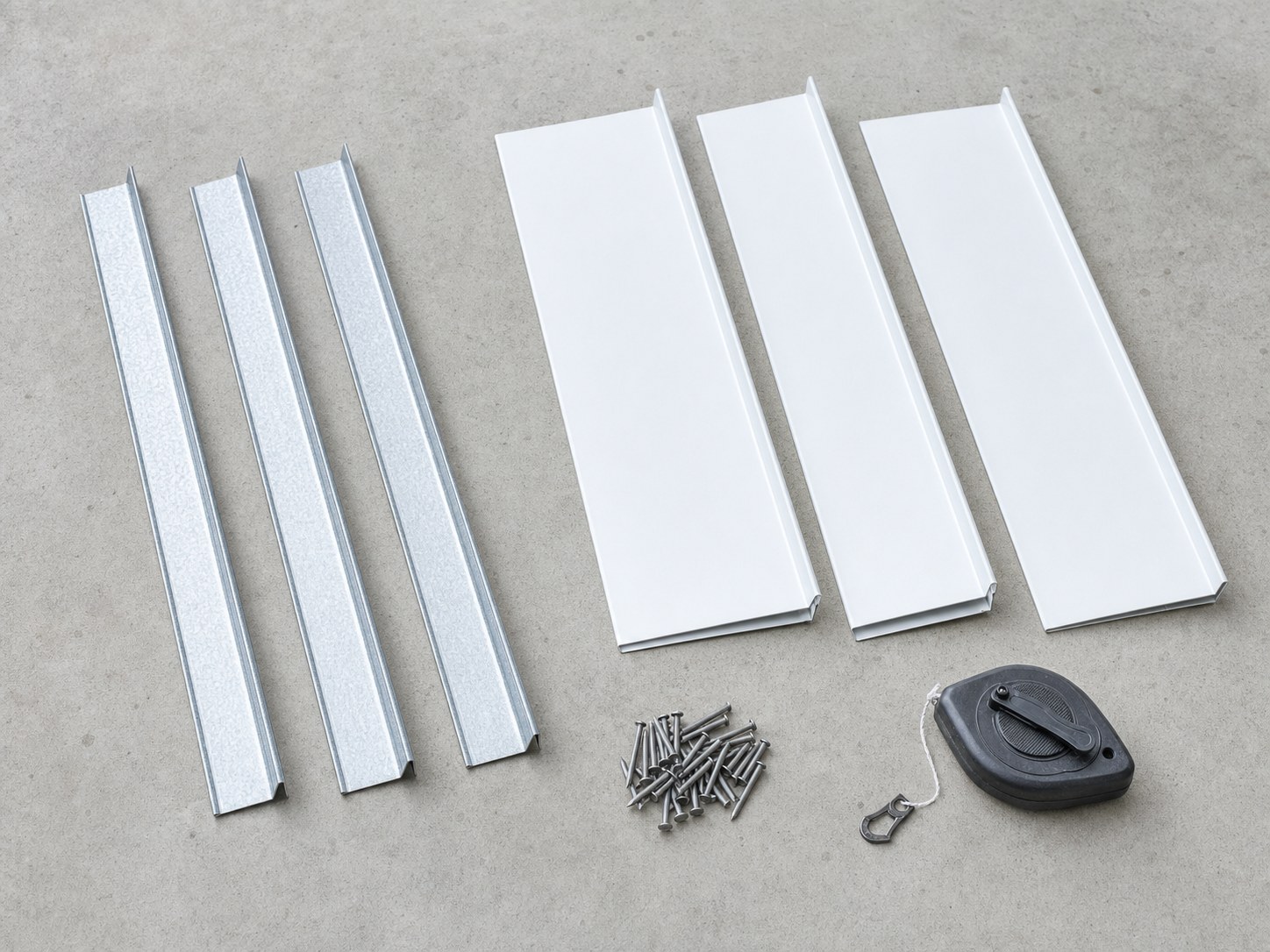
A quality Houston install layers the components in a specific order at each eave. Drip edge is installed first, directly on the sheathing at the eave, with its vertical leg pointed down and away from the fascia. Ice-and-water shield or synthetic underlayment is then laid over the horizontal leg of the drip edge, sealing the transition. Where a gutter apron is used, the apron is set on top of the underlayment with its longer leg bent into the back of the gutter run, then the starter course of shingles goes over the top of the apron and is nailed down.
Fasteners matter as much as the parts. Both flashings should be nailed at eight to ten inches on center with ring-shank roofing nails, staggered so no single line of nails can wick water. Splice overlaps should be at least two inches with tripolymer sealant hidden between the layers.
For related Houston homeowner reading, see the DC Pines guides to gutter sizing and downspout capacity, roof underlayment layers, and the Houston gutter maintenance guide.
The Bottom Line
Drip edge protects the roof. Gutter apron protects the fascia. A Houston home with gutters really wants both, installed in the right order, with the apron delivering runoff inside the trough instead of behind it. On any re-roof or gutter replacement in Houston, homeowners have a narrow, cheap window to add both flashings the right way — and skipping the apron is the mistake most likely to show up as a soft fascia three summers from now.
Ready to protect the fascia behind your gutters?
DC Pines Roofing installs seamless aluminum gutters in Houston with drip edge and gutter apron layered the right way — the details that keep fascia dry through Houston’s humid summers.