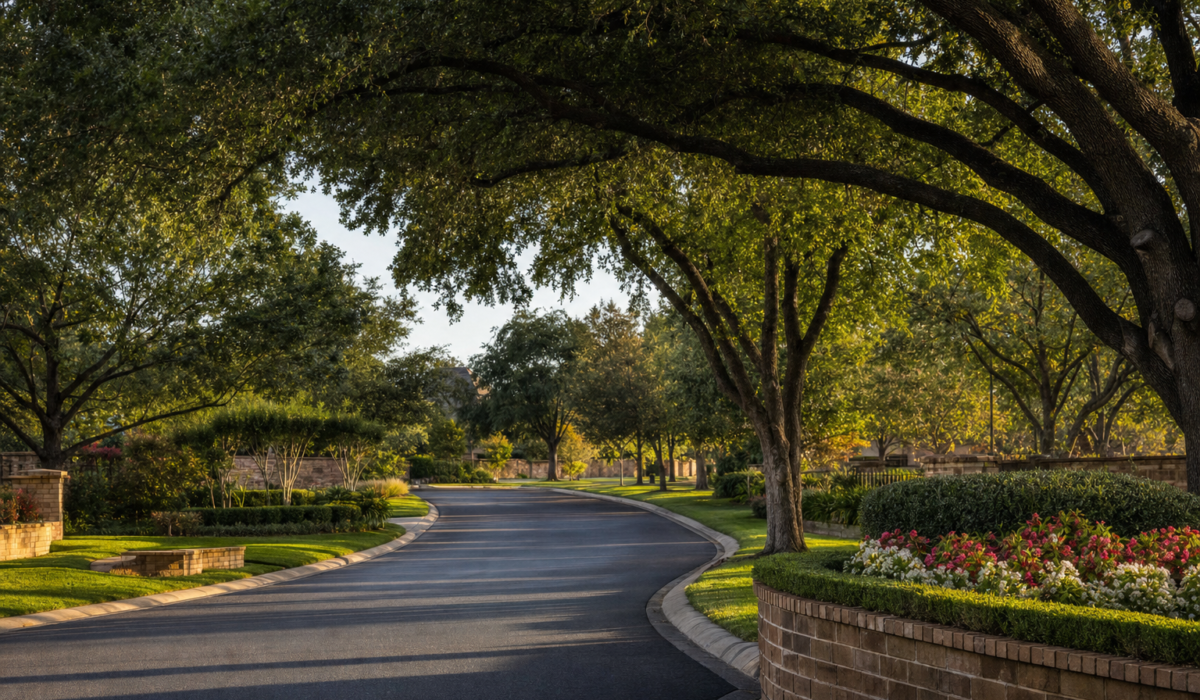
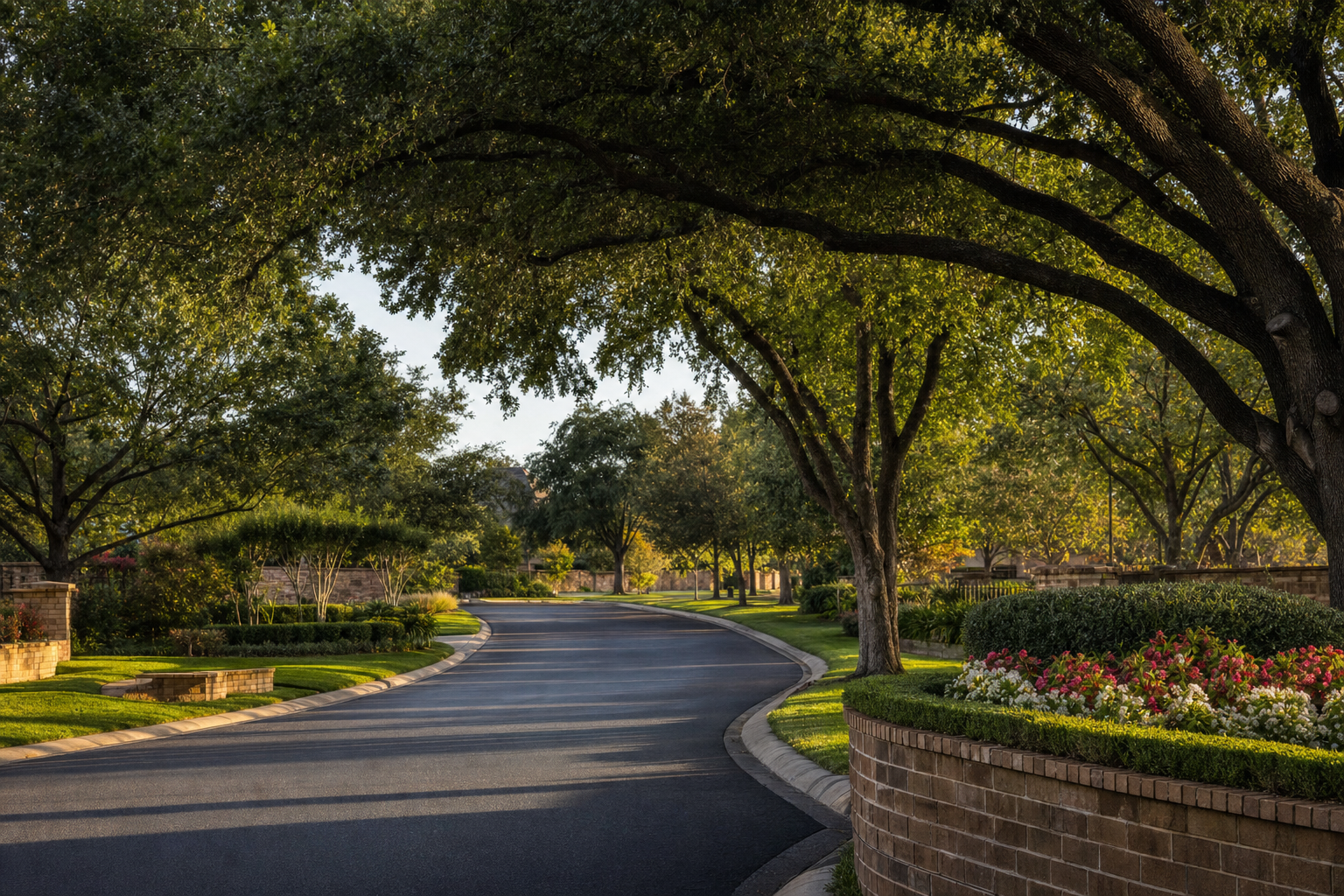
A Sugar Land HOA roof approval is often the slowest step of a roof replacement in cities like Sugar Land, Missouri City, and the surrounding Fort Bend County master-planned communities. Between First Colony, Sweetwater, Riverstone, Telfair, Greatwood, New Territory, and Sienna, most homes sit inside a property owners’ association with a written architectural review process, an approved product list, and a formal application that has to be complete before the clock even starts to run.
The DC Pines Education Center put this guide together to help Sugar Land homeowners understand how the ARC process interacts with the City of Sugar Land permit, what Texas law actually says about response times and impact-resistant shingles, and how to submit a packet that gets approved on the first pass.
Why Sugar Land Roof Replacements Move Through Two Separate Gates
Every roof replacement inside Sugar Land moves through two independent approval gates, and both have to close before shingles can go on the roof. The first is the homeowner’s HOA architectural review committee, which enforces the deed restrictions and design standards the community was built under. The second is a City of Sugar Land building permit, pulled by the roofing contractor through Development Services.
Neither gate substitutes for the other. A stamped city permit does not override a subdivision’s deed restrictions, and an ARC approval does not exempt the contractor from pulling a permit or scheduling inspections. In practice the HOA review usually goes first, because most ARCs will not review an application when the shingle color has already been ordered. A homeowner who sequences it the other way often ends up with a completed roof, a fine, and a request to replace the shingles in an approved color at their own expense.
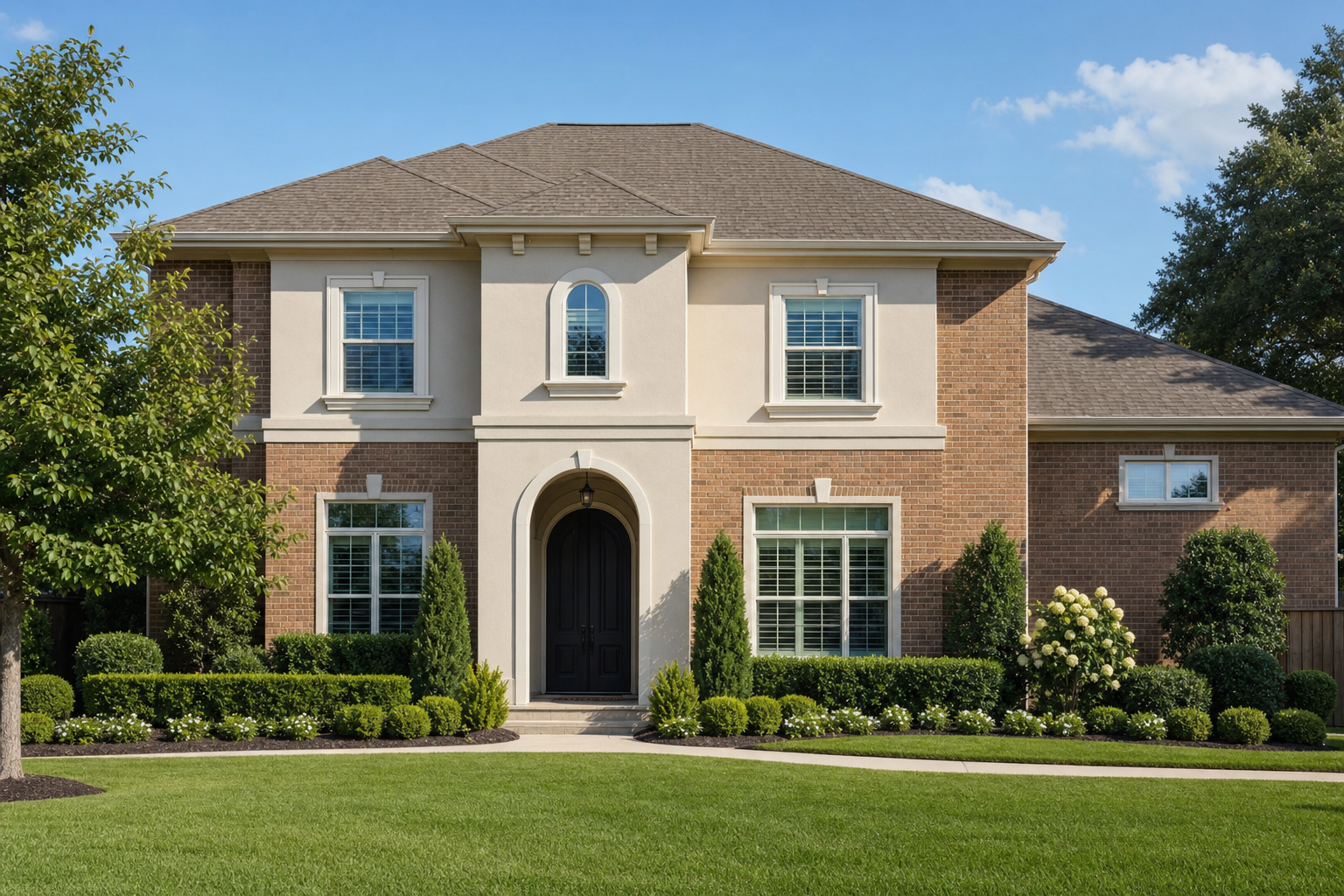
What the Sugar Land ARC Actually Reviews
Sugar Land ARCs are usually reviewing four things at once: the shingle manufacturer and product line, the exact color name and code, the general profile and dimensional shadow of the shingle, and the qualifications of the contractor performing the work. Some communities maintain a short approved product list; others maintain an approved color palette and let the homeowner select any nationally recognized architectural shingle in a matching color. Pulling the current architectural guidelines from the management company is the first move, because guideline revisions can supersede older CC&R language.
Most Sugar Land ARC packets also require a certificate of general liability insurance and workers’ compensation coverage for the roofing contractor and a projected start and completion date. Submitting all of it in the first packet keeps the 30-day review window intact.
Texas Property Code Rules That Protect Sugar Land Homeowners
Two provisions in the Texas Property Code shape how a Sugar Land ARC handles a roofing application. Section 209.00505 governs architectural review authority for property owners’ associations with more than 40 lots. It requires the ARC to issue any denial in writing, describe the basis for the denial in reasonable detail, and inform the homeowner of the right to appeal to the board within 30 days. Many Sugar Land declarations layer a 30-day review deadline on top of this framework.
The second provision is Section 202.011, sometimes called the HB 2237 protection. Under this statute a Sugar Land HOA cannot prohibit shingles designed primarily to be wind- and hail-resistant when they are rated by a nationally recognized testing laboratory such as UL. The ARC still has authority over color and general appearance, but cannot deny an application solely because the homeowner is upgrading to a Class 4 impact-resistant shingle in a comparable color.
Submitting a Sugar Land ARC Packet That Gets Approved on the First Pass
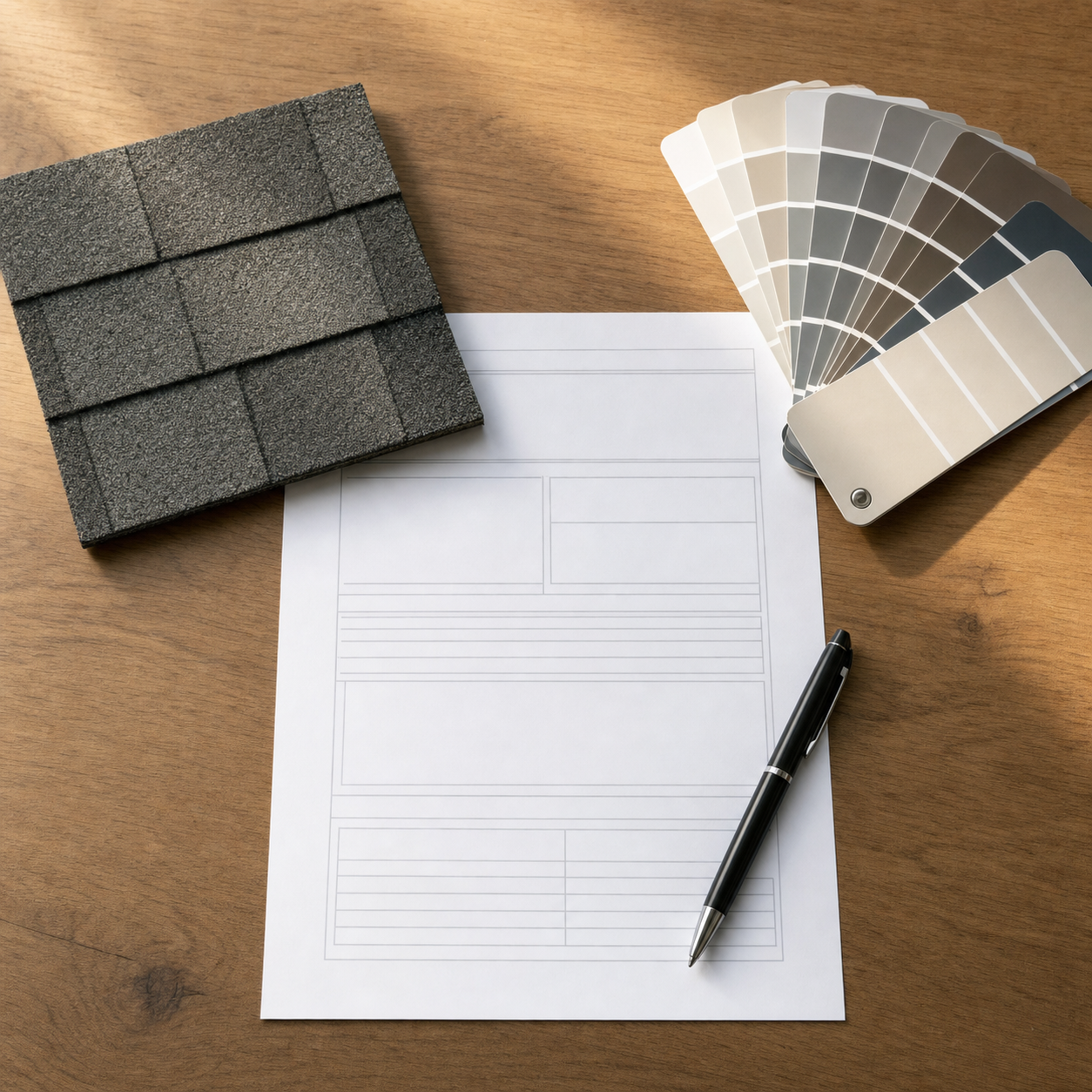
Most first-pass denials in Sugar Land come from incomplete applications, not from the shingle choice itself. A packet is considered complete when the ARC has enough information to make a decision without asking for anything else. In a typical Sugar Land subdivision that means seven items in one submission.
- A completed ARC application form with every field filled in, including the exact address, lot and block, and contact information for the homeowner.
- A manufacturer specification sheet listing the product name, model number, color code, and wind and hail ratings.
- A physical shingle sample or manufacturer color swatch matching the approved palette.
- A roof plan or site diagram showing the scope of the replacement.
- The roofing contractor’s general liability insurance certificate and workers’ compensation coverage.
- A projected start date and completion date consistent with the community’s construction hours and quiet periods.
- Where a Class 4 shingle is proposed, the UL 2218 certification documentation and a reference to Property Code Section 202.011.
Once the management company confirms in writing that the application is complete, the review clock begins. Homeowners should document that confirmation, along with the date each subsequent communication is received, so that any dispute over timing can be settled from a written record rather than from memory.
Typical Sugar Land Timeline From ARC Submission to First Nail
A realistic Sugar Land timeline looks like this. Day one is submission of a complete ARC packet. Days one through three are typically when the management company confirms receipt and completeness. Days seven through twenty-one are the ARC’s internal review period, since many committees only meet monthly. Days fifteen through thirty are when the written approval or denial is issued. After written approval, the roofing contractor pulls the City of Sugar Land building permit, schedules the tear-off around the neighborhood’s construction hours, and calls for the required city inspection. Incomplete packets often add two to four weeks by resetting the clock with each round of missing documents.
Homeowners in Sugar Land communities like First Colony, Riverstone, and Telfair can shorten the total elapsed time by combining a strong line-item estimate with the ARC packet, so contractor documentation, product data, and transferable warranty details arrive in a single reviewable format.
The Bottom Line
A Sugar Land HOA roof approval is not a mystery, but it rewards homeowners who treat it as an actual project rather than a checkbox at the end of choosing a contractor. Two gates, two independent timelines, one complete packet on the first pass. Homeowners who pull the current architectural guidelines, submit a full ARC application with contractor documentation and a physical sample on day one, and confirm completeness in writing typically clear ARC in the standard window and move straight into the City of Sugar Land permit. Homeowners who skip a step or submit partial documentation usually pay for it in weeks of delay.
Ready to move on your Sugar Land roof replacement?
DC Pines Roofing prepares complete ARC packets for Sugar Land subdivisions and coordinates the City of Sugar Land permit at the same time, so homeowners are not chasing paperwork after the material is already on order.