
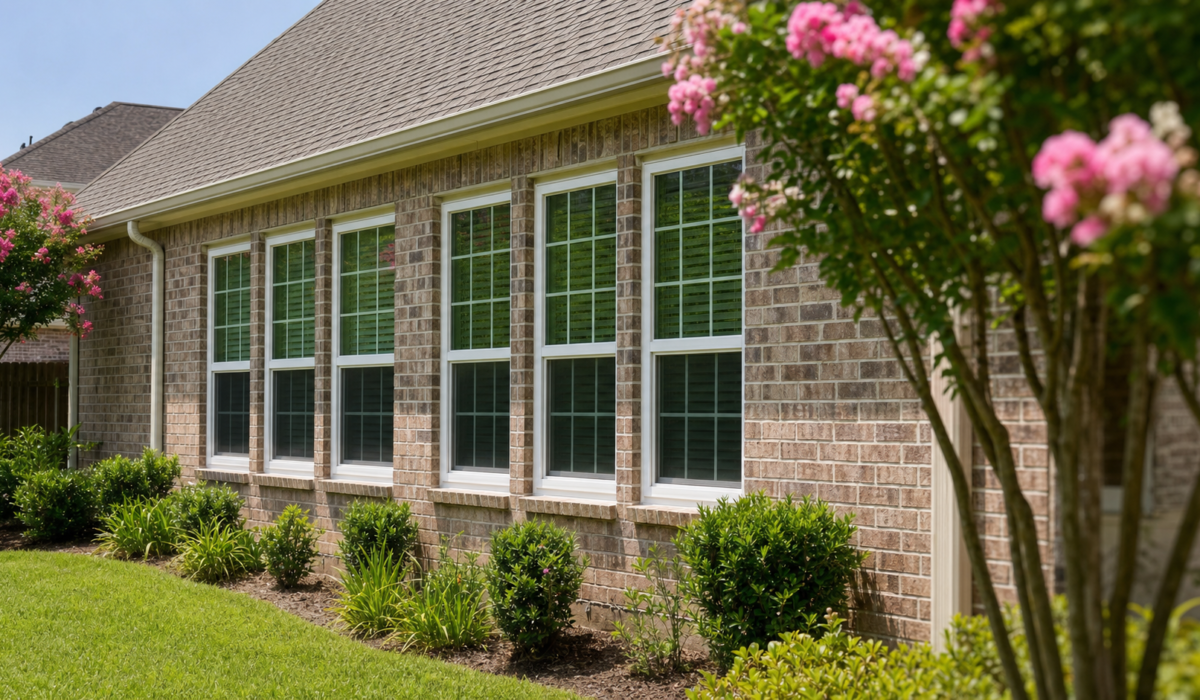
Every new window sold in Houston ships with a small NFRC sticker on the glass. Two of the numbers on that sticker matter more than anything else a salesperson will say: the Houston SHGC value and the U-factor. Those two ratings determine, more than any marketing brand promise, how a window will actually perform against a summer that runs 100°F with 70% humidity for weeks at a time.
The DC Pines Education Center breaks down what those numbers mean, why the numbers on the Houston SHGC line matter more than U-factor in the Gulf Coast climate zone, and how to sanity-check a quote before signing anything.
The Houston Climate Zone Sets the Target
Houston sits in Climate Zone 2 — hot-humid — along with Corpus Christi, Brownsville, and Gulf Coast Louisiana. That designation drives what window ratings actually make sense here.
The ENERGY STAR v7.0 criteria for the Southern climate zone that covers Houston set two hard ceilings: U-factor at or below 0.32 and SHGC at or below 0.23. Windows without the label or labeled for the Northern zone often fail one or both — where most Houston window mistakes start.
What SHGC Actually Measures — and Why Houston Cares Most

Solar Heat Gain Coefficient is a fraction between 0 and 1. It represents how much of the sun’s radiant energy hitting the glass ends up as heat inside the room. An SHGC of 0.40 means 40% of the solar energy hitting that window becomes indoor heat. An SHGC of 0.20 means 20%.
In Climate Zone 2, SHGC drives the summer cooling load more than any other window rating. The energy.gov guide to energy-efficient windows notes that in hot climates a lower SHGC matters more than a lower U-factor — the opposite of what northern homeowners are told, and the single most common misunderstanding on Houston window shopping trips.
Realistic targets for a Houston home:
- SHGC 0.25 or lower for any elevation — meets ENERGY STAR Southern zone criteria.
- SHGC 0.20 to 0.22 for south- and west-facing windows — the elevations that take the worst afternoon solar load.
- SHGC 0.28 or higher is a Northern-zone window; on a Houston home it will run the air conditioner harder than needed for the life of the window.
U-Factor: Still Matters, Just Less Than SHGC
U-factor measures how quickly heat conducts through the entire window assembly — glass, spacer, and frame. Lower U-factor means slower heat loss in winter and slower conductive heat gain in summer. Residential windows typically fall between 0.20 and 0.60.
In Houston, U-factor ranks below SHGC for two reasons. Mild winters make the heat-loss savings from a very low U-factor modest, and most summer heat load through a window in Houston is radiant — governed by SHGC, not U-factor.
A reasonable U-factor target for the Houston market is 0.30 or lower. Windows in the 0.28 to 0.30 range paired with an SHGC in the low 0.20s cover most of the performance available in production windows.
The Glass Package Does the Heavy Lifting
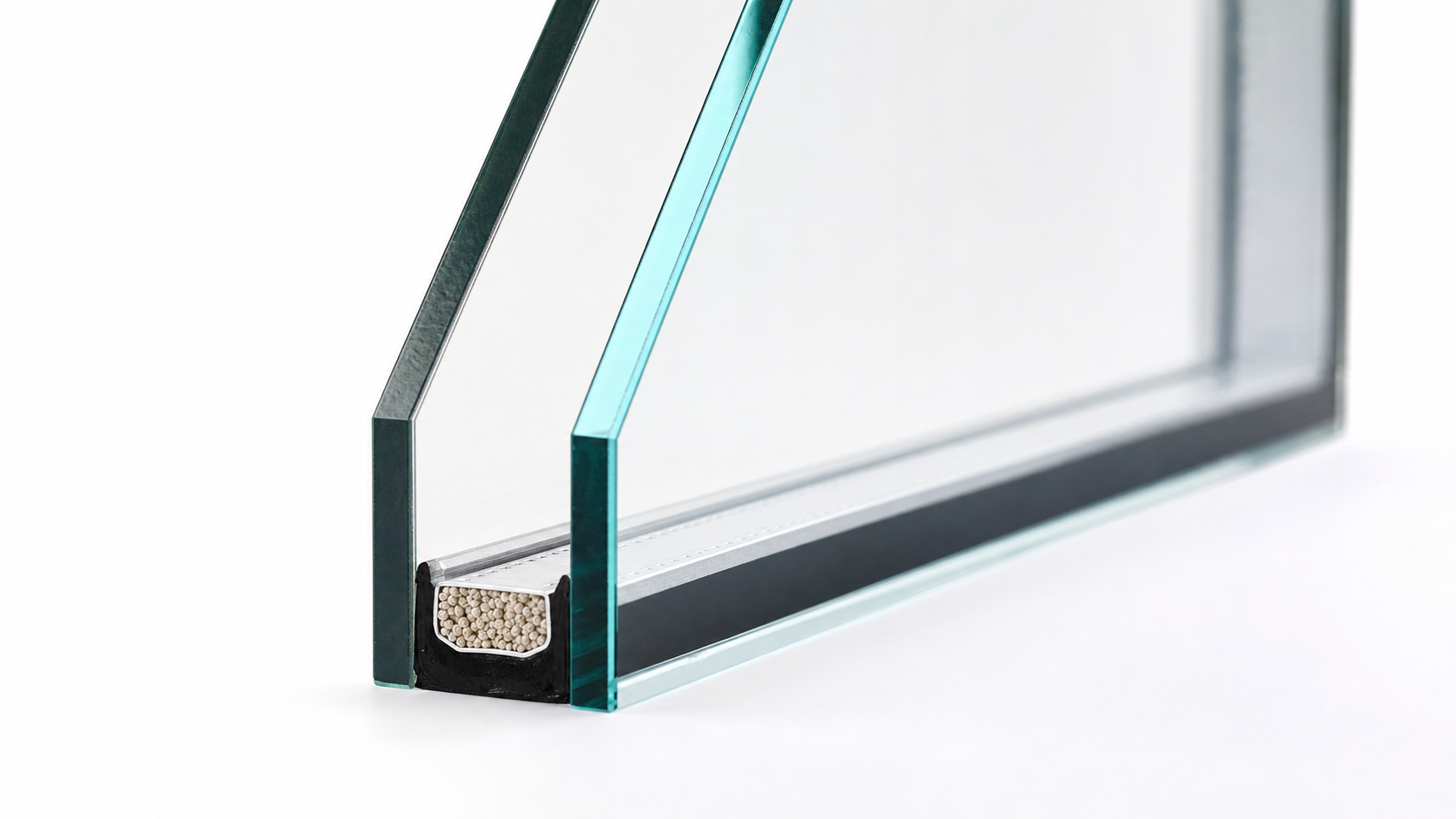
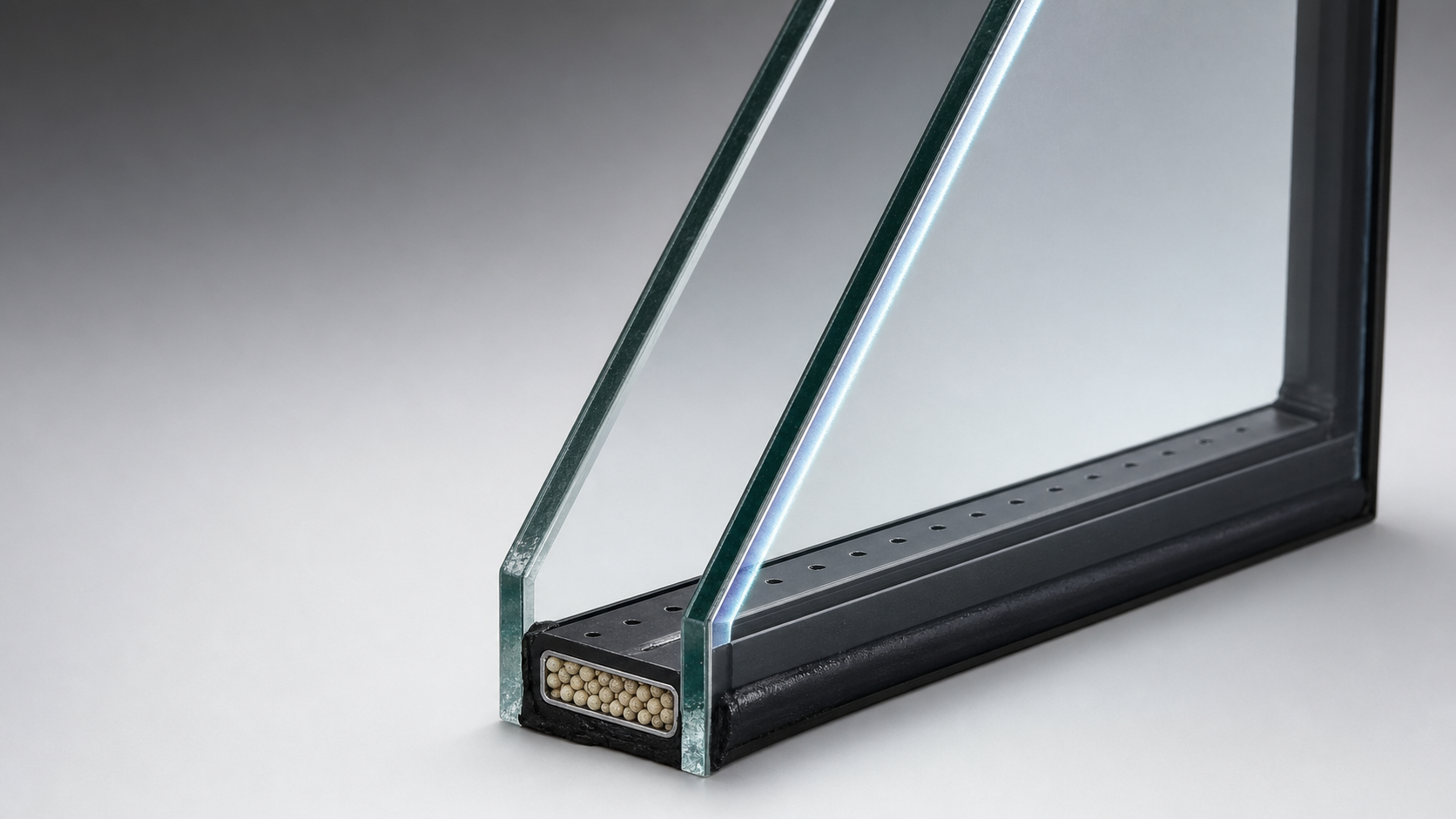
The physical way a Houston-appropriate window hits those numbers is through the glass package rather than the frame. Three components in combination make it happen:
Solar Control Low-E Coating
Passive low-E is tuned for cold climates — it lets solar heat in during winter. Solar-control low-E reflects most of the near-infrared portion of sunlight before it enters the room while still passing visible light. Only solar-control low-E hits the SHGC numbers required in Climate Zone 2.
Argon Gas Fill
Argon between the panes conducts heat more slowly than dry air, contributing primarily to lower U-factor. It is standard on most quality Houston windows today.
Warm-Edge Spacer
The spacer bar separating the two panes is the weakest thermal link in the glass unit. A warm-edge composite spacer reduces heat flow at the perimeter and reduces edge condensation risk in cooler months.
The DC Pines Education Center covers the specific mechanics of solar-control coatings in the Low-E windows and solar heat gain guide.
How to Read the NFRC Sticker Standing in Front of a Sample Window
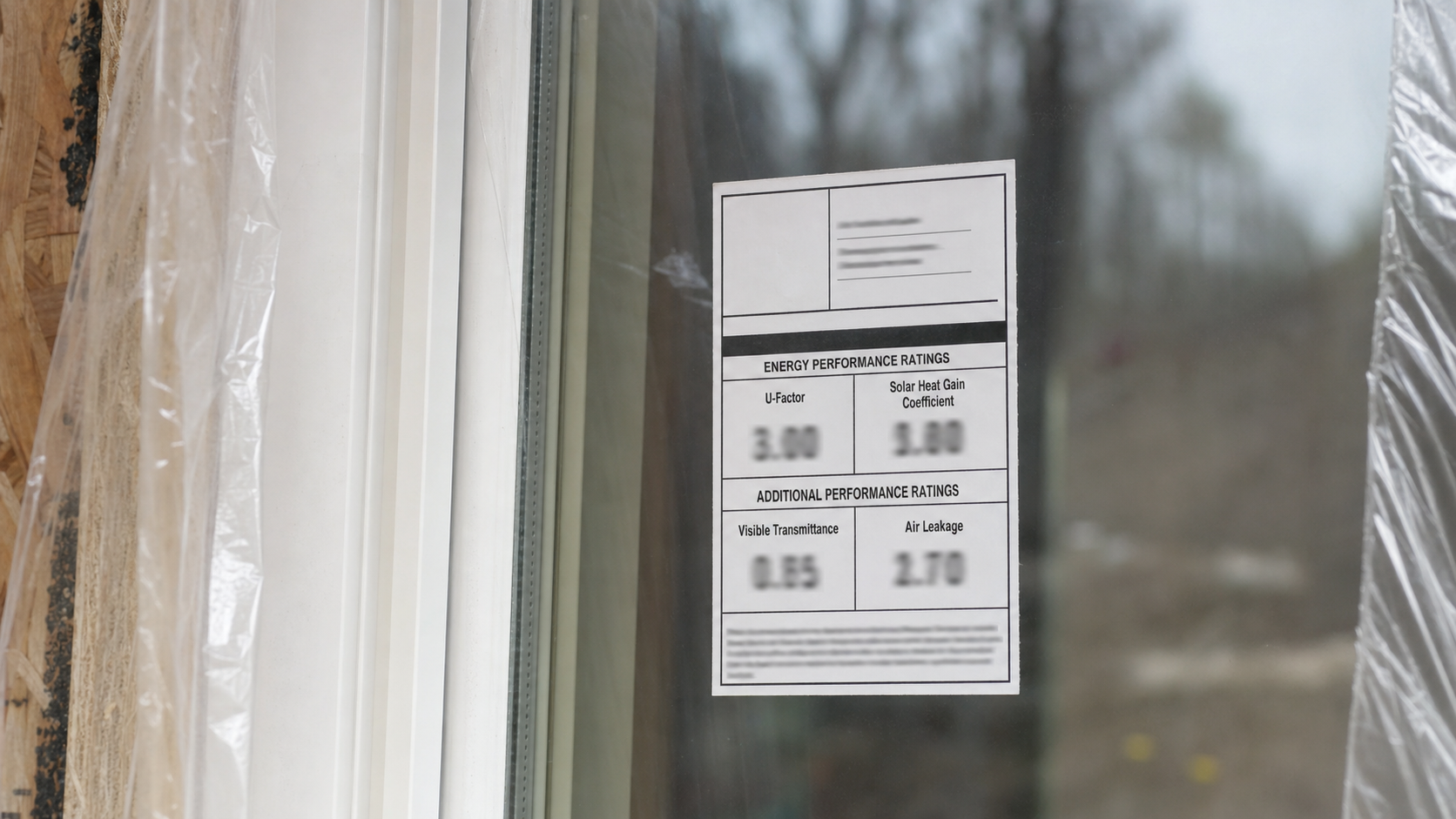
Every window sold as ENERGY STAR-certified in the United States carries a National Fenestration Rating Council performance label. The layout is standardized so a shopper can compare across brands. There are four boxes to read, in this order of Houston relevance:
- SHGC — must be 0.25 or lower. For south/west elevations, target 0.20 to 0.22.
- U-Factor — target 0.30 or lower.
- Visible Transmittance (VT) — 0.35 or higher keeps rooms bright while still meeting a low SHGC. Below 0.30 the room may feel dim.
- Air Leakage (AL) — 0.30 cubic feet per minute per square foot or lower on the sticker; lower is better. This one is a manufacturing quality indicator as much as a comfort number.
A window that clears all four for Climate Zone 2 will typically show the ENERGY STAR logo with the Southern climate zone map highlighted. If the sticker map highlights only the Northern zone, the window will underperform on a Houston home regardless of what the sales sheet claims.
Why Orientation Changes the Math
A Houston home does not experience uniform solar load. West and south elevations take direct afternoon sun for hours; east elevations get intense morning sun but cool down by afternoon; north elevations rarely see direct sun at all. That means the “right” SHGC is different for each exposure — at least in theory.
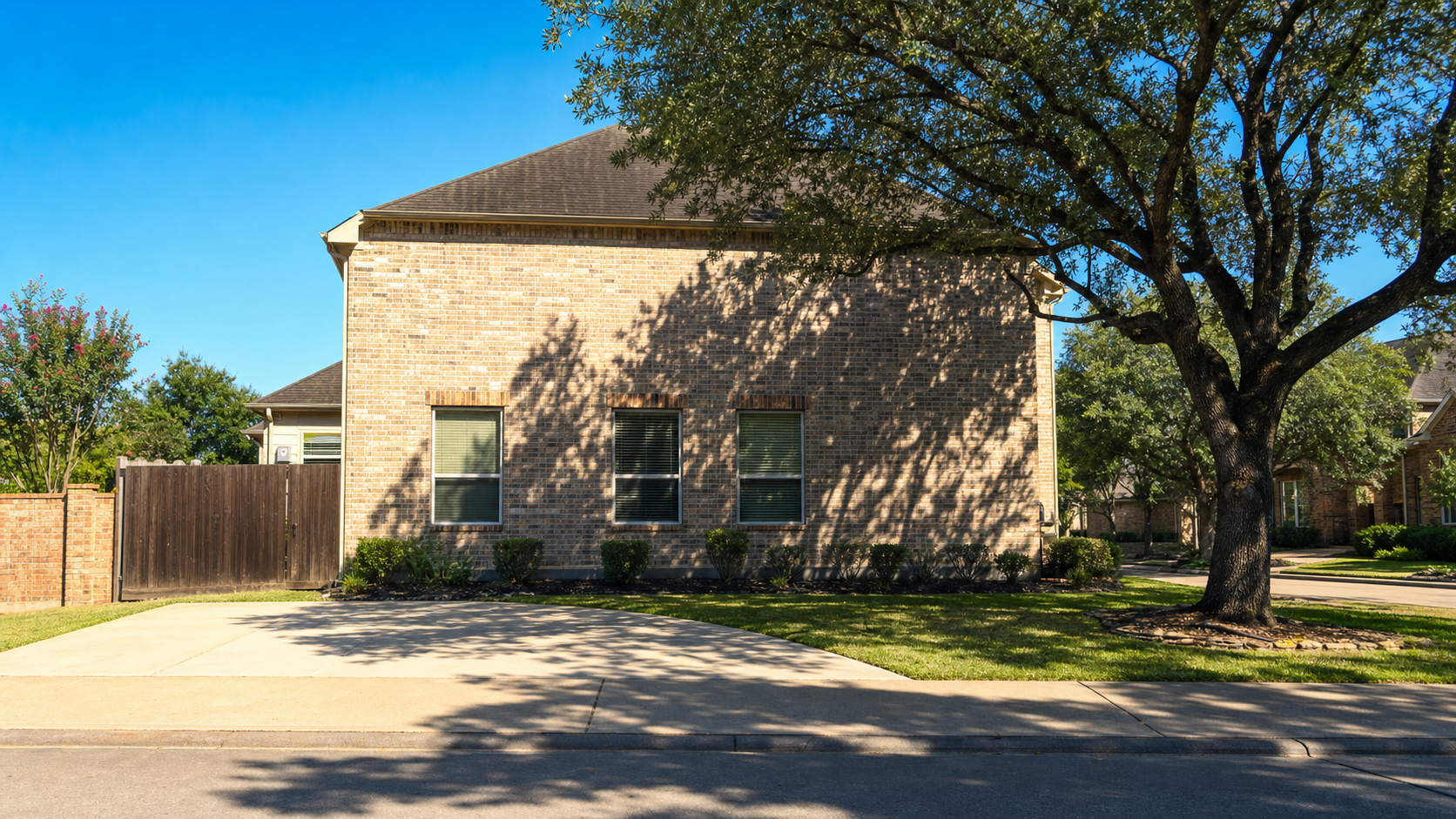
Elevation-specific targets
- West-facing: SHGC 0.18–0.22, priority #1. Afternoon sun in Houston drives peak cooling load.
- South-facing: SHGC 0.20–0.23. Sun angle is higher and shorter in duration than west, but volume is significant.
- East-facing: SHGC 0.20–0.25. Morning sun is real but limited; higher VT preserves the wake-up daylight most homeowners want.
- North-facing: SHGC up to 0.30. Minimal direct sun, so the priority shifts to U-factor and VT.
In practice, most Houston replacement projects choose one glass package for all elevations, and that package is tuned for the west and south exposures. Splitting glass packages by elevation adds cost and complexity, and the north elevation’s small over-performance is a small price for simpler ordering and installation.
Common Pitfalls in Houston Window Quotes
Homeowners comparing bids often see numbers that look similar until the NFRC label reveals the difference. A few patterns show up repeatedly:
Pattern 1: “Low-e” without a coating specification
Not all low-e coatings are the same. High-solar-gain, moderate-solar-gain, and low-solar-gain coatings all get called “low-e” in casual marketing. Only the low-solar-gain formulation delivers SHGC at or below 0.23. Ask specifically for the coating designation (LoĒ³-366, Solarban 70, SunGuard SNX 62/27, or equivalent).
Pattern 2: A great U-factor and a mediocre SHGC
A window with U-factor 0.22 and SHGC 0.35 is a northern-climate window. It will meet code in Houston but will underperform through every cooling season. The NFRC label makes this immediately visible.
Pattern 3: Triple-pane upsells
Triple-pane glass with argon or krypton fill lowers U-factor noticeably but rarely improves SHGC. Because Houston has short, mild winters, the payback on triple-pane is often decades. The exception is noise reduction along Beltway 8, I-10, or SH-99 corridors, where triple-pane earns its cost in acoustic performance.
Pattern 4: Frame material and glass mixed up
Vinyl vs fiberglass vs aluminum-composite frames matter for durability and thermal bridging, but the glass package inside those frames is what drives SHGC. A premium fiberglass frame around builder-grade glass will underperform a mid-range vinyl frame with a proper low-solar-gain low-e coating.
The Bottom Line on Houston SHGC
The Houston SHGC line on a window sticker is doing more work in a Gulf Coast summer than any other spec. A window with SHGC at or below 0.23 and U-factor at or below 0.30 — both easy to read off the NFRC label — will outperform a more expensive “premium” window optimized for a northern climate every day of a Houston summer. Reading the sticker before writing a check is the shortest path from a window quote to a comfortable, lower-cooling-cost home.
Frequently Asked Questions About Houston Window Ratings
What SHGC should a window have for a Houston home?
SHGC 0.25 or lower meets ENERGY STAR criteria for the Southern climate zone that covers Houston. South- and west-facing elevations perform best with SHGC in the 0.20 to 0.22 range.
Does U-factor matter in Houston if winters are mild?
U-factor still matters but ranks below SHGC for Houston. A U-factor of 0.30 or lower paired with SHGC at or below 0.23 covers most of the performance available in production windows.
What is the difference between passive and solar-control low-E?
Passive low-E is tuned for cold climates and lets solar heat pass through in winter. Solar-control low-E reflects near-infrared sunlight before it enters the room and is required to hit Climate Zone 2 SHGC targets.
Is argon gas fill worth it in Houston?
Argon fill helps lower U-factor and modestly improves comfort. It is standard on most quality Houston windows today and the incremental cost is small compared to the glass package itself.
Where do I find the NFRC sticker?
The National Fenestration Rating Council sticker is applied to the glass at the factory and stays on until installation. Any reputable window quote will provide the sticker values in writing before an order is placed.
Get Straight Answers on Your Window Quote
Houston homeowners choose DC Pines for a plain-English walkthrough of SHGC, U-factor, and what the NFRC sticker actually says about the windows in their quote.

Jeffrey Ternois
Jeff Ternois is the owner and founder of DC Pines Roofing, a veteran-owned roofing, gutter, and window company in Houston. A former U.S. Army Infantry Captain, he led an infantry platoon in Afghanistan and was awarded the Bronze Star Medal and the Combat Infantryman Badge. After the Army he earned an MBA focused on real estate and learned homebuilding from the studs out before founding DC Pines. DC Pines Education Center guides are published under his direction.