
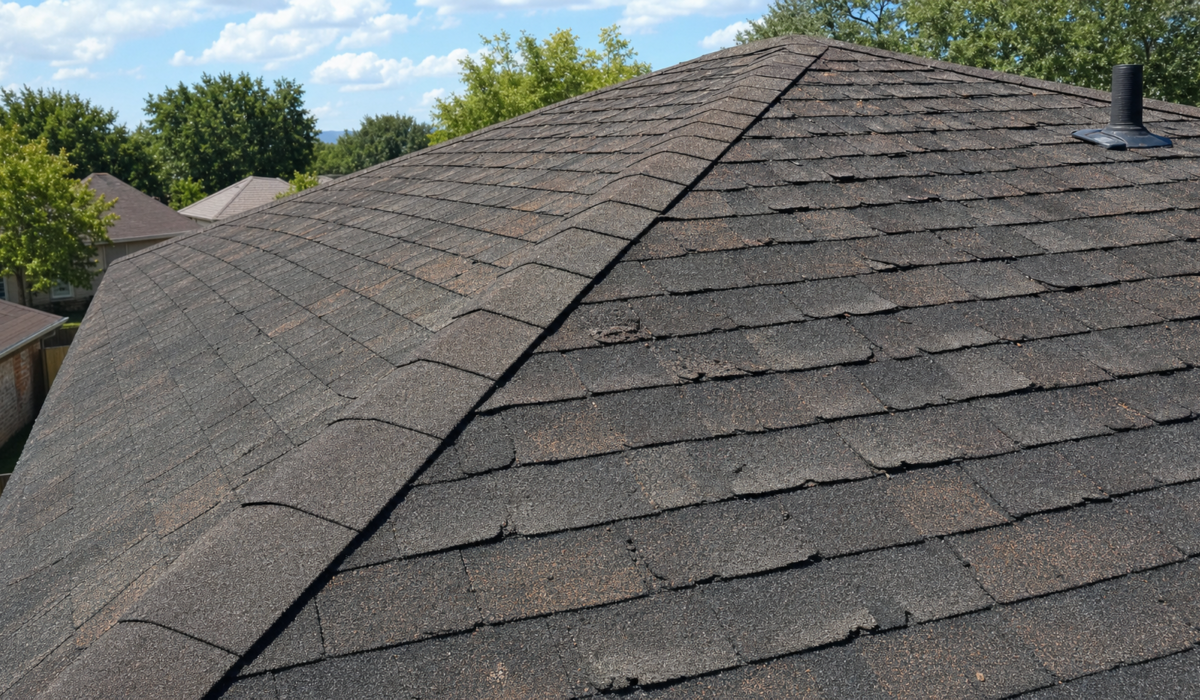
Houston homeowners make roofing decisions with a mix of good advice, dated advice, and outright folklore. Some of the folklore is harmless. Some of it costs real money — a shortened roof lifespan, a warranty claim rejected on a technicality, or a maintenance schedule that leaves a house exposed to Houston’s heat and humidity. Sorting the folklore from the facts is the whole point of an honest homeowner conversation about Houston roof myths.
The DC Pines Education Center walks through the myths that consistently show up in homeowner questions across the Greater Houston market — the ones that sound reasonable, spread quickly on neighborhood forums, and quietly damage roofs, attics, and gutters when acted on.
Myth 1: A “Lifetime” Shingle Warranty Means the Shingles Last a Lifetime
Almost every architectural asphalt shingle sold today carries a “lifetime limited warranty.” The word does not mean what most homeowners assume.
The important fine-print reality:
- “Lifetime” is the length of ownership, not the physical lifespan of the shingle, and coverage typically ends when the home changes hands.
- Full non-prorated coverage usually lasts only 10 years. After that, coverage drops each year, often reaching near-zero long before the shingle fails.
- Base warranties cover the material only — no labor, tear-off, disposal, or reinstallation.
- Installation defects are not covered. Nailing patterns, starter courses, and ventilation are workmanship the manufacturer will not pay to fix.
Extended warranty products such as SureStart PLUS add workmanship coverage, extend the non-prorated period, and include tear-off costs — but they are only available through manufacturer-credentialed contractors. Typical asphalt service life is discussed on the ENERGY STAR overview of roofing product performance.
Myth 2: If the Roof Is Not Leaking, It Is Fine
A dry ceiling is a lagging indicator. By the time water is visible inside, the underlayment and decking have usually been wet for weeks. The most expensive roof failures are the ones caught only after they stain a ceiling.
What actually indicates a roof needs attention long before a leak appears:
- Granule accumulation in gutters. The UV-protective mineral layer thins over the years; once it is gone, the asphalt oxidizes quickly under Houston sun.
- Shingle curling or clawing at the edges. A sign the shingle is losing volatile oils and no longer sealing to the course above.
- Flashing separation at chimneys and vent boots. Where the shingles look fine but the transitions have moved.
- Attic moisture stains on decking. Visible from underneath long before water reaches drywall.
An annual visual inspection catches every one of these with years of runway to plan.
Myth 3: Houston Homes Do Not Need Serious Attic Insulation
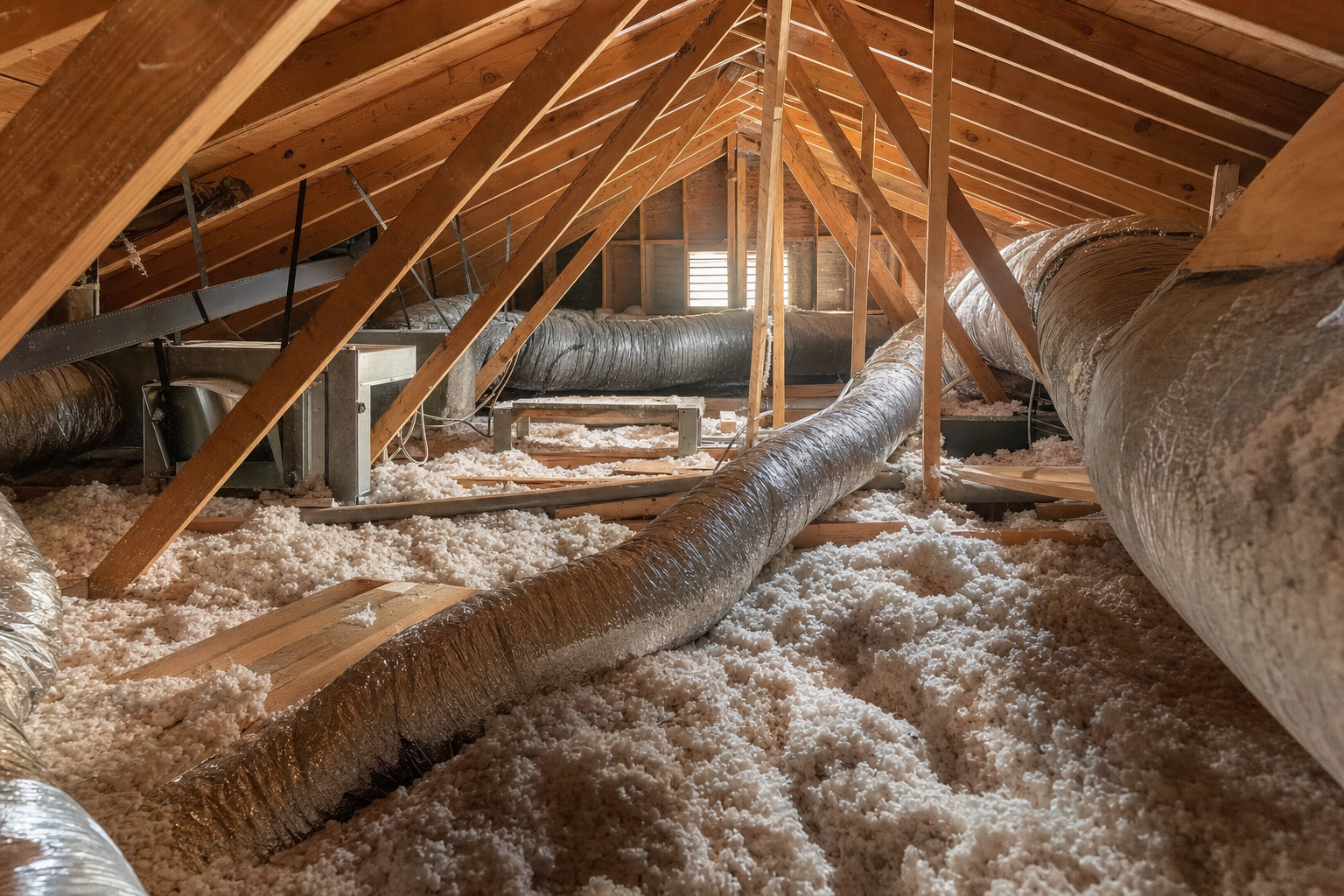
Because Houston winters are mild, some homeowners assume insulation is a cold-climate concern. The opposite is true — insulation regulates heat in either direction, and the attic-to-living-space gradient in a Houston summer is often larger than what northern homes see in winter.
The Department of Energy’s insulation guide recommends R-30 to R-60 for Climate Zone 2, which covers the Houston metropolitan area. That translates to roughly 10 to 20 inches of blown-in cellulose or fiberglass depending on target R-value. Many older Houston attics carry closer to R-13 to R-19 — half of what current guidance calls for.
The follow-on consequences in Houston are consistent: attic temperatures of 130-160°F on August afternoons that accelerate shingle aging, HVAC systems running longer at higher electric bills and shorter compressor lifespans, and rooms directly under an under-insulated attic running 4-8°F warmer than the rest of the house.
The DC Pines Education Center covers the specific mechanics in the Houston attic ventilation and radiant barrier guide.
Myth 4: Gutter Guards Mean Never Cleaning Gutters Again
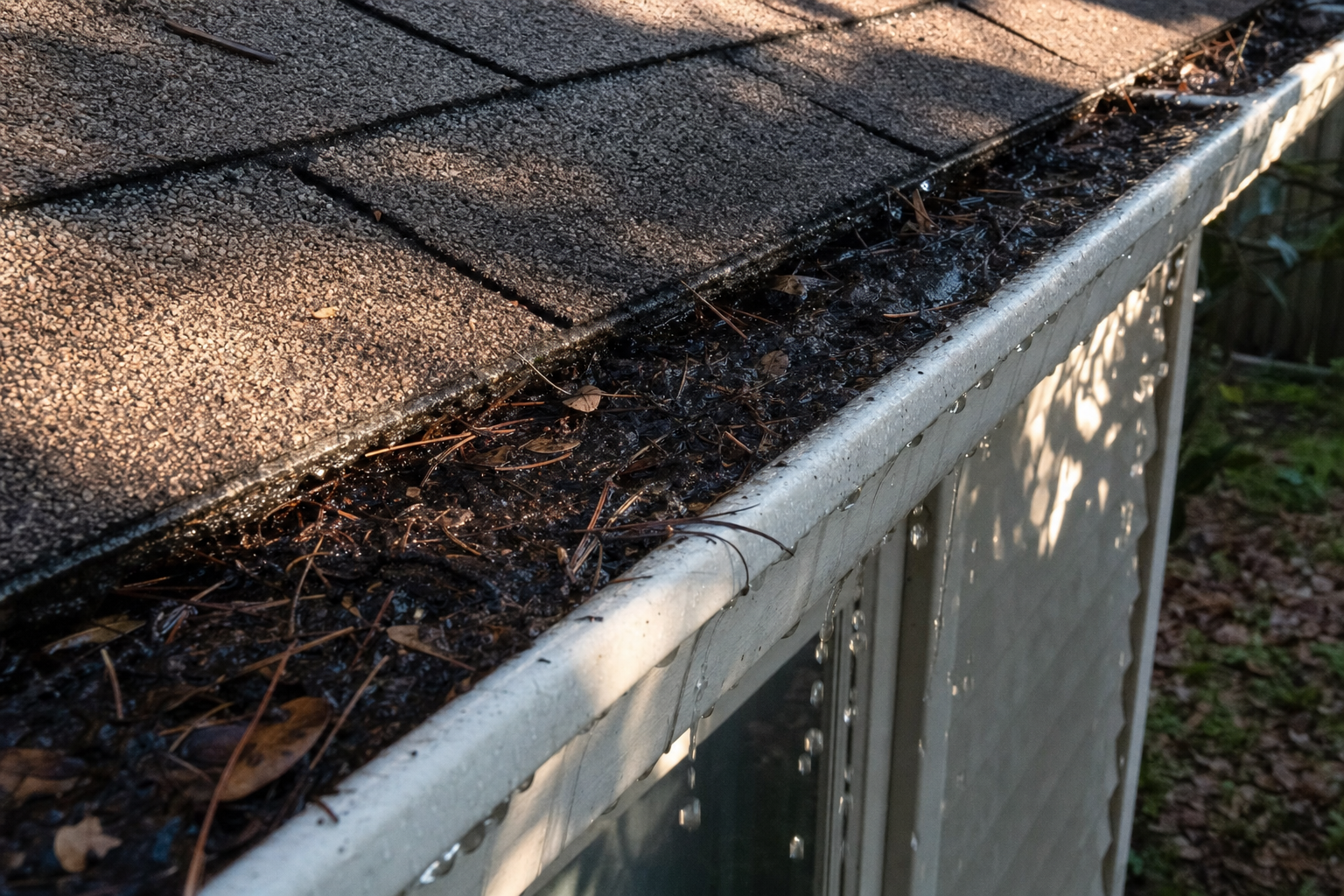
Gutter guards reduce cleaning frequency significantly. They do not eliminate it. The claim on some marketing materials that a guarded gutter is maintenance-free is a slogan, not a fact.
What actually happens on a guarded gutter in Houston: large debris is blocked at the surface, fine debris (pine needles, oak catkins, shingle grit) still moves through or settles on top, and the guard itself needs periodic brush-off — light on a stainless micro-mesh, more frequent on cheap perforated products.
The realistic rhythm for a well-guarded Houston gutter is one or two brush-offs a year rather than the four or five cleanings a bare gutter needs under mature trees — a meaningful improvement, but not zero. Homes under heavy pine should read the DC Pines gutter guards for live oak and pine debris guide.
Myth 5: A Patch or Half-Roof Replacement Is Almost as Good as a Full One
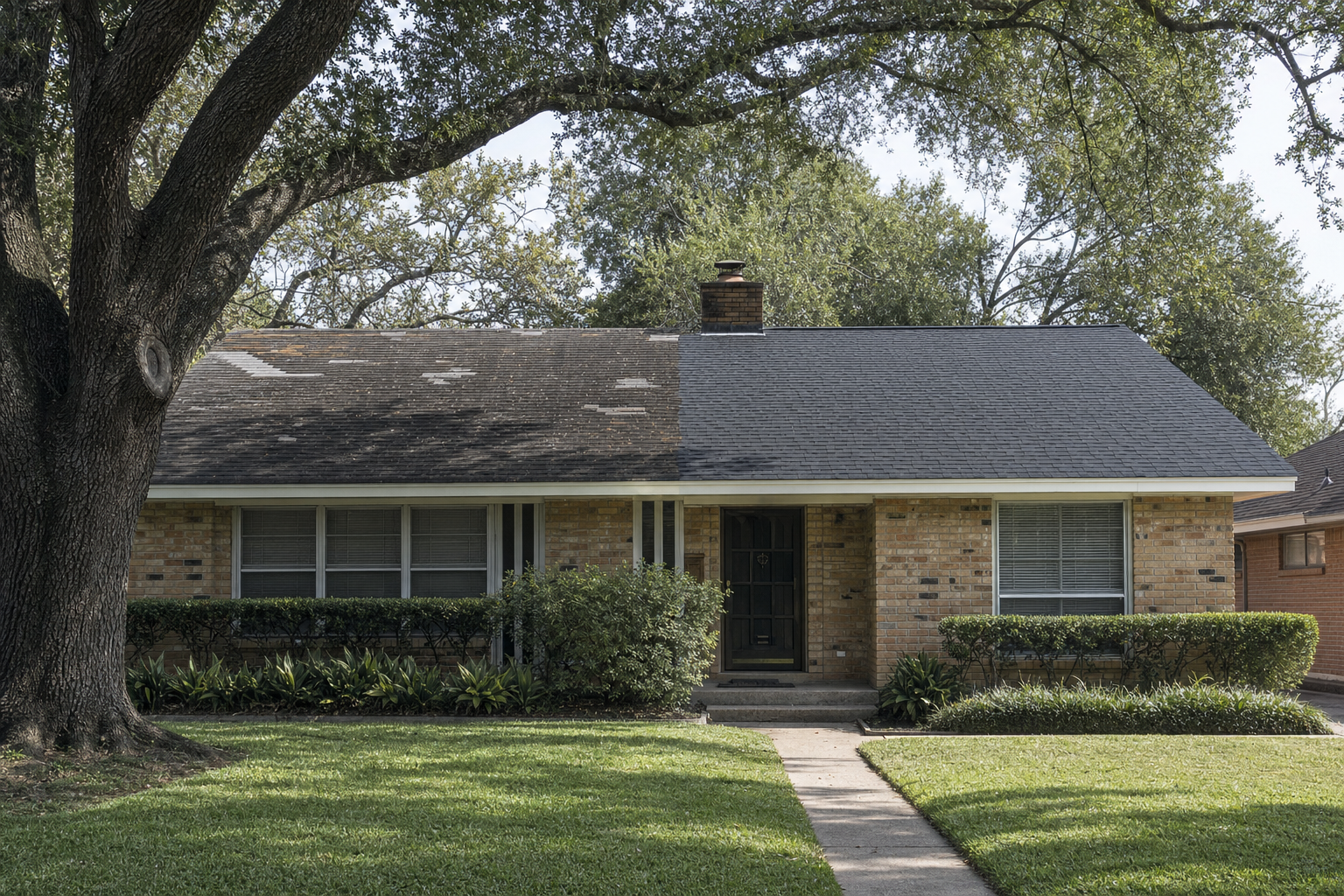
A partial replacement makes financial sense in a narrow set of circumstances — a defined area of localized damage on a roof otherwise in good condition, with matching shingles still available from the manufacturer. Outside that narrow window, patching costs more over the full roof life than replacing.
The practical reasons a “half now, half later” plan usually goes wrong:
- Shingle color drift. The same product line changes over years of UV exposure — a patch installed today will visibly differ within one summer.
- Aging underlayment stays in place. Replacing shingles alone leaves the weakest part of the assembly untouched.
- Original step flashing usually stays. That flashing at wall intersections is the most common leak source.
- Warranties become fragmented across a mix of new and old material.
Occasional targeted repair is a legitimate maintenance step. A phased half-roof replacement almost never pencils out over a full replacement.
The Bottom Line on Houston Roof Myths
Most Houston roof myths share the same shape: a marketing shortcut that got repeated until it felt true. Reading the actual warranty document, following climate-zone insulation guidance, keeping gutters serviceable rather than assumed self-cleaning, and treating partial replacements with skepticism catches the majority of expensive exterior mistakes.
Frequently Asked Questions
How long do asphalt shingles actually last in Houston?
Well-installed architectural asphalt shingles with proper ventilation typically deliver 20 to 25 years in Houston. Sustained attic overheating or under-nailed installation can shorten that meaningfully.
Does the manufacturer warranty transfer when the home is sold?
Base manufacturer warranties usually allow a one-time transfer within a specified window after the original installation. Extended warranty products transfer under different terms. The exact terms are printed in the warranty booklet supplied at installation.
How much attic insulation is enough for a Houston home?
The Department of Energy’s Climate Zone 2 guidance recommends R-30 to R-60. Older Houston homes commonly measure R-13 to R-19 and benefit from a top-off to reach current guidance.
Do gutter guards work in Houston?
Quality gutter guards work well when matched to the debris load — micro-mesh performs best under pine and oak. Cleaning frequency drops significantly but does not go to zero.
Is it ever a good idea to replace only part of a roof?
Localized, small-area replacement makes sense for defined damage on an otherwise healthy roof when matching shingles are still available. Anything larger tends to underperform a full replacement on cost, warranty, and appearance.
Get Straight Answers About Your Roof
Houston homeowners choose DC Pines for a straightforward, credential-backed take on roof condition, warranty terms, and what actually needs to happen next.

Jeffrey Ternois
Jeff Ternois is the owner and founder of DC Pines Roofing, a veteran-owned roofing, gutter, and window company in Houston. A former U.S. Army Infantry Captain, he led an infantry platoon in Afghanistan and was awarded the Bronze Star Medal and the Combat Infantryman Badge. After the Army he earned an MBA focused on real estate and learned homebuilding from the studs out before founding DC Pines. DC Pines Education Center guides are published under his direction.