
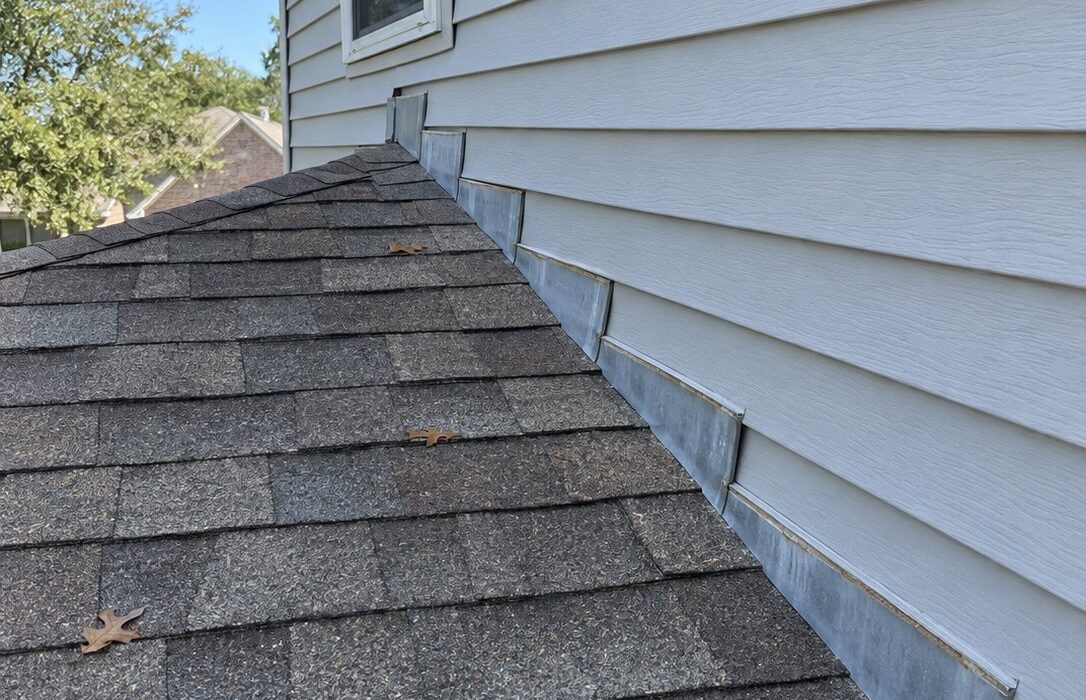
A brown stain on the ceiling is usually the first sign that a homeowner needs roof leak repair in Houston, but the stain is rarely directly under the problem. Water enters at one point, runs along the decking or a rafter, and drips wherever gravity takes it. The DC Pines Education Center wrote this guide to explain where everyday roof leaks actually start on Houston homes and what a proper repair should include so the same stain does not come back.
Most leaks on an otherwise sound roof are not caused by the shingles in the middle of a slope. They start where the roof is interrupted: at walls, chimneys, vents, valleys and fasteners.
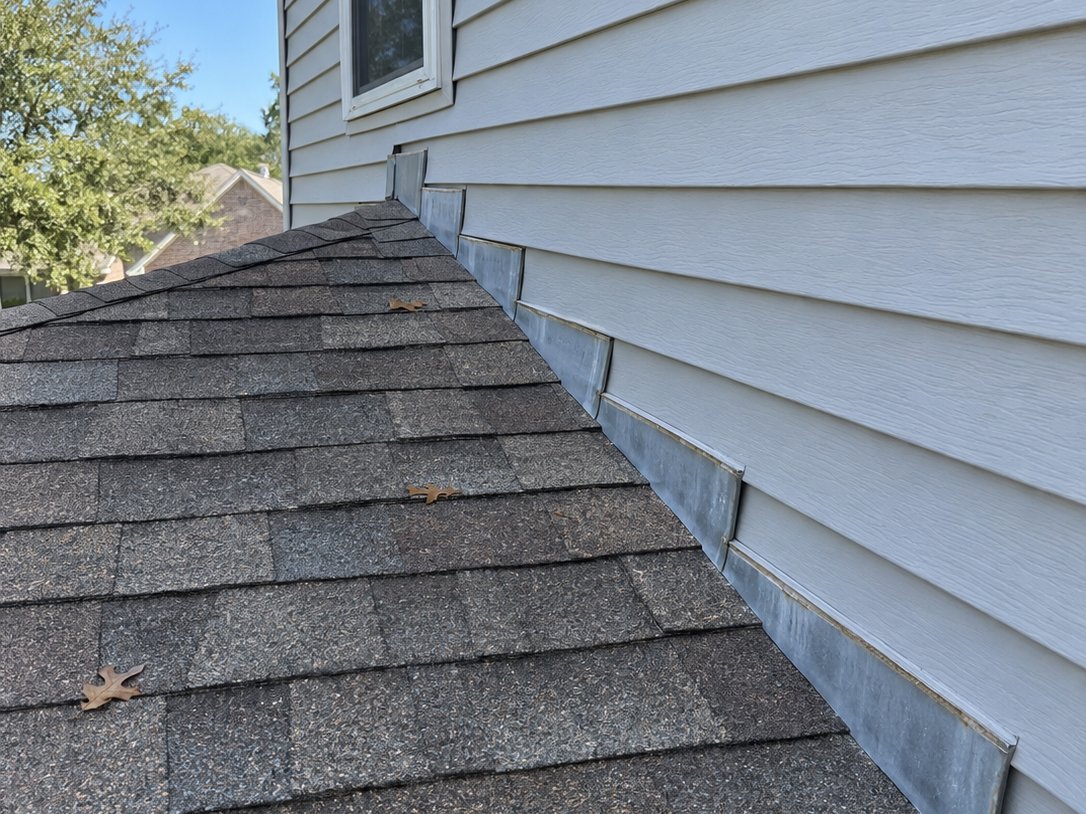
Where Roof Leaks Start on Houston Homes
When a DC Pines crew inspects a roof, its guided photo checklist covers the places leaks most often begin: each vent and pipe, the flashing at walls and chimneys, the ridge, the valleys and the roof surface. On Houston homes, the usual sources fall into a short list:
- Roof-to-wall flashing. Where a lower roof meets a second-story wall, step flashing should be woven into each shingle course. Missing, loose or caulk-only flashing lets water run behind the siding.
- Chimneys. Brick chimneys need step flashing along the sides and counter-flashing set into the mortar. Wide chimneys also need a cricket on the uphill side.
- Pipe boots and vents. Rubber pipe boots crack in the Texas sun, and older metal vents rust at the base.
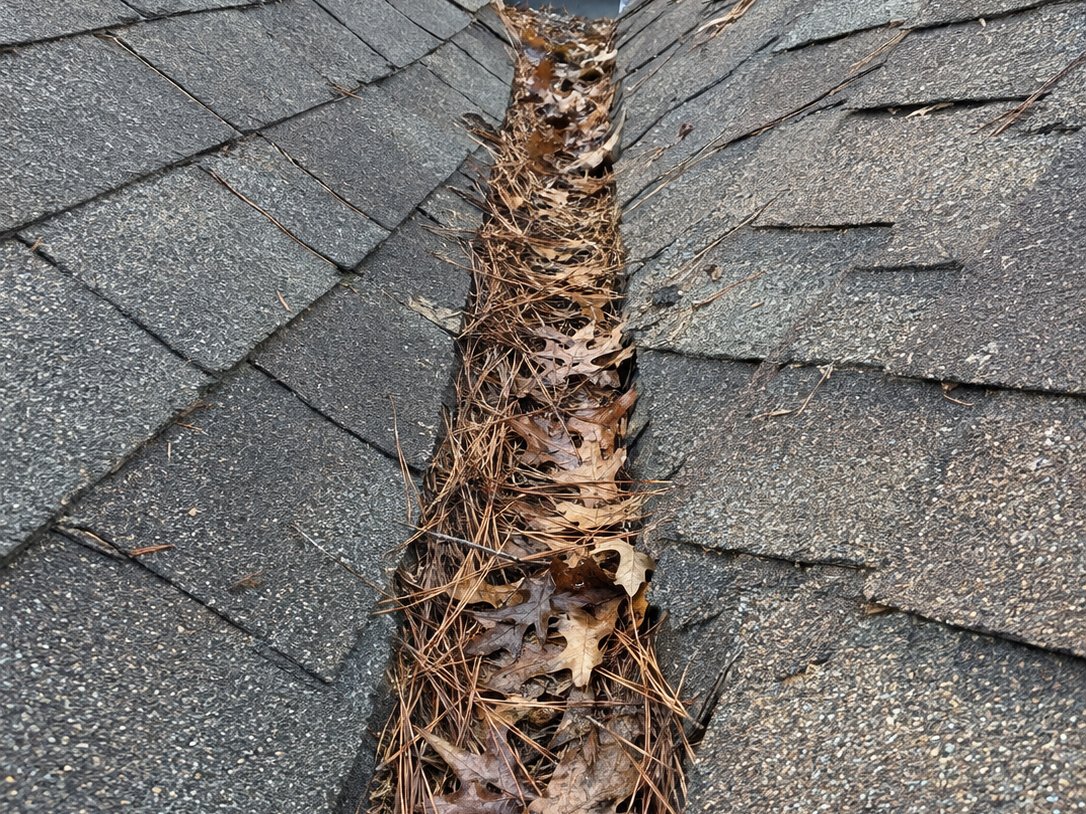
- Valleys. The channel where two slopes meet carries more water than any other part of the roof, and it collects leaves and pine needles.
- Nail pops and exposed fasteners. Nails that back out lift the shingle above them and create a small opening that lets water follow the nail shank into the deck.
Flashing Is the Most Common Culprit
Flashing is the sheet metal that bridges the gap between the roof and anything that interrupts it. The residential building code treats these spots seriously. Under the International Residential Code, Chapter 9 (Section R903.2), flashing is required at wall and roof intersections and around chimneys and other penetrations. The same section requires a cricket or saddle on the ridge side of any chimney or penetration more than 30 inches wide, so water is turned aside instead of pooling against the back of the chimney.
A common shortcut is to smear roofing cement or caulk over a joint instead of installing or replacing the metal. Sealant can stop a drip for a season, but Houston heat dries it out, and the leak returns once it cracks. A proper repair replaces failed flashing with new metal installed in the right sequence with the shingles.
Valleys, Trees and Debris
Houston neighborhoods with mature oaks and pines put a lot of debris on roofs. Leaves and needles settle into valleys and behind chimneys, where they hold water against the shingles and slow drainage. Over time, that damp layer wears the shingle surface and can push water sideways under the edges during heavy rain.
Keeping valleys clear and trimming branches that hang over the roof reduces this risk. When a leak traces back to a valley, the repair should address the worn shingles or valley lining in that channel, not just the debris on top of it.
What a Proper Roof Leak Repair in Houston Includes
A repair is only as good as the diagnosis. A thorough roof leak repair should include:
- Tracing the source. Checking the attic and the roof above the stain to follow the water path back to where it actually enters.
- Photos of the cause. The homeowner should see the failed flashing, cracked boot or lifted nail, not just hear about it.
- Fixing the component, not covering it. New flashing, a new pipe boot or re-secured shingles, installed to the manufacturer’s method.
- Checking the decking. A slow leak can soften the wood under the shingles. Soft decking around the leak should be identified and replaced.
- A clear explanation of the roof’s overall condition. If the leak is a symptom of a roof near the end of its life, the homeowner should know that before paying for repeated patches.
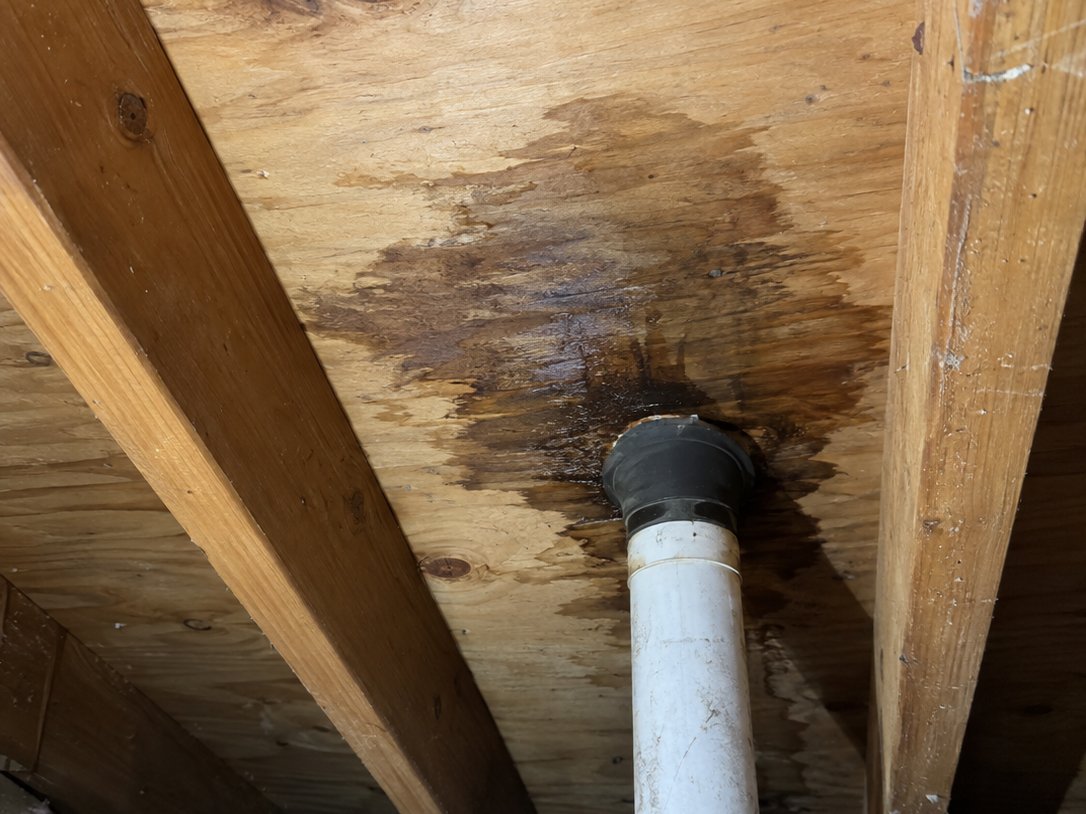
The Education Center’s pipe boot guide covers one of the most frequent leak sources in detail, and the guide to what a roof inspection in Houston should check explains how a full inspection documents each of these areas.
Frequently Asked Questions
Why is the ceiling stain not directly under the leak?
Water travels along decking, rafters and insulation before it drips, so the stain can show up several feet from where water enters the roof.
Can roofing caulk fix a leak permanently?
Not usually. Sealant can slow a drip, but it dries and cracks in Houston heat. Lasting repairs replace the failed flashing, boot or shingles.
What is a chimney cricket?
A cricket, or saddle, is a small peaked structure on the uphill side of a chimney that turns water around it. The building code requires one for chimneys more than 30 inches wide.
Should a small leak be repaired quickly?
Yes. A small leak can soften decking and wet insulation long before it shows on the ceiling, which makes the eventual repair larger.
When does a leak mean the roof needs replacing?
When leaks appear in several places, the shingles are worn across the roof, or the decking is soft in multiple areas, repeated repairs may cost more over time than a replacement.
The Bottom Line
Roof leak repair in Houston works when it finds the true source, usually flashing, a vent, a valley or a fastener, and fixes that component properly instead of covering it with sealant. Asking for photos of the cause and a check of the decking is the simplest way to make sure the repair lasts.
Written by the DC Pines Education Center for Jeff Ternois, Army veteran and owner of DC Pines Roofing.
Have a ceiling stain or a leak that keeps coming back?
DC Pines Roofing traces the leak to its source, photographs the cause and walks through each photo with the homeowner before any repair.

Jeffrey Ternois
Jeff Ternois is the owner and founder of DC Pines Roofing, a veteran-owned roofing, gutter, and window company in Houston. A former U.S. Army Infantry Captain, he led an infantry platoon in Afghanistan and was awarded the Bronze Star Medal and the Combat Infantryman Badge. After the Army he earned an MBA focused on real estate and learned homebuilding from the studs out before founding DC Pines. DC Pines Education Center guides are published under his direction.