
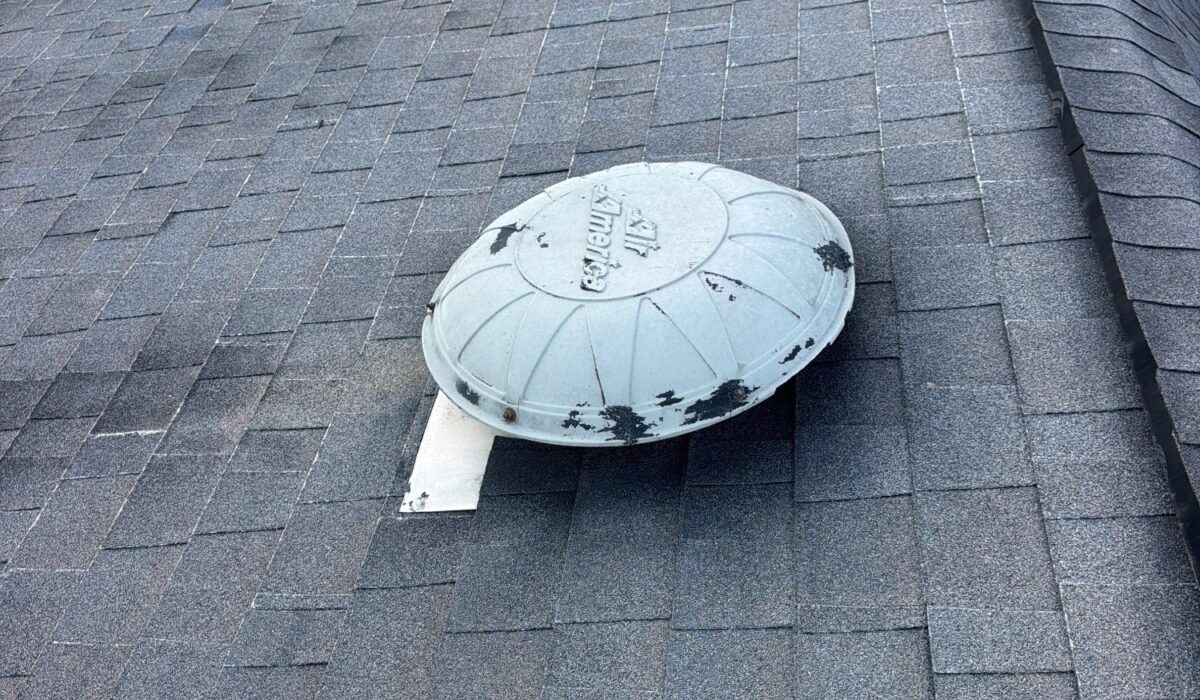
Homeowners searching for roof repair in Katy are often dealing with a roof that looks fine from the street but is aging faster than expected. Much of the Katy area sits on flat, open land, and many neighborhoods are newer subdivisions where trees are still small. That means roofs take direct sun from morning to evening, and the attic underneath gets very hot. The DC Pines Education Center wrote this guide to explain how sun and heat show up on Katy roofs, what usually needs repair, and how attic ventilation fits into the picture, using real photos from DC Pines inspections on Houston-area homes.
Why Sun Exposure Matters for Katy Roofs
In older parts of Houston, mature oaks and pines shade a good share of many roofs. In much of Katy, especially in newer master-planned communities, the roof is the shade. Asphalt shingles exposed to full sun all day lose oils and granules faster, and the sealant strips that hold each course down can weaken over time.
The attic is where the heat really builds. A dark roof under the Texas sun can push attic temperatures far above the outdoor air, and that heat bakes the underside of the decking and the shingles above it. A roof with poor ventilation tends to age faster than one that can move hot air out.
Roof Vents: The Most Common Repair Point
Every roof has several openings for exhaust vents, plumbing pipes and appliance flues. Each one needs flashing that sheds water around it, and each one is a place where a leak can start.
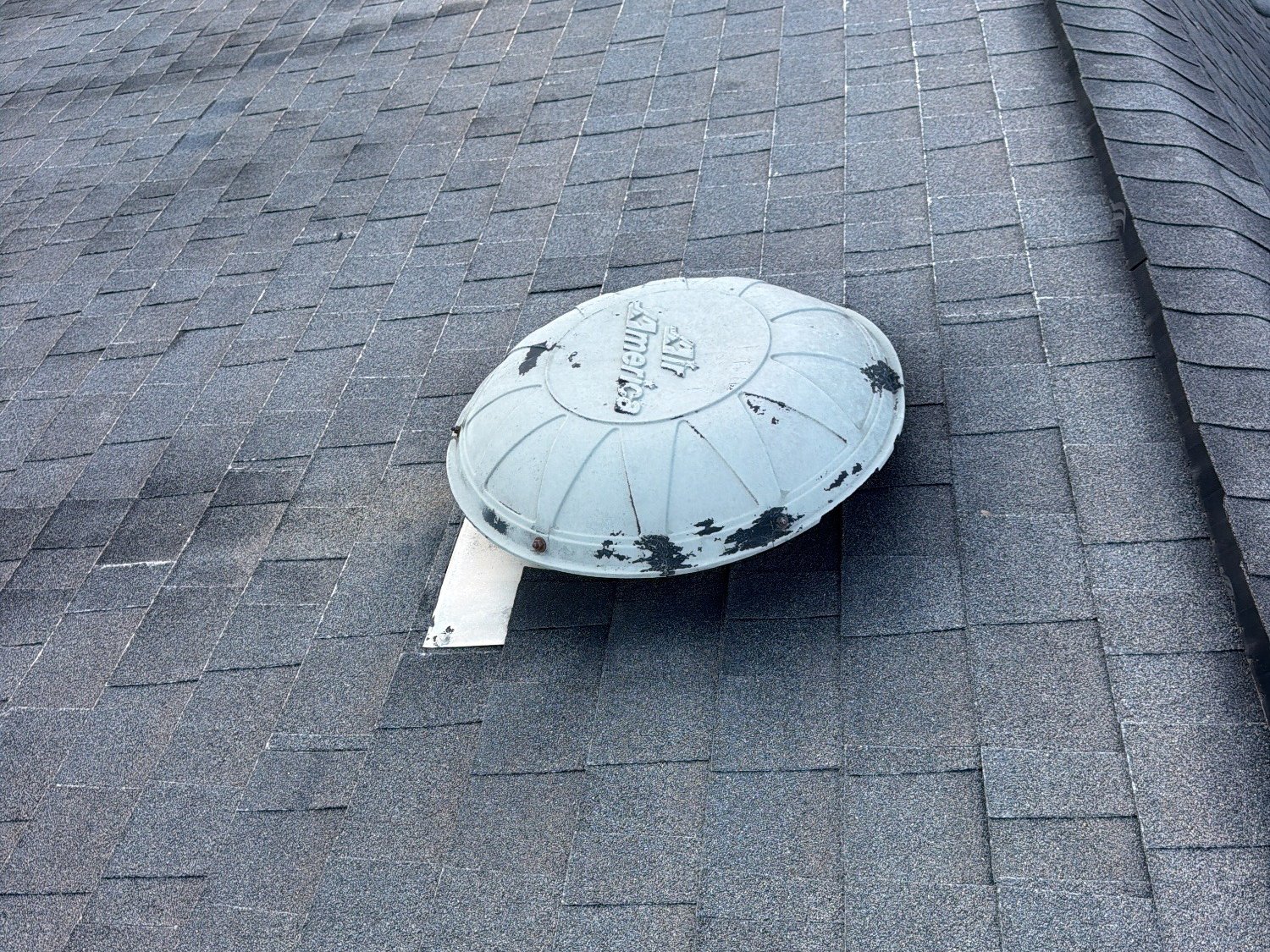
Box vents like the one in the photo above are common on Katy homes. They are simple and effective, but the metal and paint weather over the years, and the shingles around the base can lift or crack. On many roofs, the flashing around a vent outlasts the shingles but not the sealant at its edges.
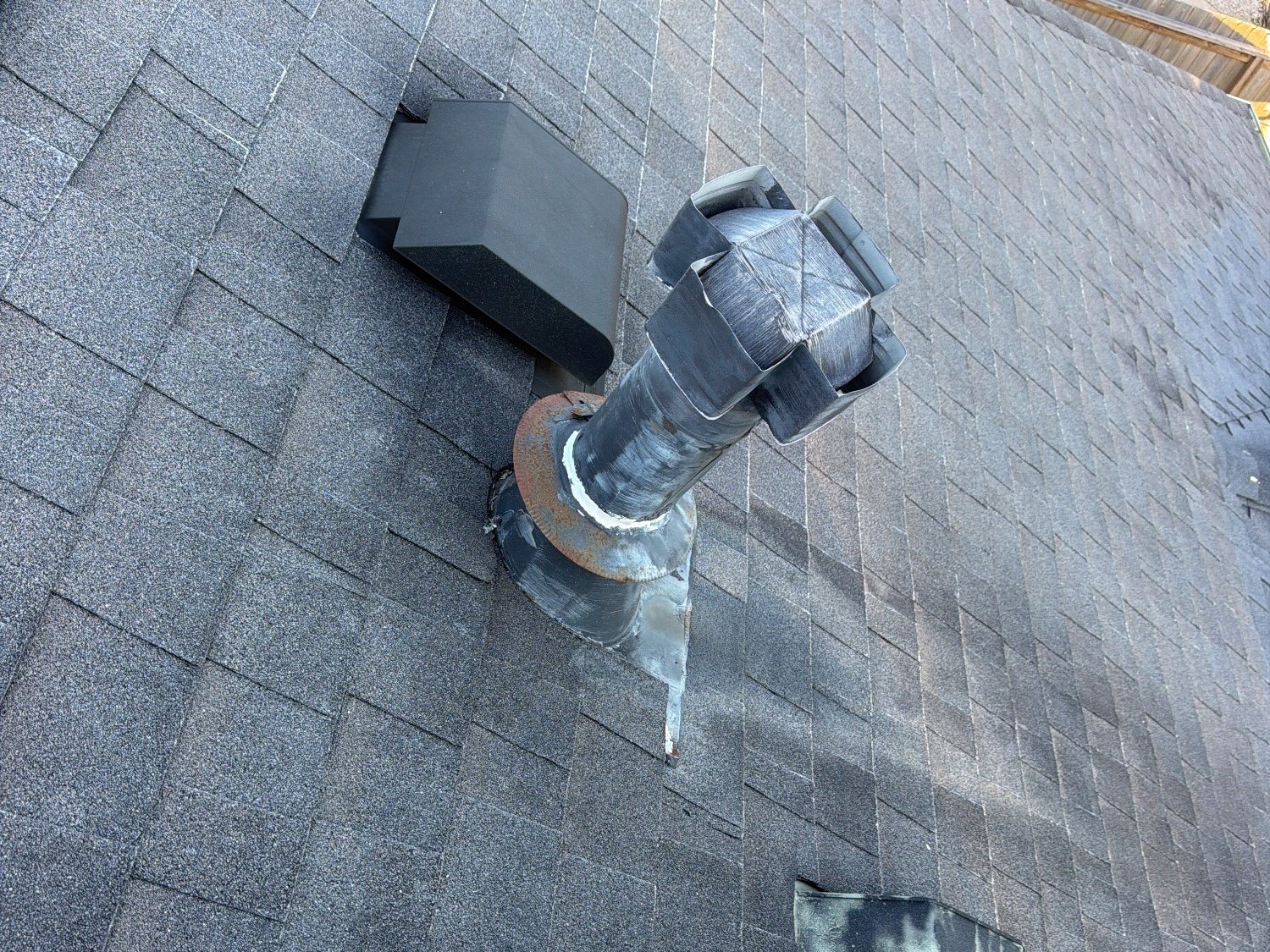
Some sections of a roof have several penetrations close together, such as a water heater flue, a bath exhaust and a box vent. Each needs its own flashing, and the shingles between them have to be cut and fit carefully. When one of these is damaged or bent, a proper repair replaces the flashing and reworks the shingles around it rather than adding more sealant. The Education Center’s pipe boot guide covers plumbing vent repairs in more detail.
What Roof Repair in Katy Should Include in the Attic
Many roof problems are easier to see from below. DC Pines crews follow a guided photo checklist on every inspection, and the attic is part of that checklist. Crews look for water stains on the decking, daylight around penetrations, soft spots in the wood, and how exhaust ducts are routed.
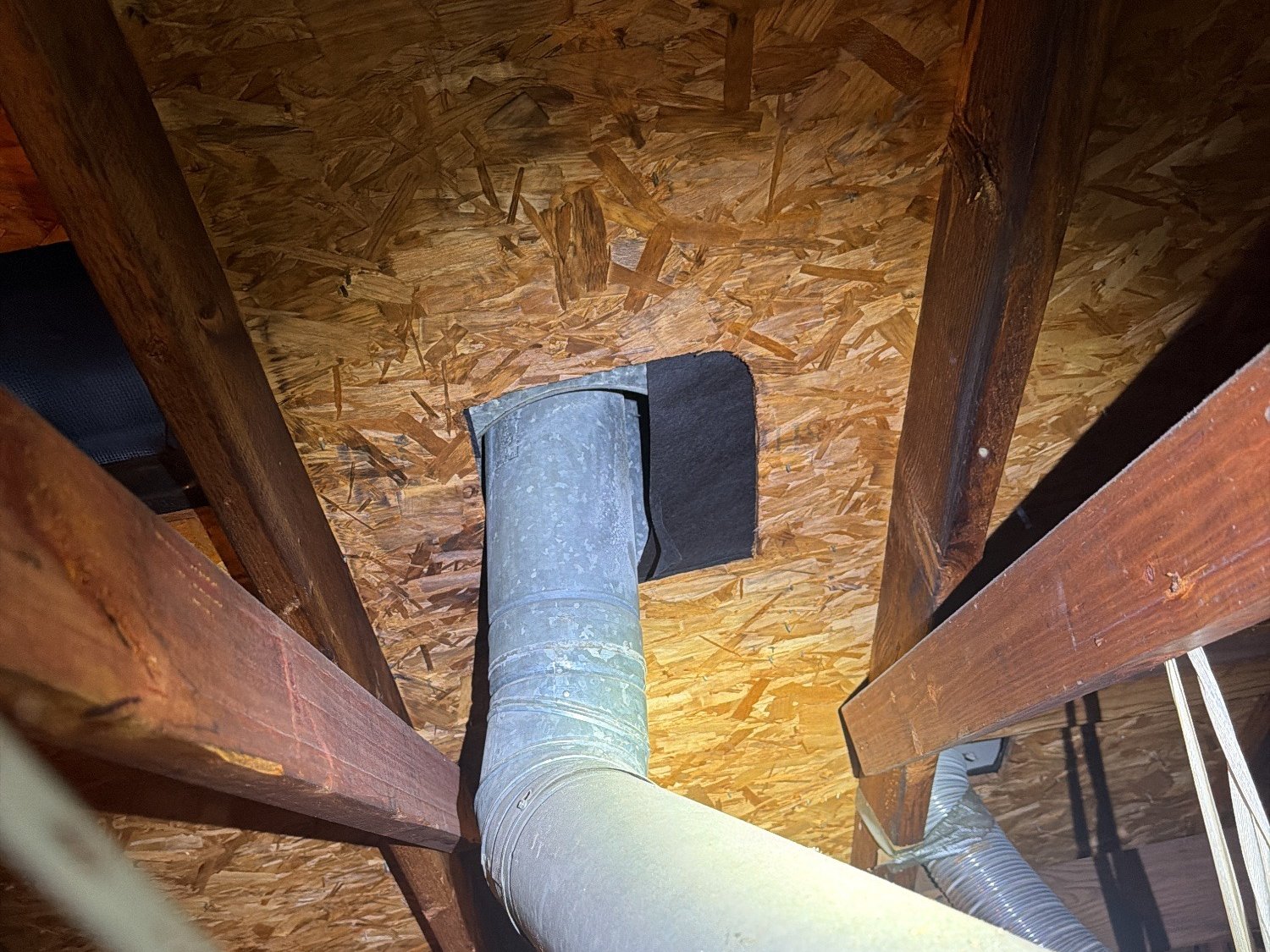
The photo above shows an exhaust duct running from the living space up to a roof cap. Ducts like this should connect firmly to the roof outlet so that warm, moist air leaves the house instead of collecting in the attic, where it can dampen the decking. A loose or disconnected duct is a simple fix that is easy to miss without going into the attic.
How Much Ventilation an Attic Needs
Attic ventilation is not guesswork. According to the Asphalt Roofing Manufacturers Association’s summary of the International Residential Code, the minimum net free ventilating area for an enclosed attic is 1/150 of the vented space. The code allows that to drop to 1/300 only when specific conditions are met, including having 40 to 50 percent of the vent area high in the attic and the rest low.
In plain terms, a well-ventilated attic pulls cooler air in at the eaves and lets hot air out near the ridge. A Katy home with plenty of exhaust vents but blocked soffit intake does not ventilate the way it should. When a roof is being repaired or replaced, it is a good time to check that intake and exhaust are balanced. The Education Center’s guide to attic ventilation and radiant barriers goes deeper on this topic.
Flashing at Walls and Chimney Chases
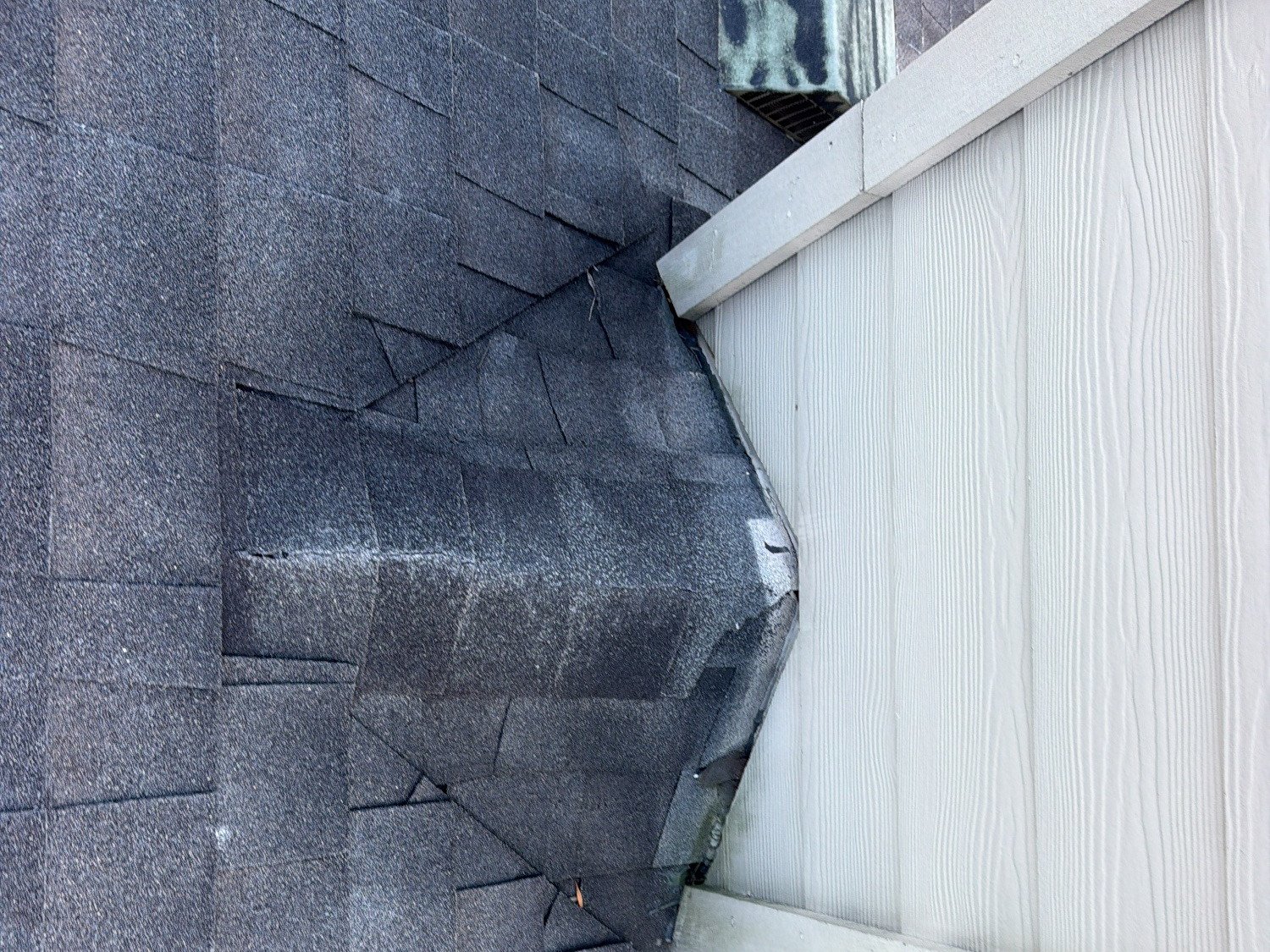
Two-story Katy homes often have lower roofs that meet siding walls and framed chimney chases. Where the roof meets the wall, step flashing should be tucked under the siding, and a cricket on the uphill side of a wide chase helps send water around it. The photo above shows the joint where a roof meets a chase. Joints like this are checked closely on every DC Pines inspection because a small gap can let water run behind the siding.
Frequently Asked Questions
Why do roofs in newer Katy neighborhoods seem to age quickly?
Many newer neighborhoods have few mature trees, so roofs take full sun all day. Heat and sun break down shingles faster, especially when the attic is not well ventilated.
Can vent leaks be repaired without replacing the roof?
Usually, yes. Replacing the flashing and reworking the surrounding shingles is a standard repair when the rest of the roof is in good shape.
How can a homeowner tell if the attic has enough ventilation?
Signs include very high attic heat, moisture on the decking and blocked soffit vents. An inspection can check the balance between intake and exhaust.
Do Katy HOAs need to approve roof repairs?
Repairs that match the existing shingles usually do not, but replacements and color changes often do. The Education Center’s guide to HOA approval for exterior work explains the process.
Should the attic be part of a roof repair visit?
Yes. Stains, soft decking and loose ducts are often visible only from inside the attic.
The Bottom Line
Roof repair in Katy often comes back to sun, heat and the openings in the roof. Vents and flashing are the most common repair points, and a balanced attic ventilation system helps the whole roof last longer. A visit that covers the roof surface and the attic, with photos of each finding, gives homeowners the clearest picture.
Written by the DC Pines Education Center for Jeff Ternois, Army veteran and owner of DC Pines Roofing.
Need roof repair in Katy?
DC Pines Roofing photographs every vent, flashing detail and attic finding and walks through each photo with the homeowner before recommending a repair. Call (832) 709-0768.

Jeffrey Ternois
Jeff Ternois is the owner and founder of DC Pines Roofing, a veteran-owned roofing, gutter, and window company in Houston. A former U.S. Army Infantry Captain, he led an infantry platoon in Afghanistan and was awarded the Bronze Star Medal and the Combat Infantryman Badge. After the Army he earned an MBA focused on real estate and learned homebuilding from the studs out before founding DC Pines. DC Pines Education Center guides are published under his direction.