
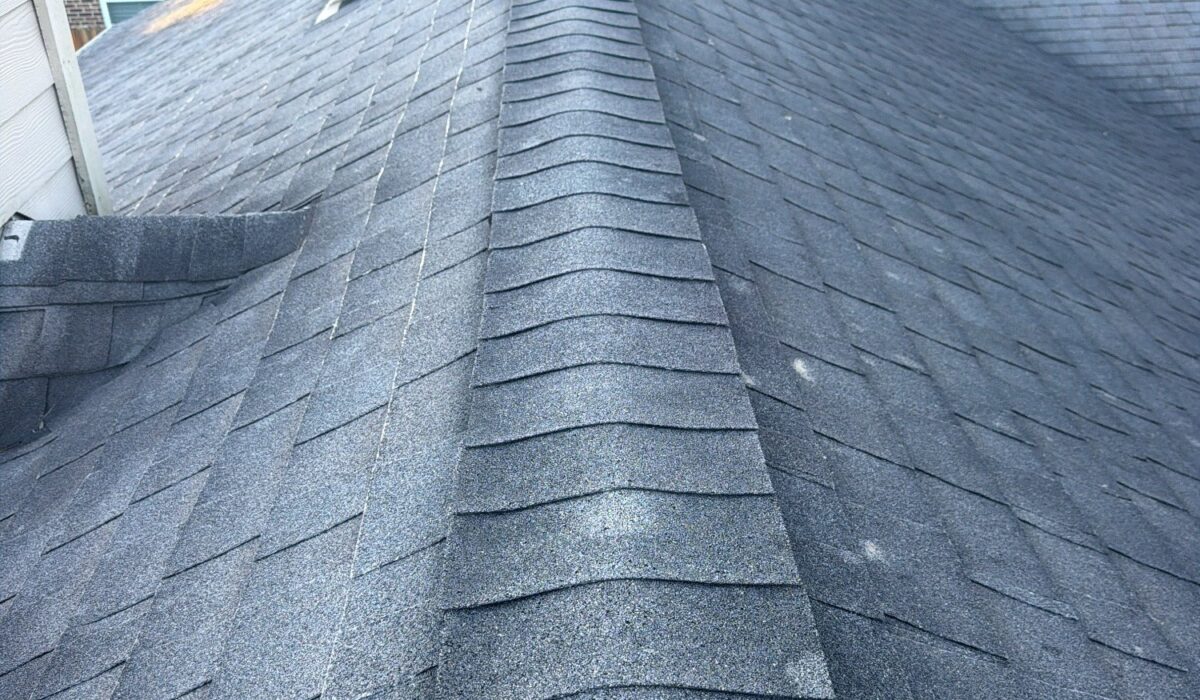
Most requests for roof repair in Cypress, TX start with a small symptom: a stain on a bedroom ceiling, a shingle in the yard or a drip near a fireplace. The repair itself is usually straightforward. The hard part is finding the real cause, because on a two-story Cypress home the problem is often on a section of roof the homeowner cannot see from the ground. The DC Pines Education Center wrote this guide to walk through what a photo-documented roof visit typically finds, using real photos taken by DC Pines crews on Houston-area homes this month.
Why Cypress Roofs Hide Their Problems
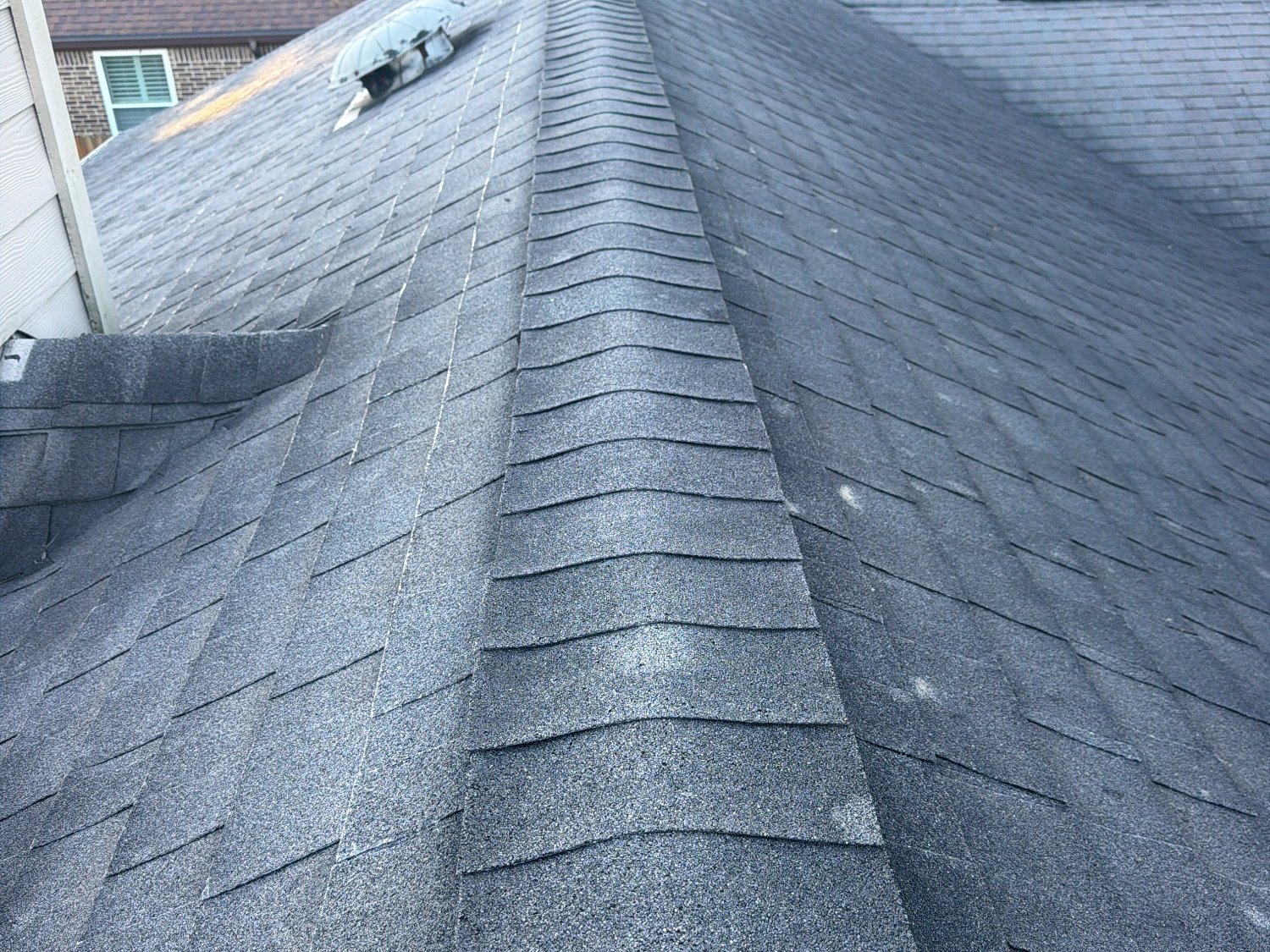
Many Cypress homes are two-story houses in master-planned neighborhoods, with lower roofs over garages and porches, chimney chases framed in siding, and several roof planes meeting at different angles. Each of those intersections is a place where water has to be turned aside by flashing instead of simply running off the shingles.
That design means a leak over a garage or a back bedroom can start at a wall intersection two floors up, and a quick look from the driveway will miss it. A useful roof visit covers every slope and every intersection, not just the area above the stain.
What a Roof Repair Visit in Cypress, TX Should Document
DC Pines crews follow a guided photo checklist on every inspection. The checklist moves through the home in a set order: each side of the house from the ground, the roof pitch, the shingle field on each slope, the ridge, every vent and pipe, the flashing at walls and chimneys, and the attic. The photos are then walked through with the homeowner so the findings are clear before any repair is recommended.
The photos in this guide come straight from that checklist. They show the kinds of problems that turn into ceiling stains if they are left alone.
Rusted Flashing at a Chimney Chase
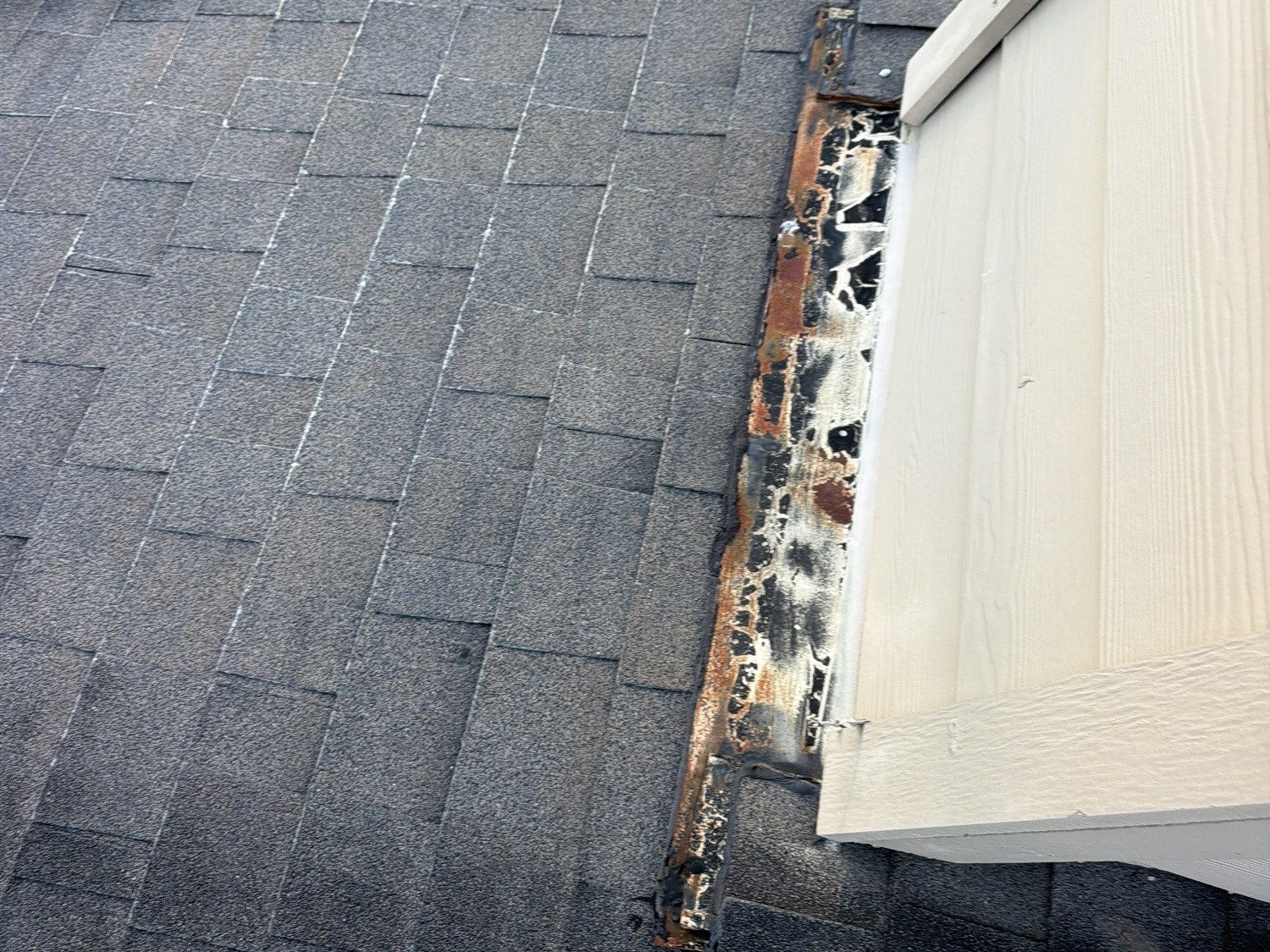
Many Cypress homes have a fireplace flue enclosed in a framed chase covered in siding. Where the roof meets the side of that chase, step flashing and a metal base should carry water back onto the shingles. In the photo above, the metal along the base of the chase has rusted through and broken apart, leaving the wall framing behind it exposed to water.
The residential building code is specific about this joint. Under International Residential Code Section R905.2.8.3, base flashing against a vertical sidewall must be continuous or step flashing at least 4 inches high and 4 inches wide, must direct water onto the roof or into the gutter, and must run continuously under the siding. A proper repair replaces the failed metal and tucks new flashing behind the siding rather than sealing over the rust.
Pipe Flashing and Loose Shingles Around Vents
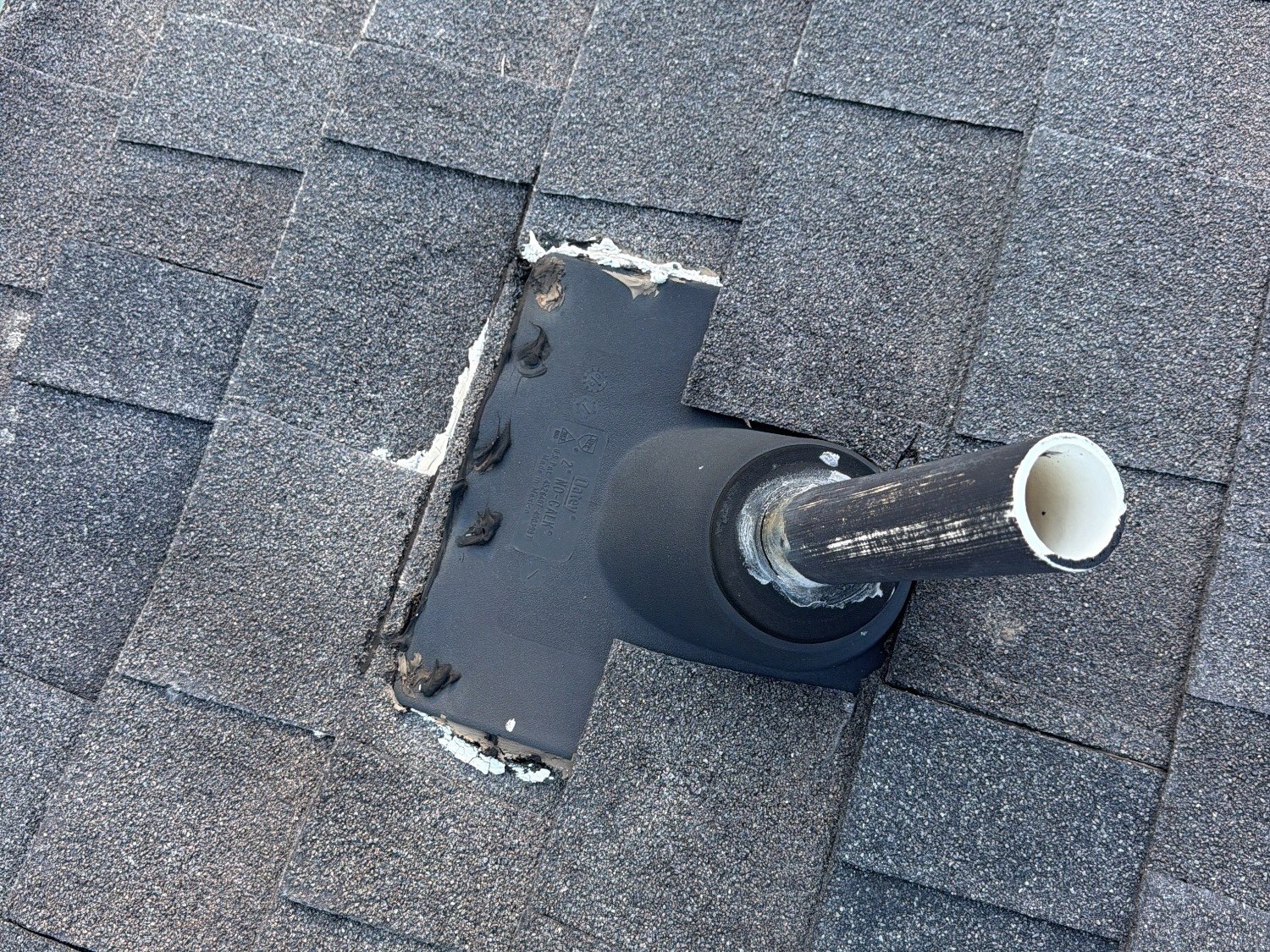
Plumbing vents and appliance flues pass through the roof on metal or rubber flashing. In this photo, the shingles around a vent flashing have been cut back and are no longer lying flat over the flange, and old sealant is visible at the edges. Water running down the slope can get under the loose shingle edges and reach the decking.
The fix is to replace the flashing where needed and reweave the surrounding shingles so the upper courses overlap the flange correctly. The Education Center’s pipe boot guide covers this repair in more detail.
Old Patches and Mismatched Shingles
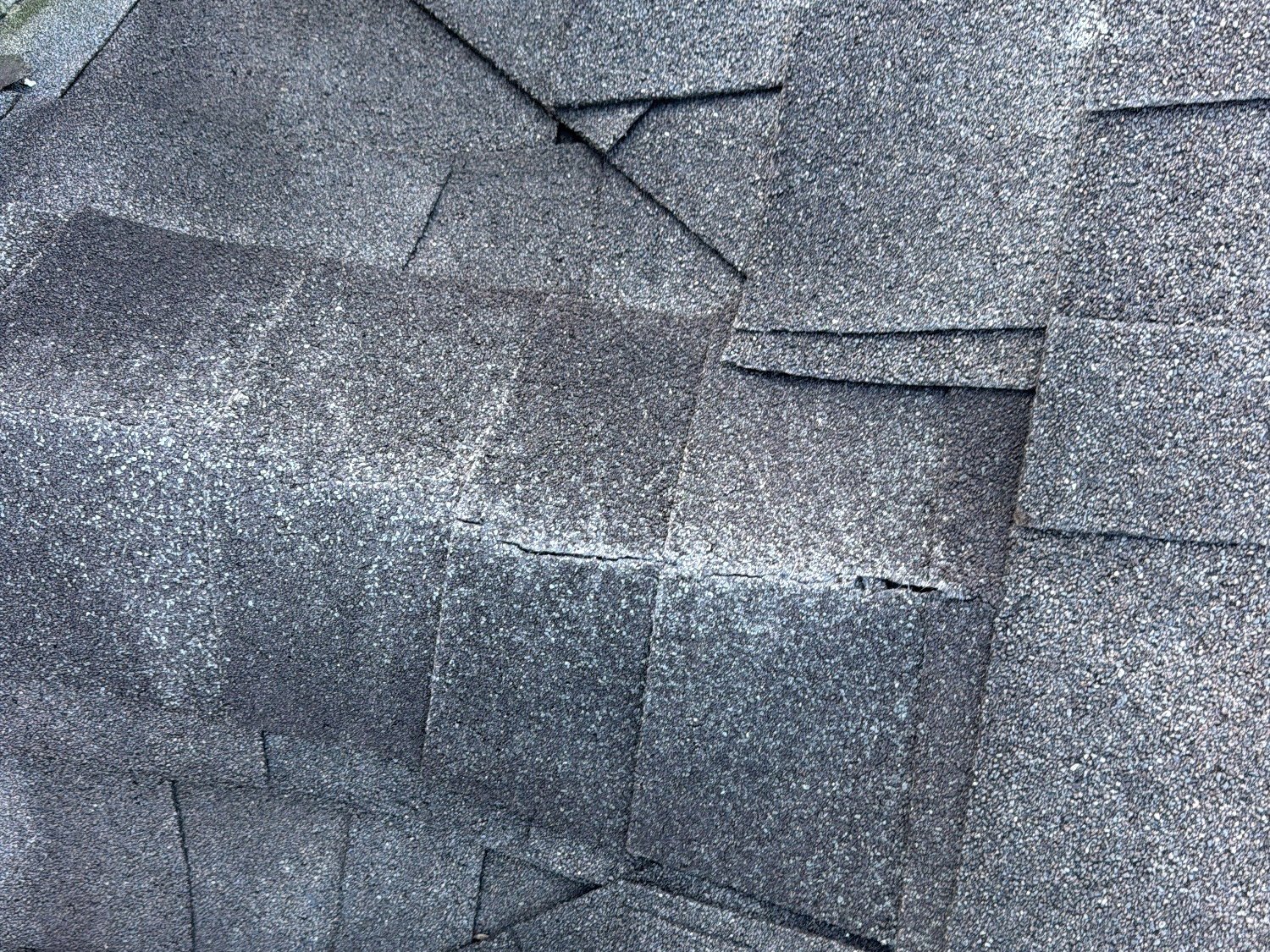
Roofs often carry the history of earlier repairs. The photo above shows a patched area where replacement shingles do not line up with the surrounding courses and several tabs are creased and lifted. Patches like this can hold for a while, but misaligned courses and broken seal strips leave openings for water during heavy rain.
When a crew finds an old patch, the right question is whether it can be redone properly or whether it is a sign of a wider problem. A single bad patch is a repair. Patches on several slopes, combined with brittle shingles, usually point toward planning for a replacement.
Repair or Replace?
Most of the problems above are repairable on their own. A full replacement starts to make more sense when the photos show widespread granule loss, many creased or lifted shingles, soft decking in more than one area, or repeated leaks at different spots. Seeing the photos makes that decision much easier, because the homeowner can compare what is found on each slope instead of relying on a verbal summary. The guide to where roof leaks actually start explains the most common leak sources in more depth.
Frequently Asked Questions
Why does a leak show up far from the damaged spot?
Water travels along decking and rafters before it drips, so a stain can appear several feet from where water enters, especially on homes with several roof levels.
What is a chimney chase?
It is a framed box, usually covered in siding, that encloses a metal fireplace flue. The joint where the roof meets the chase needs step flashing tucked under the siding.
Can rusted flashing be sealed instead of replaced?
Sealant over rusted metal is a short-term patch. Lasting repairs replace the flashing so it runs under the siding and over the shingles as the code requires.
Should a homeowner ask for photos of the problem?
Yes. Photos of each finding make it easier to understand the repair and to compare recommendations.
How long does a typical roof repair visit take?
It depends on the home, but a thorough visit includes every slope, the vents and flashing, and the attic, which takes longer than a quick look from a ladder.
The Bottom Line
Roof repair in Cypress, TX is most successful when the whole roof is documented, not just the area above the stain. Flashing at walls and chases, vent penetrations and old patches are the usual suspects, and photos of each one make the right repair clear.
Written by the DC Pines Education Center for Jeff Ternois, Army veteran and owner of DC Pines Roofing.
Need roof repair in Cypress, TX?
DC Pines Roofing photographs every slope, vent and flashing detail and walks through each photo with the homeowner before recommending a repair.

Jeffrey Ternois
Jeff Ternois is the owner and founder of DC Pines Roofing, a veteran-owned roofing, gutter, and window company in Houston. A former U.S. Army Infantry Captain, he led an infantry platoon in Afghanistan and was awarded the Bronze Star Medal and the Combat Infantryman Badge. After the Army he earned an MBA focused on real estate and learned homebuilding from the studs out before founding DC Pines. DC Pines Education Center guides are published under his direction.