
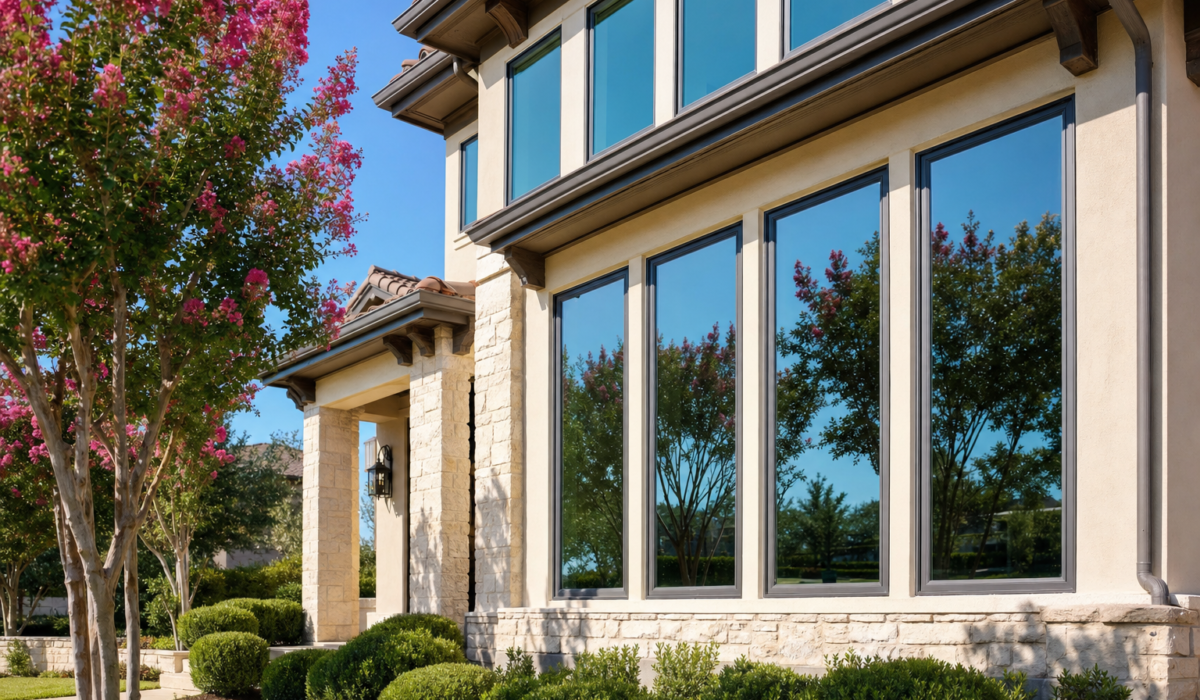
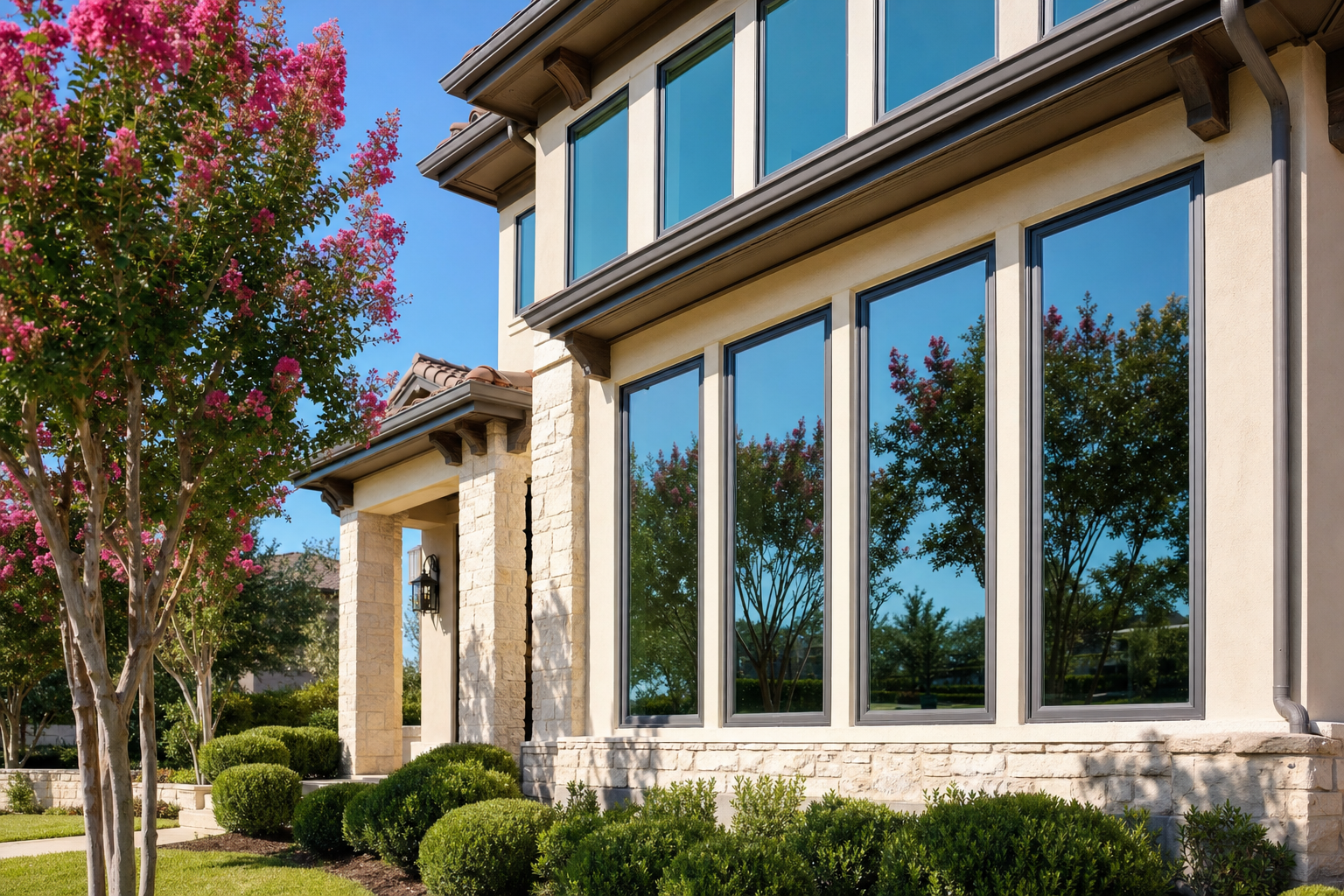
Houston low-e window coatings are the single most important specification on a residential window in this climate, and they are also the specification that gets glossed over the fastest during a sales conversation. A homeowner shopping windows in Houston is not really shopping frames or shopping brands. They are shopping the coating, the gas fill, and the spacer that sit inside the insulated glass unit, because those three components decide how the window performs against the summer heat and against the utility bill.
The DC Pines Education Center put this post together to explain what a low-e coating actually is, why the difference between soft-coat and hard-coat matters in a hot climate, why the surface the coating sits on changes the performance profile, and how the coating interacts with the SHGC and U-factor numbers on the NFRC label. It is a homeowner-education primer, not a product pitch, and it complements the existing Houston NFRC label guide.
What a Low-E Coating Actually Is
Low-emissivity, abbreviated low-e, is a microscopically thin metallic or metallic-oxide film applied to the surface of glass inside an insulated glass unit. The coating is thinner than a human hair and is virtually invisible to the eye, but it changes how the glass handles radiant heat. Long-wave infrared, which is the heat radiating from warm surfaces like an asphalt driveway or a sun-heated brick wall, is reflected back toward its source rather than passed through the glass. Visible light continues to pass, so rooms remain bright.
Independent education material from the NFRC Consumer Guide to Windows summarizes the practical effect: low-e coatings can reduce the energy loss associated with windows by as much as 40%, improve occupant comfort, and reduce fabric and flooring damage caused by ultraviolet light. Those three effects are the payoff of the coating, and they show up on every well-specified Houston window regardless of frame material or brand.
Soft-Coat vs Hard-Coat: Why It Matters in Houston
Two manufacturing methods produce low-e glass. Soft-coat, also called sputtered coat, is deposited on the glass after manufacturing in a vacuum chamber and consists of multiple metallic layers stacked in sequence. Hard-coat, also called pyrolytic coat, is applied while the glass is still hot during production and bonds directly to the glass surface as a single metal-oxide layer.
In a hot climate the two are not interchangeable. Soft-coat delivers substantially lower emissivity and much stronger solar heat control, which is why it is the coating found on ENERGY STAR Southern-Climate windows. Hard-coat is more physically durable and can survive single-lite storm-window use where the coated surface is exposed to handling, but its solar performance profile is less aggressive. For a sealed Houston insulated glass unit where the coating sits protected inside the air space, soft-coat is the correct default answer.
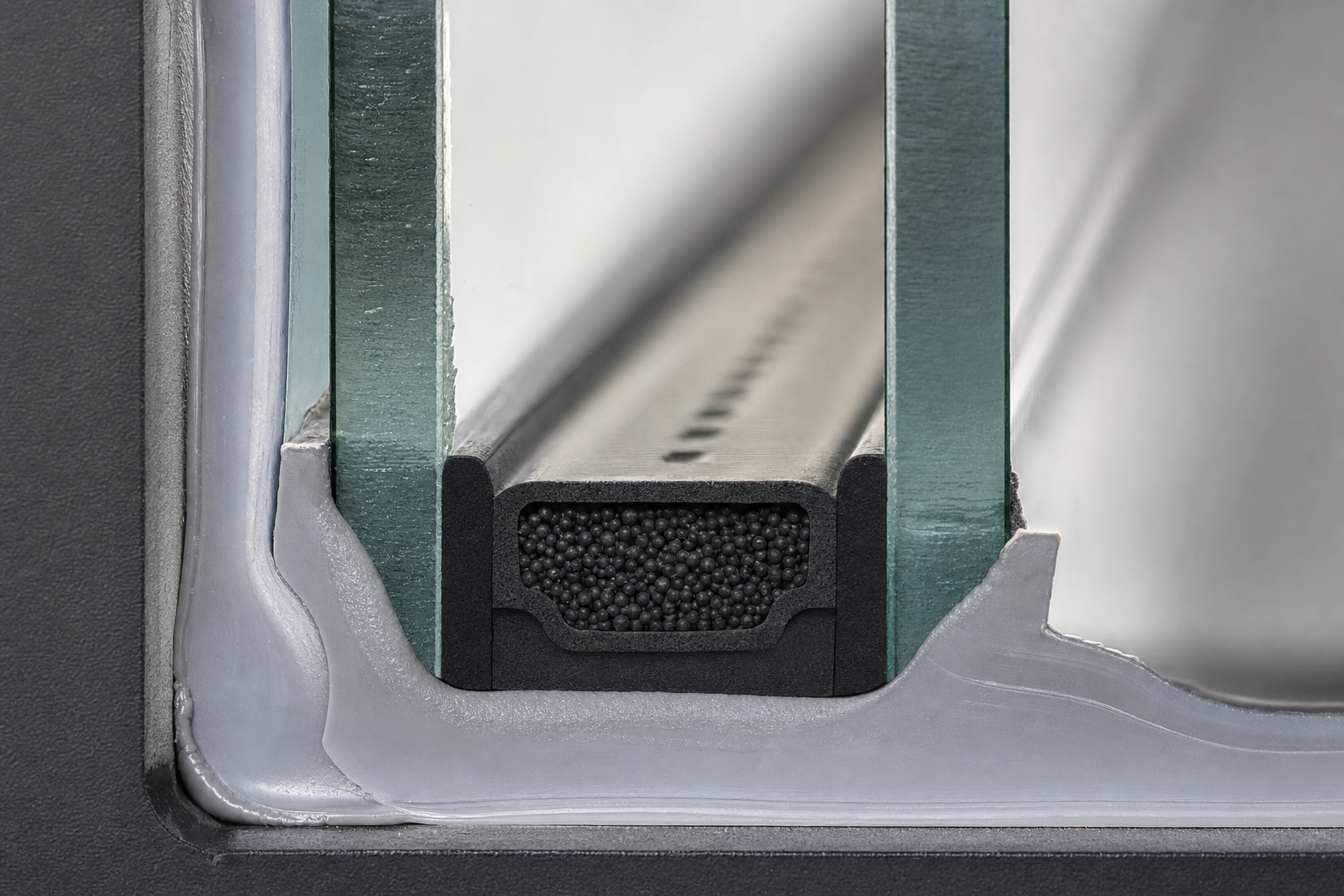
Surface Position: The Number That Nobody Explains
A residential dual-pane insulated glass unit has four glass surfaces. Numbered from the exterior in, surface 1 is the outside face of the outer pane, surface 2 is the interior face of the outer pane, surface 3 is the exterior face of the inner pane, and surface 4 is the interior face of the inner pane. Where the low-e coating sits on those four surfaces changes what the coating does.
For a hot-climate configuration appropriate to Houston, soft-coat low-e is typically placed on surface 2. That position lets the coating reflect solar heat before it enters the sealed air space between the panes, which keeps the interior pane cooler and reduces radiant heat gain into the room. A cold-climate configuration often places the coating on surface 3 instead, because in that case the goal is to bounce interior heat back into the house. A homeowner reviewing a Houston window quote should confirm the coating position, not just the presence of a coating.
How the Coating Shows Up on the NFRC Label
The NFRC label is the outward evidence of the coating and fill choices inside the insulated glass unit. Solar Heat Gain Coefficient is the number most directly affected by a hot-climate low-e coating, and in Houston a Southern-Climate ENERGY STAR window will typically land at an SHGC of about 0.25 or lower, meaning the assembly rejects roughly three-quarters of the incoming solar heat. U-factor is affected too, but Houston is a cooling-dominated climate, so SHGC carries more weight in the buying decision than U-factor.
ENERGY STAR publishes the Southern-Climate performance thresholds directly in its residential windows key product criteria. A homeowner comparing quotes should be able to point to the NFRC label on each proposal and see the SHGC number sitting at or below that threshold. If the coating is right and the fill and spacer are right, that number appears without any additional homeowner effort.

The Bottom Line
A Houston window is only as good as the low-e coating, the gas fill, and the spacer inside it. Soft-coat low-e on surface 2, argon fill, and a warm-edge spacer is a Houston-appropriate baseline specification, and everything else on a window quote sits downstream of those three choices. The frame material influences longevity and thermal bridging, the installation influences air leakage, and the price influences the purchase decision, but the coating decides whether the window is quietly rejecting Houston heat or quietly letting it into the living room. Homeowners who ask specifically about coating type, coating position, gas fill, and spacer are asking the right questions, and the NFRC label on the quote is where those answers show up in ink.
Get a window quote that names the coating, the fill, and the spacer.
DC Pines Roofing specifies the low-e configuration, gas fill, spacer type, and ENERGY STAR Southern-Climate performance targets on every window quote. Houston homeowners can request a line-item window inspection that shows exactly what is being installed and where the coating sits inside the insulated glass unit.