The DC Pines Education Center fields more questions about houston aluminum gutter thickness than almost any other gutter spec. Homeowners see three numbers on a proposal — .027, .032, sometimes .040 — and the industry does a poor job explaining what those five-thousandths of an inch actually do. The short answer: the difference is small on paper and large in the field, and the right choice depends more on tree canopy, ladder traffic, and eave height than on any national “best gauge” recommendation.
This guide breaks down what each thickness means physically, when .027 is genuinely enough, when .032 is worth the upgrade, why .040 is almost always overkill on a Houston-area home, and how thickness interacts with hanger spacing, fascia condition, and gutter profile to determine real-world lifespan.
What “Gauge” Actually Means for Aluminum Gutters
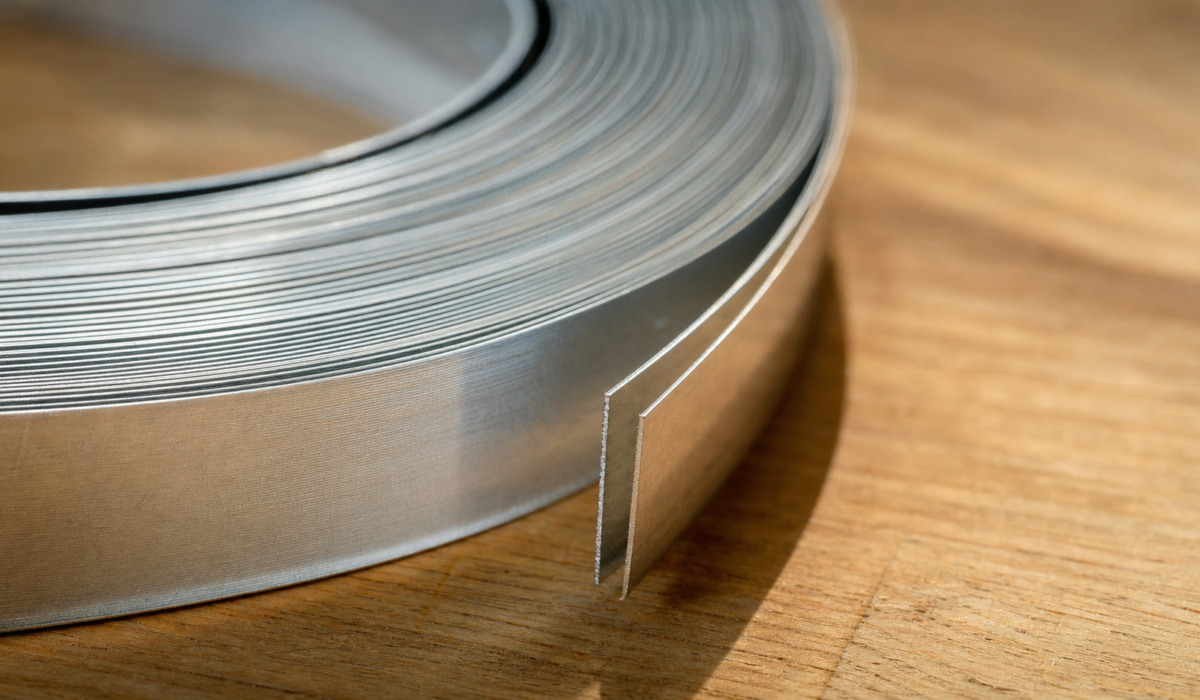
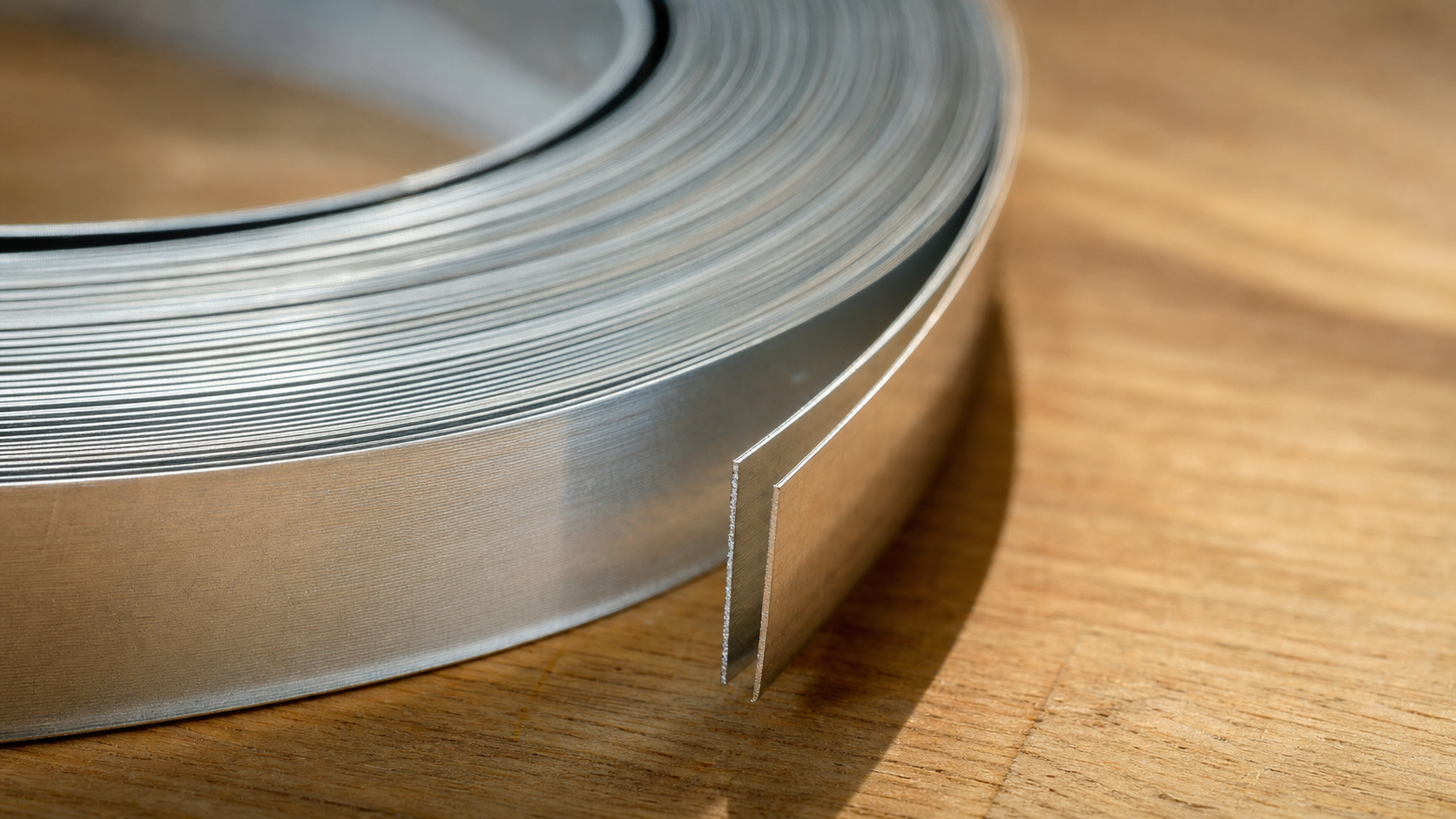
Aluminum gutter thickness is measured directly in inches, not in the wire-gauge or sheet-gauge systems used for steel. The three thicknesses a Houston homeowner will encounter are:
- .027 inch (about 0.69 mm) — builder standard, the default residential offering at almost every gutter supply house in the country.
- .032 inch (about 0.81 mm) — professional-grade upgrade, roughly 18 percent more aluminum than .027 and noticeably stiffer.
- .040 inch (about 1.02 mm) — commercial-grade, used for warehouses, multi-family, and unusually long unsupported spans.
Note that “gauge” is a common but technically incorrect term when applied to aluminum gutter coil — the industry uses decimal inch measurements. When a contractor’s proposal lists “.027 gauge” it means “.027 inch aluminum coil,” and the two terms are used interchangeably in practice.
Why the small numeric difference matters
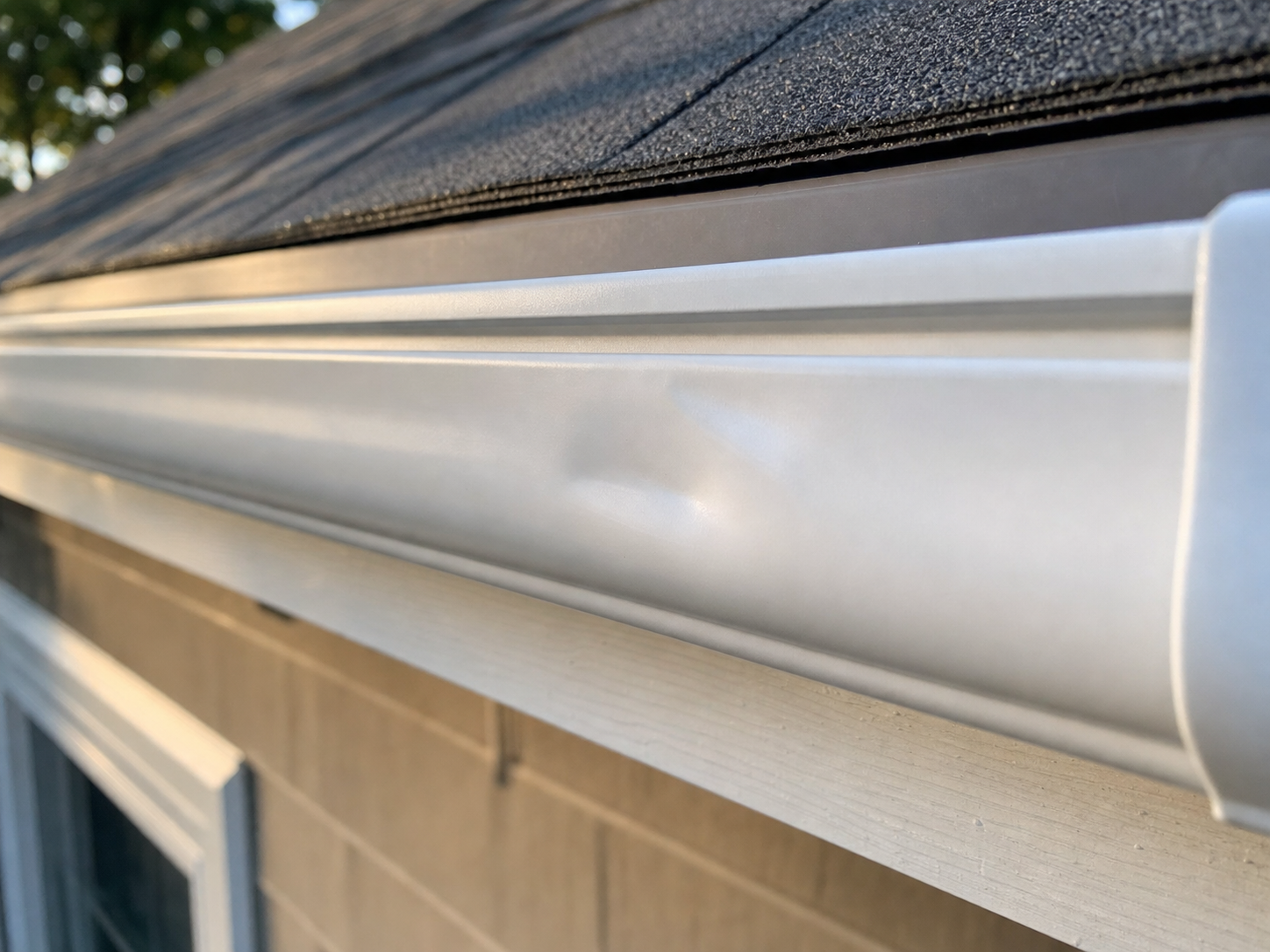
Beam deflection is not a linear function of thickness. Doubling aluminum thickness quadruples stiffness, so the modest 18 percent increase from .027 to .032 translates to roughly a 50 percent gain in resistance to bending and dent deformation under load. That is the difference between a gutter that develops a visible wave between hangers over five years and one that stays straight for two decades.
When .027 Is Genuinely Enough
The .027 aluminum standard is not a corner-cut — it is a defensible spec for most residential installations when the supporting conditions are right. According to the reference tables published by the U.S. Department of Energy’s home exterior maintenance guidance, gutter longevity in a mild climate is more strongly correlated with proper drainage and hanger spacing than with material thickness alone.
Conditions where .027 performs well
- Single-story homes with typical Houston eave heights (8–10 feet)
- Full, flat fascia boards providing continuous support behind the gutter
- Hidden-hanger installations spaced 24 inches on center or tighter
- Neighborhoods with limited tree canopy — newer Cypress, Fulshear, or Bridgeland subdivisions where mature trees are still years away
- Homes where the roof drainage area per downspout is under the standard limits

When .032 Is Worth the Small Upgrade
The material-cost delta between .027 and .032 on a typical Houston home runs approximately 100–200 dollars for a full-perimeter installation — a small fraction of the total project cost, and less than a single service call to straighten sagging gutters five years down the road. The upgrade earns its money in specific conditions that are common in the Houston metro area.
Conditions that justify .032
- Two-story eaves. Gutters at 18–20 feet see more ladder contact during cleaning, more wind exposure, and any wave or dent shows from the ground.
- Long unsupported runs. Any single-plane run over 40 linear feet benefits from the added stiffness, particularly on hip roofs common in Katy and Sugar Land master-planned communities.
- Mature tree canopy. Kingwood, Memorial, Bellaire, and older Spring neighborhoods drop enough pine needles, oak leaves, and small branches to load gutters with debris weight several times a year.
- Frequent ladder traffic. Homes where the owner or a service handles quarterly cleaning benefit from the ladder-resistance advantage.
- Inverted, short, or damaged fascia boards. Any condition that leaves the back of the gutter less supported than a full flat fascia benefits from the added rigidity.
The ENERGY STAR home improvement tools also list gutter durability as one of the components that most affects the long-term exterior maintenance budget on a home, and the small upgrade to .032 is a routine recommendation on any project scoped for a 20-plus year hold.
Why .040 Is Rarely Worth It on a Home
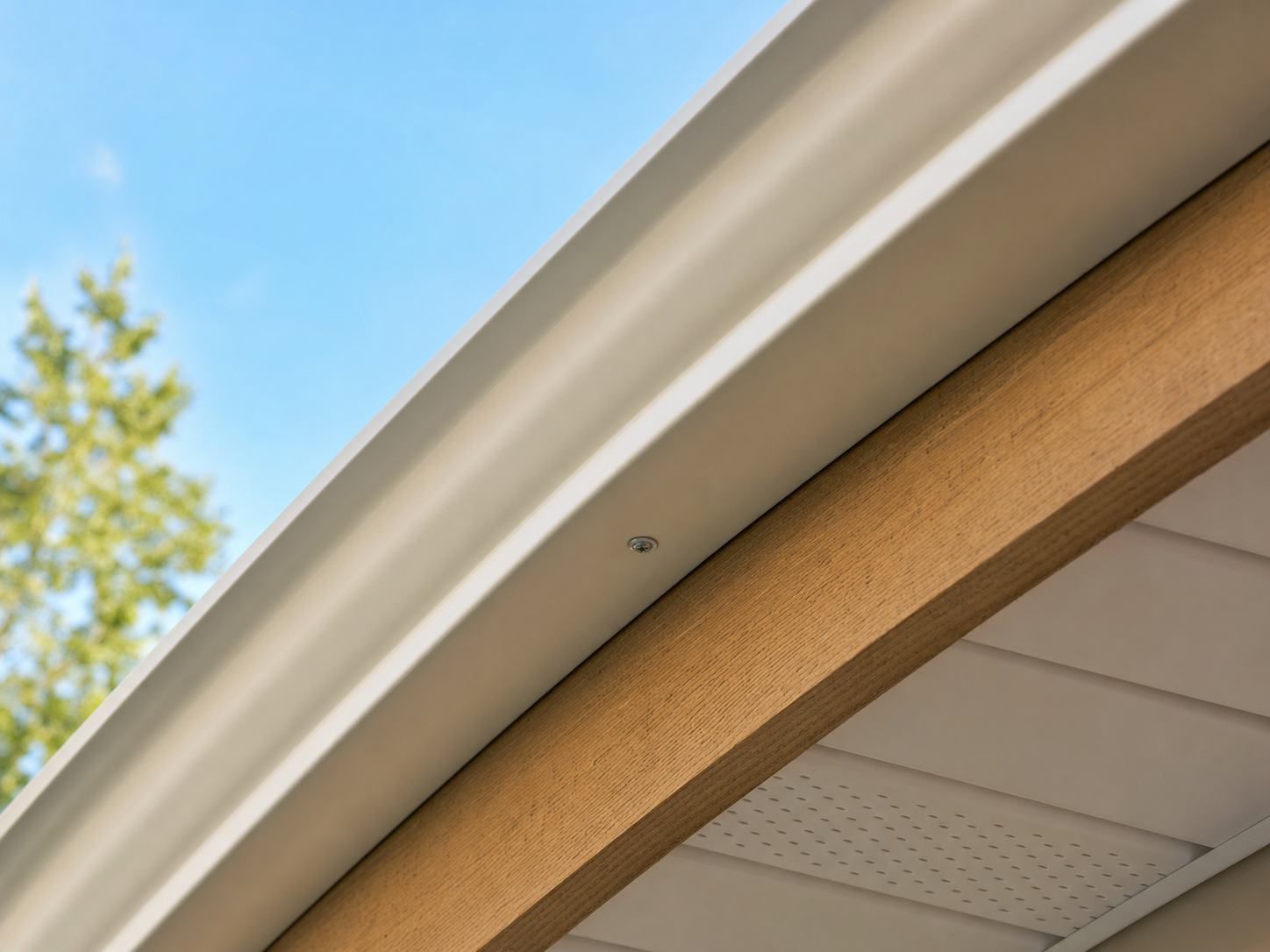
.040 aluminum is genuinely stronger than .032, but the added weight complicates installation, the material cost climbs, and the marginal benefit on a residential roof is small. Commercial buildings, warehouses, and buildings with unusually long unsupported spans use .040 because they cannot easily be re-supported later; a home with normal fascia and hanger geometry rarely needs it.
The narrow set of Houston homes that do benefit
- Large custom homes with single-plane eaves over 80 linear feet
- Homes with metal or clay-tile roofs producing high-velocity runoff
- Concrete driveways or hardscape directly below a heavily loaded gutter run, where any sag becomes visible immediately
- Rural or acreage properties with heavy pine or hardwood canopy and no easy access for maintenance
Outside of those conditions, spending .040 money on a home usually means shorting the budget somewhere more impactful — hanger spacing, downspout count, splash diffusion, or gutter guards.
Thickness Is Only Half the Story
Even the best aluminum coil fails prematurely if the surrounding install is under-spec. Homeowners evaluating gutter proposals should look at four things alongside thickness:
Hanger spacing and type
Hidden hangers spaced 24 inches on center are the current professional standard. Older spike-and-ferrule installations at 30–36 inch spacing shift more load onto the aluminum itself, which is where thin material shows waves and sag first. A .027 gutter with 24-inch hidden hangers often outlasts a .032 gutter with 36-inch spike-and-ferrule spacing.
Downspout count and placement
Undersized downspouts force water to pool in the gutter longer, adding weight and accelerating debris buildup. Standard residential guidance is one downspout per 30–40 linear feet of gutter or per major roof valley — whichever produces more downspouts.
Fascia board condition
A gutter is only as straight as the fascia behind it. Rotted, cupped, or split fascia should be replaced before the new gutter goes up, regardless of aluminum thickness. Any Houston homeowner planning a gutter project on a home older than fifteen years should ask specifically about fascia inspection during the site visit.
Gutter profile
5-inch K-style is standard on Houston-area single-story homes. 6-inch K-style is worth the modest upgrade on two-story homes, steep roofs, and high-runoff conditions. Half-round profiles offer a distinctive look but rarely appear on production Houston homes because of higher material cost and specialized bracket requirements.
The Bottom Line
For a typical Houston-area single-story home with full flat fascia, tight hanger spacing, and moderate tree exposure, .027 aluminum remains a defensible builder-standard choice and will deliver 20-plus years of service. For anything with two-story eaves, long single-plane runs, heavy tree canopy from a mature Kingwood, Memorial, or Bellaire lot, or homes where ladders will contact the gutter regularly, the small step up to .032 aluminum is one of the highest-return upgrades on any exterior project — measured in dents avoided, waves prevented, and replacement cycles pushed further out. .040 stays reserved for the narrow set of large custom homes with commercial-scale eave geometry.
For readers building out a broader gutter plan, the Education Center’s Houston gutter maintenance guide covers the seasonal work that keeps any thickness performing, the hidden hangers vs spike-and-ferrule comparison explains why bracket type matters as much as aluminum thickness, and the gutter apron vs drip edge guide covers the flashing detail that protects the fascia board behind the gutter.
Weighing gutter thickness and support options for your Houston home?
DC Pines Roofing walks through aluminum thickness, hanger spacing, fascia condition, and downspout sizing on every gutter proposal.