
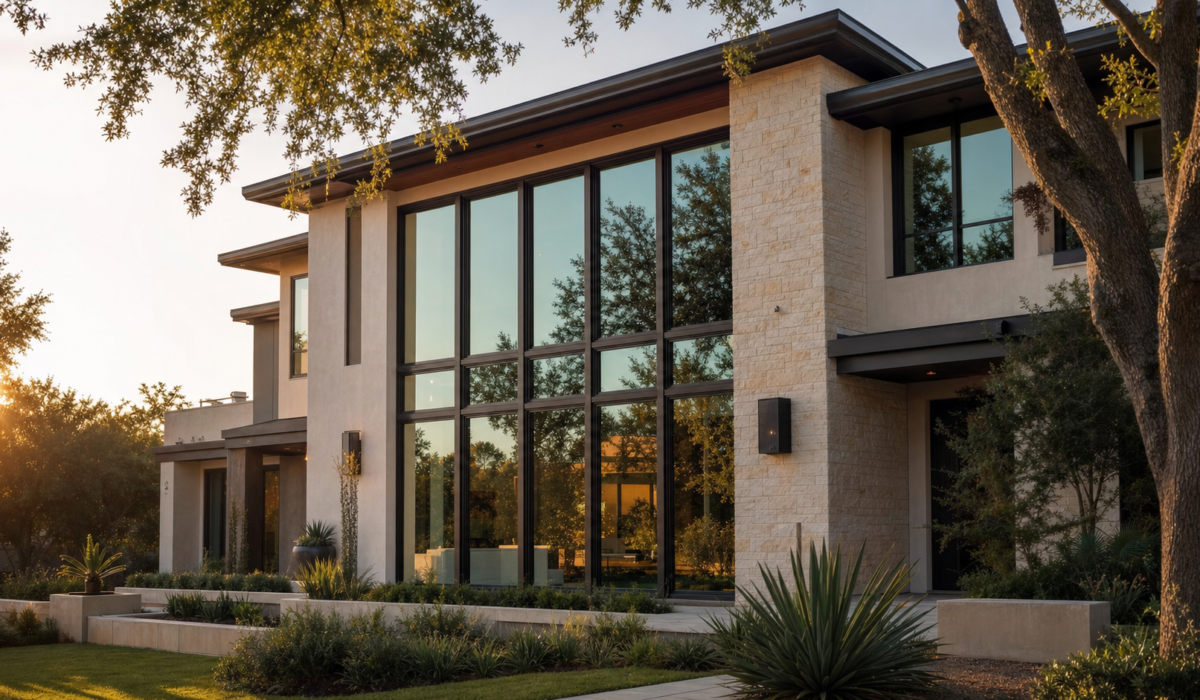
The DC Pines Education Center is often asked which single number on a window label matters most for a Houston home. The answer surprises many homeowners: it is not U-factor. In a climate where the cooling season runs from April through October and interior surfaces bake through afternoon glass, SHGC — Solar Heat Gain Coefficient — is the number that shapes the utility bill. Understanding shgc houston windows performance is the single most useful skill a homeowner can bring to a replacement conversation.
This guide walks through what SHGC actually measures, how it interacts with U-factor on the NFRC label, why ENERGY STAR treats the South-Central climate zone (which includes Houston) as its own category, and how orientation changes the picture. The goal is a homeowner who can read a manufacturer quote and instantly recognize whether the glass package matches the Texas heat load.
What SHGC Actually Measures
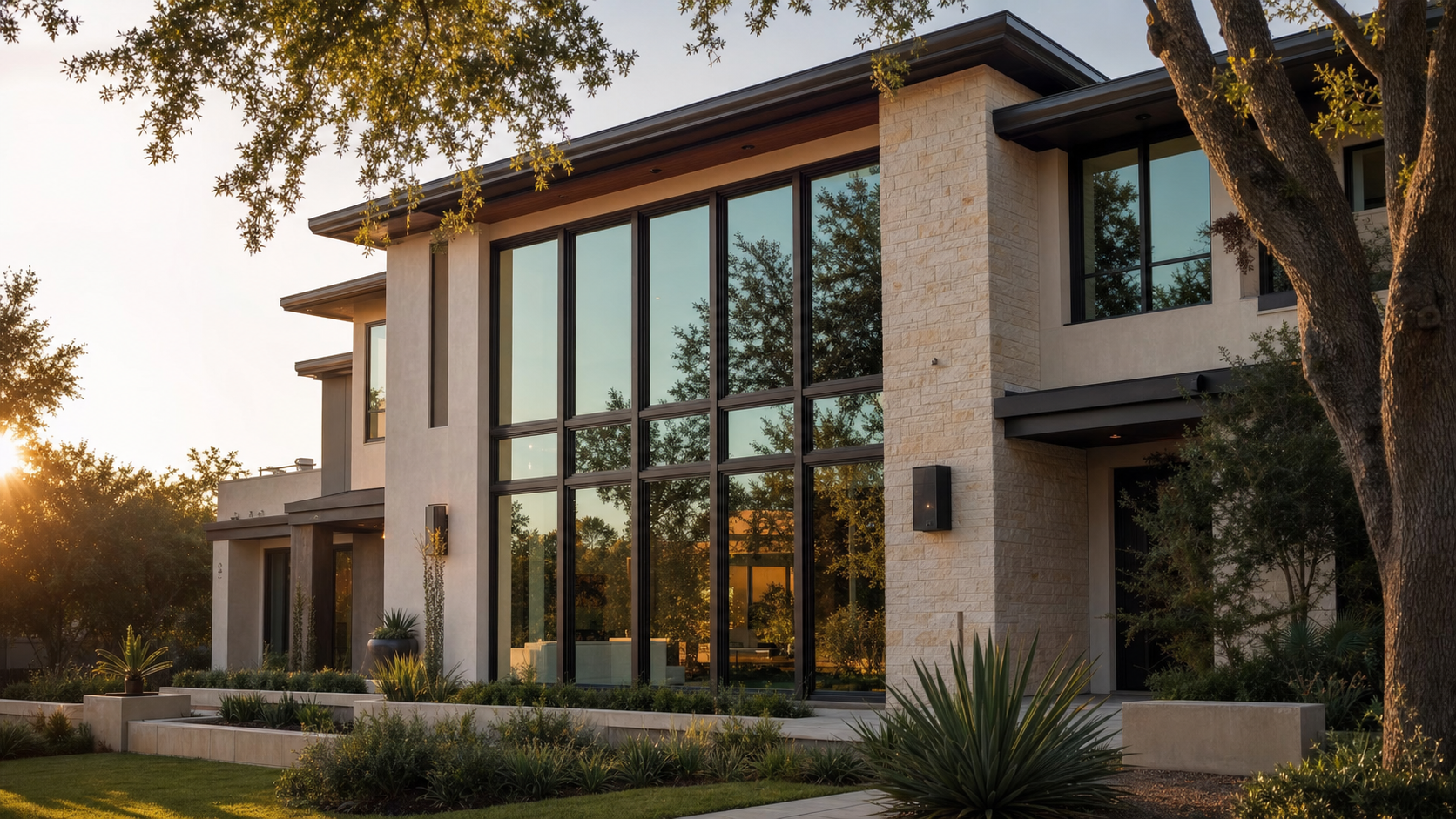
SHGC is a decimal between 0 and 1 that describes the fraction of solar energy passing through a window as heat. An SHGC of 0.50 means 50 percent of the sun’s heat passes through; an SHGC of 0.23 means 77 percent is reflected or absorbed before it enters the room. In Houston, where a single west-facing living room can absorb enough afternoon sun to raise interior temperatures by several degrees, that difference translates directly into how hard the air conditioner works between 3 p.m. and 8 p.m.
According to the ENERGY STAR Version 7.0 window criteria, the South-Central climate zone that covers Texas requires a maximum U-factor of 0.28 and a maximum SHGC of 0.23. That SHGC threshold is the strictest in the entire ENERGY STAR framework, which reflects how much cooling load a Texas home carries.
Why SHGC beats U-factor in Houston
- U-factor measures how quickly heat conducts through a whole window assembly. It matters most on the coldest winter mornings, which are relatively few in Houston.
- SHGC measures solar heat gain. It matters every sunny day the cooling system runs — roughly two hundred days a year in the Houston metro area.
- Air Leakage matters too, but modern installations bring it under 0.3 CFM per square foot regardless of glass package.
The trade-off is not perfectly clean — a low-solar-gain low-e coating also improves U-factor slightly — but when a homeowner has to pick which number to optimize for, SHGC comes first in Texas.
Reading the NFRC Label
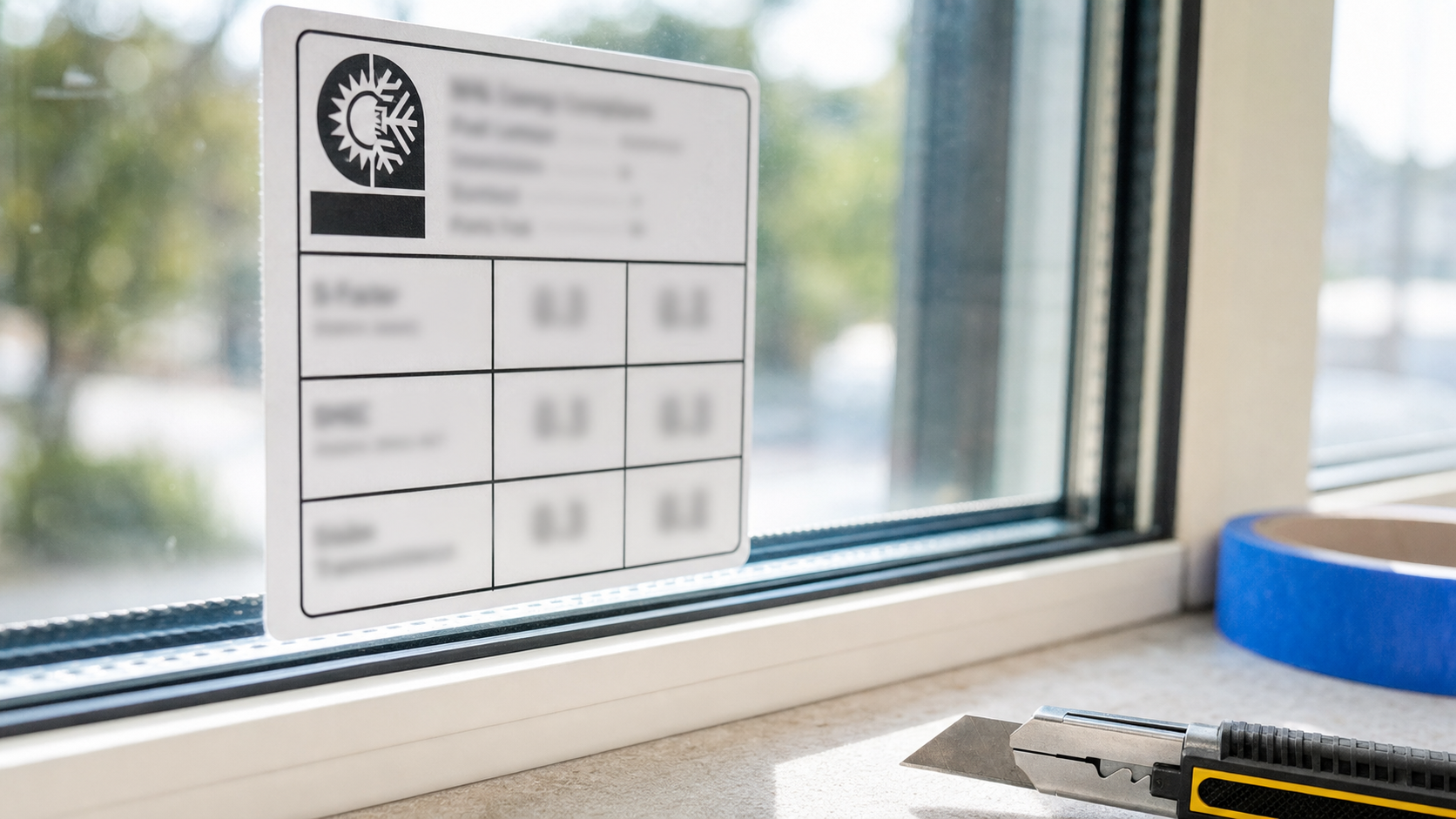
Every new window sold in the United States carries a National Fenestration Rating Council label, usually a white sticker on the glass. Four numbers appear on it:
- U-factor (0.20 to 1.20): heat conduction through the whole window. Lower is better. Houston target: 0.28 or below.
- SHGC (0 to 1): solar heat admitted. Lower is better in cooling climates. Houston target: 0.23 or below.
- Visible Transmittance (VT) (0 to 1): how much daylight passes through. Higher preserves views and reduces artificial lighting.
- Air Leakage (CFM/ft²): how much air leaks through the window at test pressure. Lower is better.
A common Houston misstep is picking a window with a great U-factor but an SHGC of 0.35 because a builder-grade “double-pane low-e” package uses a moderate-solar-gain coating tuned for northern climates. The window meets code, looks efficient on paper, and quietly costs the homeowner an extra hundred dollars a month all summer.
What a good Texas glass package looks like
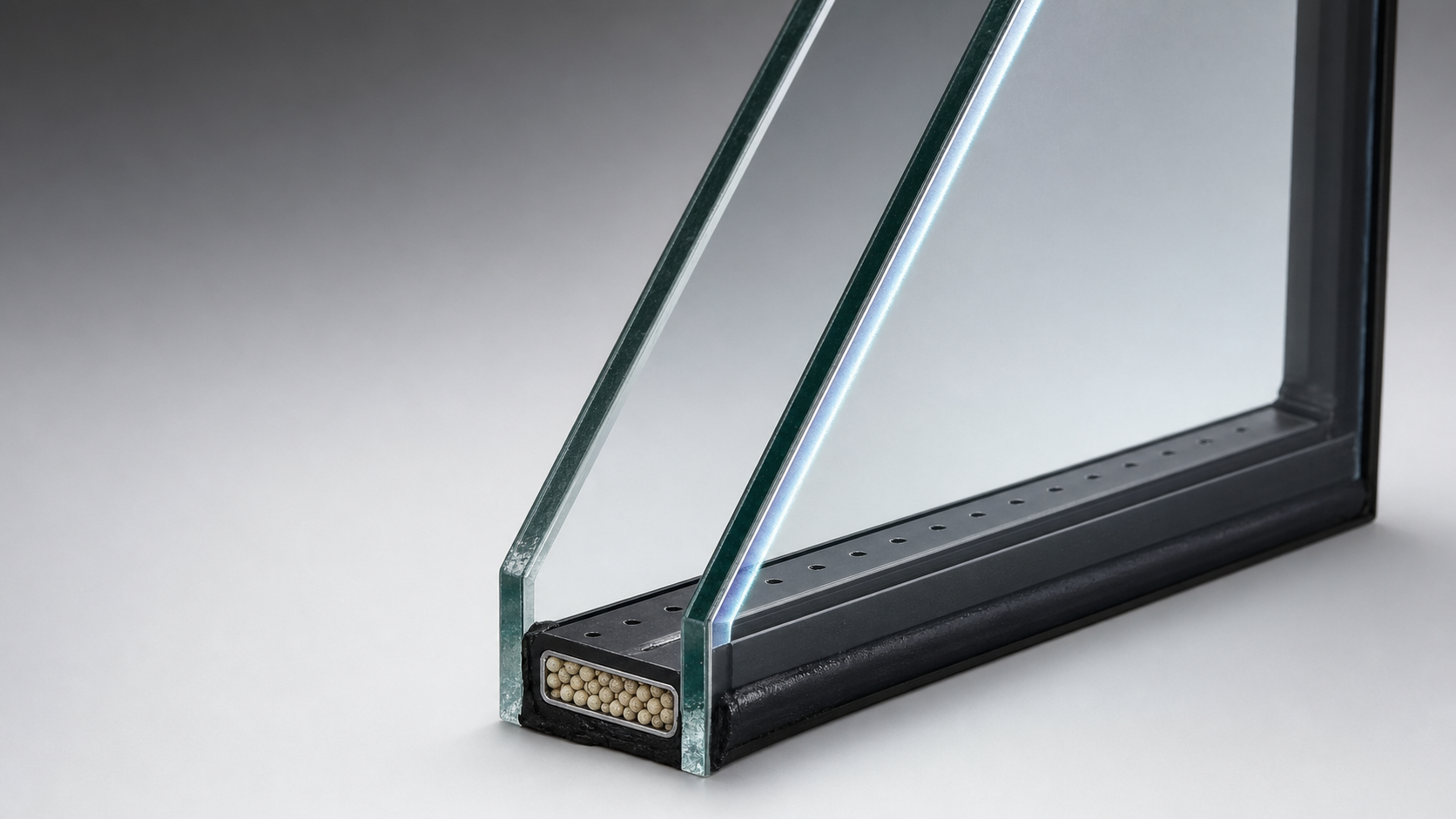
- Double-pane insulated glass unit with argon fill
- Low-solar-gain low-e coating on surface #2 (inside face of the outer pane)
- Warm-edge spacer bar between the panes
- U-factor of 0.24 to 0.28, SHGC of 0.19 to 0.23, VT of 0.45 or higher
Cardinal Glass LoĒ³-366 and equivalent triple-silver coatings from other suppliers are the current benchmark for this zone. The U.S. Department of Energy’s guide to energy-efficient windows describes the same low-solar-gain approach as the standard for cooling-dominant climates.
Why Orientation Changes the Math
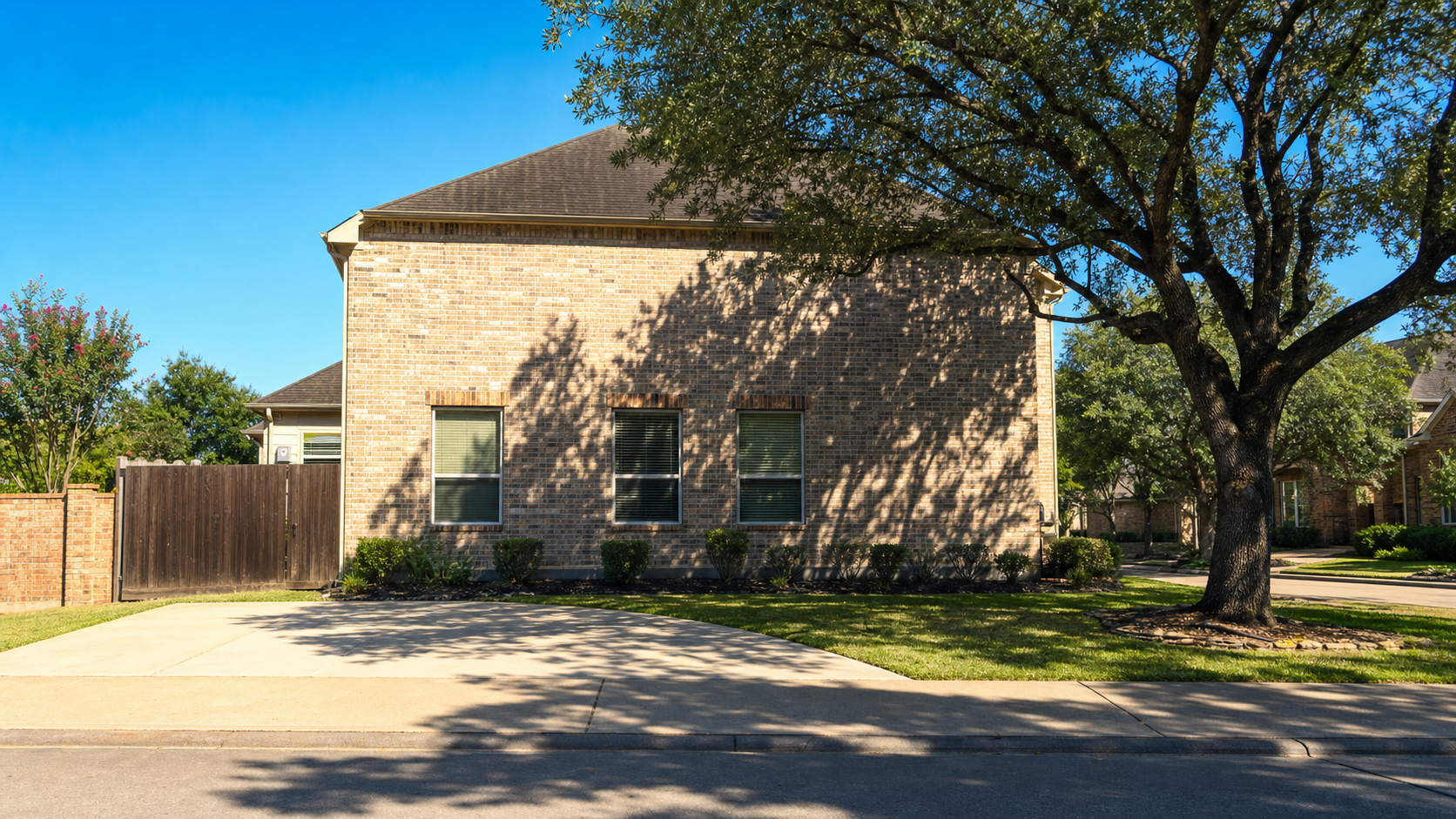
A Houston home does not experience uniform solar load. West and south elevations take direct afternoon sun for hours; east elevations get intense morning sun but cool down by afternoon; north elevations rarely see direct sun at all. That means the “right” SHGC is different for each exposure — at least in theory.
Elevation-specific targets
- West-facing: SHGC 0.18–0.22, priority #1. Afternoon sun in Houston drives peak cooling load.
- South-facing: SHGC 0.20–0.23. Sun angle is higher and shorter in duration than west, but volume is significant.
- East-facing: SHGC 0.20–0.25. Morning sun is real but limited; higher VT preserves the wake-up daylight most homeowners want.
- North-facing: SHGC up to 0.30. Minimal direct sun, so the priority shifts to U-factor and VT.
In practice, most Houston replacement projects choose one glass package for all elevations, and that package is tuned for the west and south exposures. Splitting glass packages by elevation adds cost and complexity, and the north elevation’s small over-performance is a small price for simpler ordering and installation.
Common Pitfalls in Houston Window Quotes
Homeowners comparing bids often see numbers that look similar until the NFRC label reveals the difference. A few patterns show up repeatedly:
Pattern 1: “Low-e” without a coating specification
Not all low-e coatings are the same. High-solar-gain, moderate-solar-gain, and low-solar-gain coatings all get called “low-e” in casual marketing. Only the low-solar-gain formulation delivers SHGC at or below 0.23. Ask specifically for the coating designation (LoĒ³-366, Solarban 70, SunGuard SNX 62/27, or equivalent).
Pattern 2: A great U-factor and a mediocre SHGC
A window with U-factor 0.22 and SHGC 0.35 is a northern-climate window. It will meet code in Houston but will underperform through every cooling season. The NFRC label makes this immediately visible.
Pattern 3: Triple-pane upsells
Triple-pane glass with argon or krypton fill lowers U-factor noticeably but rarely improves SHGC. Because Houston has short, mild winters, the payback on triple-pane is often decades. The exception is noise reduction along Beltway 8, I-10, or SH-99 corridors, where triple-pane earns its cost in acoustic performance.
Pattern 4: Frame material and glass mixed up
Vinyl vs fiberglass vs aluminum-composite frames matter for durability and thermal bridging, but the glass package inside those frames is what drives SHGC. A premium fiberglass frame around builder-grade glass will underperform a mid-range vinyl frame with a proper low-solar-gain low-e coating.
The Payback Math for Houston Homes
The ENERGY STAR Most Efficient 2026 window list shows top-tier products landing at SHGC 0.18 to 0.20 in the South-Central zone. Moving from a builder-grade SHGC 0.35 double-pane window to a Most Efficient SHGC 0.20 window typically drops peak-month electric bills by seventy to one hundred twenty-five dollars for a mid-sized Houston home. Payback also shifts with tree canopy — mature-canopy Kingwood, Memorial, and Bellaire homes see smaller absolute savings, while newer Cypress, Katy, and Fulshear homes with unshaded elevations see the largest bill reduction from a low-SHGC upgrade.
The Bottom Line
The single most useful thing a Houston homeowner can do when reviewing shgc houston windows options is to insist on seeing the NFRC label — or at minimum, the U-factor and SHGC values in writing — before signing a proposal. A window that meets ENERGY STAR Version 7.0 in the South-Central zone (U-factor ≤ 0.28, SHGC ≤ 0.23) with a low-solar-gain low-e coating on surface #2 will consistently outperform builder-grade “double-pane low-e” packages by ten to twenty percent on cooling load, and that difference compounds over the twenty-to-thirty-year life of the window.
For readers just starting to plan a window project, the Education Center’s guide to Houston windows energy efficiency warning signs covers when replacement makes sense in the first place, the frame-material comparison for Houston homes covers vinyl vs fiberglass vs aluminum-composite trade-offs, and the Houston energy-efficient window myths guide tackles the marketing claims that most often mislead homeowners.
Comparing window quotes and want a straight read on the NFRC label?
DC Pines Roofing walks Houston homeowners through SHGC, U-factor, and glass-package options with no upsell theatrics.