
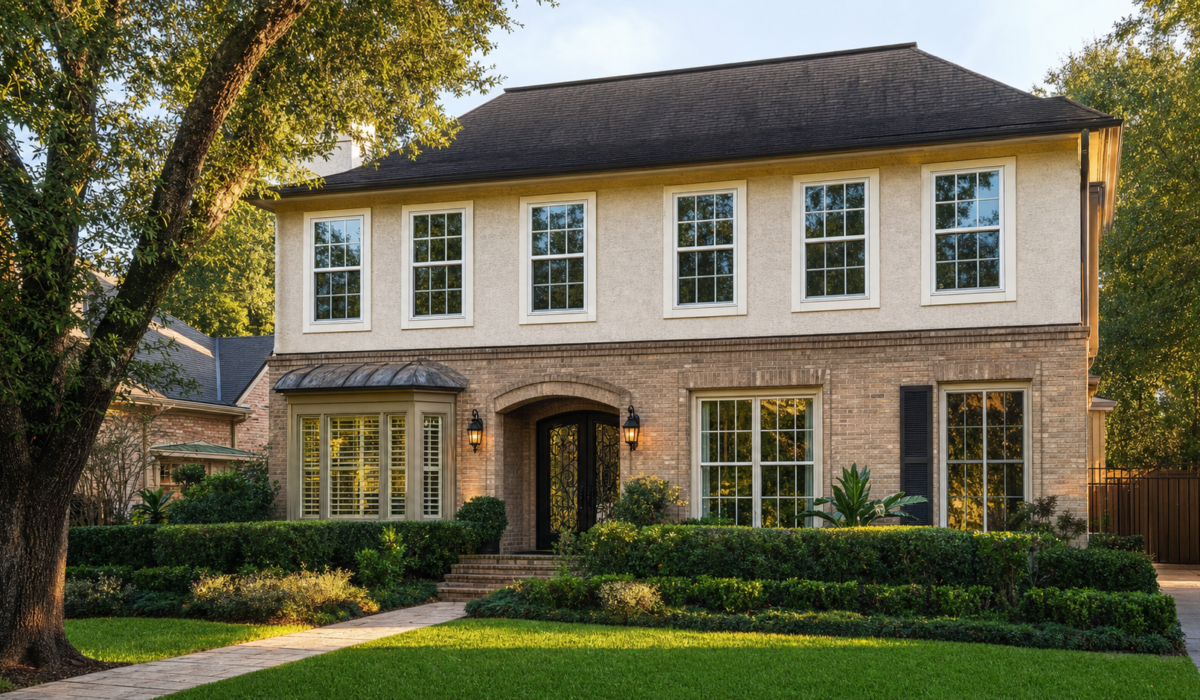
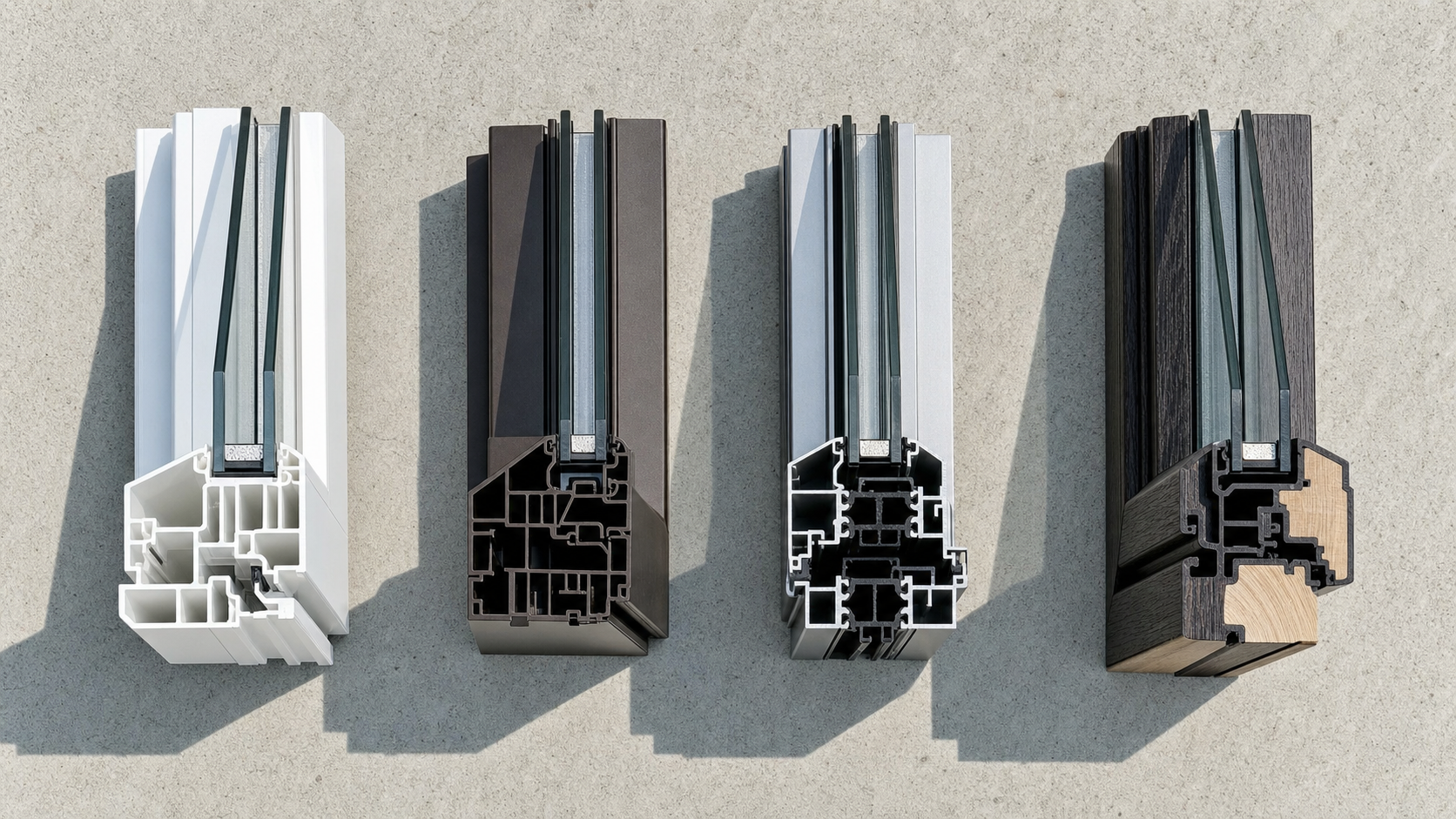
Every window replacement conversation in Houston eventually lands on the same fork in the road: which frame material to buy. Glass gets most of the marketing attention, but on a Houston home the frame decides how long the window survives, how the seal ages under year-round heat and humidity, and how the elevation looks a decade in. This guide compares the four houston window frame materials homeowners actually see in bids — vinyl, fiberglass, aluminum, and composite — with an honest read on where each one belongs and where it does not.
The right answer is not the same for every home. A shaded interior street in the Heights, a west-facing wall in Katy that bakes from 2 p.m. onward, and a modern build in Bellaire with slim architectural sight lines all point to different materials for good reasons. This guide walks through each material’s Houston-specific strengths, weaknesses, and cost math so the homeowner sitting through the sales pitch can push back on the parts that matter.
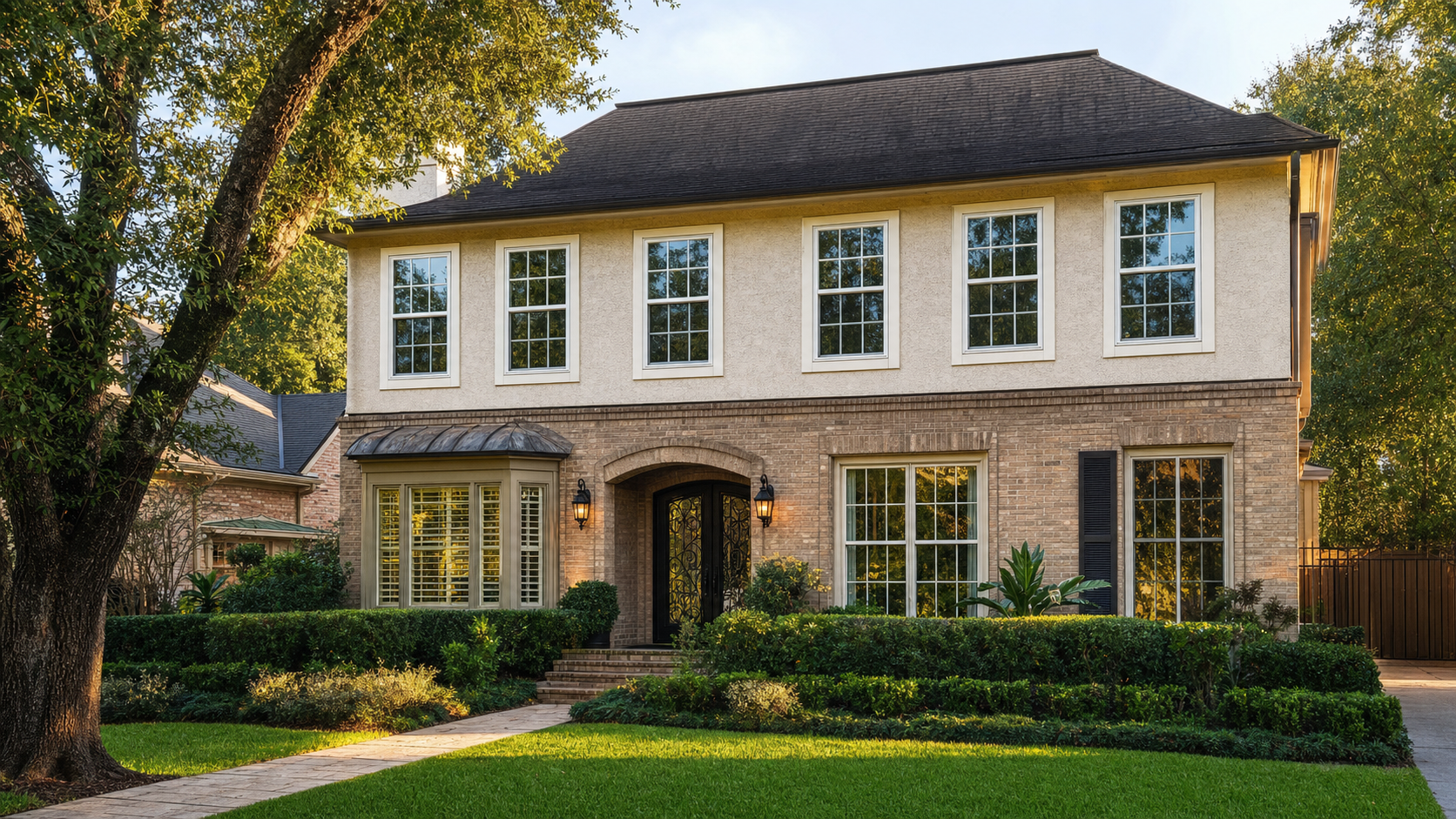
Vinyl: The Volume Choice in Houston
Vinyl is the dominant residential window frame material in Houston for a simple reason: cost. A good vinyl window costs 30% to 50% less than a comparable fiberglass unit, installs quickly, and — when the product is well made — performs adequately for the ownership period of a typical Houston home. Vinyl frames are hollow polyvinyl chloride extrusions with internal chambers that trap air and add insulation value; better products add metal reinforcement inside the sash for larger openings.
Vinyl’s real weakness in Houston is ultraviolet exposure. Cheap vinyl with weak UV stabilizers can chalk, yellow, or slightly warp on west-facing walls within 10 to 15 years. Vinyl from manufacturers who specify heat-stabilized formulations and higher-grade UV inhibitors holds up much longer — 20 to 30 years is a reasonable expectation on a quality product. Color matters too: dark-colored vinyl absorbs more heat and moves more with expansion cycles, and cheap dark vinyl on a west elevation is the fastest way to see the frame fail.
Fiberglass: The Houston Sweet Spot on Longevity
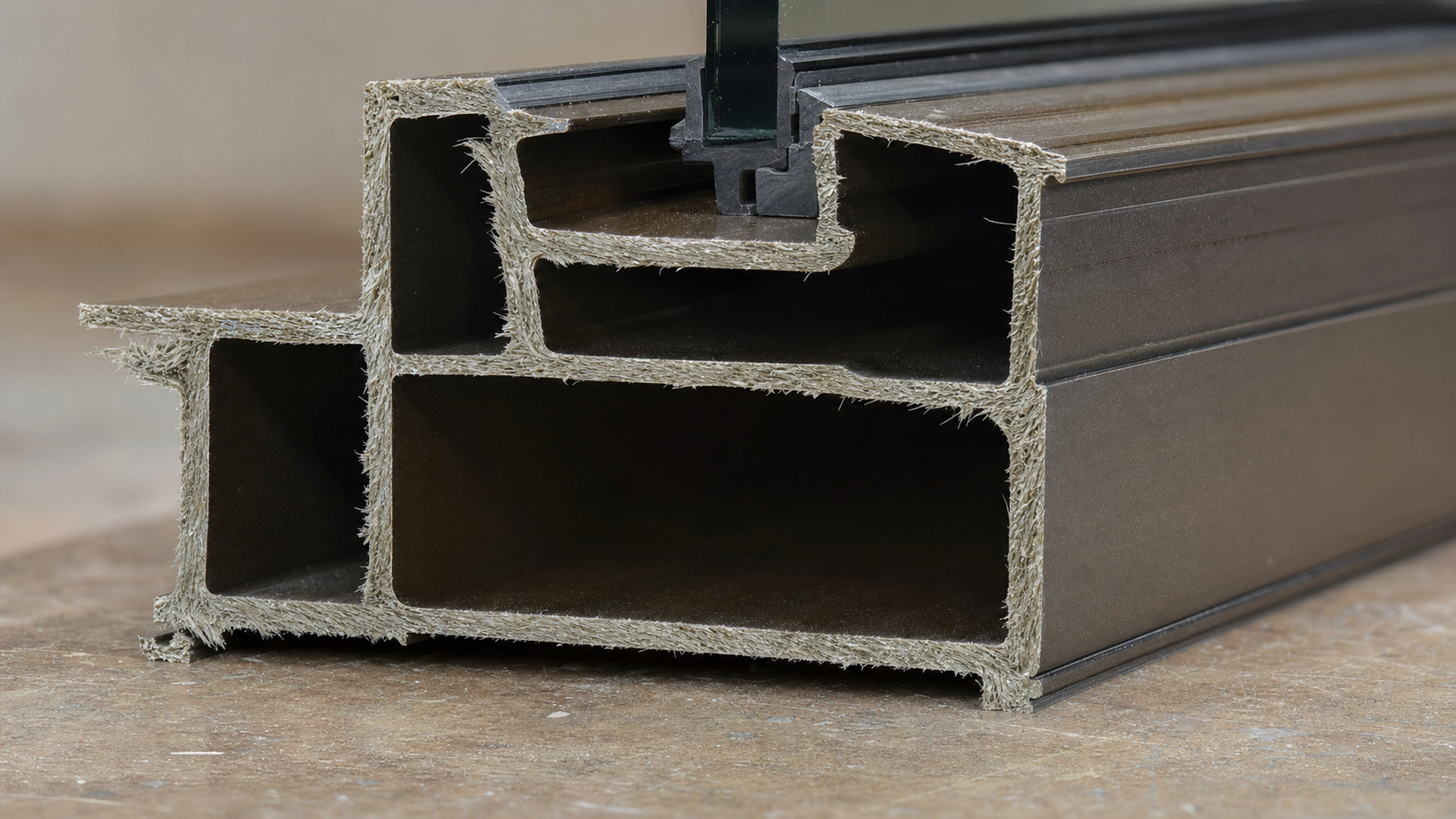
Fiberglass window frames are pultruded — long glass fibers pulled through a resin bath and cured into a rigid hollow profile. The engineering advantage in Houston is thermal expansion: fiberglass expands and contracts at almost exactly the same rate as glass. That means the frame and the glazing move together through every hot afternoon and cool morning, and the perimeter seal is not being flexed apart the way it is on a frame material with a mismatched expansion coefficient.
The practical result is a longer-lived unit — 30 years or more with basic care — and a lower risk of the double-pane seal failing early and fogging up between the panes. Fiberglass also holds paint far better than vinyl, which means color choice does not lock the homeowner into that color for the life of the window. The tradeoff is cost: fiberglass runs 15% to 30% higher than comparable vinyl.
Aluminum: Thin Sight Lines With a Thermal Asterisk
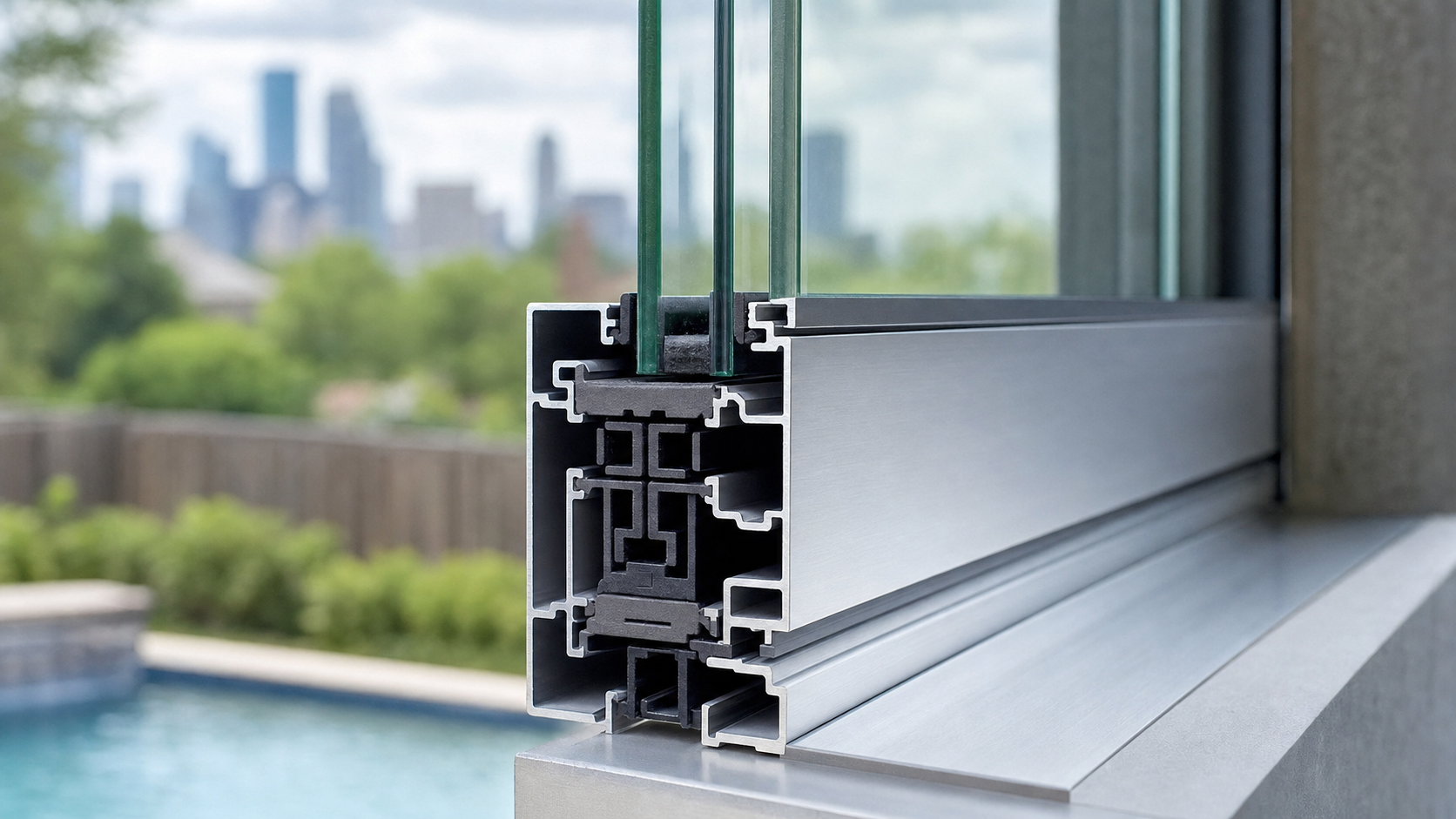
Aluminum window frames enjoyed a run in Houston through the 1970s and 1980s, then largely disappeared from residential remodels once buyers understood that raw aluminum conducts heat and cold straight through the wall. On a humid Houston morning, an untreated aluminum frame regularly runs cold enough to sweat on the interior surface, and the resulting moisture invites mold on the trim and drywall behind it.
Modern architectural aluminum solves this with an engineered thermal break — a polyamide or reinforced polymer strip that separates the exterior aluminum from the interior aluminum so heat cannot bridge across. Thermally broken aluminum performs adequately for Houston, hits attractive slim sight-line profiles that vinyl and fiberglass cannot easily match, and is a legitimate choice for modern architectural styles. The requirement is documentation: the NFRC U-Factor should be at or below 0.35, and the manufacturer should be able to name the thermal-break design used.
Composite: The Premium Category
Composite windows blend materials to get the best of two worlds. The most common Houston configuration is a wood interior with a fiberglass or aluminum-clad exterior — the wood gives the interior a warm, high-end look, and the cladding handles the heat, humidity, ultraviolet exposure, and moisture without demanding a paint cycle every few years. A second variant uses a molded polymer that mimics the visual density of wood without the maintenance.
Composite is the top of the price ladder and makes the most sense on higher-end remodels where interior aesthetic quality matters as much as thermal performance. The one caution in Houston is to verify the exterior cladding is thick enough to handle sustained UV and that the interior wood is protected from any long-term humidity infiltration; a badly detailed composite window can rot the wood interior invisibly from behind.
How the Four Materials Compare on a Houston Home
The U.S. Department of Energy’s guidance on window types and technologies summarizes the same tradeoffs in general terms: vinyl for cost, fiberglass for durability, aluminum for slim sight lines with a thermal break, and wood or composite for aesthetics. Houston adds its own weight to each factor — the UV exposure argues against cheap vinyl on west walls, the humidity argues against untreated aluminum anywhere, and the long cooling season argues for lower U-Factor and lower Solar Heat Gain Coefficient on every elevation regardless of frame material.
The Federal Trade Commission’s consumer guidance on energy-efficient home upgrades is worth reading before signing any window bid: the FTC has repeatedly flagged inflated energy-savings claims in the window industry, and the NFRC label is the neutral scoreboard homeowners should compare across bids regardless of what a sales presentation promises.
Related Reading from the DC Pines Education Center
For more Houston-specific window guidance, see the Houston SHGC and U-Factor window sticker guide, the recent energy-efficient window myths vs reality breakdown, and what summer window condensation actually means on a Houston home.
The Bottom Line for Houston Homeowners
Frame material is not a decision to shortcut. On a Houston home, quality vinyl is the honest volume choice for most owners, fiberglass earns its premium on longer holds and on west-facing walls, thermally broken aluminum belongs on modern architectural styles where the slim sight line is the point, and composite is worth the money when the interior aesthetics justify it. The homeowner who compares bids by the NFRC label — not by the manufacturer name on the sticker — ends up with the right window for the right elevation and skips the marketing tax.
Picking window frames for a Houston home?
DC Pines Roofing walks homeowners through vinyl, fiberglass, aluminum, and composite — with the honest Houston-elevation math on cost, longevity, and NFRC performance.