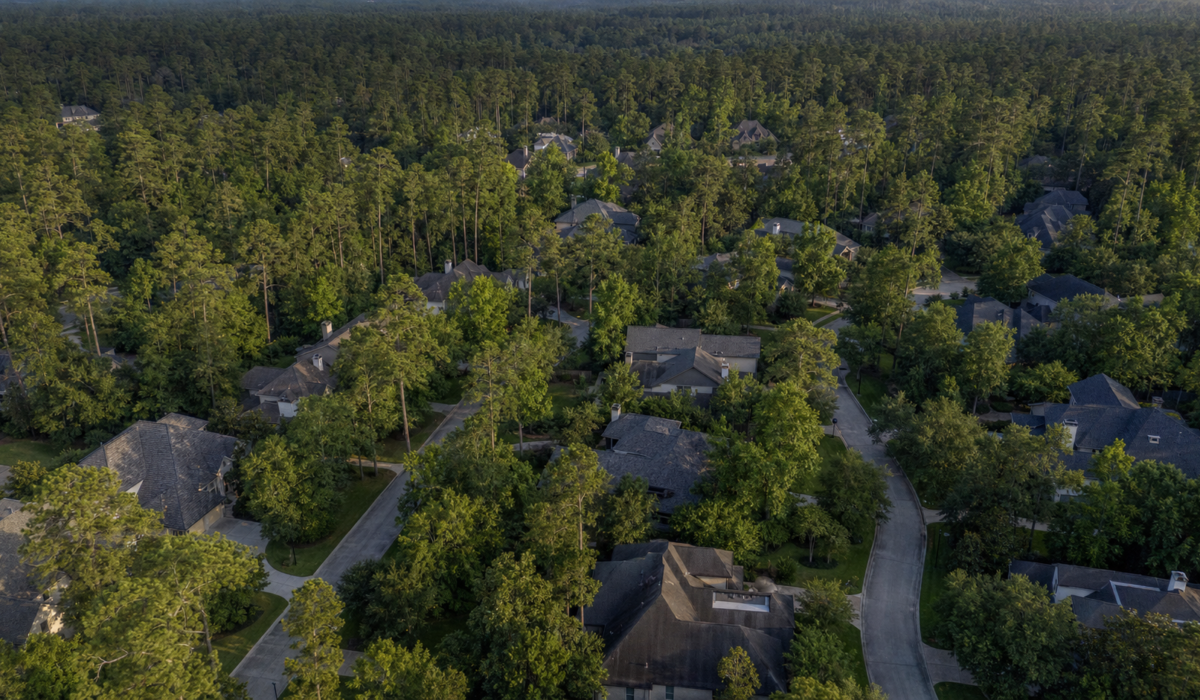
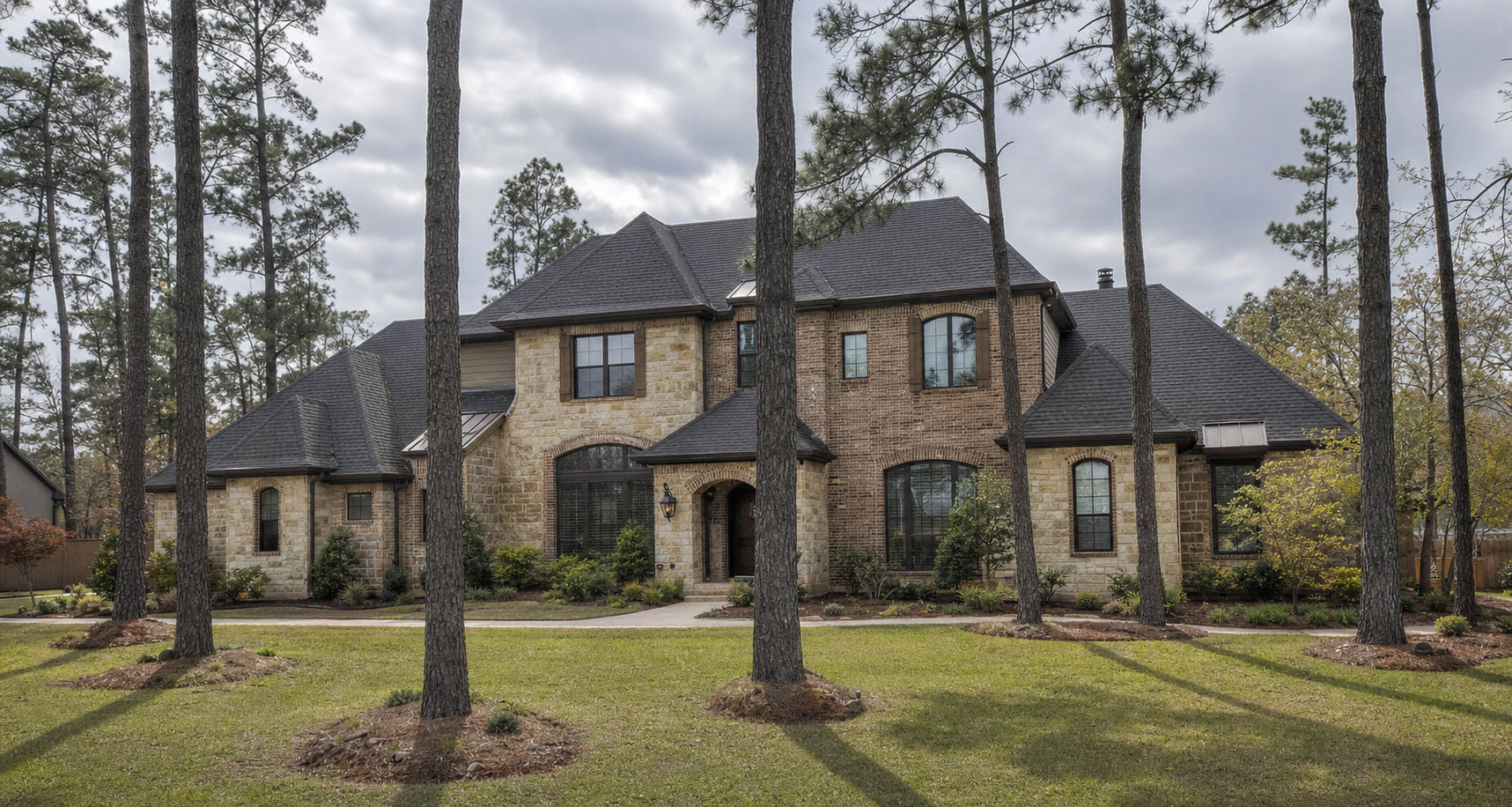
The Woodlands is a master-planned community where the tree canopy is the defining feature of nearly every home’s exterior. Preserved loblolly pines, post oaks, sweetgums, and magnolias shade rooftops most of the day. That canopy is beautiful, but it puts steady pressure on roofs and gutters year after year. The Woodlands roof maintenance rhythm looks different from a wide-open subdivision in Katy or Cypress — pretending otherwise is how homeowners end up with premature shingle failure and rejected exterior modifications.
This DC Pines Education Center guide covers what makes the Woodlands exterior unique: how the canopy ages roofs and gutters, what the Residential Design Review Committee (RDRC) requires for a roof replacement, how muted-shade rules interact with Class 4 shingles, and a maintenance schedule that keeps homes in good standing.
Why the Woodlands Canopy Is Hard on Roofs and Gutters
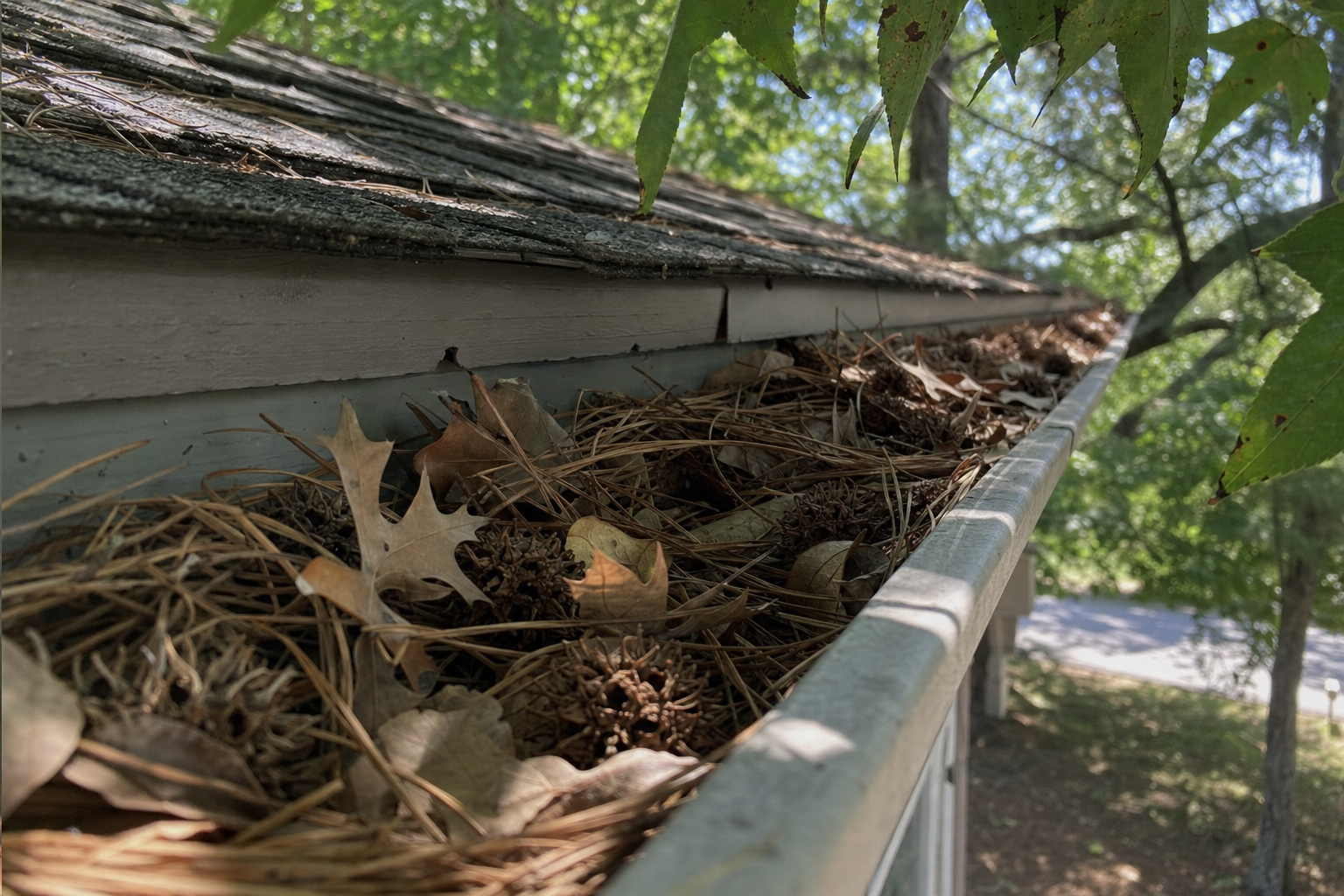
The same trees that make the Woodlands feel like a forest also drop constant debris. Pine needles, oak catkins, sweetgum balls, and magnolia leaves shed year-round, packing into valleys, behind chimneys, and along drip edges where they hold moisture against decking and flashing. Trapped moisture is the fastest way to shorten a roof’s life below the warranty on the box.
Gutters take the second hit. Standard K-style gutters fill with a dense sludge of needles and oxidized granules, and once water can’t move it spills onto fascia, siding, and foundation soil. Homes here typically need gutter cleaning two to four times per year without guards, versus once for a comparable open-canopy home (documented by exterior-cleaning operators in the Township).
Common Signs the Canopy Is Winning
- Dark streaks below tree lines — often algae fed by trapped debris and moisture.
- Granule loss visible as sediment at downspout splash blocks.
- Sagging gutter sections where hangers are carrying wet debris load.
- Soft spots on the roof deck at valleys and behind chimneys.
What the RDRC Actually Requires for a Roof Replacement
Covenant Administration reviews all exterior modifications through the RDRC, and roof replacement is on the approval-required list even for like-for-like. According to the Township’s covenants-standards summary, roofing colors must harmonize with the natural landscape, materials must be muted and without color pattern, and glossy metal finishes are prohibited.
In practice, that means three things:
- The application is real. Reviews typically run 15 to 25 days. Ordering material before approval is a common, expensive mistake.
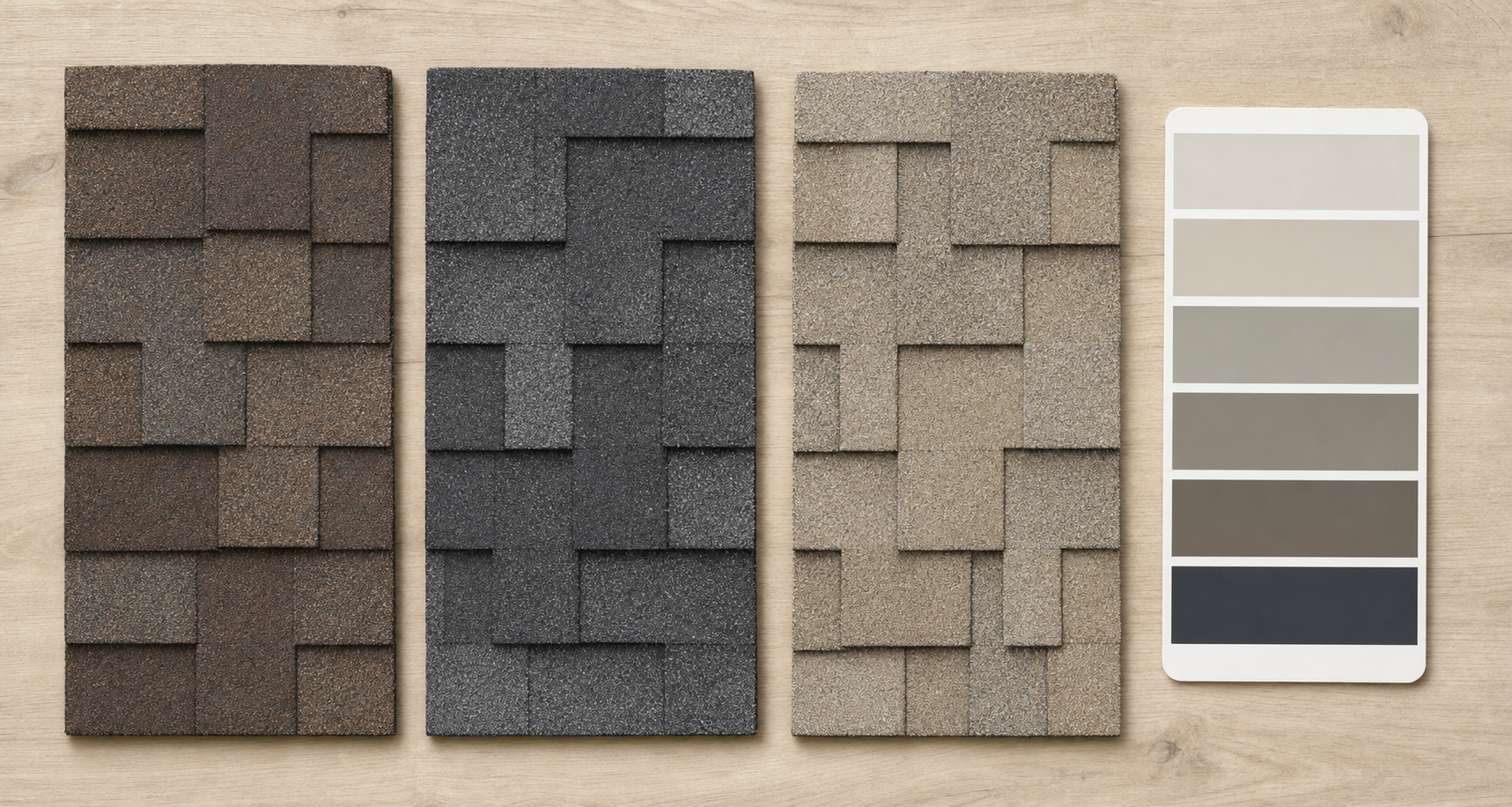
- The palette is narrow. Muted browns, grays, and blacks without contrasting pattern are the norm. Shenandoah is tighter — dark brown or gray only.
- Physical samples may be requested. Staff often want to see the exact material board.
Homeowners outside Township limits in unincorporated Montgomery County should still confirm with their subdivision HOA. Montgomery County does not require a county roofing permit, but that doesn’t override HOA authority.
HB 2237, Impact-Resistant Shingles, and the Color Question
A frequent confusion is whether the RDRC can block a hail-resistant shingle. Under Texas Property Code 202.011 (added by HB 2237), an HOA cannot prohibit shingles designed primarily to be wind- or hail-resistant, energy-efficient, or solar-generating. The association still retains the right to require reasonable aesthetic guidelines. A Class 4 shingle is allowed, but it still needs to fall inside the approved muted palette.
The playbook that avoids friction:
- Pull the current criteria for the specific village — village criteria can be stricter than master standards.
- Ask for a sample board of two or three muted options that are Class 4 rated.
- Submit the application with the sample board attached.
A Realistic Maintenance Rhythm for a Wooded Home
A high-canopy home benefits from a predictable calendar rather than reacting to visible damage:
- Spring (Mar-Apr): Full roof and gutter clearing after oak catkin drop. Inspect flashing at chimneys, plumbing boots, and skylights.
- Early summer (Jun): Trim limbs closer than six to ten feet from the roof plane.
- Late summer (Aug-Sep): Second gutter clearing before fall drop. Check downspout discharge routing away from the foundation.
- Late fall (Nov-Dec): Post-sweetgum-ball and post-magnolia clearing. Verify no needle mats have re-accumulated at valleys.
Heavy pine coverage justifies a micro-mesh gutter guard system. Standard perforated guards leak fine needles and granules through; guards designed for pine debris seat the mesh flush with the shingle line so needles slide off. The DC Pines deep-dive on gutter guards under live oak and pine debris covers the tradeoffs.
Roofing and Gutters That Match the Neighborhood
The muted-color rule is not a limitation once the palette is visible. Architectural asphalt shingles in weathered wood, driftwood, charcoal, and slate gray dominate approved lists across the Woodlands.
Gutters follow the same pattern. Six-inch seamless aluminum in bronze, dark brown, or off-white is the norm; five-inch is undersized for the debris load of a typical two-story here. Oversized 3×4 downspouts reduce clog frequency in the corner leaders where debris piles up. The DC Pines guide on gutter sizing and downspout capacity covers the math.
The Bottom Line
The Woodlands is forgiving to own a home in, provided the owner respects two facts: the canopy is relentless, and the covenant standards are enforced. Cleaning gutters two to four times a year, submitting RDRC applications before ordering material, choosing muted colors, and specifying Class 4 shingles gets significantly more life out of every exterior surface.
Frequently Asked Questions
Do Woodlands homeowners need a permit to replace a roof?
Montgomery County does not require a county permit for a residential re-roof, but The Woodlands Township requires prior written approval from the RDRC through Covenant Administration. Review typically takes 15 to 25 days.
Can the RDRC reject a Class 4 impact-resistant shingle?
Under Texas HB 2237, an HOA cannot prohibit shingles designed primarily to be hail- or wind-resistant. The RDRC can still require the shingle to fall inside its approved muted color palette and profile. A Class 4 shingle in charcoal or weathered wood is the usual path.
How often should gutters be cleaned on a home with heavy canopy?
Two to four times per year is the realistic baseline for Woodlands homes without guards, versus roughly once per year for open-canopy neighborhoods. Micro-mesh guards designed for fine pine debris cut that frequency substantially.
Which shingle colors are typically approved in The Woodlands?
Muted shades of brown, gray, and black without a color pattern are the standard. Common tones include weathered wood, driftwood, charcoal, and slate gray. Shenandoah is tighter — dark brown or gray only. Bright or high-contrast roofs are almost always denied.
What is the fastest way to get a roof-color application approved?
Submit a complete application through Covenant Administration with a physical shingle sample board attached and a color code that appears on the Township’s compliance list.
Woodlands homeowners choose DC Pines for canopy-tough roofing and gutters.
RDRC-friendly shingle color guidance, Class 4 impact-rated systems, and gutter sizing built for pine debris — all from a veteran-owned Houston roofing team.