

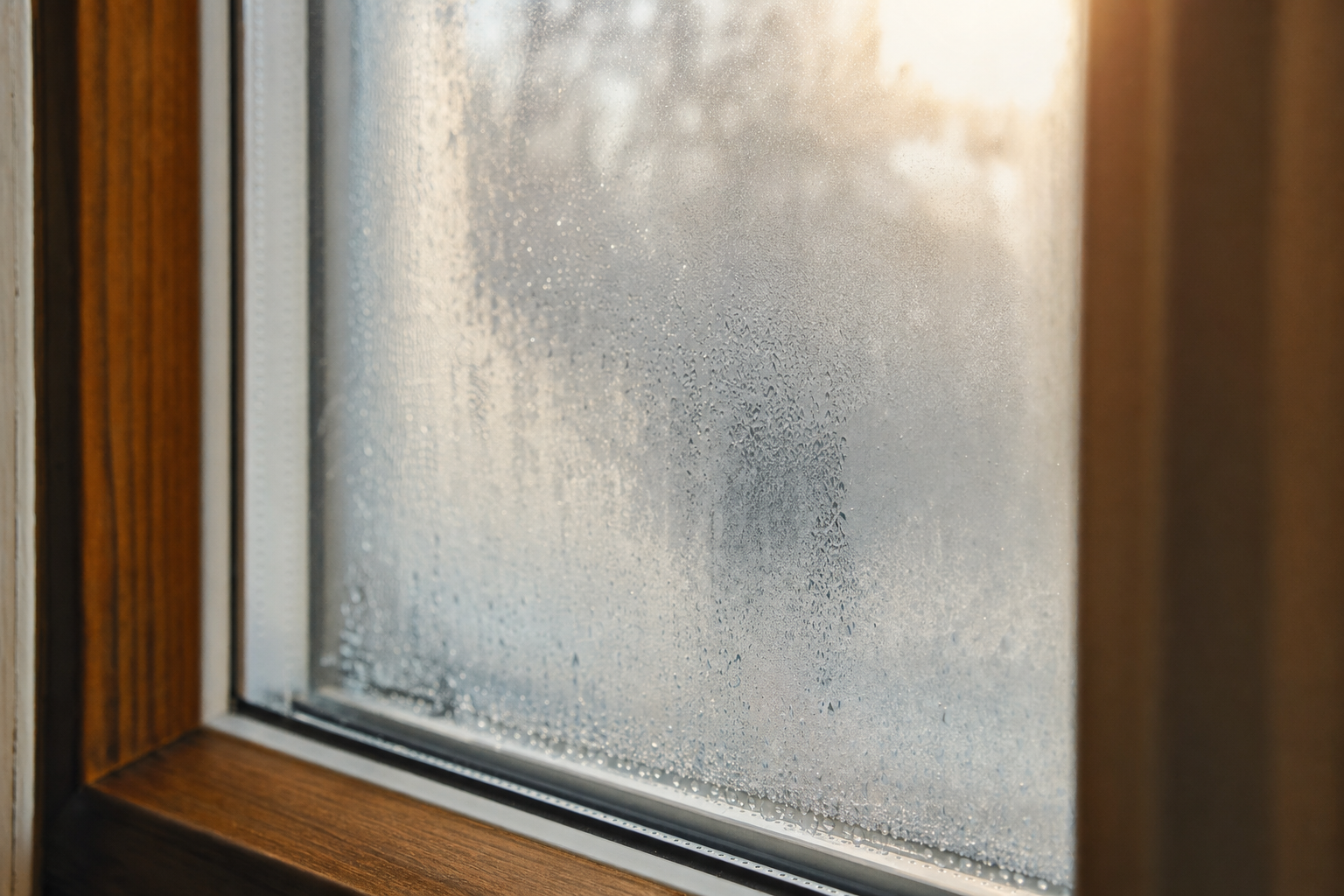
Foggy glass between two panes is one of the most misunderstood signals in a Houston home. It looks like a cleaning problem, but no amount of Windex fixes it. That is because double-pane window seal failure happens inside a sealed factory assembly, and once the perimeter seal loses its grip, the window quietly stops doing the job it was engineered to do.
The DC Pines Education Center put together this guide so Houston homeowners can recognize the early signs, understand what is actually happening between the panes, and decide when a repair, a glass swap, or a full window replacement is the right call for the house.

What a Double-Pane Window Is Actually Doing
A modern residential double-pane window is not two loose sheets of glass. It is a single sealed assembly called an insulated glass unit, or IGU. The two panes are held apart by a spacer bar along the perimeter and bonded with a primary and secondary sealant. The cavity between the panes is filled with dry air or, more commonly today, an inert gas such as argon that insulates far better than plain outdoor air.
That gas fill and the desiccant inside the spacer bar are the reason a double-pane window resists heat transfer. As long as the perimeter seal holds, the gas stays put and the desiccant absorbs any trace moisture. When the seal fails, all three things go wrong at once: gas escapes, humid outdoor air moves in, and the desiccant gets overwhelmed.
Why Houston Is Especially Hard on Window Seals
Houston hands residential windows a very specific workload. Long stretches of 95 degree summer heat expand the glass and the sealant. Cool nights and morning air-conditioning contract them again. That daily cycle repeats hundreds of times a year and slowly fatigues the perimeter bond.
Add Houston’s humidity, which sits above 70 percent for large parts of the year, and the sealant is under constant vapor pressure trying to push moisture past it. Direct west-facing and south-facing sun exposure accelerates the process further because UV attacks the sealant chemistry. Many window systems installed 15 to 25 years ago simply were not engineered for that combination.
The Warning Signs of Seal Failure
The classic sign is cloudy or foggy glass that will not wipe clean. But there are earlier and subtler indicators worth watching on any Houston home that is a decade or more into its current windows.
Persistent haze between the panes
Haze that appears in the morning, burns off by mid-afternoon, and comes back the next day usually means the seal is compromised but the leak is small. The trapped moisture is cycling with outdoor temperature. Left long enough, the haze becomes permanent and starts leaving mineral streaks on the interior of the glass.
Visible water droplets or mineral deposits between the panes
Once the fog progresses to visible droplets, the desiccant is saturated and mineral residue is being left behind every time moisture evaporates. That residue is inside the sealed unit and cannot be cleaned from either side.
Rooms that feel warmer than they should near the window
When the argon fill is gone and humid air has replaced it, the insulating value of the window drops. In practical terms, Houston homeowners often notice a hot spot near the affected window in summer, even when the rest of the room is comfortable.
How Seals Actually Break Down
Seal failure is rarely a single event. It is a slow chemical and mechanical breakdown driven by three factors that all show up in a Houston climate.
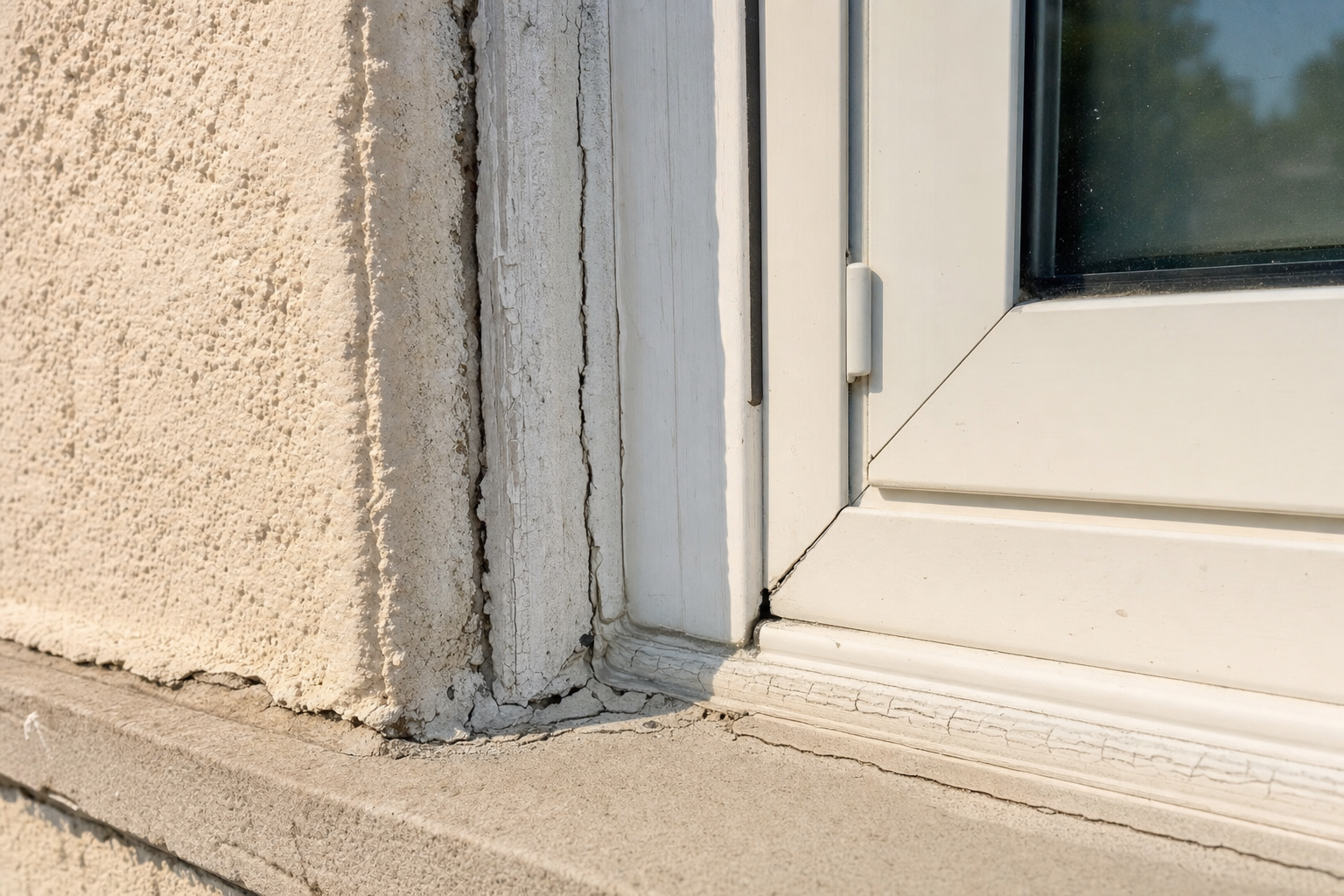
The first is thermal expansion and contraction. Every degree of temperature swing moves the glass a small amount relative to the spacer bar. Multiply that by hundreds of cycles per year and the bond line eventually cracks. The second is UV exposure. Sunlight breaks down the polymer chains in the sealant, especially on windows that face west and take direct afternoon sun. The third is moisture intrusion from the exterior side of the frame. Failed exterior caulk, incorrect flashing, or missing weep paths let bulk water sit against the sealed unit, and the seal is not designed to be submerged.
The exterior of the frame is often where a technician can spot the earliest evidence, before the glass itself starts to fog.
Repair, Reglaze, or Replace
When seal failure is confirmed, Houston homeowners typically have three paths, and the right one depends on the age and condition of the whole window.
Reglaze the IGU. If the frame is structurally sound, the exterior flashing and caulk are intact, and the window brand is still in production, the insulated glass unit alone can sometimes be replaced. This is often the most cost-effective option for a small number of affected windows on an otherwise healthy assembly.
Full window replacement. When the same house shows multiple failed units of similar age, when the frame shows daylight or rot, or when the original windows lack Low-E coating, a full replacement with modern Low-E double-pane windows is usually the better long-term investment. Houston homeowners considering this path can review the Education Center’s explainer on how Low-E windows manage solar heat gain and the four warning signs that windows are costing money on the energy bill.
Third-party defog. Some vendors offer procedures that drill the glass, flush the cavity, and install a small vent. This can improve the visible fog, but it does not restore the argon fill or the original low-emissivity coating, and it may affect any remaining glass warranty. It should be evaluated case by case.
Why This Matters for the Rest of the House
A single failed window is a cosmetic annoyance. A pattern of failed windows across a Houston home is an energy problem. Combined with an under-ventilated attic — a common issue detailed in the Education Center’s guide to attic ventilation and radiant barrier performance — aging windows push HVAC systems into longer duty cycles and drive up the monthly cooling bill.
Modern replacement windows engineered for Gulf Coast conditions typically pair Low-E glass with warm-edge spacer technology and factory gas fills that are more durable than what was standard 20 years ago. The result is a window that not only looks clearer but also holds its insulating value for a longer service life.
The Bottom Line
Foggy panes are the visible symptom of an invisible engineering failure inside the insulated glass unit. In Houston, the combination of heat, humidity, UV, and thermal cycling ages window seals faster than most homeowners expect. Recognizing the early signs — persistent haze, mineral streaks, warm spots near the window — allows for a planned decision between reglazing and full replacement, rather than a reactive one after the whole facade looks foggy.
Foggy panes are not the end of the window — they are the start of a decision.
DC Pines Roofing installs energy-efficient double-pane and Low-E replacement windows built for Houston’s heat and humidity, with warranty documentation from day one.