
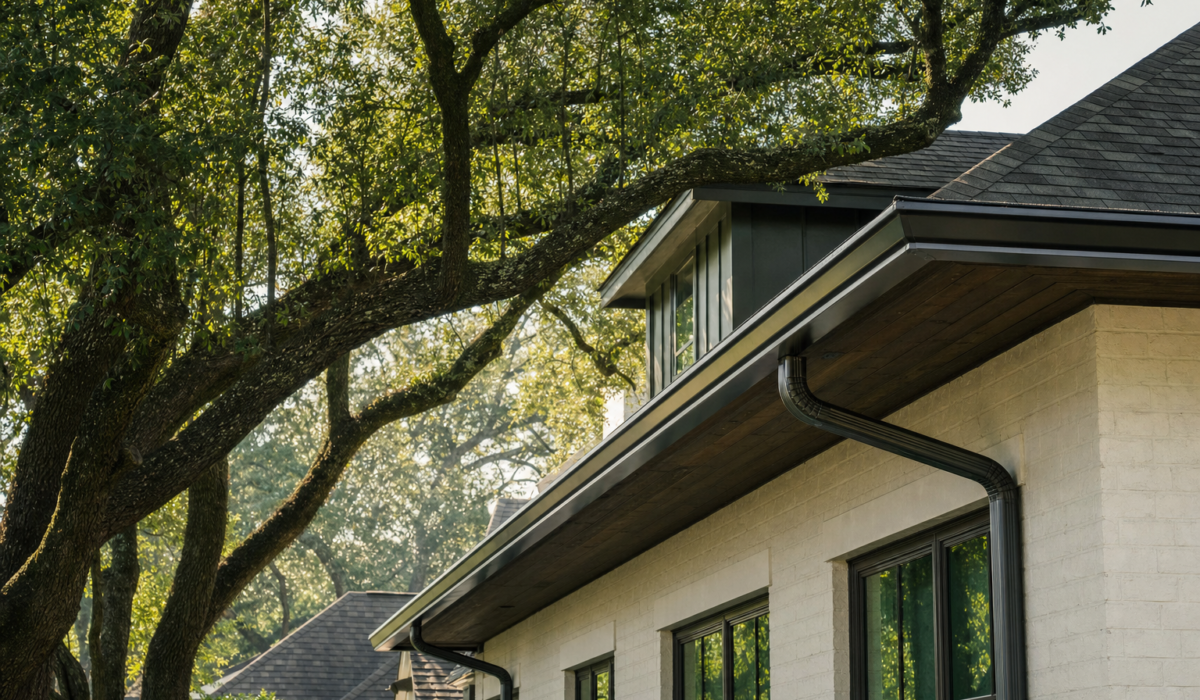
Homeowners across Houston discover the same seasonal frustration: mature live oaks and pines shed a steady stream of catkins, leaves, and needles that end up piled inside their gutters. The DC Pines Education Center has walked enough homes across Katy, The Woodlands, Sugar Land, Bellaire, and Memorial to say plainly that Houston gutter guards are not a luxury upgrade under this kind of canopy. They are the practical fix that turns a two-or-three-times-a-year cleaning chore into an occasional visual check.
This guide from the Education Center covers what Houston gutter guards for live oak and pine debris actually do, why the material choice matters more than most homeowners realize, and how to tell whether a home is a good candidate. It is written the same way DC Pines Roofing walks a driveway estimate: focused on the physical realities of Houston trees, Houston rain, and Houston clay soil.
Why Houston debris is different
Not all leaf drop is created equal. A homeowner in Michigan deals mostly with large hardwood leaves that a coarse screen can catch. Houston homeowners deal with something finer and stickier: live oak catkins in the spring, small live oak leaves that continue dropping through the year, and pine needles that thread themselves right through cheap plastic screens.
Live oak catkins in particular are a problem because they are small enough to slide through basic guards and dense enough to mat together once they get wet. Pine needles do the same thing from a different angle — they lay flat and weave into any opening they can find. The DC Pines Education Center has seen more than a few Houston gutters that were technically “guarded” but still had four inches of composted debris sitting inside because the guard was never designed for this debris profile.
What quality Houston gutter guards actually look like
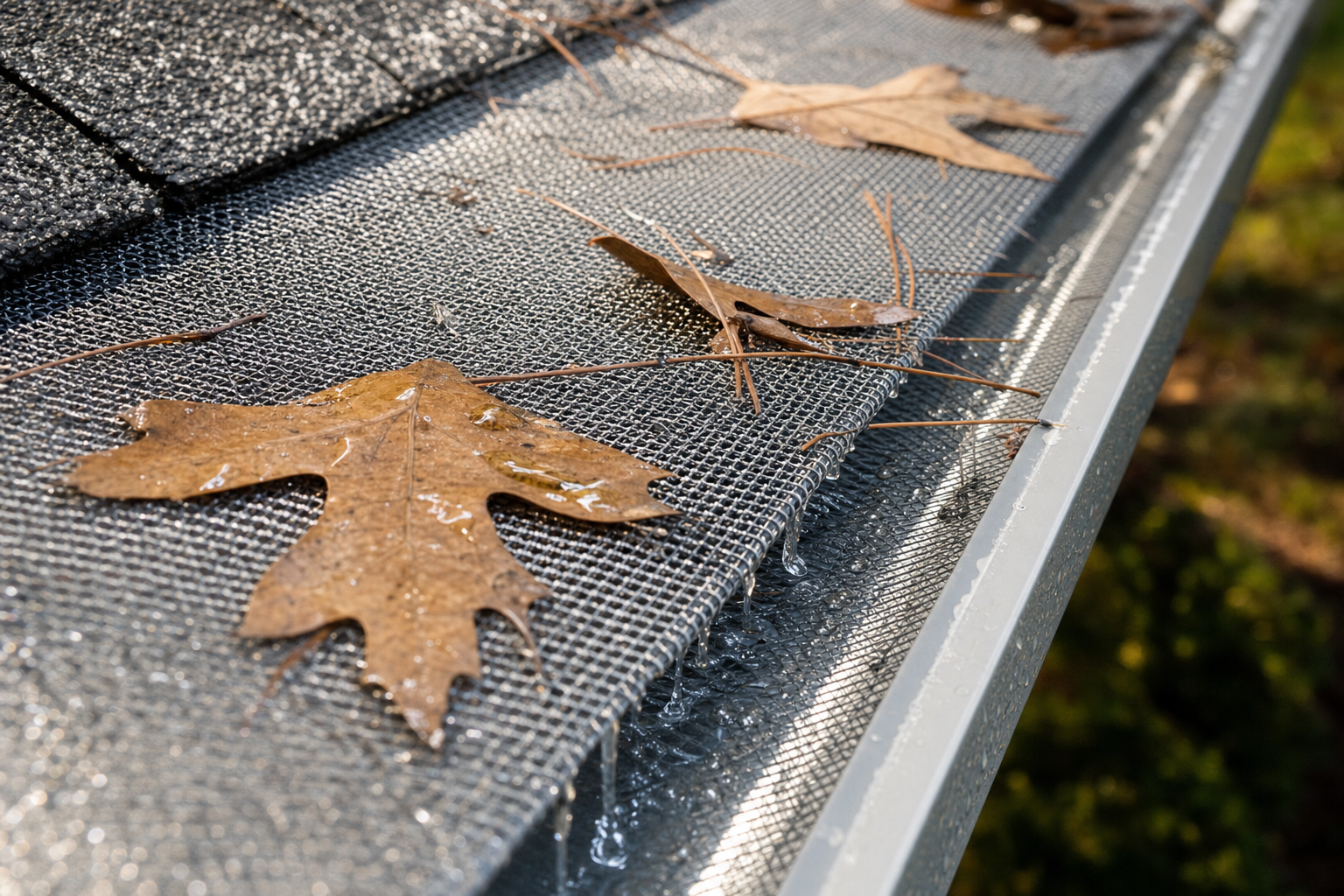
The Education Center recommends stainless steel micro-mesh guards for Houston homes under significant canopy. The mesh is fine enough to shed live oak catkins and pine needles instead of trapping them. Because the guard is stainless steel, it does not rust, warp in the summer heat, or crack from UV exposure the way plastic screen guards do after a few Texas summers.
Just as important as the mesh is the substructure. A quality gutter guard sits on a rigid frame that keeps the mesh taut across the gutter opening. That taut surface is what lets debris blow or wash off cleanly. Sagging mesh — the common failure mode of cheap products — traps debris the same way an uncovered gutter does.
What to avoid
Foam inserts, plastic screen guards, and reverse-curve “helmet” style guards all have specific failure modes in the Houston climate. Foam holds moisture and grows algae. Plastic screens crack and let debris through the gaps. Reverse-curve guards can overshoot in the heavy rainstorms Houston gets several times a year, causing water to bypass the gutter entirely. The Education Center’s guidance is straightforward: for a Houston home, invest once in a stainless micro-mesh system instead of replacing a cheaper guard every few years.
How gutter guards protect more than just the gutters
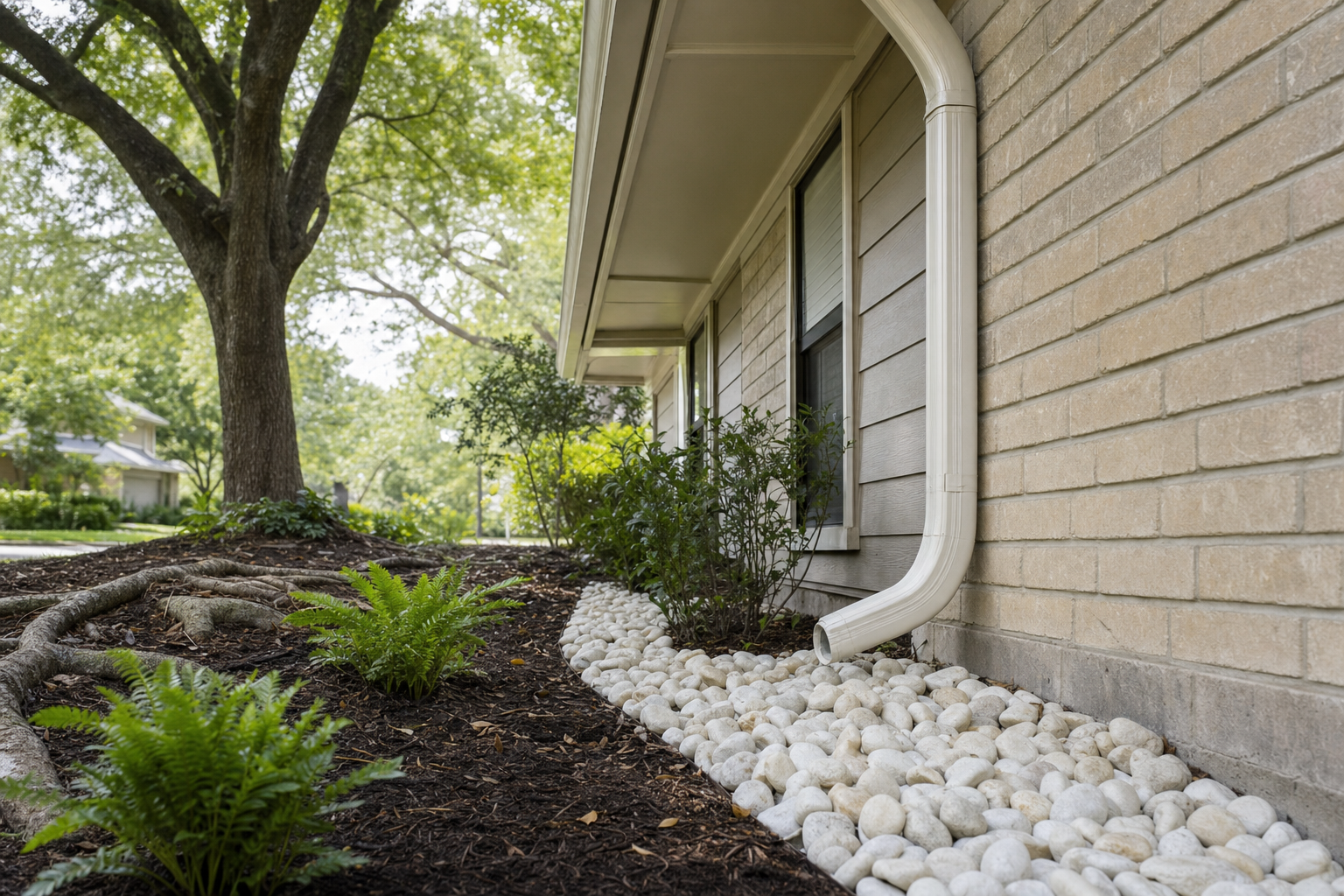
Clean gutters are not the real prize. The real prize is what clean gutters protect. A well-guarded gutter system carries water through the downspouts and discharges it well away from the foundation. That matters everywhere, but it matters specifically in Houston because Houston’s clay-heavy soil expands and contracts dramatically with moisture cycles, and uncontrolled water at the perimeter is one of the most common contributors to foundation stress and exterior damage.
Guards also protect the fascia and soffit. When a gutter overflows because it is choked with wet leaves, water sheets down behind the gutter and soaks the wood trim. That is how a homeowner ends up with soft fascia, peeling paint on the eaves, and eventually rot that has to be cut out and replaced. Preventing that overflow with a properly-installed guard system is a lot cheaper than fixing the wood damage after the fact.
The right time to install Houston gutter guards
Timing matters more than most homeowners think. The Education Center suggests two windows: either right after a full gutter cleaning in early summer so the guards start clean, or paired with a roof replacement when the crew is already on the eave and can align the gutter pitch with the new roofline. Installing guards on top of neglected, poorly-pitched gutters usually delivers disappointing results and no warranty coverage.
For homeowners already thinking about upgrades, the Education Center’s guide to Houston gutter maintenance is a useful companion read. It covers what a healthy gutter system should look like before guards are added on top.
What a DC Pines gutter guard estimate covers
DC Pines Roofing approaches gutter guard estimates as a full-system evaluation, not a single-product upsell. That means checking the gutter pitch, the fascia condition, the downspout placement, and the discharge zones at the foundation. It also means being honest about homes where guards will not help — a low-canopy home in a newer neighborhood with minimal debris might be better served by a straightforward gutter tune-up.
When guards are the right call, the on-site walk covers material choice, warranty length, and how the installation will be sequenced against any roofing or fascia work. Homeowners get a written scope, not a verbal quote scribbled on the back of a business card.
The Bottom Line
Houston gutter guards for live oak and pine debris are not a decorative upgrade. Under mature canopy, they are the practical fix that keeps gutters flowing, protects fascia and soffits, and directs water away from a foundation that is already dealing with clay-soil movement. The wrong guard is worse than none at all — the right guard, installed with a healthy gutter system, is one of the higher-return exterior upgrades a Houston homeowner can make.
For a homeowner deciding between a repeat cleaning contract and a guard system, the math usually favors the guard system within a few years. The added benefit is quieter: no more ladders in the summer heat, no more surprise overflows during a heavy afternoon rain, and no more compost bricks forming in the gutter over the winter.
Ready to protect a Houston home from live oak and pine debris?
DC Pines Roofing installs stainless steel micro-mesh gutter guards engineered for Houston’s canopy and rain patterns, paired with seamless aluminum gutters and a matched warranty.