
Most homeowners in Houston don’t think about the internal culture of a roofing company when they hire one. They think about price, warranty, and whether the crew shows up on time. But the DC Pines Education Center has found that the small internal habits of a home-services company — how crews eat together, how they check in with each other, how they mark milestones — end up shaping the quality of the work homeowners actually see on their roofs, gutters, and windows.
This post looks at the connection between team traditions and the finished job. Not the marketing version — the practical version. Because when a crew is well-cared-for and well-led, that shows up in how a project starts, how communication flows during the work, and how the punch-list gets closed out on the last day.
Why culture matters in a service business
Roofing, gutter work, and window installation are physical trades that depend heavily on repetition, focus, and communication. A crew that trusts each other communicates better on a jobsite. A crew that has real relationships spots problems earlier — a missing fastener, a decking board that needs replacing, a flashing detail that isn’t sitting right. A crew that feels like a team, not a labor pool, treats every home like it’s the only one on the schedule that day.
That’s the thesis behind the team-first approach DC Pines Roofing brings to Houston: culture isn’t a soft add-on to the work. Culture is upstream of the work. It shapes whether the guy on the ladder speaks up when he sees something questionable, or whether he lets it slide because he doesn’t feel invested in the crew’s reputation.
Team meals: the smallest tradition that matters most
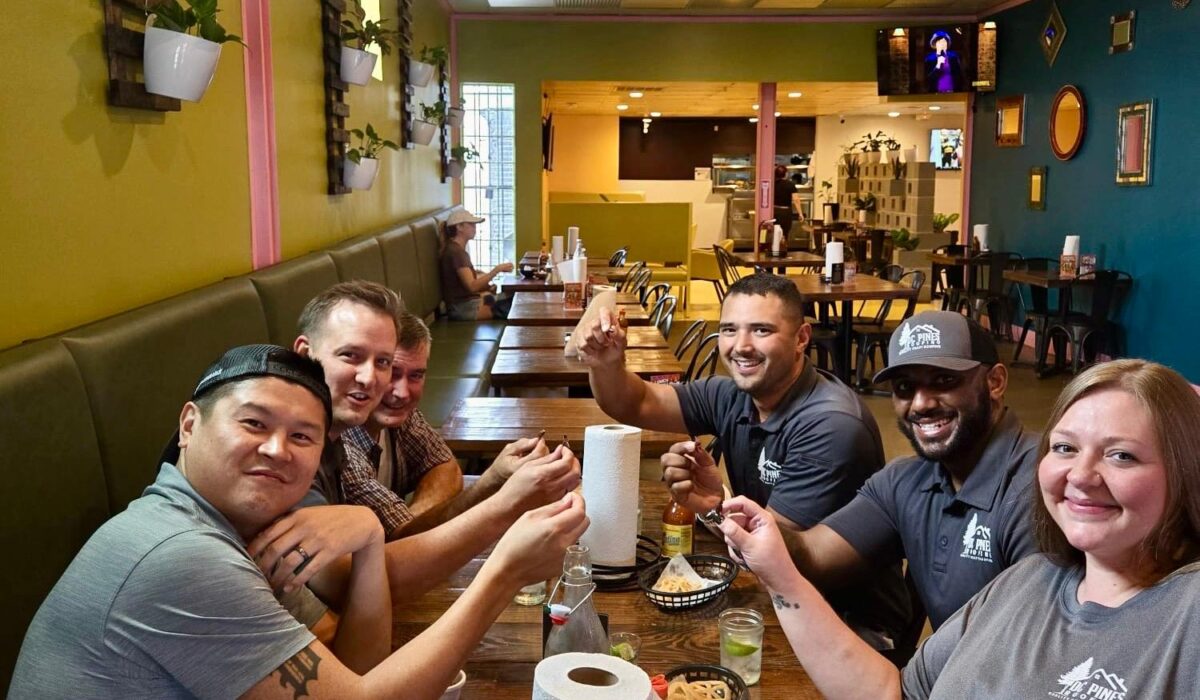
One of the most important traditions at DC Pines Roofing is also the simplest — the team sits down together for a real meal on a regular cadence. Not a rushed lunch break at a jobsite. A proper meal off-site, phones down, whole crew present. This does two things that pay off in the actual work.
First, it flattens communication. When crew leaders, estimators, and install techs are eating at the same table, small concerns get raised early — a schedule conflict next Tuesday, a customer who seemed hesitant during the estimate, a supplier delay on a specific shingle color. Those little details get handled in casual conversation instead of turning into escalations later.
Second, it builds loyalty. Home-services companies with high turnover produce inconsistent quality because every new crew member is learning the standards from scratch. Team meals are one of the cheapest, most effective retention tools a small business has. And retention is what keeps the craftsmanship from a job in April looking the same as a job in November.
What crews notice when they’re actually paying attention
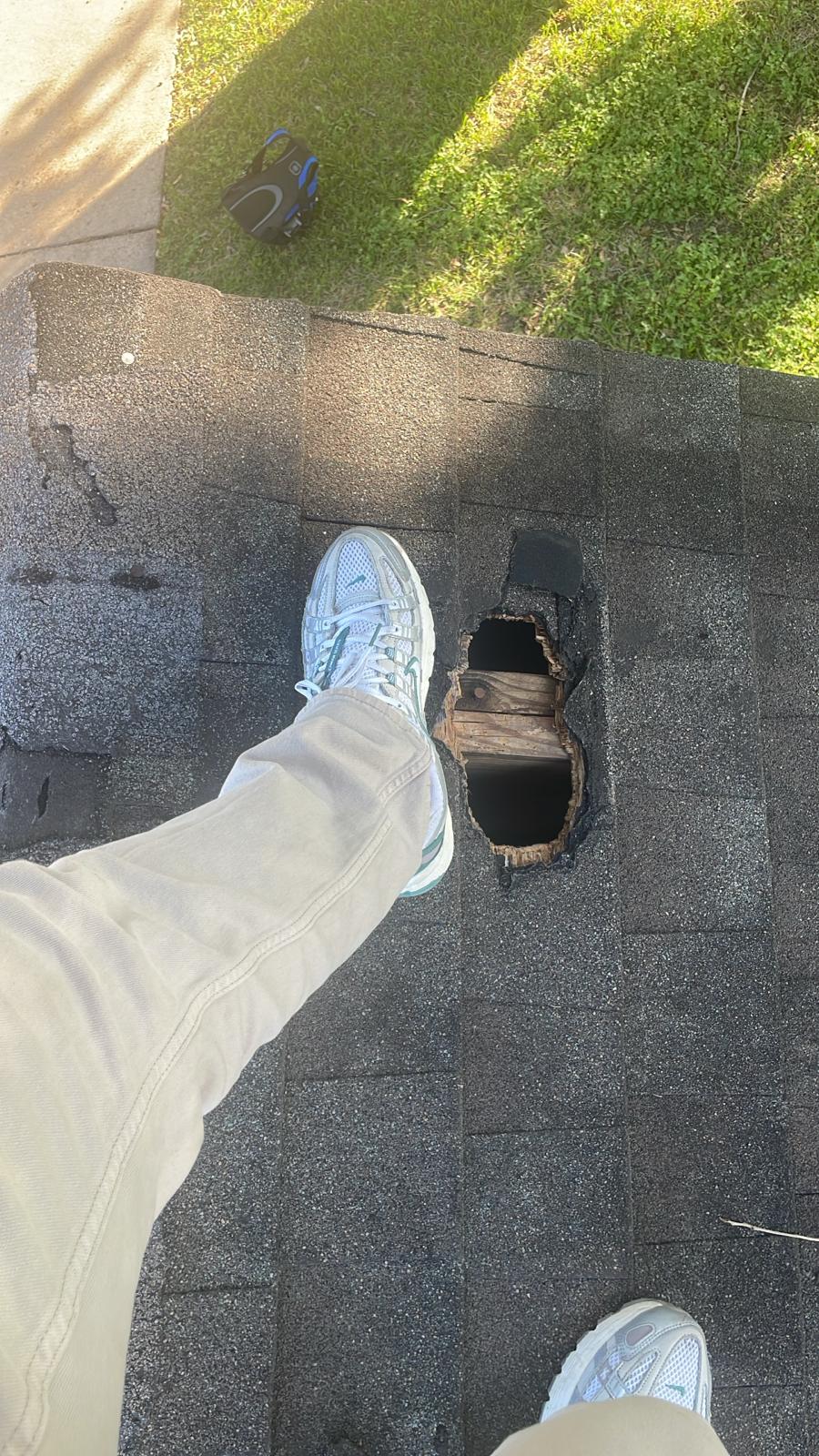
Attention to detail is often described as a personality trait, but on a roofing crew it’s really a cultural expectation. The DC Pines Education Center has watched enough estimates and inspections to say plainly: crews that are respected by their leadership look harder at every roof they step on. They walk the entire slope. They lift shingle edges. They check decking around penetrations. They document what they find — with photos, with notes, with a call back to the office if something isn’t right.
That’s not free. It costs time on every estimate. It costs a few uncomfortable homeowner conversations when the crew flags something the owner didn’t want to hear. But it’s how a service business ends up with the kind of informed decision-making that protects a Houston roof for its full service life, rather than a patch-and-run job that comes back around in two years.
Structured check-ins beat heroics
Another quiet tradition inside DC Pines Roofing is the structured start-of-day and end-of-day check-in on install days. It sounds simple. It matters more than it looks. The morning check-in aligns the whole crew on scope, delivery windows, and any homeowner-specific instructions. The end-of-day check-in reviews what got finished, what needs to carry over, and whether any surprise findings need to be communicated to the homeowner before crews leave the site.
That rhythm is why DC Pines projects tend to close cleanly. It’s not because individual crew members are heroes — it’s because the culture treats communication as a scheduled, non-optional event. Homeowners feel the difference because they get updates instead of guesses.
Why veteran-owned shapes the culture
DC Pines Roofing is a veteran-owned company, and that background isn’t a marketing line — it’s a structural influence on how crews are organized and how expectations get set. Veteran-owned service businesses tend to emphasize a few habits: predictable communication, safety as a non-negotiable, and clear chains of responsibility. Those habits map cleanly onto trades work.
Practically, that shows up in how DC Pines runs a jobsite. Everyone knows who’s calling the shots at any moment. Nobody is guessing about roles. When a decision needs to happen fast — a weather change, a supplier issue, an unexpected finding on a roof — the crew moves as a unit instead of freezing. That’s the culture on the ground, not the culture on the About page.
The Bottom Line
Homeowners hiring a Houston roofing company aren’t just buying materials and labor. They’re buying the accumulated habits of the team that will spend a day or two on their home. Team traditions — meals together, structured check-ins, honest crew culture — sound like they shouldn’t affect the finish quality of a roof or the tidiness of a gutter install. In practice, they’re the whole game.
The difference between a Houston service company that lasts and one that turns over its crews every year shows up in the small stuff — in how the team walks the roof, in what they document, in how they hand off from estimate to install to close-out. Culture is upstream of craftsmanship, and craftsmanship is what a homeowner actually gets to keep.
Meet the Houston homeowners’ choice for veteran-owned craftsmanship.
DC Pines brings the same commitment to quality and team culture to every roof, gutter, and window job across greater Houston.