
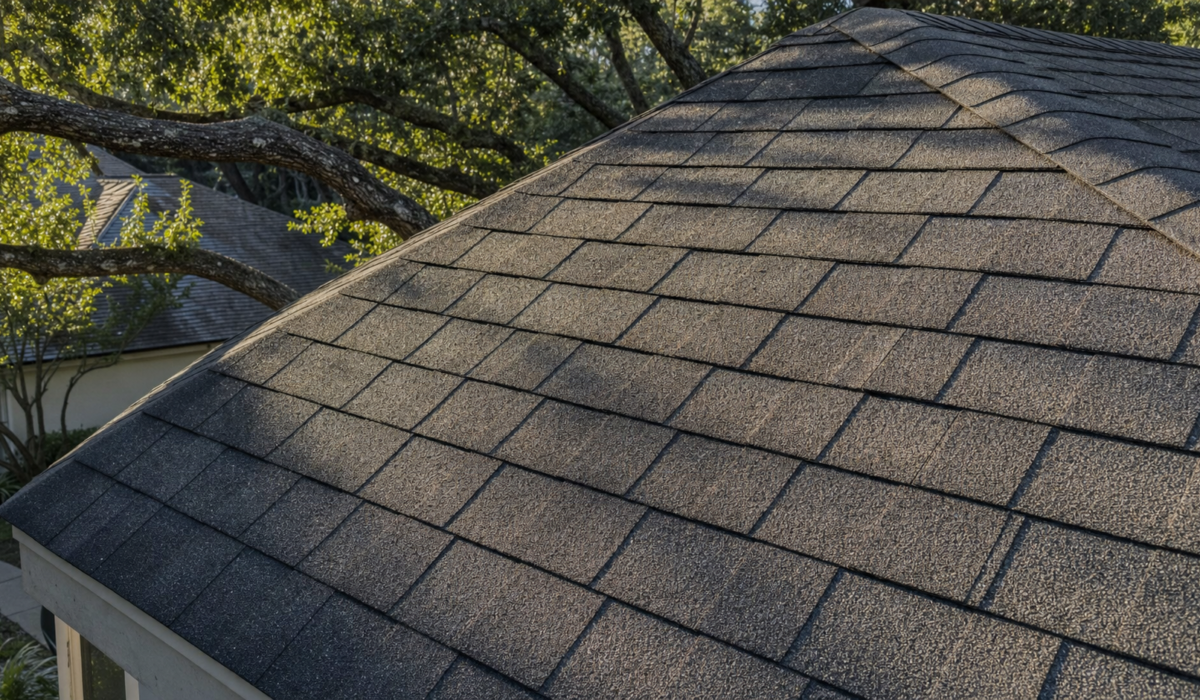
Houston homeowners rarely think about their roof until something drips. What most miss is that an asphalt shingle roof doesn’t fail in one moment — it ages steadily through years of Gulf Coast sun, humidity, and thermal cycling, and the visible cues appear long before a leak. Understanding houston roof shingle heat aging is the difference between planning a replacement calmly at year twelve and scrambling for tarps at year thirteen.
The DC Pines Roofing Education Center takes a closer look at how Houston’s climate actually breaks down an asphalt shingle roof over time, which slopes go first, what year-eight-through-twelve wear looks like from the ground, and the maintenance steps that stretch a roof’s usable life closer to its manufacturer rating.
Why Houston Roofs Age Faster Than the Warranty Suggests
An asphalt shingle is a sandwich: a fiberglass mat, a coating of modified asphalt binder, and a top layer of mineral granules that reflect UV light and shield the asphalt underneath. Manufacturer warranties assume that sandwich holds together for the rated lifespan under laboratory conditions. Houston is not laboratory conditions.
The metro delivers a combination that few climates match: sustained 90°F-plus temperatures for four to five months a year, roof-surface temperatures that routinely reach 150-170°F in July and August, sharp overnight cooling from summer thunderstorms, and one of the highest UV indexes in the continental United States. That combination cooks the asphalt binder, drives daily expansion-contraction cycles into every shingle joint, and slowly loosens the mineral granules that were the shingle’s UV shield in the first place.
Year One Through Seven: The Quiet Phase
For roughly the first seven years, a well-installed shingle roof shows very little visible change from the ground. Beneath the surface, the asphalt binder is slowly oxidizing and losing volatile compounds — the “curing” that manufacturers actually expect — but the granule layer is intact and the shingle profile is flat. Maintenance during this phase is light: annual gutter cleaning, occasional debris removal from valleys, and inspection of flashings around chimneys and pipe boots.
What to check in the quiet phase
Gutters should be cleared before the wet season each year — heavy pine and live oak debris trap moisture against the roof edge and accelerate shingle degradation at the eaves. The Education Center’s Houston gutter maintenance guide walks through this cadence in detail. Beyond gutters, homeowners should confirm attic ventilation is intact — a blocked soffit vent silently doubles the aging rate of the shingles above it.
Year Eight Through Twelve: The Visible-Wear Window
Somewhere between year eight and year twelve, the first ground-visible signs of aging arrive. This is the window where homeowners should start noting what they see and scheduling a professional review every two to three years, because caught early, most of this wear can be managed rather than replaced.
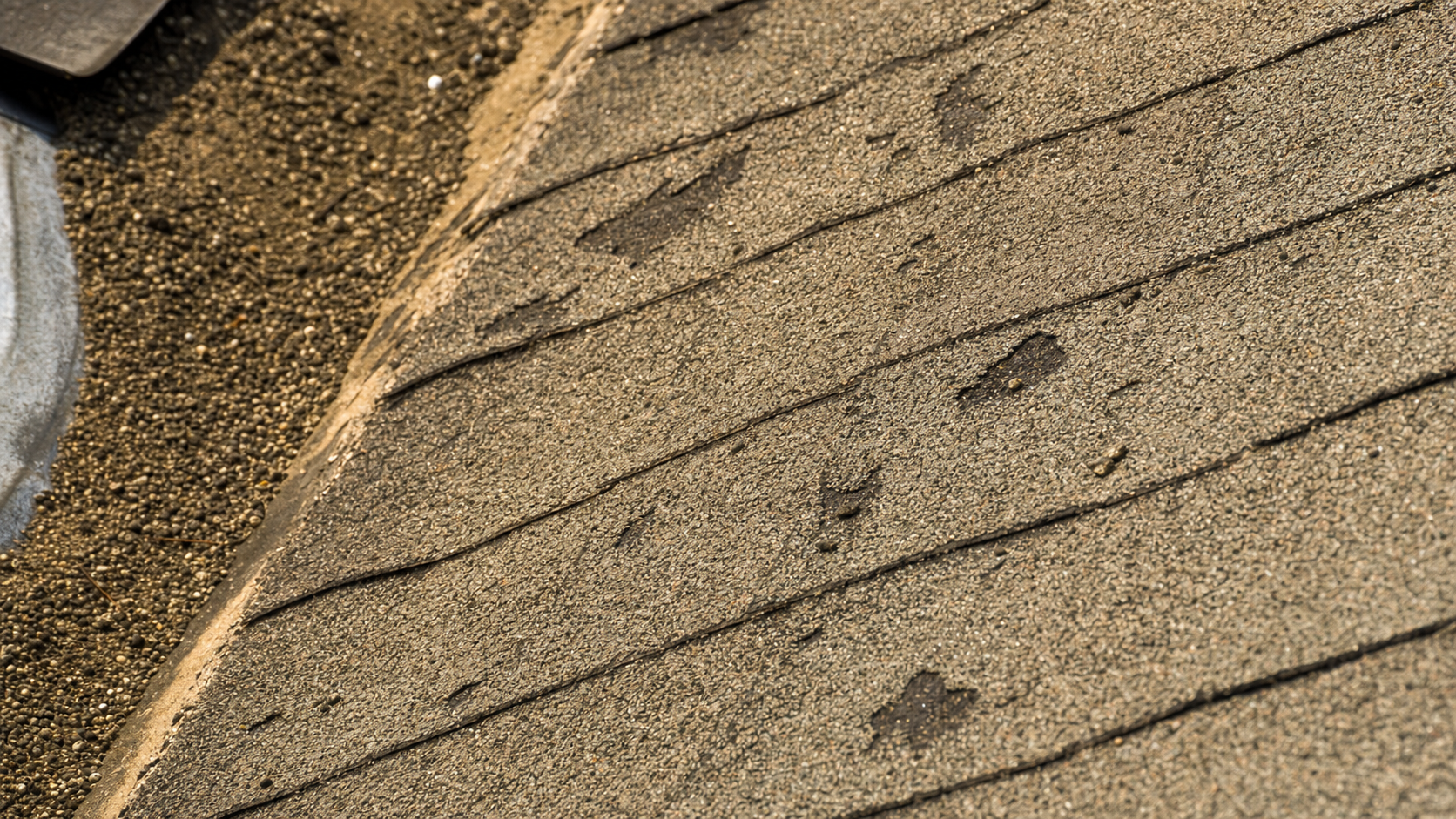
Granule loss
The single most reliable indicator is granule accumulation in the gutters. Fresh coarse dark sand at the bottom of a downspout is the shingle roof aging in real time. A small amount is normal — shingles shed slowly throughout their life — but a sudden pile after a normal Houston summer, or persistent black streaks running down the exterior wall below a downspout, are worth a closer look.
Color banding on south and west slopes
Houston sun does not hit every slope of a roof equally. South- and west-facing slopes receive the most heat and UV, and by year eight to ten they often show a lighter, chalkier tone than the north and east slopes of the same roof. From the ground, this shows up as a subtle stripe pattern when the sun hits the roof at a low angle — most visible in the late afternoon.
Year Twelve and Beyond: The Late-Stage Signs
Past year twelve on a standard architectural shingle in Houston, the more advanced signs begin to appear. These are the cues that a replacement conversation should already be scheduled, not deferred.
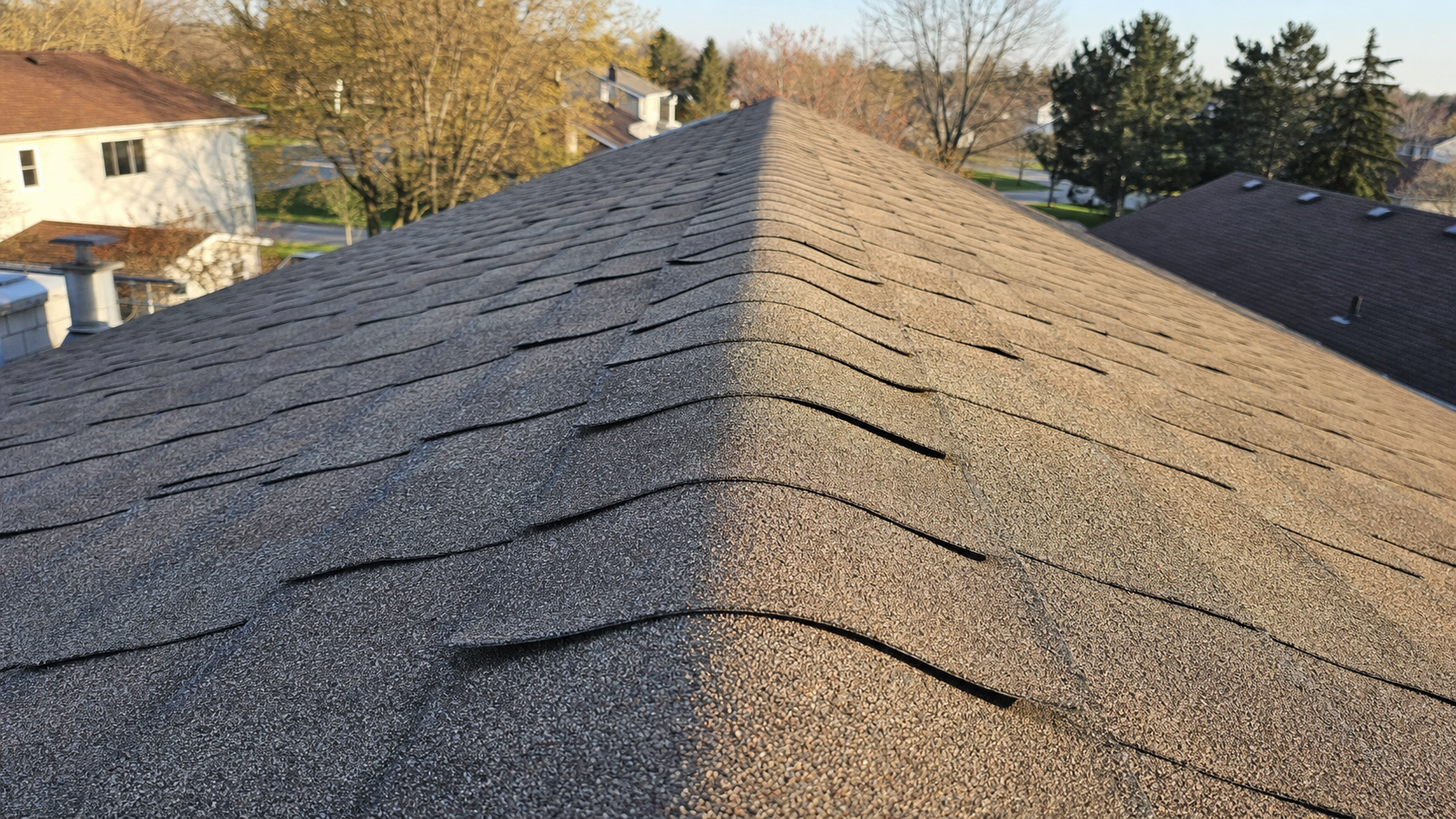
Curling and cupping
As the asphalt binder loses flexibility, individual shingles begin to curl at the corners or cup along their edges. Curled shingles let wind under the tab, and once a Houston thunderstorm gets under a shingle, the tar strip that holds it down is no longer doing its job. This is the point where isolated shingle blow-offs during ordinary summer storms become the norm rather than the exception.
Cracking and splitting
Very late-stage shingles develop hairline splits across the tab, usually starting at the exposed edge and working inward. At this point the shingle is no longer functioning as a waterproof layer, and the underlayment underneath is the only thing separating the attic from a rain event.
What Actually Extends Shingle Life in Houston
Three maintenance habits push a Houston shingle roof closer to its full manufacturer rating rather than losing years to preventable heat damage.
First, keep attic ventilation working. A hot, sealed attic pushes shingle underside temperatures higher and accelerates every aging mechanism above. The Education Center’s Houston attic ventilation guide covers what balanced intake and exhaust actually looks like, and why it matters more in Houston than in most metros.
Second, keep the roof clean. Debris from live oaks and pines trapped in valleys holds moisture against the shingles, and moisture plus Houston heat is the fastest way to age the asphalt binder. A yearly walk-down of the roof — or a professional inspection if the pitch is steep — clears the traps before they do damage.
Third, choose the right replacement product when the time comes. Not every shingle handles Houston heat the same way. The Education Center’s coverage of shingle brands and the CertainTeed Integrity Roofing System explains which product characteristics matter most in Gulf Coast climates and which warranty terms actually apply to installations here.
The Bottom Line
A Houston asphalt shingle roof rarely dies in one moment. It ages through granule loss on the sunniest slopes, then color banding, then curling at the edges, and finally cracking — a decade-long conversation the roof is having with the homeowner if anyone bothers to look. Homeowners who walk their yard once a year, check their gutters for granules, and glance up at their roof in late-afternoon light are the ones who replace on their timeline. The rest usually meet their new roofer during a thunderstorm.
Wondering where your Houston roof sits on the aging curve?
DC Pines Roofing offers thorough, ground-level and rooftop roof reviews across the Houston metro and installs Gulf-Coast-rated shingle systems from CertainTeed and other top manufacturers.