
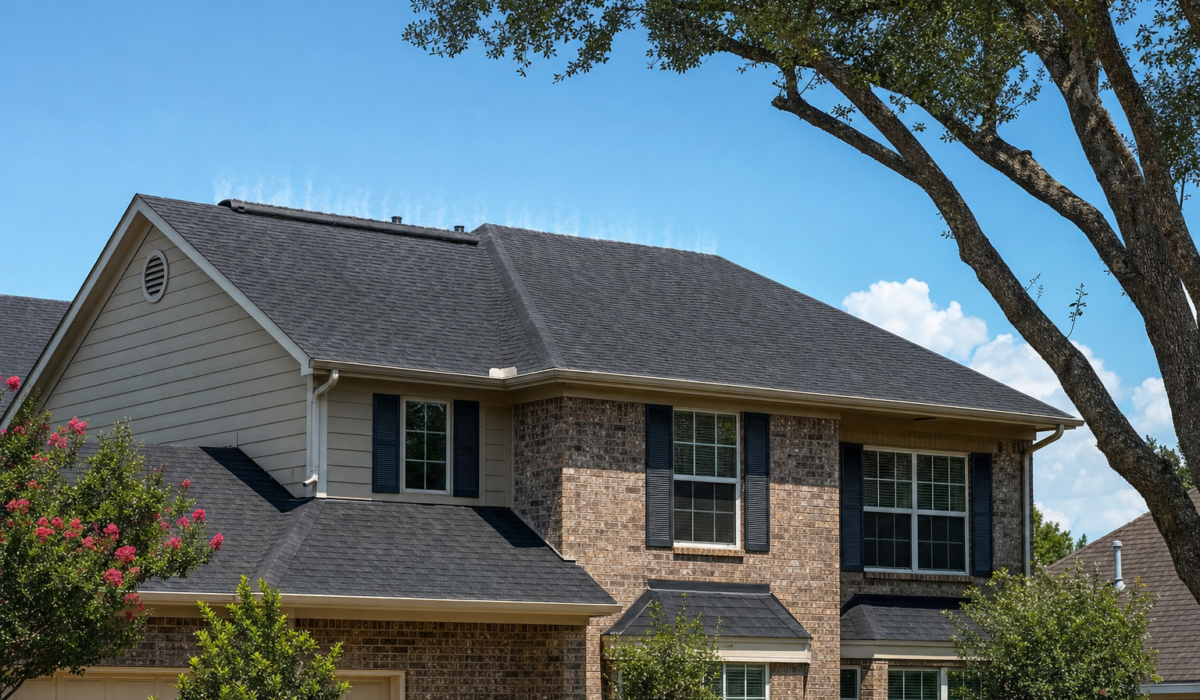
Most Houston homeowners have never climbed into their attic in August, and there is a good reason for that. The temperature up there routinely climbs to 140 degrees on a mid-summer afternoon — hot enough to warp shingles from the underside, cook the HVAC ductwork, and bleed straight into the living space below. This guide from the DC Pines Education Center explains why Houston attics get so extreme, how proper ventilation and insulation change the math, and why the smartest energy-efficiency work often happens above the ceiling instead of just at the windows.
Attic performance is one of the most overlooked pieces of a home’s energy story. New replacement windows and a well-tuned AC can only do so much if a 140-degree oven sits directly above every bedroom. The DC Pines Education Center regularly finds that a modest investment in ridge vents, soffit intake, radiant barrier, or added insulation delivers a bigger monthly-bill improvement than any single HVAC tweak.
Why a Houston Attic Hits 140 Degrees
The physics is simple. Dark asphalt shingles absorb up to 90% of incoming solar radiation. On a 98-degree Houston afternoon with full sun, the shingle surface itself can reach 160 to 170 degrees. That heat conducts straight through the decking and into the attic below, where — without proper ventilation — it has nowhere to go.
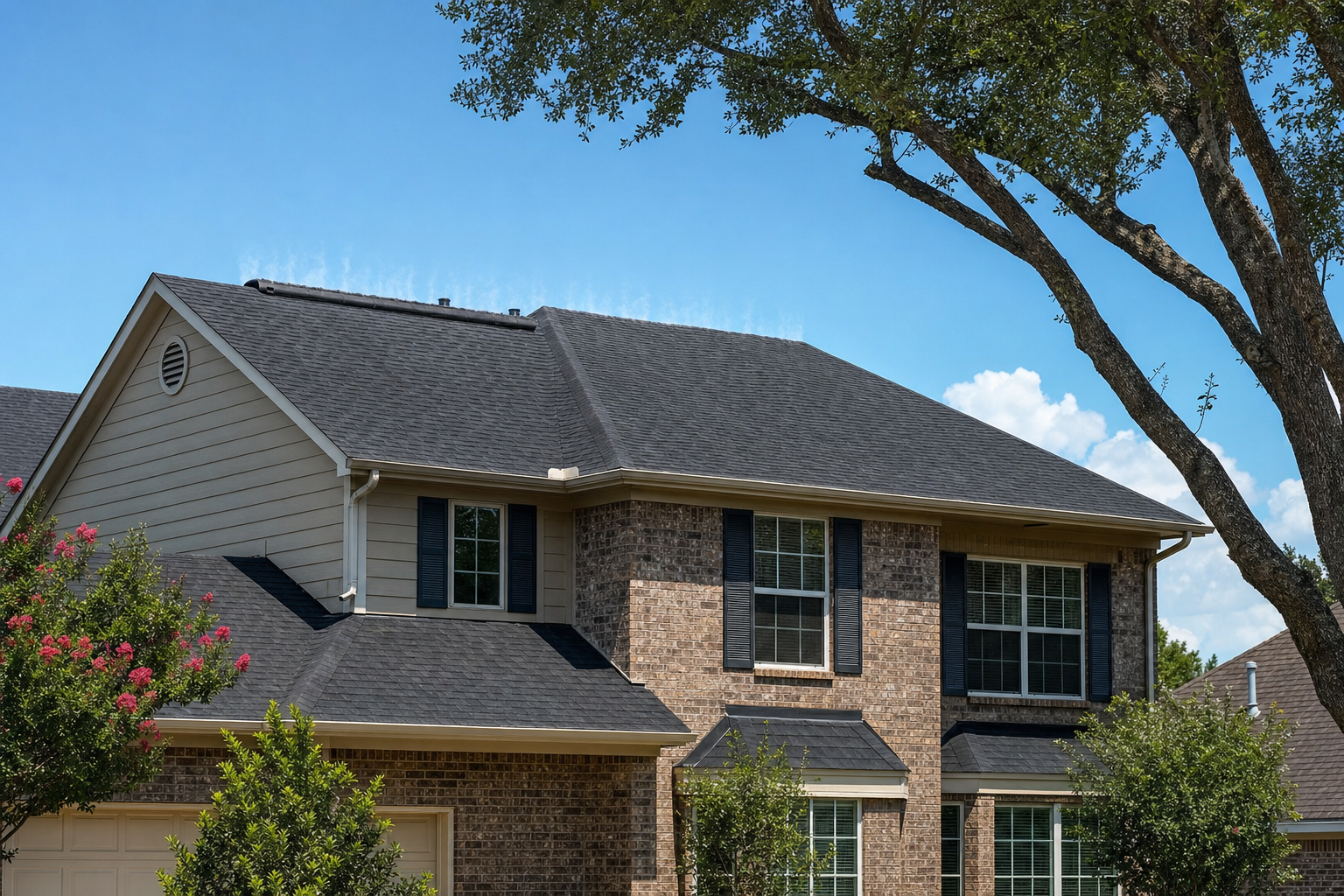
The trapped heat radiates downward through the ceiling drywall and works against every square foot of insulation the home has. Ductwork running through the attic gets baked, meaning the cold air the AC produces arrives at the vents 5 to 10 degrees warmer than it left the unit. The compressor cycles longer, the electric bill climbs, and rooms directly under uninsulated attic sections stay stubbornly warm no matter where the thermostat is set.
The Two Halves of Attic Ventilation
Effective attic ventilation is not a single component — it is a paired intake-and-exhaust system that lets hot air continuously escape while cooler air flows in to replace it. Miss either half and the whole system fails.
Ridge Vents (Exhaust)
A ridge vent runs along the peak of the roof and lets the hottest air in the attic — which naturally rises to the ridge — escape into the outside air. Modern ridge vents are low-profile, integrated under the ridge cap shingles, and virtually invisible from the ground.
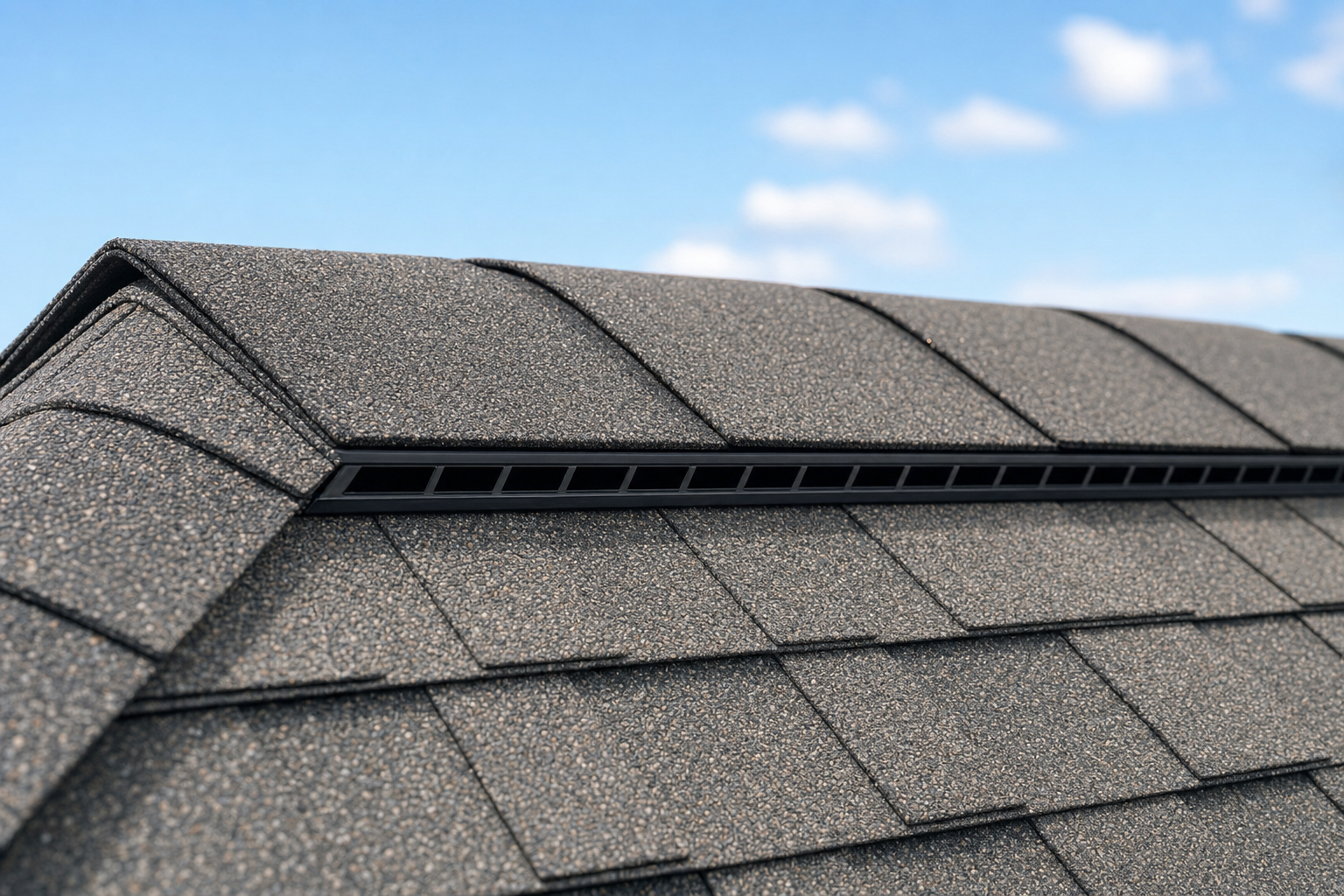
Ridge vents work passively, driven by the simple fact that hot air rises. They require no electricity, no motors, and no maintenance — a critical advantage over powered attic fans, which draw current, wear out, and can actually pull conditioned air out of the living space if the attic is not properly sealed.
Soffit Vents (Intake)
Soffit vents sit under the eaves of the roof and pull cooler outside air into the attic from below. As hot air escapes through the ridge, this incoming air continuously replaces it, creating a slow but constant sweep across the underside of the roof decking.
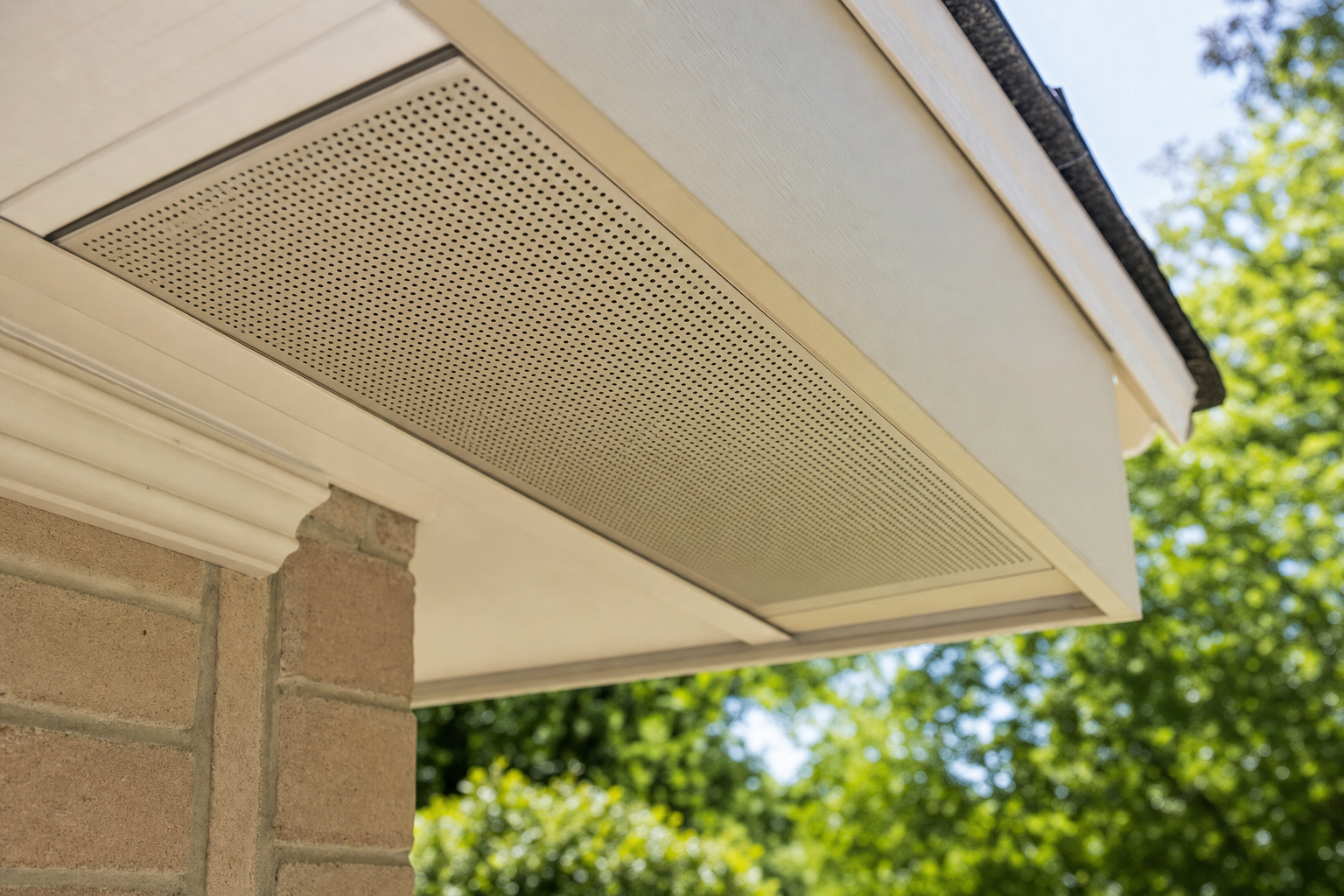
Balance matters more than raw square footage. A common failure mode in older Houston homes is a ridge vent installed during a re-roof without matching soffit intake — or blown insulation stuffed against the eaves that blocks the intake path entirely. Without free intake at the eaves, a ridge vent has nothing to move.
Radiant Barrier: The Reflective Shield
Ventilation gets the trapped heat out. A radiant barrier keeps it from entering the attic in the first place.
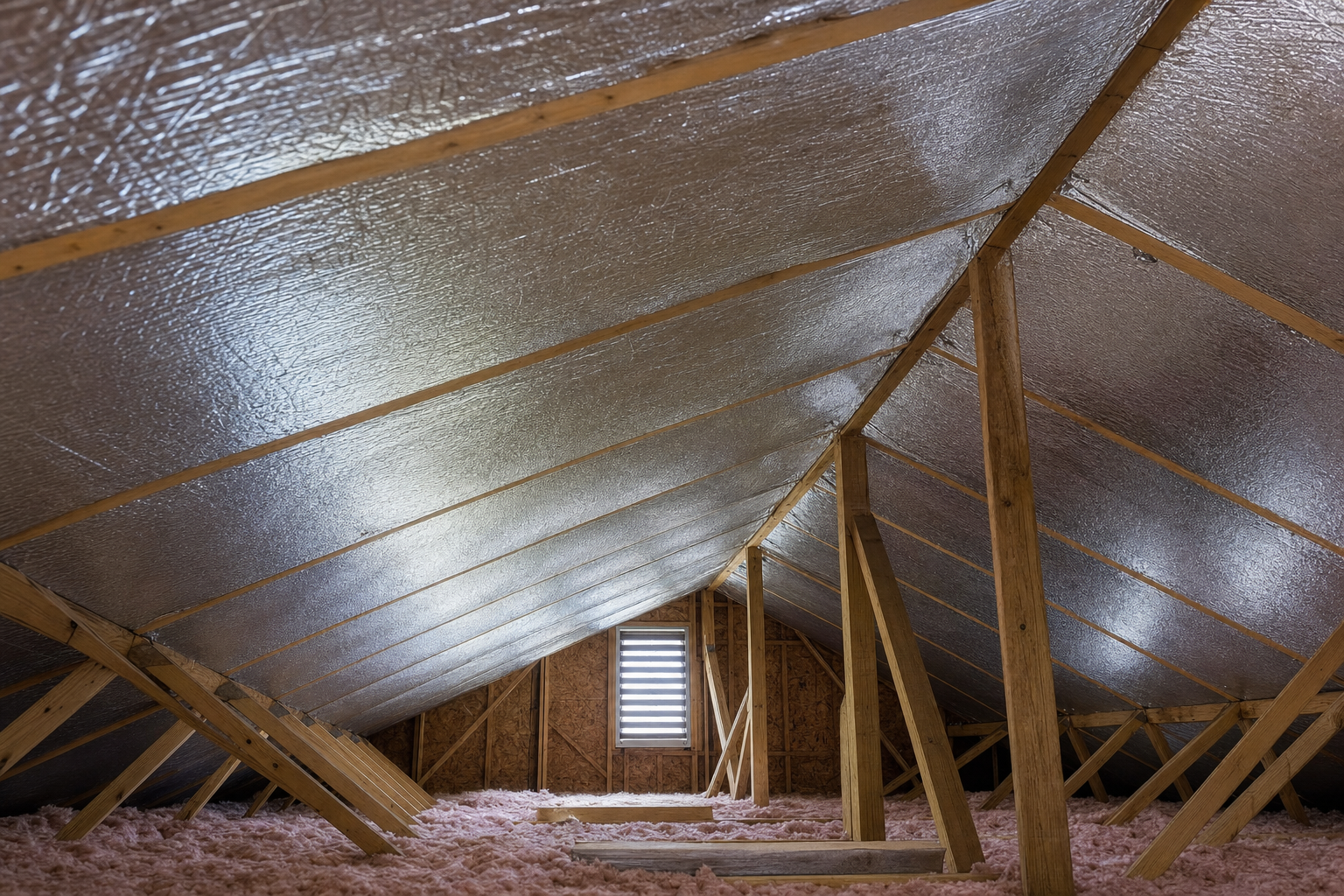
Radiant barrier is a thin reflective foil — typically aluminum bonded to a substrate — installed on the underside of the roof rafters or directly against the roof decking. It reflects up to 97% of the sun’s radiant heat back through the roof rather than letting it radiate down into the attic. Houston attics with radiant barrier installed regularly run 20 to 30 degrees cooler on peak summer afternoons than identical attics without one.
The technology is especially effective in the Gulf Coast climate because Houston’s cooling season is so long. Northern climates spend most of the year trying to keep heat in; Houston spends most of the year trying to keep heat out. Radiant barrier addresses exactly that problem.
Insulation Depth: The Third Leg
Ventilation and radiant barrier control the roof-side of the equation. Insulation controls the ceiling-side. Current Department of Energy recommendations for Houston call for R-38 to R-60 in the attic — roughly 12 to 20 inches of blown fiberglass or cellulose. Many older Houston homes in Bellaire, Memorial, and inner-loop neighborhoods still have R-19 or less, dating from the original build.
Adding insulation is one of the highest-return home improvements in the region. It is invisible from the street, requires no permits, and typically pays for itself in reduced cooling costs within three to five summers.
The Bottom Line
Houston attics are the hottest square footage in the home, and they quietly punish every other energy-efficiency investment a homeowner has made. Balanced ridge-and-soffit ventilation lets trapped heat escape, radiant barrier reflects incoming solar heat before it enters, and adequate insulation keeps whatever remains from reaching the living space. Homeowners in The Woodlands, Sugar Land, Katy, Cypress, Bellaire, and Memorial who address the attic first often find that upgraded windows and modern HVAC finally deliver the comfort and monthly-bill improvement they were supposed to.
Find out how DC Pines can help with your home’s energy efficiency.
From energy-efficient replacement windows with low-E glass and argon fill to full-home solutions built for the Houston climate — see the complete window and comfort services offered by DC Pines Roofing.