
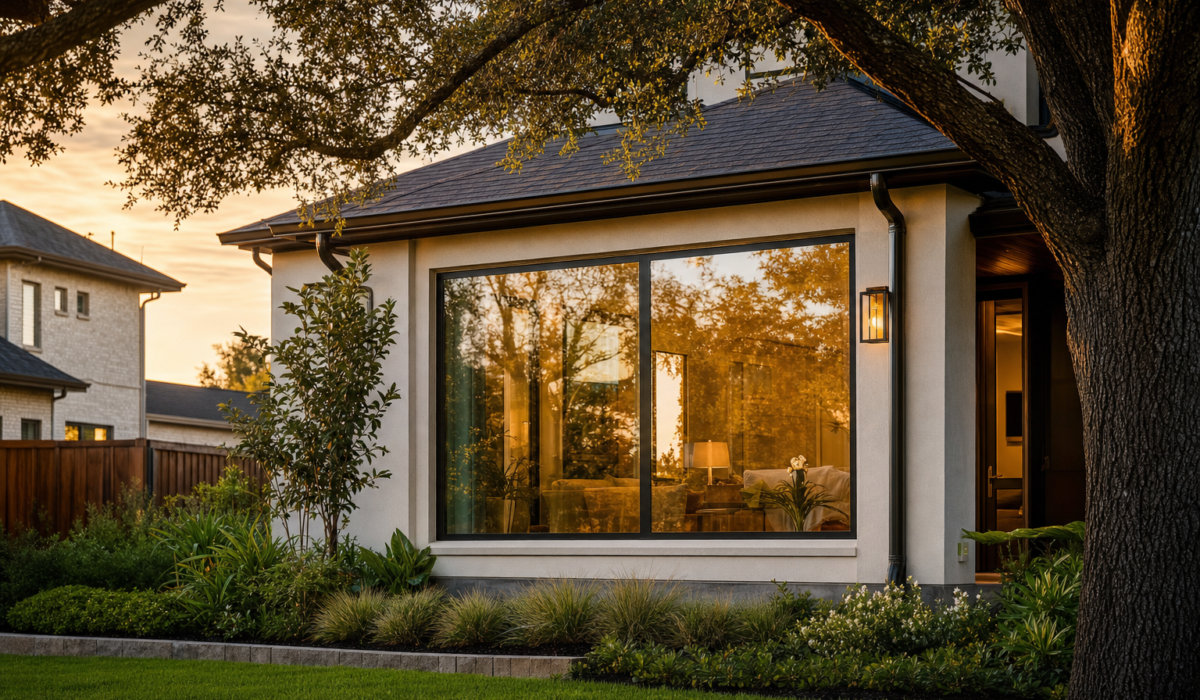
When August rolls in and the AC runs almost nonstop, Houston homeowners often start hunting for the culprit behind rising energy bills. The thermostat is set the same as last year, the filter got changed, the compressor sounds fine — yet the bill climbs. The DC Pines Education Center sees this pattern every summer, and the answer is often hiding in plain sight: aging windows.
Windows are the single largest source of unwanted heat gain in most Houston homes. On a 98-degree afternoon, a failing double-pane window can radiate heat into a room like a slow-cooking oven, forcing the HVAC to work harder just to hold temperature. This guide from the DC Pines Education Center walks through the warning signs, the simple tests any homeowner can run this weekend, and the specific upgrade options that make sense for the Houston climate.
How Windows Quietly Drive Up a Houston Energy Bill
The Department of Energy estimates that windows account for 25% to 30% of residential heating and cooling energy use, and in Houston — where cooling season stretches from April through October — that percentage skews higher. Every square foot of underperforming glass is a slow leak: solar heat coming in through the pane, cooled indoor air escaping through the frame.
Windows also fail gradually. Seals weaken, frames warp, argon gas escapes, and the low-E coating degrades invisibly over 15 to 25 years. The AC picks up the slack, and the bill quietly climbs before anyone connects the dots.
Four Warning Signs Houston Homeowners Should Not Ignore
1. Fog or Moisture Between the Panes
This is the clearest visual sign of a failed window. Double-pane windows are sealed at the factory with argon gas between the panes and a desiccant strip in the spacer to absorb any stray humidity. When the seal fails, outside air (and Houston’s famous humidity) works its way into the cavity. The desiccant saturates, and moisture condenses between the panes where no cleaning cloth can ever reach.
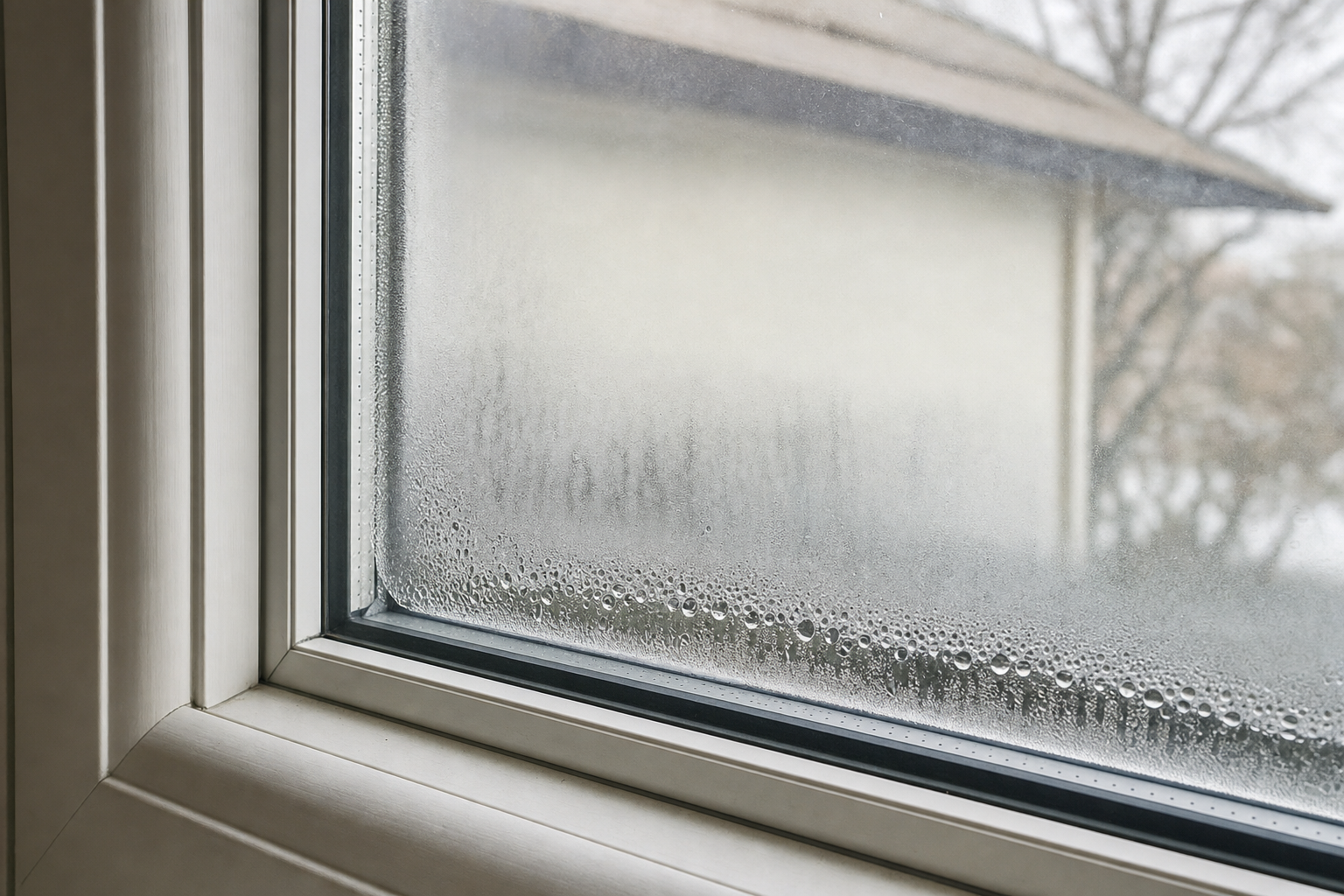
A fogged window has essentially become a single-pane window with extra cost and none of the insulation. In Houston’s climate, this shows up as one room feeling noticeably warmer than the rest of the house on hot afternoons.
2. Drafts You Can Feel — Even With the Window Closed
Stand next to a suspect window on a windy day, close eyes, and just feel. Is there a temperature line where the room air meets the window? Does a hand held six inches from the frame feel cooler in winter or warmer in summer than the same hand held near an interior wall? That’s the frame or sash losing its seal.
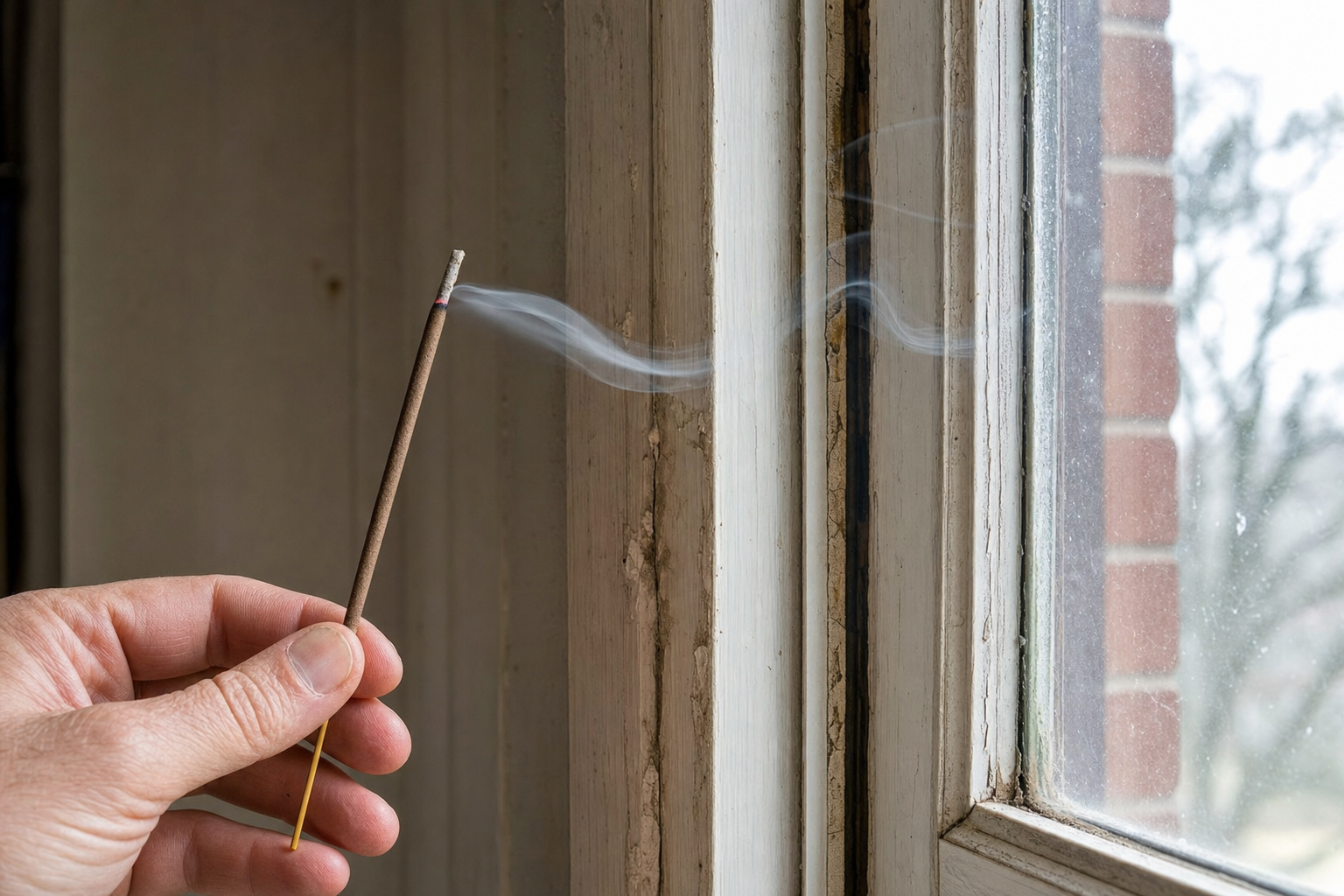
The simplest DIY diagnostic is the incense test pictured above. Light a stick of incense, hold it slowly around the perimeter of the window frame with the window closed, and watch the smoke trail. Smoke that rises straight up means the seal is holding. Smoke that bends, wavers, or pulls sideways is showing the exact leak path — usually the top corners or the meeting rail on a double-hung window.
3. Rooms That Never Match the Thermostat
Every Houston home has that one room — the bonus room over the garage, the west-facing office that becomes unusable at 3 p.m., or the master bedroom that runs five degrees warmer than the hallway. Some of this is airflow balance, but a surprising amount is window performance. West and south-facing windows in Houston take direct solar hit for hours each day, and older glass without proper low-E coating turns that sunlight directly into interior heat.
4. Peeling Paint, Warped Frames, or Sticking Sashes
Wood-frame windows in Houston fight a losing battle against humidity and clay-heavy soil movement. When the paint on the exterior sill peels, the sash sticks, or interior trim shows water staining, the frame is compromised. Repainting solves the cosmetics but not the underlying air and moisture path.
What Modern Replacement Windows Actually Deliver
Window technology has advanced dramatically in the last two decades. A modern replacement window built for the Gulf Coast climate is fundamentally different from what most Houston homes were built with in the 1990s and 2000s.
Low-E Coatings Tuned for the Gulf Coast
Low-emissivity (low-E) coatings are microscopically thin metallic layers deposited on the glass surface. In hot climates like Houston, the coating is designed to reflect the sun’s infrared heat back outside while still letting visible light through. The result is a window that looks clear but blocks a significant portion of the solar heat that older glass allowed straight through.
Argon Gas Fill and Warm-Edge Spacers
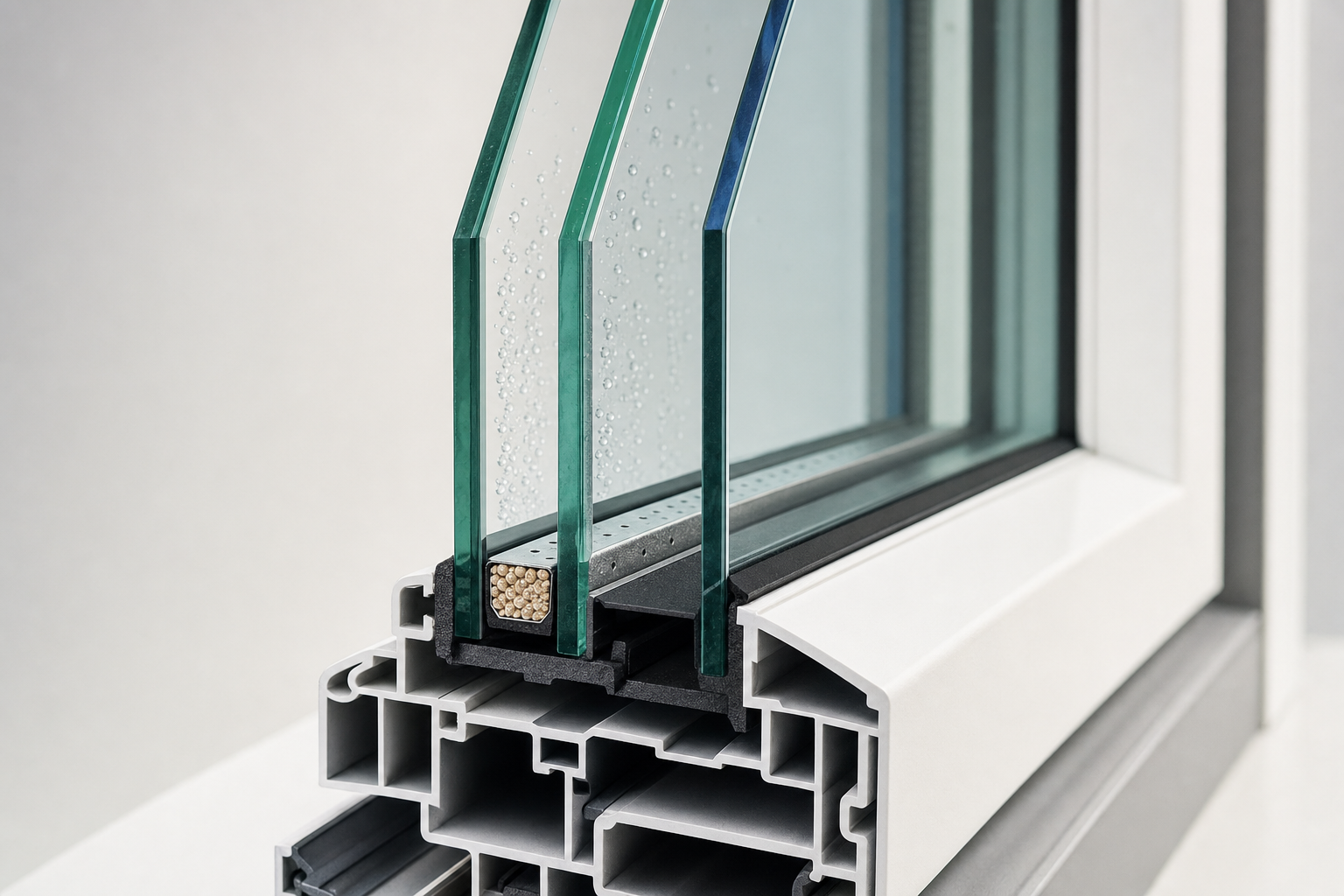
The space between the panes matters as much as the panes themselves. Modern insulated glass units are filled with argon — a dense, non-toxic gas that conducts heat far more slowly than plain air. Combined with a warm-edge spacer (the strip pictured above that separates the panes), argon fill dramatically reduces heat transfer around the edges of the glass, which is historically the weakest point in any window.
Frame Materials Built for Houston Humidity
Vinyl and fiberglass frames handle Houston’s humidity swings without warping, rotting, or requiring repainting every few years. They also seal tighter and hold that seal longer than aged wood frames. For homes in The Woodlands, Sugar Land, Katy, Cypress, Bellaire, and Memorial where humidity punishes exterior finishes, frame material choice matters as much as the glass package.
When Replacement Beats Repair
Not every problem window needs replacement. A single failed seal on an otherwise young window can sometimes be fixed by swapping the insulated glass unit, and weatherstripping around a solid frame can buy several more years. But once multiple windows show fogging, drafts, or frame damage — and once monthly energy bills climb without another explanation — a whole-home replacement usually pays back faster than piecemeal repairs.
Full-home replacements also unlock benefits partial jobs cannot: consistent aesthetics across the exterior, single-point warranty coverage, and a stronger resale story than a home with mismatched, mixed-age windows.
The Bottom Line
Windows fail slowly, and the AC hides the problem by working harder. Houston homeowners who notice fogged panes, feel drafts around closed windows, live with rooms that never cool down, or see peeling frames should treat those signs as a summons rather than an annoyance. A weekend of walking the house with an incense stick and a critical eye can reveal exactly where the energy is escaping — and modern replacement windows built for the Gulf Coast can shift the monthly bill in a direction that actually feels good to open.
Find out how DC Pines can help with your windows.
From energy-efficient replacement windows with low-E coatings and argon fill to full-home installations built for the Houston climate — see the complete window services offered by DC Pines Roofing.