

If you own a home in Houston, your gutters do a lot more work than you might think. Between our humid subtropical climate, heavy summer downpours, and the constant carpet of live oak leaves and pine needles, gutters here take a beating year-round. Yet most homeowners don’t think twice about them — until water starts spilling over the fascia or pooling next to the foundation.
The DC Pines Education Center put together this straightforward guide to what gutters actually do, why Houston homes are especially hard on them, and how a few small habits can save homeowners thousands in avoidable damage.
Why Gutters Matter More in Houston Than You Think
Gutters have one job: move rainwater away from the roof, siding, and foundation. When they’re working properly, no one notices them. When they fail, the damage compounds fast — and it rarely stays cheap.
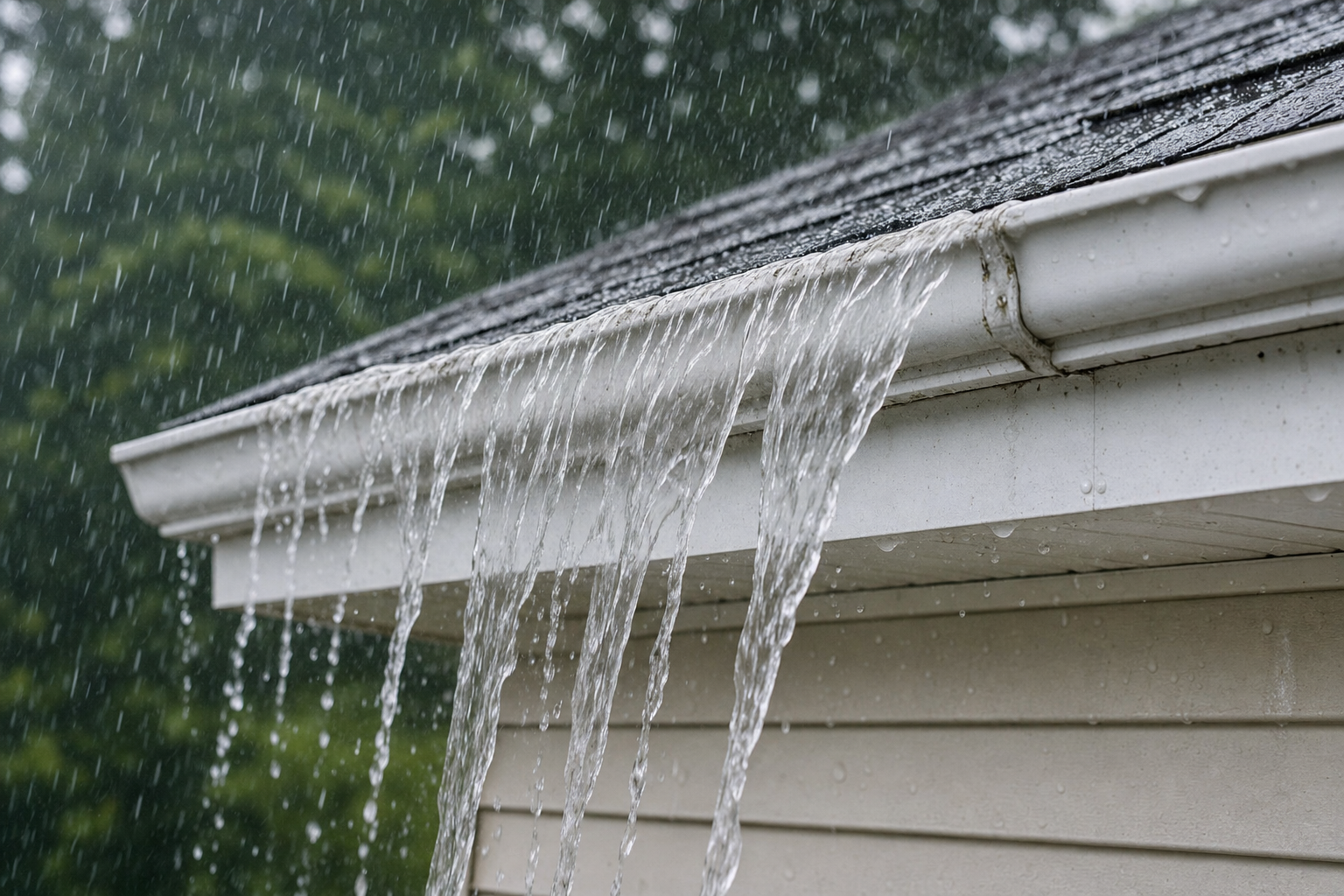
In Houston specifically, three things make gutter performance critical:
- Rainfall volume. Houston averages 50+ inches of rain a year, often delivered in short, intense bursts. A single afternoon thunderstorm can push more water off a roof in an hour than some regions see in a week.
- Clay-heavy soil. Houston’s expansive soils swell when wet and shrink when dry. Water pooling near the foundation from overflowing gutters accelerates this cycle and can lead to slab movement, cracked interior walls, and stuck doors.
- Tree canopy. Live oaks, pines, sweetgums, and pecans drop leaves, seed pods, and needles constantly. Debris fills gutters faster in Houston than in most of the country.
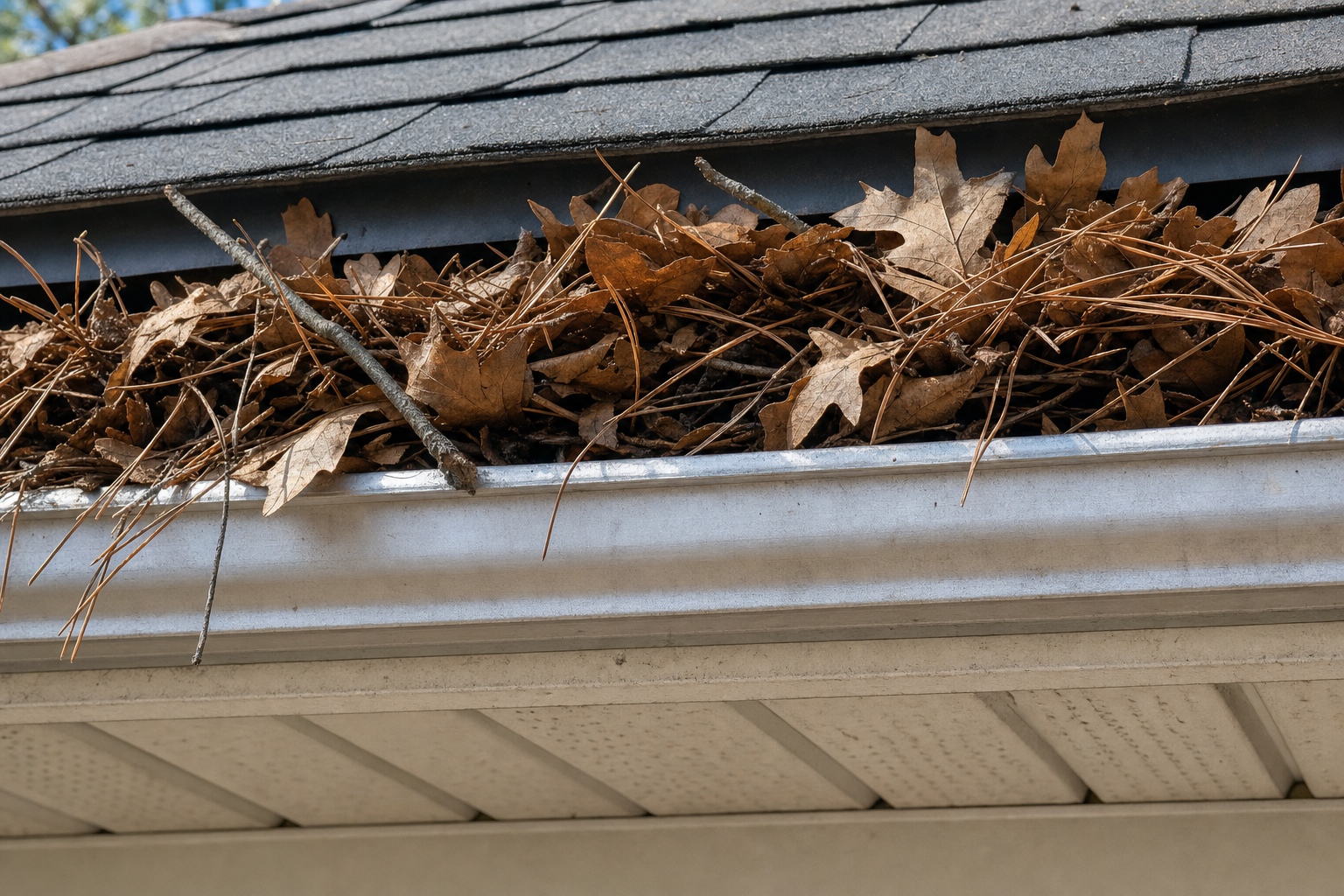
Signs Gutters Aren’t Keeping Up
Spotting most gutter problems doesn’t require a ladder. A quick walk around the property after the next hard rain will reveal the red flags:
- Water sheeting over the front edge of the gutter instead of flowing through it
- Vertical streaks of dirt or rust on the outside face of the gutter
- Mulch, dirt, or gravel splash on siding and lower windows
- Erosion trenches in flower beds directly under the drip line
- Sections of gutter that visibly sag, tilt, or pull away from the fascia
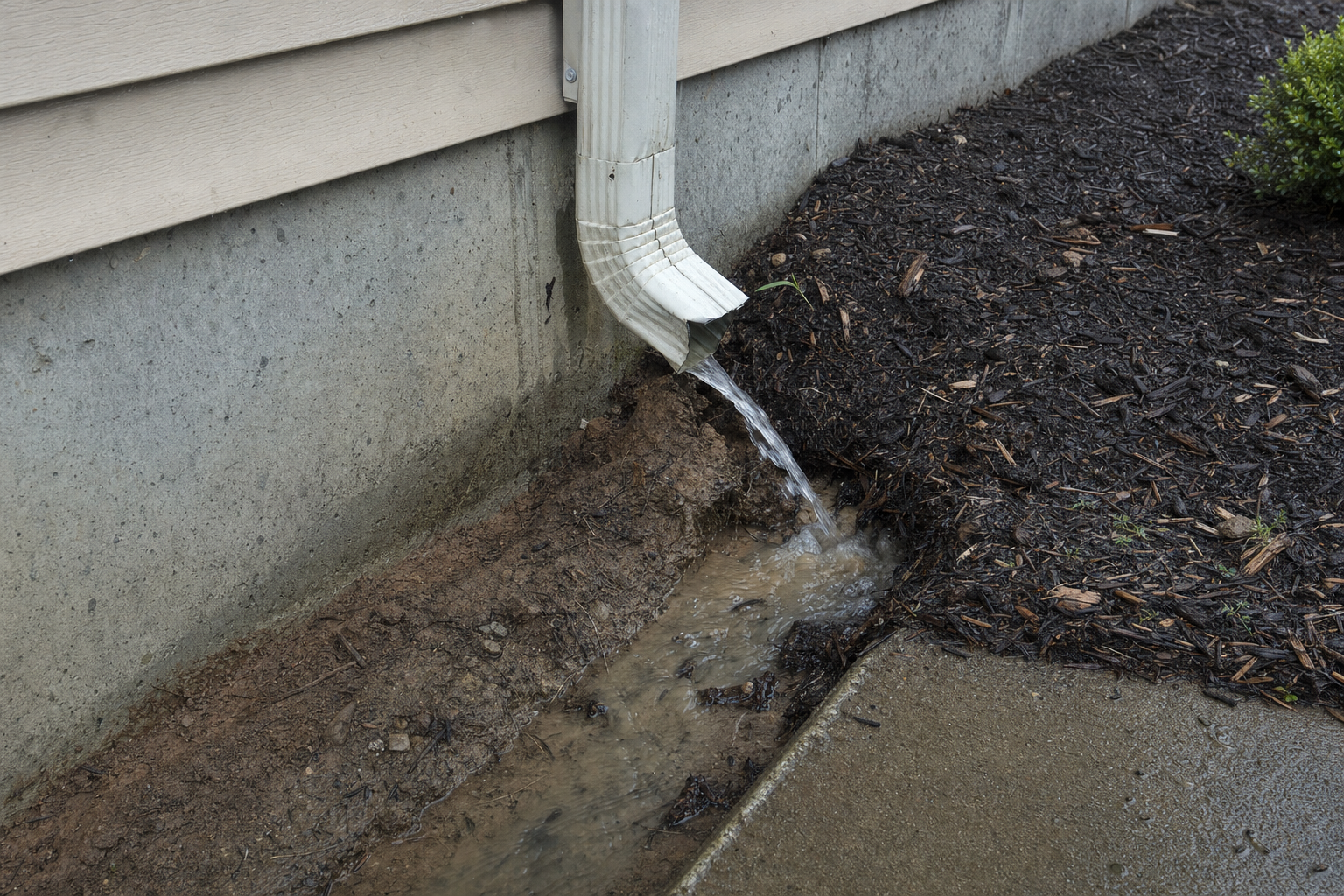
- Standing water pooled at the base of downspouts more than a few feet from the house
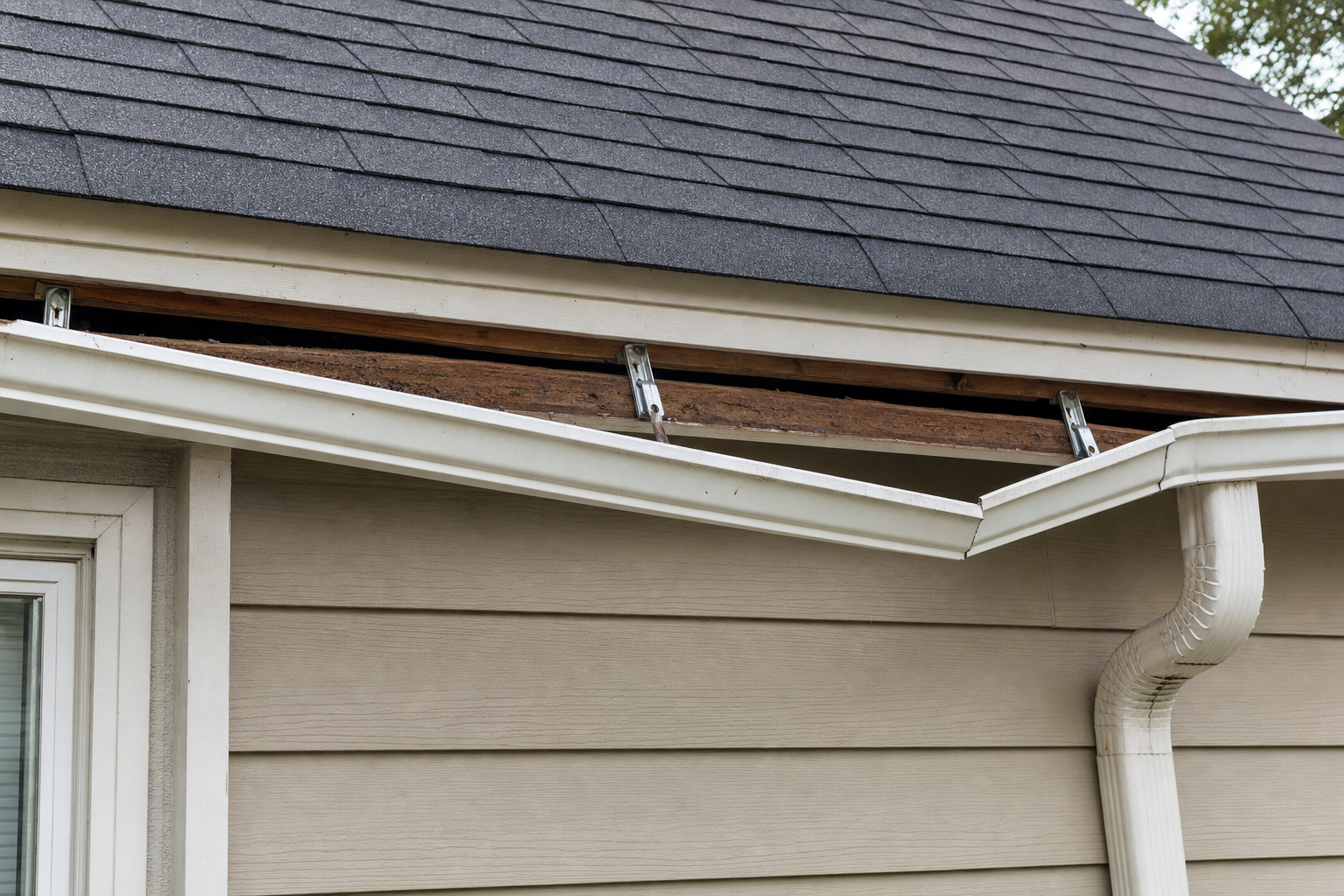
Any one of these means the system isn’t doing its job. Two or more, and there’s active water damage underway that will only get worse.
A Simple Houston Gutter Maintenance Rhythm
Gutters don’t need constant attention — they need consistent attention. Here’s the rhythm the DC Pines Education Center recommends:
Twice a year, at minimum
Clean gutters in late spring (before hurricane season ramps up in June) and again in late fall or early winter (after the bulk of leaf drop). Homes under heavy tree cover should move to a quarterly schedule.
After every major storm
Do a quick visual check after any storm that produces heavy wind or debris. A single limb strike can bend a gutter run enough to pull it out of pitch and stop the flow.
Inspect the downspout outlets
Water should exit downspouts and travel at least 4–6 feet from the foundation. Downspouts that dump right at the base of the house need splash blocks or flexible extensions. This one $10 fix prevents a lot of foundation drama.
Check the pitch
Gutters should slope roughly 1/4 inch for every 10 feet of run toward the downspout. Sagging middles trap standing water, which adds weight, encourages corrosion, and breeds mosquitoes — a real concern in Houston.
When It’s Time to Stop Cleaning and Start Upgrading
If gutter cleaning is happening more than twice a year, or ladder work is no longer comfortable, it’s worth pricing out a permanent solution. Modern micro-mesh gutter guard systems have come a long way from the plastic screens sold at big box stores.
LeafBlaster Pro is a stainless steel micro-mesh guard with a patented Z-bend that keeps out everything from oak leaves down to pine needles and shingle grit — while still handling Houston’s heaviest downpours. It carries a manufacturer warranty that transfers with the home.
Combined with a properly sized 6-inch seamless aluminum gutter, it’s a system most Houston homeowners can install once and effectively forget about.
The Bottom Line
Gutters are the cheapest insurance policy on any home. A $200 cleaning or a one-time guard investment protects a foundation that costs $15,000+ to repair and siding, soffits, and interior finishes that add tens of thousands more when water gets behind them.
Find out how DC Pines can help with your gutters.
From seamless aluminum installs to LeafBlaster Pro guard systems and free inspections — see the full lineup of Houston gutter services from DC Pines Roofing.